
The Magazine That Captured America's Reckoning
John Wayne's 1971 Playboy confession and the interview that divided a nation
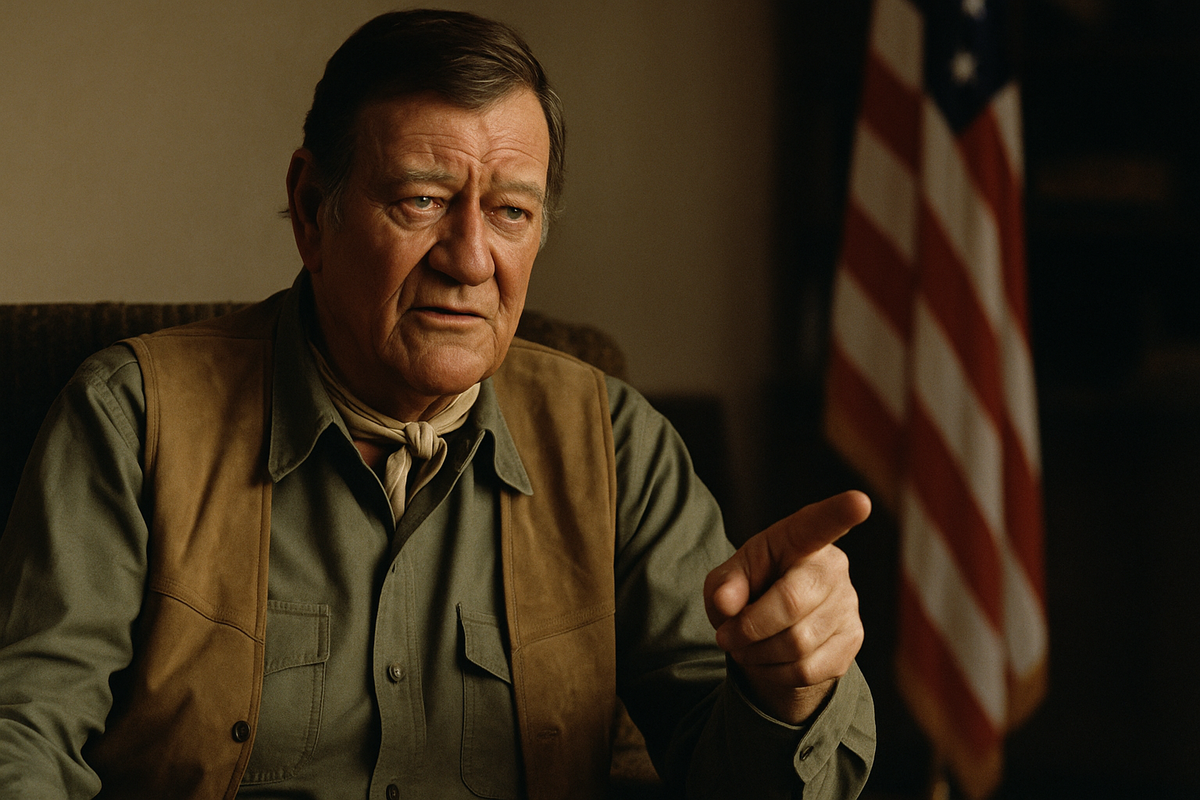
In May 1971, John Wayne sat down and said the quiet part loud.
America's most bankable cowboy—the man who'd taught three generations what it meant to be tough, righteous, and unflinchingly American—opened Playboy and delivered a statement so incendiary it still burns: "I believe in white supremacy until the blacks are educated to a point of responsibility."
The interview detonated. Not because Wayne had gone rogue, but because he'd done the opposite: he'd perfectly articulated the worldview of millions of Americans who saw their country slipping away. While campuses burned and Nixon plotted his silent majority strategy, Wayne became the voice of an America that refused to apologize for itself.
More than fifty years later, the May 1971 issue of Playboy remains one of the most sought-after magazines of the decade—not despite its controversy, but because of it. This wasn't celebrity gossip. It was a referendum on American identity, printed on glossy paper and sold at newsstands for 75 cents.
Archive Details
Historical Figure: John Wayne (Actor, Cultural Icon)
Issue Date: May 1971
Archive Source: Playboy Magazine
Interviewer: Richard Warren Lewis
The Perfect Storm
By spring 1971, America had fractured into armed camps. Nearly 50,000 soldiers dead in Vietnam. Kent State's bloodstained quad barely a year old. The Black Panthers and Stokely Carmichael demanding revolution while Middle America recoiled in horror. Women burning bras. Students burning draft cards. Nixon in the White House, preaching law and order to a nation that seemed to have forgotten what either word meant.
John Wayne wasn't just a movie star in this landscape—he was a political weapon. His 200-film career had made him the walking embodiment of American exceptionalism: the frontier lawman, the uncompromising soldier, the man who knew right from wrong and never needed a committee to tell him the difference. When Wayne made The Green Berets in 1968—Hollywood's only major pro-Vietnam War film—he wasn't chasing box office. He was planting a flag.
The Playboy interview gave him twenty pages to defend that flag. What he delivered was a masterclass in defiance.
Why Playboy Mattered
By 1971, Playboy had evolved into something no men's magazine had been before: a cultural power broker that could make or break reputations. Hugh Hefner's signature interview series had already hosted Malcolm X, Martin Luther King Jr., Fidel Castro, and Muhammad Ali—figures who understood that Playboy's seven million readers included the lawyers, executives, and tastemakers who shaped American discourse.
The magazine's genius was its format: extended, unfiltered Q&A sessions that let subjects hang themselves with their own words or reveal unexpected depths. No press agent could sanitize these conversations. No editor could soften the blows.
Wayne knew exactly what he was walking into. He chose to walk in anyway.
What He Said
The interview's architect was Playboy's Richard Warren Lewis, who spent hours with Wayne extracting opinions the actor had clearly been waiting to unleash. The resulting conversation was structured as classic Playboy Q&A—Lewis's questions serving as launch pads for Wayne's monologues.
On Race
Beyond the white supremacy remark, Wayne argued that Native Americans had been rightfully dispossessed because "there were great numbers of people who needed new land, and the Indians were selfishly trying to keep it for themselves." He dismissed slavery's legacy with a shrug, suggesting that Black Americans simply needed more time to catch up.
On Vietnam
While half the country demanded withdrawal, Wayne doubled down. Communism was a cancer. America's duty was to cut it out, even if the surgery was bloody. Antiwar protesters weren't principled dissenters—they were cowards hiding behind college deferments while working-class kids did the dying.
On Hollywood's Moral Decay
Wayne reserved special contempt for Midnight Cowboy, the 1969 Best Picture winner about a male hustler in New York. The film represented everything wrong with modern cinema: degeneracy celebrated, traditional masculinity mocked, American values trampled. Hollywood had once built heroes. Now it wallowed in filth.
On the Counterculture
The youth movement wasn't idealistic—it was spoiled. Protestors didn't understand sacrifice. They'd never gone hungry, never fought for anything, never learned that freedom requires discipline. They were children throwing tantrums while the adults tried to run a civilization.
The Scuba Girl and the Culture War
The May 1971 cover featured a model in a form-fitting scuba outfit—playful, adventurous, quintessentially Playboy. Flip inside, and you encountered John Wayne's vision of America: hierarchical, martial, unforgiving of weakness.
The dissonance was the point. Playboy sold sexual liberation and cultural sophistication while giving space to a man who believed both were destroying the country. This wasn't hypocrisy—it was editorial ambition. Hefner understood that his magazine's power came from hosting the full spectrum of American argument, from Black Panthers to Hollywood cowboys.
The issue sold out. Letters poured in for months. Wayne received death threats and marriage proposals in equal measure. The interview was excerpted, analyzed, condemned, and defended in newspapers across the country. It had done exactly what Playboy interviews were designed to do: force America to confront itself.
The Legacy Question
Wayne never apologized. Not when civil rights leaders condemned him. Not when liberal Hollywood turned cold. Not when younger audiences began to question whether the values he represented had ever been as noble as his films suggested.
He died in 1979, still convinced he'd been right about everything. The Playboy interview ensured that future generations would judge for themselves.
That's the uncomfortable brilliance of primary sources—they don't let you off easy. You can't dismiss Wayne as a relic without confronting his massive popularity. You can't celebrate his films without grappling with his politics. The May 1971 Playboy freezes that contradiction in amber, forcing every reader to decide what they're looking at: American heroism or American mythology? Principled tradition or stubborn bigotry?
The magazine doesn't answer those questions. It just presents the evidence and lets history render its verdict.
Why Collectors Hunt This Issue
Historical Flashpoint
Few interviews have captured a cultural moment with such brutal clarity. Wayne's words are cited in academic papers, documentary films, and biographies. To own this issue is to own primary source material for understanding American conservatism at its most unapologetic.
The Interview That Won't Die
Every few years, someone rediscovers Wayne's remarks and the controversy reignites. The 2019 wave—when younger readers encountered the white supremacy quote—proved the issue's statements still have the power to shock. Controversy is the ultimate preservative.
Peak Playboy
This issue arrived during the magazine's golden age, when it routinely published fiction by Vladimir Nabokov and Gabriel García Márquez alongside centerfolds. The production values, the editorial ambition, the cultural weight—everything that made Playboy matter is present in these pages.
The Collectibility Paradox
Because the interview was so explosive, many readers kept their copies, thinking they might be valuable someday. But magazine preservation is about more than saving—it's about condition. Most surviving copies show wear. Clean, well-preserved issues grow scarcer each year.
Finding History
Original Playboy magazines from the 1950s through the 1990s document decades of American transformation—cultural, political, sexual, artistic. Each issue is an artifact of its moment, containing not just interviews but fiction, journalism, photography, and advertising that reveal how Americans saw themselves and their world.
Browse Playboy Magazine CollectionThe Artifact
Hold a clean copy of the May 1971 Playboy and you're holding more than vintage paper. You're holding the moment American exceptionalism looked in the mirror and saw two completely different faces staring back.
One face saw strength, tradition, and moral clarity worth defending at any cost.
The other saw racism, militarism, and the desperate thrashing of a worldview whose time had passed.
Both faces belonged to the same country. Both claimed to represent its soul.
The magazine captured them both, in John Wayne's own words, unfiltered and unrepentant.
That's why collectors hunt it. That's why historians cite it. That's why it still matters.
Some artifacts explain the past. The best ones make you understand why the present turned out the way it did.
The May 1971 Playboy with John Wayne is one of the best.