
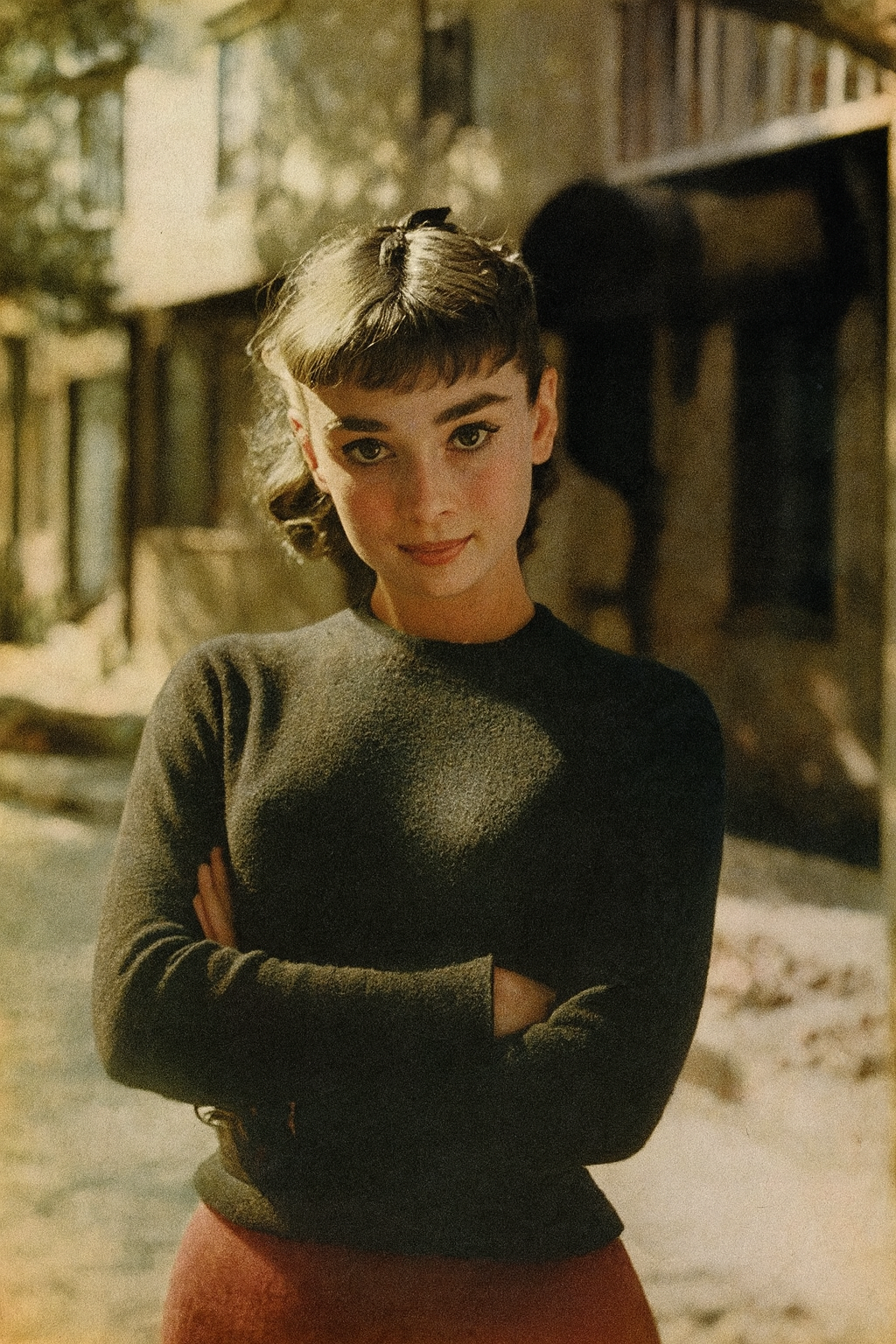
The Dawn of an Icon: Inside Life Magazine's December 7, 1953 Portrait of Audrey Hepburn
When photojournalism captured Hollywood's newest star at the precise moment between breakthrough and legend
December 7, 1953. While most Americans browsed their local newsstands for the latest Life Magazine, few realized they were witnessing a coronation. The young woman gracing that week's cover—barely known to audiences six months earlier—was about to rewrite the rules of Hollywood stardom. Her name was Audrey Hepburn, and the photo-essay inside would capture something unprecedented: a star being born in real time, caught between the triumph of an Oscar and the weight of what came next.
This wasn't another manufactured Hollywood puff piece. It was documentary evidence of transformation.
Archive Details
Historical Figure: Audrey Hepburn
Issue Date: December 7, 1953
Archive Source: Life Magazine
Photographer: Mark Shaw
Cultural Moment: Post-Roman Holiday Oscar win, during Sabrina production
A New Face for a New Hollywood
The timing was everything. Roman Holiday had just won Hepburn the Academy Award for Best Actress, catapulting the unknown stage actress into the international spotlight. By December, she was deep into production on Sabrina, working under Billy Wilder's exacting direction and Edith Head's legendary costuming. Life Magazine positioned its cameras at the precise inflection point—after the breakthrough, before the legend.
What readers encountered was revolutionary. In an era defined by Marilyn Monroe's overt sensuality and Greta Garbo's untouchable mystique, Hepburn offered something Hollywood hadn't packaged before: approachable elegance. Natural grace married to visible discipline. A star who looked like she might actually answer her own door.
Postwar America was ready for her. The early 1950s marked a cultural pivot—Cold War anxieties tempered by suburban optimism, traditional glamour giving way to something more authentic. Hepburn arrived as both symbol and beneficiary of that shift, and Life's cameras were there to document it.
Photojournalism as Biography
Life Magazine had perfected a distinct editorial formula by 1953: let the images carry the narrative weight. For the Hepburn feature, photographer Mark Shaw abandoned the studio entirely, following his subject through the unglamorous machinery of stardom.
The resulting photo-essay reads like visual anthropology:
The captions reinforced what the images suggested: here was someone "many-sided," capable of embodying contradictions. Dignified yet approachable. Glamorous yet simple. The article described her as equally believable in a ballgown or milking a cow—high praise in an industry that typically demanded actresses choose one register and stay there.
What the Collaborators Saw
Billy Wilder, not given to effusive praise, offered this assessment: Hepburn possessed an uncanny ability to focus inward while performing, a quality of intelligent discipline unlike any other actress he'd directed. Studio colleagues echoed the sentiment—here was someone who respected technical crews, studied scripts with genuine diligence, and approached filmmaking as collaborative art rather than personal showcase.
The breakfast scene captured it perfectly: Hepburn grabbing a quick meal with technicians, treating the set as workspace rather than stage. For a 1953 audience accustomed to Hollywood's carefully maintained hierarchies, these glimpses of egalitarian professionalism registered as radical.
The Cover That Codified a Moment
Life's December 7, 1953 cover signaled Hepburn's arrival in the cultural vocabulary. Unlike competitor magazines that favored heavily staged glamour shots, Life used its prime real estate to convey immediacy—the sense that readers were accessing someone's actual life, not a publicist's construct.
Inside, Shaw's photographs operated as primary sources. An image of Hepburn sipping coffee while stretching awkwardly, or conducting business under a salon hair dryer, communicated what prose couldn't: the simultaneous ordinariness and extraordinariness of serious acting work. This was Life's cultural power at its zenith—the ability to make icons feel accessible while documenting their iconography.
For readers in 1953, the effect was intimate revelation. For us, seven decades later, these images function as historical evidence: proof that Hepburn's carefully cultivated public image wasn't entirely cultivated. The discipline was real. The humility was documented. The charm was captured in gestures too small to fake.
The Enduring Image
Audrey Hepburn's career would span four decades, encompassing Breakfast at Tiffany's, My Fair Lady, humanitarian work with UNICEF, and status as one of the 20th century's most recognizable cultural figures. But Life's December 1953 feature offers something later profiles couldn't: the unvarnished beginning.
Here is Hepburn before the icon hardened around her—still capable of surprise, still visibly working, still negotiating the strange transformation from person to symbol. The photo-essay preserves her at maximum possibility, when everything remained unwritten.
That's the alchemy of great photojournalism: it stops time without killing movement. Seventy years later, we can still see Hepburn pedaling her bicycle to set, still catch her studying scripts with furrowed concentration, still witness the discipline that would sustain decades of work. The magazine didn't predict her longevity. It documented its foundation.
Why Collectors Pursue This Issue
The December 7, 1953 Life Magazine stands as both artifact and argument—proof that Audrey Hepburn's stardom wasn't manufactured but cultivated, not projected but earned. Mark Shaw's photographs and Life's editorial vision combined to create something rare: a celebrity profile that doubles as historical record.
For collectors, it's a cornerstone acquisition. For cultural historians, it's primary evidence. For Hepburn admirers, it remains what it was in 1953—a revelation of who she was before the world decided who she should be.
Explore the Archive
Our collection includes thousands of original Life Magazine issues from the 1930s through 1970s—covering watershed moments in politics, war, culture, and cinema. Each issue represents primary source material: history as it was first reported, packaged, and distributed to millions of readers.
Browse Life Magazine CollectionWhether you're building a serious archive, researching 20th century visual culture, or connecting with family history, these magazines offer irreplaceable access to midcentury America's collective consciousness.