
The Night the Music Died
Brian Jones, Rolling Stone's First Obituary, and the End of the Sixties Dream
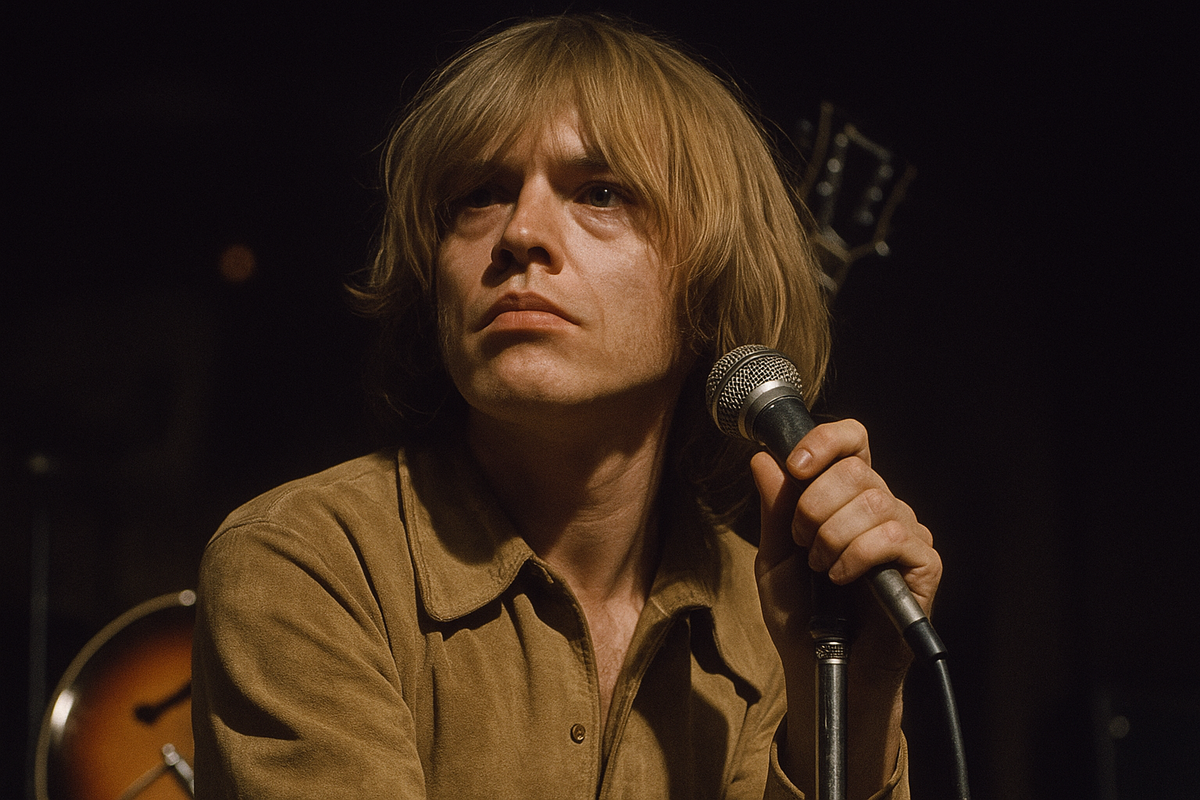
On a humid August morning in 1969, newsstand browsers reached for the latest Rolling Stone and froze. There, staring back from the cover in grainy black-and-white, was Brian Jones—microphone in hand, eyes luminous and lost. The masthead needed no explanation. Everyone already knew he was dead.
Twenty-seven years old. Drowned in his own swimming pool. The founding Stone, expelled from his own band just weeks earlier, found floating in the Sussex estate he'd bought in a better time. If Altamont would become the symbolic death of the sixties, Brian Jones was its first actual corpse—and Rolling Stone Magazine gave him the funeral he deserved.
The August 9, 1969 issue didn't just report a death. It documented the exact moment rock and roll stopped being fun.
When Icons Became Mortal
The summer of 1969 sat at a terrible crossroads. Woodstock loomed three weeks away, promising transcendence through mud and music. Apollo 11 had just planted humanity on the moon. Yet Vietnam churned on, campus protests turned bloody, and now this: a founding member of the world's greatest rock band, dead before thirty, his body bloated with pills and alcohol.
Rolling Stone had been chronicling the counterculture for two years, but this was different. Brian Jones wasn't a political martyr or a war casualty. He was destroyed by the very lifestyle the magazine celebrated—drugs, fame, artistic obsession, the belief that talent exempted you from consequence.
The coroner's report was clinical: "drowning by immersion in fresh water, associated with severe liver dysfunction and intoxication." Rolling Stone printed it without flinching. No euphemisms. No romantic spin. Just the blunt mechanics of how a 27-year-old genius stops breathing.
Archive Details
Historical Figure: Brian Jones, Founding Member of The Rolling Stones
Issue Date: August 9, 1969
Archive Source: Rolling Stone Magazine
Historical Context: First major rock obituary, three weeks before Woodstock, beginning of the "27 Club" phenomenon
The Architect of the Stones' Golden Sound
What made Jones's death more than tragic was what died with him. This wasn't some tragic hanger-on or burnt-out has-been. Brian Jones founded the Rolling Stones in 1962, recruiting Mick Jagger and Keith Richards to join his vision of an authentic British blues band. While Jagger became the face and Richards the riff-maker, Jones was the sonic alchemist.
Sitar on "Paint It Black." Dulcimer on "Lady Jane." Marimba on "Under My Thumb." The Mellotron's ghostly sweep on "She's a Rainbow." Rolling Stone's feature catalogued his instrumental omnivore's appetite, reminding readers that the Stones' mid-sixties masterpieces—Aftermath, Between the Buttons, Their Satanic Majesties Request—bore Jones's fingerprints on every track.
By 1969, though, he'd become a liability. Legal troubles, erratic behavior, and his crumbling relationship with Jagger and Richards pushed him to the margins. The Stones announced his departure on June 9. On July 3, he was dead.
A Magazine That Understood the Assignment
Rolling Stone's coverage succeeded because it refused to choose between reverence and honesty. The August 9 issue didn't canonize Jones or condemn him. It did something harder: it made him human.
The magazine recounted his trajectory from blues-obsessed schoolboy expelled for "being a menace" to the bohemian ringleader who willed the Stones into existence. It acknowledged his gifts—his ear for texture, his fearless eclecticism—while documenting his self-immolation through drugs, paranoia, and isolation.
Most powerfully, Rolling Stone captured the Hyde Park concert held two days after Jones's death, where more than 20,000 fans gathered as Mick Jagger read from Shelley's Adonais—an elegy for a dead poet—and released thousands of white butterflies into the London sky. Some flew. Some didn't. The symbolism needed no explanation.
This was music journalism operating at the level of literature. Rolling Stone understood that Brian Jones's death wasn't celebrity gossip. It was a generation confronting its own fragility.
The First of the 27s
Though the term "27 Club" wouldn't emerge for years, Jones inaugurated rock's most morbid tradition. Within two years, Jimi Hendrix, Janis Joplin, and Jim Morrison would all die at twenty-seven, cementing the age as a dark milestone in popular culture.
Rolling Stone's August 9 issue captured something prophetic: the sense that rock stardom had become unsustainable, that the drugs and chaos and pressure were no longer romantic accessories but actual killers. The magazine's sober tone suggested its editors already suspected more bodies would follow.
They were right.
What the August 9, 1969 Issue Captured
Founding Vision
Jones created the Rolling Stones in 1962, assembling the band that would define rock rebellion for generations.
Musical Innovation
His mastery of sitar, dulcimer, marimba, and exotic instruments gave the Stones their signature sixties sound.
Hyde Park Memorial
Jagger's poetry reading and butterfly release became one of rock's most iconic funeral moments.
Generational Reckoning
The issue forced readers to confront the dark underside of the counterculture dream.
Cultural Journalism
Rolling Stone elevated music coverage to the level of serious literature and cultural criticism.
The 27 Prophecy
Jones's death at 27 foreshadowed a tragic pattern that would claim Hendrix, Joplin, and Morrison.
Why Collectors Prize This Issue
Historical Watershed
Documents the death of a founding Stone and the moment rock confronted its own mortality—a genuine turning point in music history.
Iconic Cover Image
The stark black-and-white portrait of Jones—haunting, ethereal, instantly recognizable—makes this issue visually unforgettable.
Cultural Inflection Point
Captures the Stones at their pivot from experimental sixties band to the darker, harder-edged group that would define the seventies.
Condition Rarity
Clean copies with intact covers and minimal yellowing are increasingly scarce, driving premium valuations in the collector market.
Cross-Market Appeal
Desired by Stones completists, sixties historians, music memorabilia collectors, and scholars of counterculture—a rare intersection of audiences.
Primary Source Value
Not a retrospective but a real-time document—journalism written weeks after Jones's death, capturing the raw shock of the moment.
The Magazine That Mattered
The August 9, 1969 issue demonstrates why Rolling Stone became indispensable. While mainstream outlets treated rock as disposable teen fodder, Rolling Stone granted it the analytical seriousness of politics or literature. The Jones coverage combined eyewitness reporting, cultural criticism, and biographical depth, creating a historical record that still holds up five decades later.
No other publication could have done it. Not Life, which would have turned it into maudlin spectacle. Not Time, which would have moralized. Rolling Stone threaded the needle—mourning Jones while refusing to ignore what killed him.
Coda
Brian Jones drowned on July 3, 1969. The Stones played Hyde Park on July 5. Rolling Stone published its tribute on August 9. By then, the butterflies had long since flown away or died, and Mick Jagger was already in the studio recording "Gimme Shelter"—a song about apocalypse that would define the band's post-Jones future.
The August 9 issue sits at that hinge point in history: between the dream and the hangover, between innocence and experience, between the sixties that promised peace and the seventies that delivered cynicism.
For collectors, historians, and obsessives, this magazine is more than paper and ink. It's the moment rock and roll looked in the mirror and saw mortality staring back.
Own a Piece of Rock History
The August 9, 1969 issue of Rolling Stone Magazine remains essential for anyone serious about rock history. These aren't just old magazines—they're eyewitness testimony to the moments that built modern culture.
Browse Rolling Stone Magazine Collection