
Broadway's Bold Step: Pearl Bailey, Cab Calloway, and the All-Black Triumph of Hello, Dolly! in 1967
How Jet Magazine documented the night Broadway belonged to Black excellence
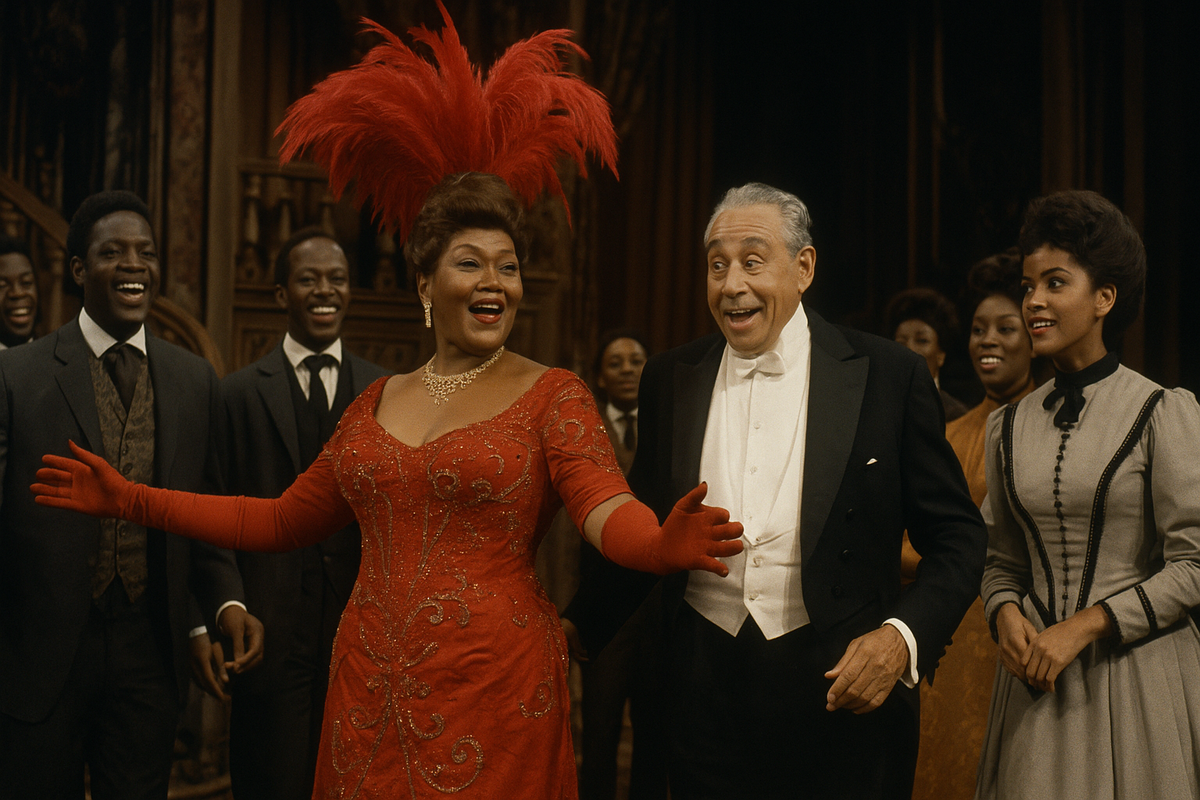
The theaters were sold out. Audiences lined the block. And inside, something unprecedented was unfolding: an all-Black cast commanding Broadway's most coveted real estate, not as a novelty act or a social experiment, but as the hottest ticket in New York. When Pearl Bailey swept onto the stage as Dolly Gallagher Levi in November 1967, with Cab Calloway at her side, they didn't just perform Hello, Dolly!—they redefined what Broadway could be, and who it could belong to.
For readers of Jet Magazine's November 9, 1967 issue, this wasn't entertainment news. It was evidence.
Archive Details
Historical Figures: Pearl Bailey, Cab Calloway
Issue Date: November 9, 1967
Archive Source: Jet Magazine
Cultural Context: Civil Rights Movement, Broadway Integration
The Stakes Were Higher Than Applause
The year 1967 carried the weight of a nation at war with itself. The Civil Rights Act of 1964 had outlawed segregation. The Voting Rights Act of 1965 had secured African American enfranchisement. Yet that summer, Newark and Detroit burned. Police brutality, systemic poverty, and broken promises ignited urban uprisings that exposed how far America still had to go.
Against this backdrop, Pearl Bailey—already celebrated for her warm, comedic singing style—stepped into a role originally made famous by Carol Channing. But Bailey wasn't imitating anyone. She was reclaiming space. Alongside her stood Cab Calloway, the legendary bandleader whose electrifying performances had packed Harlem's Cotton Club since the 1930s. Together, they transformed a Broadway institution into a declaration of Black excellence.
This was more than casting. It was a statement.
As Jet documented, the all-Negro production opened at Washington's National Theatre before conquering Broadway, selling out every performance and smashing box office records. For African Americans watching from the audience—or reading about it in Jet—this wasn't just theater. It was vindication. In an era when Hollywood still trapped Black actors in stereotypical roles, seeing an all-Black cast celebrated for artistry, not tokenism, carried revolutionary force.
Jet Captured What Mainstream Media Ignored
By 1967, Jet Magazine had established itself as the authoritative chronicle of African American life. Where mainstream outlets offered sporadic, stereotype-laden coverage of Black entertainers, Jet provided comprehensive documentation. The magazine understood what was at stake: cultural victories mattered as much as legislative ones.
In the November 9, 1967 issue, Jet didn't simply announce Bailey's casting. The magazine captured the electric atmosphere—sold-out shows, audiences breaking into spontaneous ovations, critics marveling that Bailey's performance rivaled any Dolly before her. Jet described matinee performances packed with "little old ladies and smart-looking housewives," and reported that excitement reached such intensity that theatergoers would "pay just to stand and watch" when seats sold out.
This level of detail mattered. Jet positioned Black theater triumphs alongside civil rights marches, musical milestones, and political debates. The magazine's coverage reminded readers that the Black freedom struggle extended beyond legislation—it demanded visibility, cultural pride, and access to spaces historically denied.
The Visual Record: Photography as Historical Testimony
Jet's iconic pocket-sized format and bold, photo-driven covers made history portable. On November 9, 1967, when Bailey and Calloway appeared on newsstands across America, the magazine announced that something extraordinary was happening—and that Black audiences stood at its center.
Inside, the photographs functioned as more than documentation:
Pearl Bailey
In her grand entrance, commanding the stage with humor and song
Cab Calloway
Debonair and magnetic, bringing his trademark charisma to every scene
Supporting Cast
Jack Crowder, Emily Yancy, and Chris Calloway (Cab's daughter), proving the production's depth of talent
Cultural Impact
Images that proved Broadway could belong to Black performers and that African American artistry surpassed mainstream productions
For Jet's readers, these images carried evidentiary weight. They proved Broadway could belong to Black performers. They demonstrated that African American artistry didn't just compete with mainstream productions—it surpassed them.
This fusion of photography, journalism, and cultural commentary made Jet indispensable. The magazine didn't just report on Black achievement. It created an archive of pride.
The Numbers Tell Their Own Story
Within weeks of opening, Bailey's Hello, Dolly! was grossing over $90,000 per week—extraordinary figures for any Broadway production. Critics noted that Bailey played Dolly as though the role had been written for her, bringing warmth, comic timing, and improvisational brilliance that made each performance feel spontaneous.
For Cab Calloway, the production marked a triumphant Broadway return. His performance as Horace Vandergelder perfectly complemented Bailey's Dolly, reminding audiences why he had dominated American entertainment for decades.
But the production's significance transcended individual performances. The entire ensemble was Black—a groundbreaking decision that challenged Broadway's unspoken rules. As Jet emphasized, this wasn't a gimmick or a curiosity. It was legitimate artistic triumph, judged on the same terms as any Broadway production and exceeding every expectation.
Theater managers reported unprecedented demand. Audiences of all races came, applauded, and returned. The production proved what should have been obvious: talent has no color, but opportunity too often does.
Why Collectors Prize This Issue
For serious collectors of vintage Jet magazines, the November 9, 1967 edition stands out for multiple reasons:
Historical Convergence
Published at the height of the Civil Rights Movement, this issue captured a cultural breakthrough in real time. It documented one of those rare moments when progress became visible, tangible, undeniable.
Cultural Rarity
This recorded one of the few instances when an all-Black Broadway cast didn't just exist as a footnote—it dominated. Bailey's Dolly became the production everyone wanted to see.
Celebrity Significance
Featuring legends like Pearl Bailey and Cab Calloway makes this issue essential for collectors of theater history, jazz history, and African American cultural achievement.
Archival Quality
Jet's documentation remains one of the clearest, most comprehensive records of the production's early success. The magazine captured details that newspapers overlooked and that time has otherwise erased.
Owning this issue means holding an artifact from the night Broadway acknowledged what Black artists had always known: they belonged on every stage.
The Legacy Jet Preserved
Jet's Hello, Dolly! coverage endures because it understood something fundamental: the Black freedom struggle unfolded on multiple stages simultaneously—in courtrooms and streets, yes, but also in theaters where representation could shift public consciousness.
Today, when debates about Hollywood diversity and Broadway casting remain urgent, Bailey and Calloway's 1967 triumph offers instruction. It demonstrates how visibility transforms perception. It proves how talent, given a platform, silences prejudice. And it shows why Jet Magazine was irreplaceable—the magazine preserved victories that mainstream media ignored, ensuring future generations would inherit a complete historical record.
Pearl Bailey's Dolly wasn't a favor granted by progressive producers. It was excellence demanding recognition and receiving it. Jet made sure that story reached the people who needed to see it most.
Own a Piece of This History
If you're committed to preserving cultural history, this issue belongs in your collection. From the bold cover featuring Pearl Bailey and Cab Calloway to the detailed reporting inside, the November 9, 1967 Jet issue opens a window into a transformative moment.
Browse Jet Magazine CollectionWhether you're a theater historian, a civil rights scholar, or someone honoring family legacies, these magazines transcend memorabilia. They're time capsules—physical connections to 1967, when Broadway's lights shone on Black excellence and Jet captured every triumphant moment.
Final Word
The November 9, 1967 issue of Jet Magazine remains one of the most significant cultural records of its era. It captured the moment when Black artistry commanded Broadway, when audiences of every background stood to applaud, and when Jet gave its readers the images and words to claim that victory as their own.
To hold this issue today is to hold proof: proof that representation matters, that talent transcends barriers, and that some victories—once won on stage—echo for generations.
Broadway turned Black excellence into mainstream triumph that night. Jet Magazine made sure the world would remember.