
Bruce Lee, Hong Kong Cinema, and the Rise of Martial Arts in America
How Esquire's August 1973 issue captured the exact moment martial arts conquered the West—and immortalized Bruce Lee at the height of his powers
In August 1973, American newsstands carried a magazine that would become a relic of prophecy.
The issue of Esquire bore witness to a seismic shift—one that most readers wouldn't fully comprehend until years later. Martial arts had arrived in America, not as novelty but as inevitability, and Bruce Lee was its messenger. Within weeks of publication, Lee would be dead at thirty-two, transforming this feature into something rarer than journalism: a final portrait of a man becoming myth in real time.
The Cultural Fault Line of 1973
America in the early 1970s was a nation searching for new coordinates. The Vietnam War staggered toward its inglorious end. Watergate was dismantling faith in institutions. The old icons—cowboys, war heroes, square-jawed leading men—no longer held their charge.
Into this vacuum came something unexpected: martial arts.
Bruce Lee, born in San Francisco and raised in Hong Kong, had just completed Enter the Dragon—the first major Hollywood-Hong Kong co-production. The film would premiere on August 19, 1973, days after Esquire reached subscribers. Simultaneously, Hong Kong's Shaw Brothers studio was flooding American grindhouse theaters with dubbed kung fu films. Karate schools multiplied across suburban strip malls. Children mimicked flying kicks in backyards. A new language of power, discipline, and rebellion had entered the American vernacular.
Esquire recognized this transformation early and gave it the editorial treatment it deserved—not as fad, but as the leading edge of global culture reshaping itself.
Esquire at the Height of Its Powers
Historical Context
Cultural Figure: Bruce Lee (1940–1973)
Issue Date: August 1973
Feature Title: "The Hong Kong Style" by Alex Ben Block
Archive Source: Esquire Magazine
Historical Significance: Published weeks after Bruce Lee's death and days before Enter the Dragon premiered in U.S. theaters
By 1973, Esquire had spent four decades defining what an intelligent men's magazine could be. Its editors understood that culture wasn't reducible to politics or sports—it was the totality of what people consumed, believed, and became.
The August 1973 issue exemplified this vision through Alex Ben Block's feature, "The Hong Kong Style."
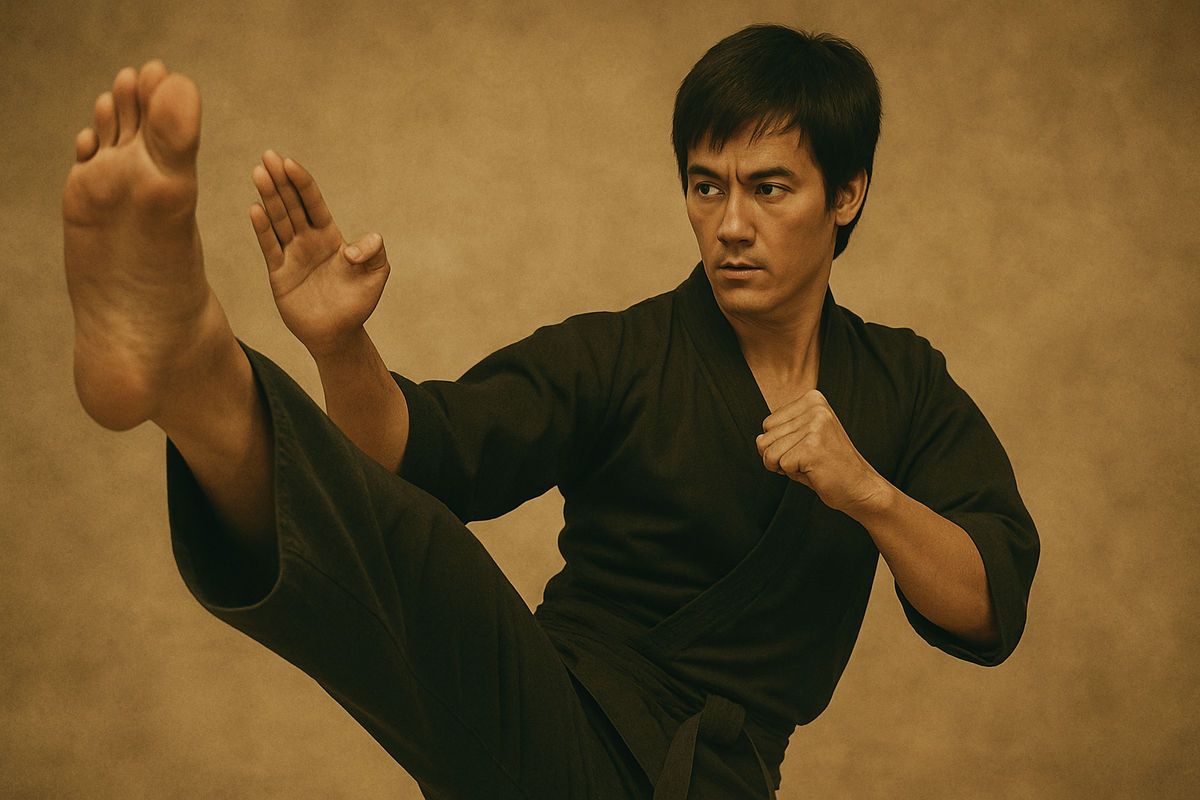
Bruce Lee in Full Power: A full-page portrait froze Lee mid-stance—shirtless, coiled, defiant. This wasn't celebrity photography; it was iconography. Lee appeared as both man and elemental force, the embodiment of discipline meeting explosive potential.
Block's Narrative: The article situated Lee within the machinery of both Hollywood and Hong Kong cinema. Block chronicled Lee's training, his battles against Hollywood's racist typecasting, and his strategic retreat to Hong Kong to build stardom on his own terms. One line cut to the heart of the moment: "Is not Warner Bros. ancient and wise? Is not Bruce Lee young and coming up fast?" The question framed Lee not as curiosity but as the future of global cinema.
The Hong Kong Comic Spread: Most audaciously, Esquire reproduced panels from a translated Hong Kong martial arts comic. American readers encountered a visual language utterly foreign to Marvel and DC—exaggerated fists, bloodied faces, kinetic action rendered in stark black and white. For many, this was their first exposure to Asian comic book artistry and its different grammar of violence and honor.
Together, these elements created immersion rather than mere information. Readers didn't just learn about martial arts—they felt its arrival.
What the Feature Revealed
Block's article and Esquire's editorial construction illuminated several converging forces:
The Afterlife of a Cultural Document
Like the great magazine features of the twentieth century, Esquire's martial arts coverage endures because it recognized transformation while transformation was still underway.
The article wasn't simply about movies or fighting techniques. It was about identity, globalization, and the hunger for new models of strength during a period of national uncertainty. Today, when martial arts films dominate global box office receipts and Bruce Lee remains a touchstone for athletes, filmmakers, and philosophers, this Esquire issue reads as prescient.
It showed Americans what was arriving—and got there first.
Why Collectors Seek This Issue
Access the Archive
Dozens of original Esquire magazines spanning the 1930s through the 1970s are available in our collection. These issues document style, politics, and culture as they unfolded—not as memory, but as lived experience.
Browse Esquire Magazine CollectionThe August 1973 issue of Esquire remains one of the magazine's defining cultural documents. Its coverage of Hong Kong martial arts and Bruce Lee's ascent wasn't entertainment reporting—it was recognition of a global shift in progress.
To hold this issue is to hold the precise moment when martial arts moved from Chinatown theaters to suburban multiplexes, when Bruce Lee passed from actor into archetype, and when Esquire demonstrated again why it mattered.
For anyone who values twentieth-century cultural history, vintage Esquire magazines aren't simply collectibles. They are witnesses—physical evidence of the revolutions that made the world we inhabit now.