
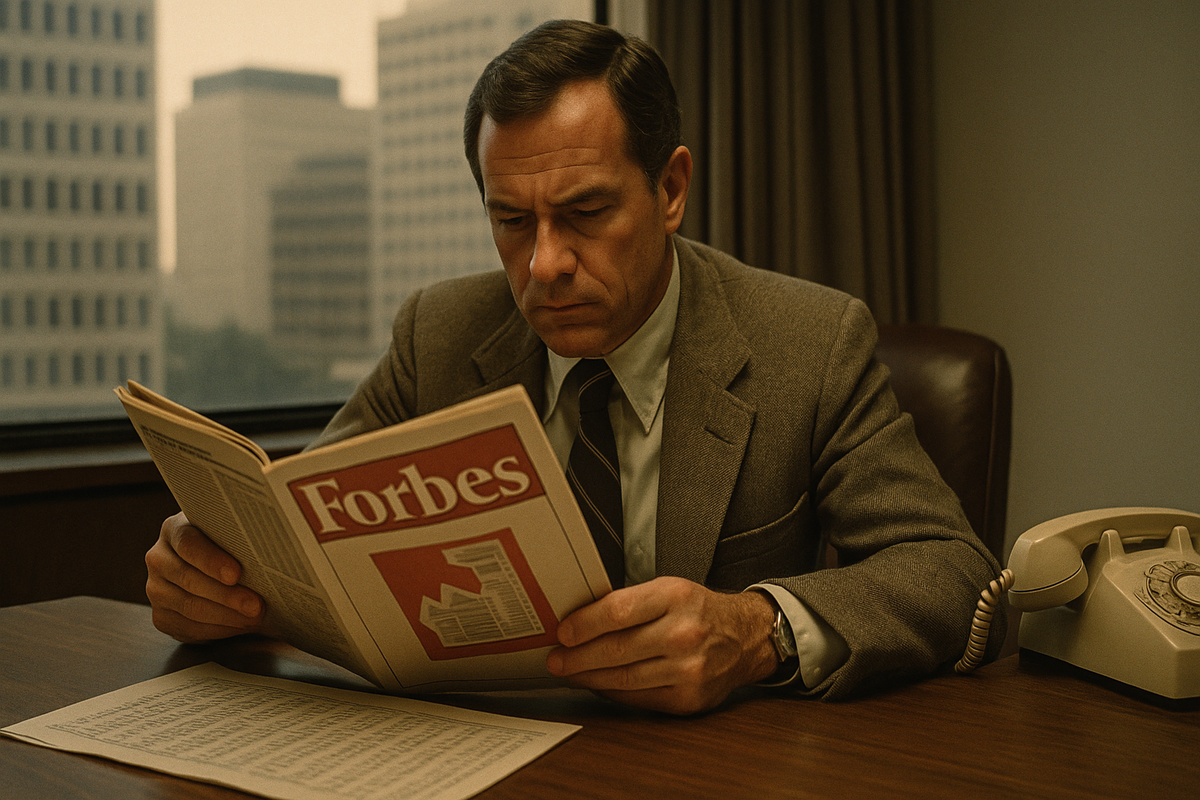
When Forbes Cracked the Code
The 1979 Article That Predicted Modern Investing
September 17, 1979. While most of Wall Street nursed wounds from a decade of oil shocks, stagflation, and broken promises, Forbes Magazine published something dangerous: a list of eighty companies that had quietly been compounding wealth at 20% returns—through the worst recession since the Depression.
The article was called "Compound Interest Machines." And it read like a treasure map.
For readers who followed its logic, the next decade would prove extraordinary. For those who dismissed it as contrarian noise in a bear market, it became the investment opportunity they'd spend the rest of their lives regretting. Today, this single issue stands as one of the most prophetic documents in American financial journalism—a snapshot of the exact moment when patient capital began its revenge against speculation.
Archive Details
Publication: Forbes Magazine
Issue Date: September 17, 1979
Feature Article: "Compound Interest Machines"
Historical Context: Published at the close of the 1970s economic crisis, just before the Reagan-era expansion
The Decade That Broke America's Faith in Growth
The 1970s didn't just test investors—it broke them. The oil embargo of 1973 sent shockwaves through every industry. The 1974–75 recession wiped out portfolios. Stagflation—that toxic marriage of high inflation and economic stagnation—became the new normal. Bonds looked safer. Real estate felt smarter. Stocks? They were for suckers.
Yet beneath the wreckage, eighty companies had done something remarkable: they'd survived. More than that, they'd thrived, averaging returns on equity of 20% or higher for five consecutive years, recession included.
This wasn't luck. This was something else entirely.
The late 1970s also marked a pivot in global power. Japanese automakers were dismantling Detroit's dominance. American industries faced foreign competition for the first time in a generation. Technology companies—still embryonic—were beginning to sketch the architecture of the digital age. In this climate of anxiety and reinvention, Forbes delivered a radical thesis: the math hadn't changed. Compounding still worked. The businesses that understood this would define the next era of American wealth.
What Forbes Understood—And Why It Mattered
Forbes wasn't a daily newspaper chasing headlines. It was a manual for thinking. The magazine's mission had always been to arm its readers with frameworks, not just facts. "Compound Interest Machines" exemplified this philosophy with surgical precision.
The article accomplished three things that separated it from typical market commentary:
It made the math undeniable. A company earning 20% ROE could double an investor's money in four years. Sixfold in ten. Fortyfold in twenty. Forbes laid this out in plain arithmetic—no jargon, no mysticism. Just compounding at work.
It contextualized the fear. These weren't hypothetical returns cherry-picked from boom years. Every company on the list had weathered 1974–75, the most brutal economic downturn since World War II. Their profitability wasn't a fluke—it was structural.
It challenged the consensus. While the broader market had soured on growth stocks, Forbes identified what it called "secondary" companies—overlooked firms with pristine fundamentals trading at bargain multiples. Many had price-to-earnings ratios below 10. The crowd had given up on them. Forbes had not.
This was vintage Forbes: contrarian, rigorous, and ruthlessly data-driven.
A Magazine Built for Authority
If you've never held a 1979 Forbes in your hands, the physical object itself tells a story. The cover design was bold and businesslike—sharp typography, symbolic illustrations of wealth and power. No lifestyle fluff. No celebrity gossip. Just the unvarnished machinery of capitalism.
Inside, the layout commanded respect: dense columns of analysis, tables packed with earnings data, dividend yields, price histories. Where other magazines leaned on photography and white space, Forbes doubled down on information density. Every page carried weight.
"Compound Interest Machines" wasn't built on anecdotes or interviews. It was built on numbers—hard, verifiable, unforgiving numbers. For readers in 1979, this combination of clarity and authority made Forbes indispensable. It wasn't entertainment. It was an operating manual for the American economy.
The Five Lessons Hidden in Plain Sight
Decades later, the core insights from "Compound Interest Machines" still hold. Here's what Forbes understood in 1979 that most investors didn't:
The Compounders List
Eighty companies—Tandy (Radio Shack), Levi Strauss, Super Valu Stores, Albertson's among them—had averaged at least 20% return on equity for five straight years. Some of these names would dominate the 1980s. Others would disappear. But in 1979, they shared one trait: disciplined capital allocation.
Resilience as Signal
Every company on the list had survived the 1974–75 recession while maintaining profitability. This wasn't growth in easy times—it was durability under pressure.
The Undervalued Opportunity
Many of these businesses traded at P/E ratios under 10, a fraction of what "glamour stocks" once commanded. The market had mispriced quality for pessimism.
Reinvestment Over Distribution
The most powerful compounders didn't just generate profits—they reinvested them. Instead of paying everything out as dividends, they plowed earnings back into expansion, R&D, and market share. This created exponential growth.
The Arithmetic of Patience
Forbes illustrated the thesis with brutal simplicity. A $5 stock earning 20% ROE could grow to $20 in five years, plus dividends. The math didn't require genius. It required discipline.
Together, these insights painted a picture of what real investing looked like: not chasing momentum, not timing markets, but owning businesses that quietly multiplied value year after year.
The LIFE Magazine Parallel
Just as LIFE Magazine brought the battlefield into American living rooms with its war photography, Forbes brought the marketplace onto American desks. Its blend of reporting, data, and strategic analysis gave readers the confidence to act.
In 1979, Forbes didn't just describe the market—it shaped how people understood it. By spotlighting compounders at the precise moment of maximum doubt, the magazine reinforced a principle that echoes through every investing classic written since: compounding is the most powerful force in finance. Everything else is noise.
Why This Issue Became a Collector's Grail
Historic Timing
Published at the tail end of America's most disillusioning economic decade, just before the Reagan-era expansion and the greatest bull market in modern history. It sits at the hinge point of financial history.
Iconic Content
"Compound Interest Machines" reads like prophecy today, particularly in the age of Warren Buffett and long-term value investing. The principles Forbes outlined are now orthodoxy. In 1979, they were heresy.
Data Snapshot
The tables of eighty companies function as a time capsule. Some names—like Albertson's—endured for decades. Others vanished in mergers or bankruptcies. For historians and collectors, these lists tell the story of American industry in transition.
Cultural Artifact
To own this issue is to hold the same pages that investors, CEOs, and financial advisors studied in real time as they positioned themselves for the coming decade. It's not just a magazine—it's a primary source.
Enduring Demand
Business and finance periodicals from milestone years, especially those containing market wisdom that has proven correct, command premium prices among collectors today. This issue checks every box.
For Collectors: A Gateway to Business History
If the September 17, 1979 issue resonates with you, it's worth knowing that vintage Forbes magazines represent some of the most rewarding territory for collectors of business history. They trace the rise and fall of industries, capture the intellectual frameworks of past generations, and preserve the voices that shaped modern economic thought.
Explore Forbes Magazine CollectionFrom the 1920s through the late 20th century, you can follow decades of entrepreneurship, leadership, and global commerce as they were first reported—unfiltered, unrevised, and invaluable.
The Turning Point
The September 17, 1979 issue of Forbes Magazine was more than a business periodical. With "Compound Interest Machines," it showed Americans that even in times of inflation, uncertainty, and collective despair, companies with steady profitability and reinvestment discipline could create extraordinary wealth.
Holding this issue today is holding a turning point—the moment when Forbes gave its readers a lesson that still defines investing forty-five years later: compounders are timeless.
For collectors, historians, and anyone who values financial wisdom, this magazine is not old newsprint. It is a living artifact—proof that the best ideas never expire.