
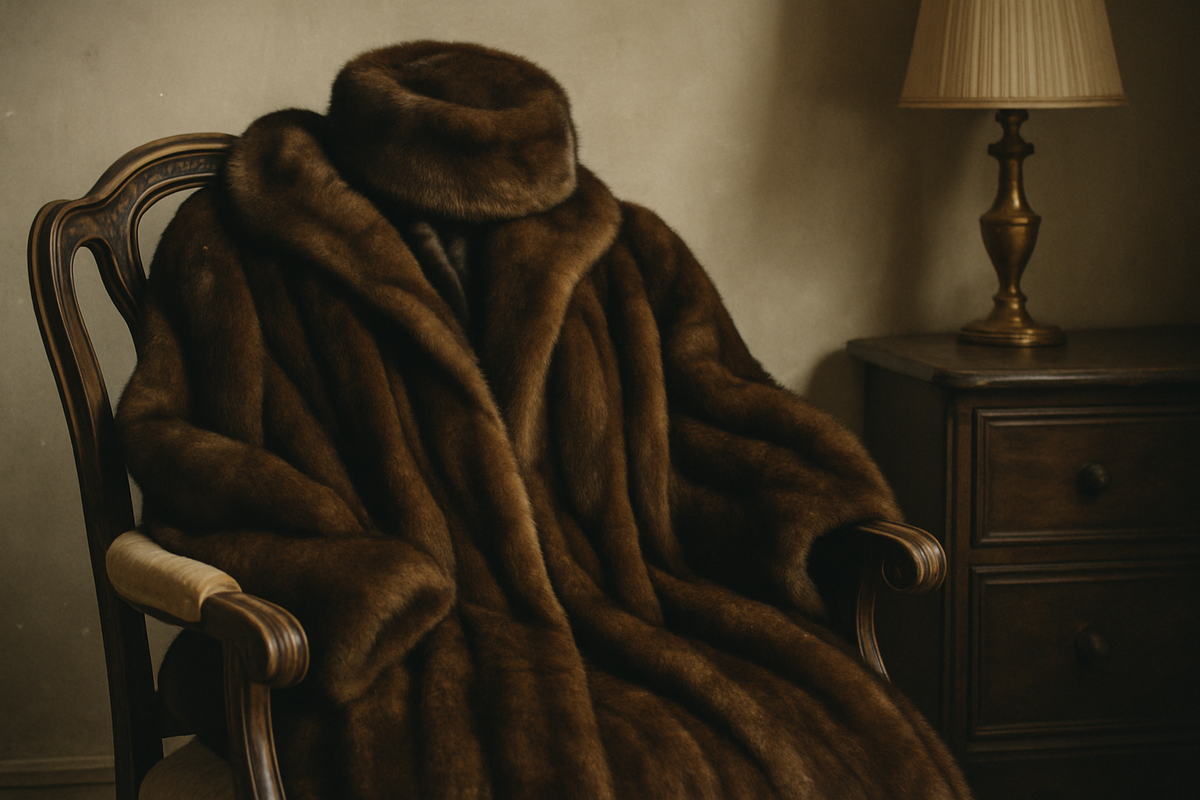
The $10,000 Mink Coat and the Price of Dignity
Inside Jet Magazine's Most Audacious Feature
When Mrs. Ray Robinson stepped onto the cover of Jet Magazine's November 1, 1951 issue, wrapped in ten thousand dollars worth of mink, she wasn't modeling a coat. She was modeling possibility itself.
Inside those pocket-sized pages—sold for fifteen cents at newsstands across Black America—sat one of the most subversive pieces of fashion journalism the 1950s would produce: "10 Ways to Get a Mink Coat." Part satire, part survival guide, the feature used luxury fur as a lens to examine everything the mainstream press refused to acknowledge about African American women's lives—their economic ingenuity, their constrained choices, their refusal to accept invisibility.
This wasn't Vogue's breathless coverage of Park Avenue socialites. This was something sharper, stranger, and infinitely more revealing about mid-century America.
The Currency of Mink
In 1951, a mink coat represented more than warmth or fashion. It was wearable proof of economic arrival in a country determined to deny Black citizens access to that very economy.
Consider the mathematics of aspiration: while the average American household earned roughly $3,700 annually, a quality mink coat commanded anywhere from $10,000 to $30,000. For African American women navigating Jim Crow's economic landscape—locked out of high-wage professions, barred from many department stores, subjected to humiliating "inspection" when they did gain entry—such a purchase wasn't frivolous. It was radical.
Jet Magazine, launched mere months earlier by publishing visionary John H. Johnson, understood this alchemy. The magazine's genius lay in treating Black life as worthy of the same glossy attention white publications lavished on their subjects. Where Life documented suburbia's expansion and Harper's Bazaar chronicled haute couture, Jet chronicled something more essential: how a community carved out dignity in a hostile nation.
The mink coat feature crystallized this mission. Outerwear became metaphor. Fashion became resistance.
Issue Archive Details
Publication: Jet Magazine
Issue Date: November 1, 1951
Cover Feature: Mrs. Ray Robinson in $10,000 Mink Coat
Historical Context: First year of Jet publication; postwar economic expansion; height of Jim Crow segregation
Featured Voice: Thelma Carpenter, singer and independent purchaser
Ten Routes to Respectability
The article's framework was deceptively simple: ten methods for acquiring the ultimate status symbol. But the list itself—oscillating between pragmatic advice and razor-sharp satire—revealed the impossible calculus facing Black women in postwar America:
Save your pennies and buy one.
Marry a rich man.
Catch your husband cheating and use it as leverage—"get a mink."
Win one at a raffle or ballgame.
"Blackmail" the right man in the wrong way.
Raise mink on a farm.
Buy one secondhand.
Receive an inheritance.
Collect insurance if your husband dies.
Buy on the installment plan.
Read superficially, it's cheeky lifestyle content. Read closely, it's an indictment. The list acknowledges that legitimate economic pathways remained largely closed—so women improvised, leveraged, strategized, and occasionally transgressed to claim what prosperity owed them.
Yet Jet refused to present Black women solely as victims of circumstance. Enter Thelma Carpenter, the singer whose testimony anchored the piece in self-determination. Carpenter explained she acquired her coat the "hard way"—saving, paying, working for it herself. No husband required. No leverage games. Just labor, discipline, and the satisfaction of self-made success.
Her voice provided the article's moral center: yes, the path was rigged, but Black women walked it anyway, on their own terms.
The Magazine That Fit in Your Pocket—And Changed Everything
Jet's physical form was itself revolutionary. At digest size, it slipped into purses, jacket pockets, and glove compartments. It traveled through barbershops and beauty parlors, passed hand-to-hand in church basements and kitchen tables. Its portability made it communal—shared, discussed, debated.
John H. Johnson engineered this accessibility deliberately. Where Crisis and Ebony (his own earlier creation) served as substantial monthly chronicles, Jet operated as a weekly pulse—immediate, responsive, intimate. It covered Emmett Till's murder with unflinching photography and profiled Lena Horne's latest film role with equal gravity. It understood that Black life contained multitudes, that dignity meant claiming space for both tragedy and glamour.
The mink coat feature exemplified this editorial philosophy. Jet treated fashion not as escapism but as cultural commentary, a way to examine gender dynamics, economic barriers, and community values through the prism of a single coveted garment.
Sugar Ray Robinson's Wife and the Theater of Luxury
Mrs. Ray Robinson's cover appearance was strategic casting. Her husband, the legendary welterweight champion, represented Black excellence in the most visible arena postwar America offered—professional sports. His $10,000 gift to his wife translated athletic dominance into domestic generosity, individual achievement into family prosperity.
The coat draped over Mrs. Robinson carried symbolic weight far exceeding its physical warmth. It announced: We have arrived. We claim this luxury. You cannot deny us.
For Jet's readers, many struggling to afford basics in segregated cities, that image functioned as aspiration and affirmation. If Mrs. Robinson could wear $10,000 on her shoulders, perhaps their own ambitions—however modest or grand—weren't delusional. Perhaps the barriers were temporary.
Jet article noted that mink had become democratized by the 1950s, no longer exclusive to white socialites. Through savings plans, credit arrangements, and sheer determination, working-class women could access what previous generations considered impossibly remote. This wasn't quite accurate—true democratization remained distant—but the magazine's optimism reflected something real: Black Americans' determination to participate in postwar prosperity, invitation or not.
Key Themes in the Feature
The Symbolism of Mink
Mink was described as the ultimate fur, surpassing others like sable or chinchilla in terms of beauty and prestige. It was what "every woman wants"—and what husbands and boyfriends were expected to provide.
The Price of Luxury
The article noted that a mink coat could cost as much as $30,000, a staggering sum in 1951. Sugar Ray Robinson's gift to his wife underscored just how much such garments symbolized wealth.
Humor as Social Commentary
By listing outrageous ways to get a coat (like blackmail or catching a cheating husband), Jet used satire to highlight women's limited options in a patriarchal and racially segregated society.
Female Voices
The inclusion of Thelma Carpenter's voice signaled that many Black women were determined to earn luxuries themselves, not just wait for them to be bestowed by men.
The Artifact Speaks
Great magazines function as time machines. They transport readers not just to historical events but to the concerns, jokes, and dreams that animated daily life.
The mink coat feature endures because it refuses simple interpretation. Yes, it's humorous—those tongue-in-cheek suggestions about blackmail and leveraging infidelity still land. Yes, it's aspirational—the gleaming coat promises elevation. But it's also melancholic, acknowledging the narrow corridors through which Black women navigated toward economic security.
Thelma Carpenter's voice—proud, self-made, refusing victimhood—provides the essential counterpoint. She bought her coat "the hard way" because that's what self-respect demanded. Her testimony elevates the article from satire to something more complex: a meditation on agency within constraint.
Modern readers encounter this issue and discover their assumptions challenged. The 1950s weren't monolithic. Black America wasn't waiting passively for civil rights legislation to grant permission for ambition. Communities were building, striving, succeeding, and documenting their own stories—often with more sophistication than mainstream culture credited.
Why Collectors Prize This Issue
Founding-Year Rarity
Published in Jet's inaugural year, early issues survive in limited quantities. The magazine's pocket size made it portable but vulnerable—easily lost, discarded, or damaged through repeated handling.
Cultural Documentation
This issue captures the African American experience with unusual specificity. It preserves not just events but attitudes, humor, aspirations—the emotional texture of a moment.
Celebrity Intersection
The Robinson connection links fashion history to sports history, creating multiple points of collector interest.
Condition Scarcity
Well-preserved copies grow scarcer annually. The magazine's newsprint composition and small format mean deterioration strikes rapidly.
Holding History
Collecting vintage Jet magazines means preserving a specific kind of cultural memory—one mainstream archives often neglected. These publications documented Black excellence, struggle, style, and complexity when few others bothered.
The November 1, 1951 issue stands as a particularly rich artifact. In sixteen pocket-sized pages, it captured aspiration and irony, celebrity and everyday life, humor and hard truth. Mrs. Ray Robinson's $10,000 mink wasn't just a coat. It was a statement, a symbol, a starting point for conversations about who deserved luxury and how they might claim it.
For those interested in African American cultural history, mid-century fashion, or the golden age of Black print journalism, this issue belongs in your collection.
Explore the Archive
Whether you're a seasoned collector, a cultural historian, or someone preserving family heritage, these magazines offer something rare: direct access to how a community saw itself, spoke to itself, and carved out space for its own stories in an America that tried to make it invisible.
Browse Jet Magazine CollectionThe mink coat may have symbolized arrival. But the magazine that documented it? That symbolized something bigger—the insistence on being seen, remembered, and taken seriously. That insistence echoes still.