
The Night America Discovered the Sacred Mushroom
How Life Magazine's May 13, 1957 Issue Introduced Psychedelics to Mainstream America
On May 13, 1957, millions of Americans sat down to breakfast with their weekly Life Magazine—and found themselves staring into the eyes of a Mexican curandera holding fungi that could unlock visions of God.
They had no idea what they were looking at.
The article was titled "Seeking the Magic Mushroom." The author was R. Gordon Wasson, a vice president at J.P. Morgan, who had done something no American banker had ever confessed to in print: he had traveled deep into the mountains of Oaxaca, entered a candlelit adobe hut, and consumed sacred mushrooms under the guidance of a Mazatec healer named María Sabina.
What followed was not a travel story. It was a detonation.
For the first time in American history, a mainstream publication presented psychedelic mushrooms not as poison, not as folklore, but as sacrament—ancient, Indigenous, and profoundly serious.
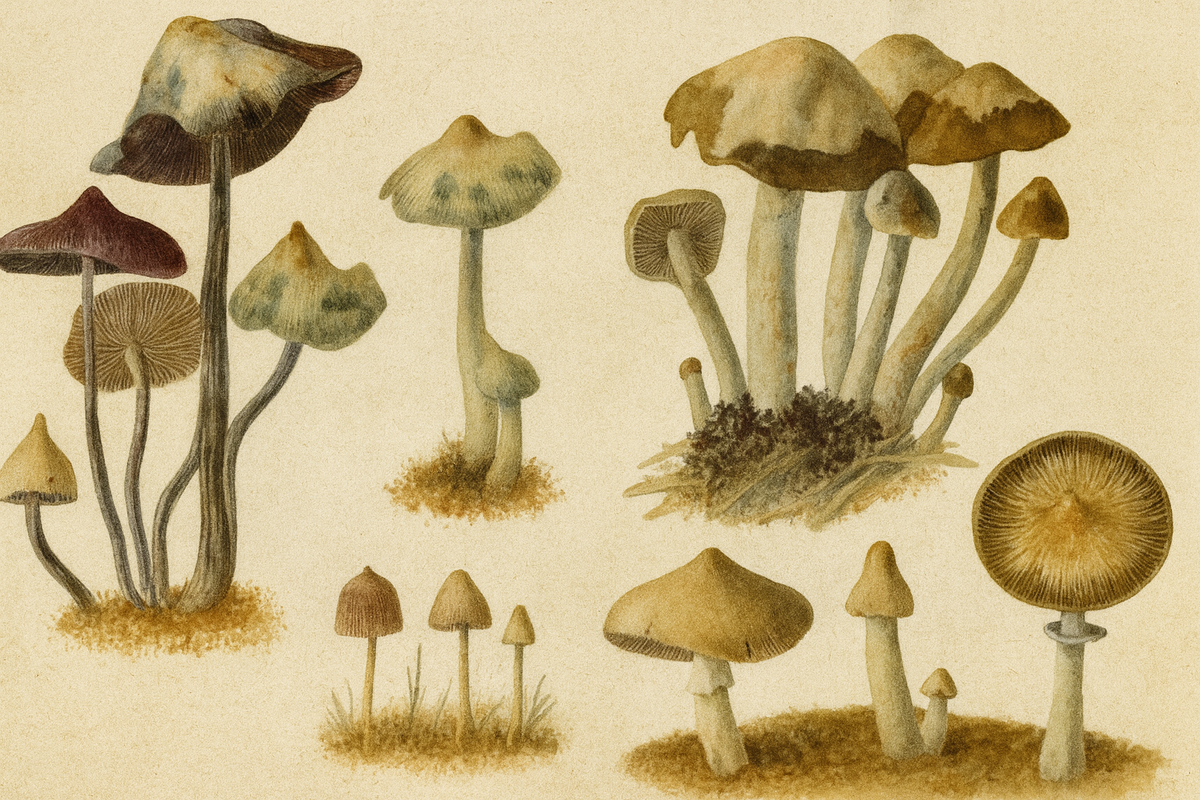
Life didn't bury the story in the back pages. It gave Wasson sixteen pages, full-color photographs, and watercolor botanical illustrations of species most scientists didn't know existed. The magazine bet that Middle America could handle the truth: there were plants on Earth that dissolved the boundary between the self and the sacred, and human beings had been using them in ceremony for thousands of years.
The bet paid off. Within a decade, psilocybin would be in Harvard laboratories, Timothy Leary's research programs, and the hands of a generation that would reshape American culture. But it all began here—in the May 13, 1957 issue of Life.
Historical Archive Details
Publication: Life Magazine
Issue Date: May 13, 1957
Featured Article: "Seeking the Magic Mushroom" by R. Gordon Wasson
Historical Figure: María Sabina, Mazatec curandera
Author: R. Gordon Wasson, Vice President at J.P. Morgan and mycologist
Archive Significance: First mainstream American introduction to psilocybin mushrooms
When the Hidden Became Visible
The late 1950s were an era of Cold War anxiety, suburban conformity, and a scientific establishment obsessed with mapping the mysteries of the human mind. Psychoanalysis dominated psychiatry. Behaviorism ruled psychology. The idea that a mushroom could reveal truths beyond the reach of reason was, to most Americans, lunacy.
Yet here was Wasson—a Wall Street banker, a mycologist, a scholar of ancient languages—describing an experience that shattered every assumption.
He wrote of visions with "the immediacy of bodily sensation." Geometric patterns that pulsed with life. Landscapes dissolving into rivers of light. Archetypal figures draped in luminous robes. Voices speaking truths that bypassed language entirely.
He was not alone in the ceremony. María Sabina chanted in Mazatec, her voice rising and falling like a current. Incense smoke curled through the darkness. Other participants lay on woven mats, their faces slack with awe. Even children rested quietly in the same room—observers in a ritual that belonged to the entire community, not just the adults who consumed the fungi.
Wasson made no attempt to rationalize what he had seen. He simply reported it, with the precision of a banker and the reverence of a pilgrim.
The Photographs That Changed Everything
Life Magazine was the most powerful visual medium in America. Its photographers didn't just document—they revealed. And in this issue, they did something unprecedented: they made the invisible visible.
The photo essay included:
These were not illustrations. They were evidence. For readers who might have dismissed Wasson's account as fantasy, the photographs said: This is real. These people exist. This knowledge has been here all along.
No American magazine had ever treated Indigenous sacred practices with this level of seriousness. Life didn't present the ceremony as superstition or spectacle. It presented it as truth—one that the modern world had forgotten, and that the Mazatec people had preserved.
What Made This Article Radical
Wasson didn't write like a tourist. He wrote like a scholar who understood he was witnessing something older than Christianity, older than Western philosophy. He traced the use of sacred mushrooms across continents and millennia:
Siberian shamans consuming Amanita muscaria in snowbound rituals
Aztec priests eating teonanácatl—"God's flesh"—in ceremonies that Spanish conquistadors tried to eradicate
Ancient Greek Mysteries at Eleusis, where initiates drank a potion that may have contained ergot fungi
Vedic hymns to Soma, the divine plant whose identity scholars still debate
He was making an argument: that humanity's religious impulse might not come from revelation alone, but from direct experience facilitated by plants. That the visions described by mystics across cultures might have a biochemical origin. That Indigenous peoples had developed technologies of consciousness long before laboratory science existed.
This was not the language of the counterculture. This was the language of anthropology, comparative religion, and rigorous inquiry. Wasson was no hippie prophet—he was a 58-year-old banker with a Harvard education and friendships with poets like Robert Graves. His credibility made the story impossible to dismiss.
The Scientific Aftermath
Life's article did more than inform—it activated.
Within months, Harvard psychologist Timothy Leary read the piece and traveled to Mexico to try the mushrooms himself. He returned transformed and launched the Harvard Psilocybin Project, which would make him the most famous (and infamous) advocate of psychedelics in America.
French mycologist Roger Heim, working with Wasson's specimens, identified and classified several new species. Swiss chemist Albert Hofmann—who had already synthesized LSD—isolated psilocybin and psilocin, the active compounds in the mushrooms, making them available for controlled research.
By the early 1960s, psilocybin was being studied in clinical settings for its potential to treat alcoholism, depression, and existential anxiety in terminal patients. The research showed promise—until the political backlash against psychedelics shut down most legal studies by the end of the decade.
But the knowledge didn't disappear. It went underground, preserved by communities of researchers, therapists, and seekers who understood what Wasson had understood: that these mushrooms were not recreational drugs, but tools for exploring consciousness.
Today, as psilocybin therapy re-enters mainstream psychiatry, researchers cite Wasson's 1957 article as the beginning of the modern psychedelic era. The May 13 issue of Life is not just history—it's the origin story.
Why Collectors Seek This Issue
A Document That Transcends Its Era
The May 13, 1957 Life Magazine did something rare: it respected its subject without condescension, documented the extraordinary without sensationalism, and introduced a revolutionary idea without demanding that readers accept it.
Wasson's article remains one of the finest pieces of participatory journalism ever published. María Sabina's ceremony remains one of the most photographed—and misunderstood—Indigenous rituals in modern history. And the mushrooms themselves remain at the center of debates about medicine, spirituality, and the limits of human consciousness.
Life gave those mushrooms a name. It gave María Sabina's voice a platform. And it gave millions of Americans permission to ask a question they didn't know was forbidden: What if there are other ways of knowing?
That question is still being answered.
Browse Life Magazine CollectionWhether you're a collector of cultural turning points, a historian of the psychedelic era, or someone drawn to the intersection of Indigenous wisdom and modern science, vintage Life magazines are more than archival curiosities—they are time capsules of the moments when America's understanding of itself shifted forever.