
The Senator, The Centerfold, and the Storm
Charles Percy's Playboy Gambit in April 1968
The yellow suit catches your eye first.
Bold, almost absurd against the carefully composed backdrop, a man's figure sports a black bunny-head pocket square—Playboy's signature wink rendered in fabric. Framed against him, a model gazes outward with the practiced allure the magazine had perfected since 1953. This was the cover of Playboy's April 1968 issue, arriving in American homes and newsstands as the nation hurtled toward catastrophe.
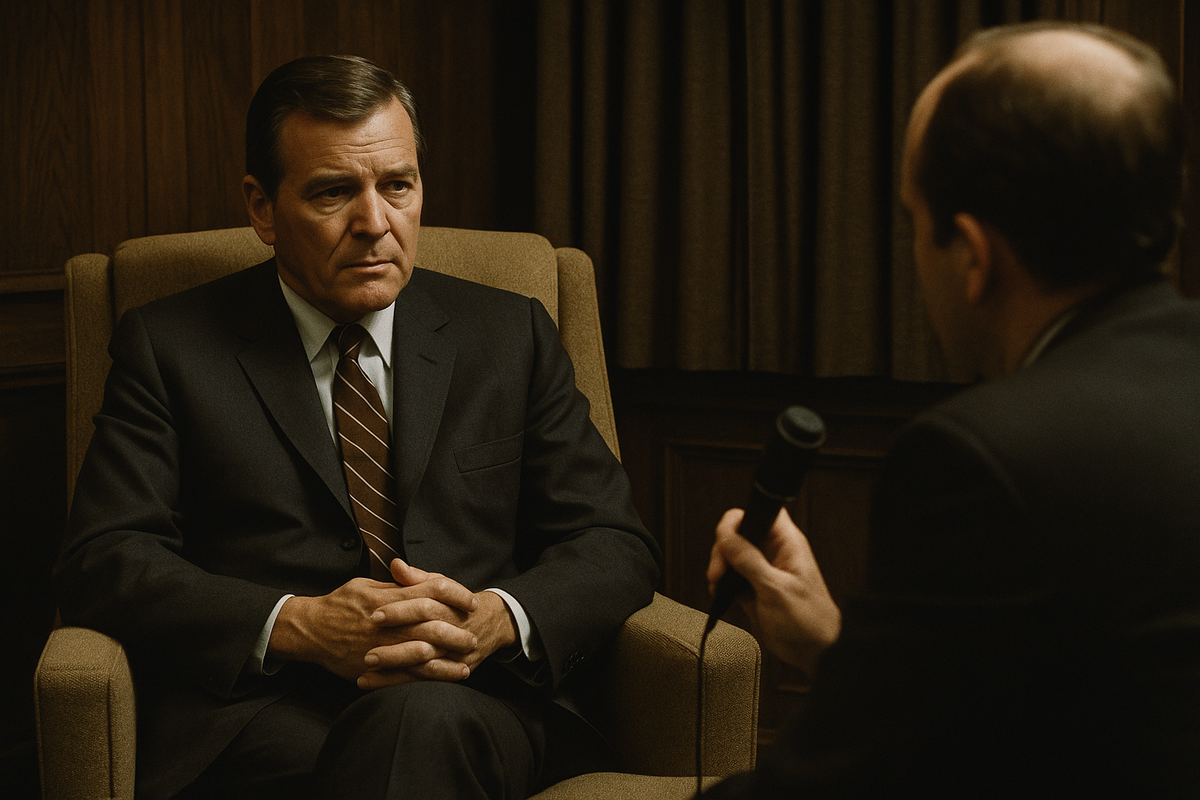
Inside those glossy pages, past the centerfold and the fiction, past the cocktail recipes and stereo reviews, sat something unexpected: a lengthy, probing conversation with Senator Charles Percy of Illinois—a Republican moderate who represented everything American politics was about to lose.
Three weeks after this issue hit the streets, Martin Luther King Jr. would be murdered in Memphis. Two months later, Robert Kennedy would die on a kitchen floor in Los Angeles. By year's end, Richard Nixon would occupy the White House, and the Republican Party's centrist wing would begin its long, slow eclipse.
But in April 1968, Percy still seemed possible. And Playboy was the arena where that possibility played out.
Archive Details
Historical Figure: Senator Charles Percy (R-Illinois)
Issue Date: Playboy Magazine, April 1968
Archive Source: Original 20th Century Magazine Collection
Cultural Context: Published weeks before the assassination of Martin Luther King Jr., during one of America's most turbulent years
The Man Who Mistimed History
Charles Percy's biography reads like a postwar American dream rendered in corporate boardrooms. Born in 1919, he clawed his way from modest circumstances to the presidency of Bell & Howell by age 29, then parlayed business success into a 1966 Senate victory in Illinois. By 1968, his name circulated in presidential speculation—the moderate Republican who could bridge the party's Goldwater conservatives and its Rockefeller pragmatists.
He was photogenic, articulate, and relentlessly disciplined. He was also arriving at precisely the wrong moment in American history.
The GOP's future belonged to Nixon and Reagan, to the Southern Strategy and law-and-order appeals. Percy's brand of pragmatic centrism—his willingness to discuss civil rights legislation, urban renewal, and government responsibility without reflexive conservative orthodoxy—would soon become a relic. But Playboy's readers didn't know that yet. In April 1968, Percy looked like the future.
Why Playboy Mattered (And Why It Still Does)
Dismiss Playboy as a "girlie magazine" if you want. You'd be making the same mistake Percy's advisors likely debated before agreeing to the interview.
By 1968, Playboy had become the most unlikely forum for serious American discourse. Since launching the Playboy Interview series in 1962, the magazine had published marathon conversations with Malcolm X, Martin Luther King Jr., Fidel Castro, and a dozen other figures who would never grant such access to mainstream newspapers. The format was simple: give intelligent, controversial people space to think aloud, print it verbatim, and trust your audience to handle complexity.
That audience—educated, upwardly mobile, disproportionately young—was exactly who Percy needed to reach. These were the baby boomers skeptical of both their parents' institutions and their generation's radicals. They bought sports cars and hi-fi equipment. They read Norman Mailer alongside the pictorials. They were sexual revolutionaries with corporate jobs.
For them, politics and pleasure weren't contradictions. They were the same conversation.
What Percy Actually Said (And What He Couldn't)
The interview captures a politician performing an impossible balancing act on a tightrope stretched across a burning country.
On civil rights and urban unrest, Percy acknowledged racial inequality and voiced cautious support for legislation—but always with the hedging language of a centrist afraid to lose his base. On Vietnam, he expressed the frustration consuming American households without offering the clear opposition the antiwar movement demanded. On government responsibility, he threaded between Republican rhetoric about personal initiative and pragmatic calls for fair housing, economic opportunity, and urban renewal.
Most tellingly, Percy recognized the political energy of young activists while simultaneously warning against their radicalism. He wanted their votes. He feared their methods. He understood their anger but couldn't fully embrace their vision.
Reading the interview now feels like watching a man try to hold water in his hands. Percy was intelligent, thoughtful, and genuinely conflicted about the forces tearing America apart. But conflict and thoughtfulness don't win revolutions. They don't stop them either.
Civil Rights & Race Relations
Percy acknowledged racial inequality with cautious support for civil rights legislation, reflecting the careful moderation of centrist Republicans navigating urban unrest.
Vietnam War
Expressed widespread frustration without radical opposition, performing the balancing act between hawks and doves that defined moderate politics in 1968.
Government Responsibility
Emphasized pragmatic action on urban renewal, fair housing, and economic opportunity while maintaining Republican ideals of personal responsibility.
Generational Change
Recognized the energy of young voters and activists, acknowledging their importance while voicing concerns about radicalism and methods.
The Cover's Quiet Provocation
That yellow suit wasn't accidental.
Playboy's covers operated as visual manifestos—each element calibrated to signal the magazine's central proposition. The fashion-forward elegance suggested sophistication. The model's gaze promised erotic possibility. The bunny pocket square branded it all as part of Hugh Hefner's carefully constructed universe where men could be both intellectually serious and unapologetically sexual.
The April 1968 cover delivered luxury, flirtation, and a knowing wink to readers who understood they were buying more than centerfolds. They were buying membership in a tribe that refused to separate pleasure from ideas, that insisted adult men could discuss Senate politics and sexual freedom in the same evening, in the same magazine, without apology.
For collectors today, that cover represents peak Playboy—the moment when the magazine's cultural authority and visual sophistication reached equilibrium before the 1970s brought both imitation and dilution.
The Interview Format's Lost Power
Modern political discourse happens in seven-second TikTok clips and cable news soundbites engineered for viral outrage. The Playboy Interview format—ten thousand words, minimal editing, space for contradiction and complexity—has virtually disappeared from American media.
That loss matters more than we admit.
Percy's interview, like all the best Playboy conversations, allowed room for a public figure to think through positions, acknowledge tensions, and speak in paragraphs rather than slogans. Readers encountered not a processed message but something closer to actual human cognition—incomplete, evolving, sometimes contradictory.
These interviews endure as historical documents precisely because they captured how political figures framed their thinking in real time, not how their press secretaries wished they'd framed it three days later.
Why This Issue Endures
Historical Timing
This issue arrived at the hinge moment of the 1960s, published weeks before King's assassination transformed American cities into war zones and months before the Democratic convention turned political discourse into street combat. It captures the last breath before the violence.
Political Documentation
The Percy interview stands as one of the most detailed explorations of moderate Republicanism at the exact moment that ideology began its terminal decline. For political historians studying the party's rightward evolution, this conversation is primary source material.
Cultural Artifact
Every element—the cover design, the advertising, the fiction selections, the interview itself—illuminates how Americans in 1968 negotiated the collision between traditional values and revolutionary change. The magazine didn't just report on the sexual revolution and political upheaval. It embodied them.
Publishing Rarity
Original copies in good condition become scarcer each year as collections disperse and paper deteriorates. What survives isn't just readable—it's holdable, a physical connection to the texture and weight of 1968 America.
Collecting the Moment
For serious collectors of vintage Playboy magazines, certain issues function as anchors—the editions that define their era and justify entire collections. April 1968 sits firmly in that category.
It offers the full Playboy package: iconic visual design, substantive political journalism, and a snapshot of American culture at maximum turbulence. Whether your interest runs toward political history, mid-century publishing, or the evolution of American masculinity, this issue delivers.
And unlike museum pieces locked behind glass, these magazines still circulate. They can be owned, studied, displayed—living artifacts of a moment when politics, sexuality, and culture crashed together in glossy, full-color pages.
Your Portal to 1968
This issue and thousands more from Playboy's golden decades—the 1950s through 1980s—remain available to collectors, researchers, and cultural historians. Each magazine tells a story about how America wrestled with desire, power, identity, and change.
Browse Playboy Magazine CollectionWhether you're building a serious collection, researching political history, or exploring the cultural architecture of postwar America, these aren't reproductions or digital scans. They're the actual objects that sat on coffee tables and bedside stands while history unfolded around them.
The Last Word
Charles Percy never became president. His brand of moderate Republicanism didn't survive the decade. The Playboy Interview format lost its cultural centrality as media fragmented into a thousand channels.
But the April 1968 issue remains—a 57-year-old magazine that still speaks if you're willing to listen. It tells the story of a senator trying to navigate an impossible moment, a magazine at the height of its cultural power, and a country on the edge of transformation it couldn't yet imagine.
That yellow suit, that careful interview, that glossy cover—they're all still here, waiting in collectors' hands and archive boxes, proving that some artifacts don't just preserve history.
They are history, frozen in paper and ink, ready to teach anyone curious enough to turn the pages.