
The Man Who Walked Away: Jim Brown's 1968 Playboy Confessional
When the greatest running back in NFL history sat down with Playboy Magazine, he delivered something more dangerous than sports commentary—he delivered a manifesto.
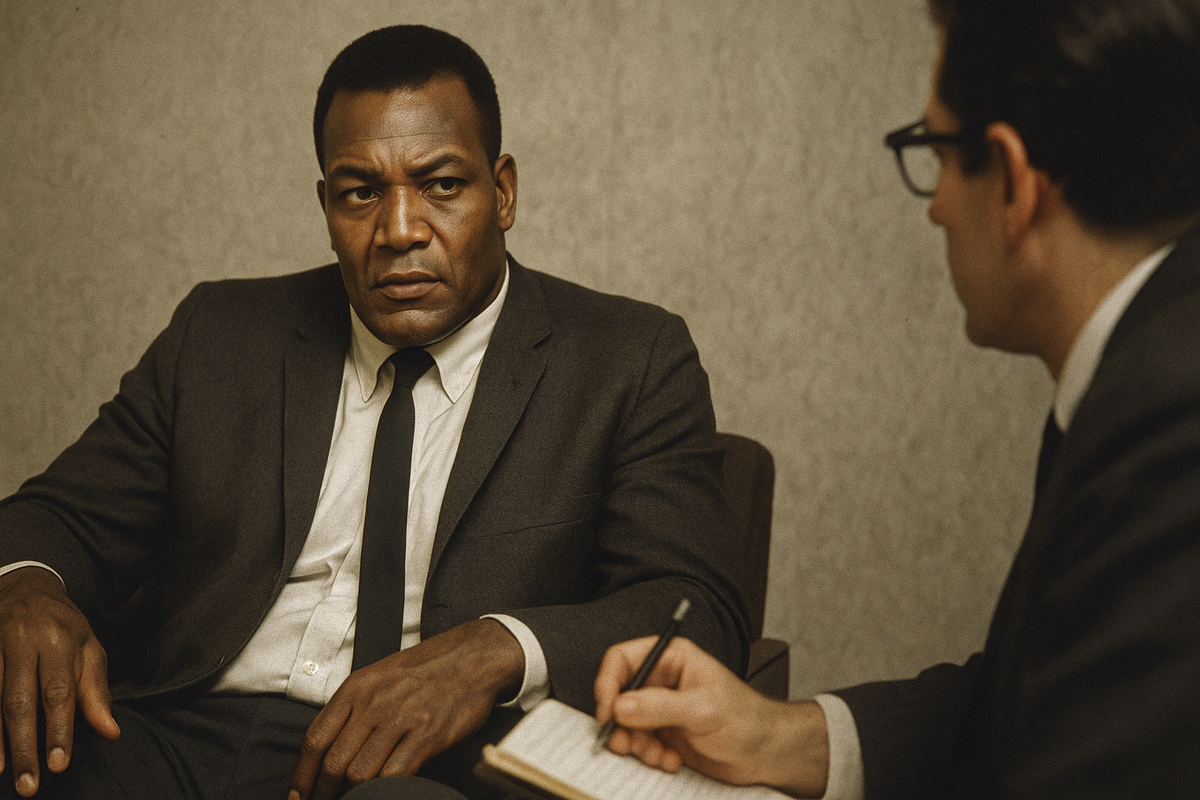
In February 1968, Jim Brown told Playboy Magazine he was ready to kill.
Not metaphorically. Not in some sanitized discussion of competitive fire. The greatest running back in NFL history—who had retired two years earlier at thirty, still in his prime—sat for an interview that read less like a celebrity profile and more like a manifesto. While America burned, while Martin Luther King Jr. had mere weeks to live, Brown spoke with the kind of unvarnished clarity that made white readers uncomfortable and Black readers nod in recognition.
This wasn't a puff piece. It was a reckoning.
Archive Details
Historical Figure: Jim Brown, NFL Legend & Civil Rights Activist
Issue Date: February 1968
Archive Source: Playboy Magazine
Historical Context: Published months before MLK's assassination, during urban uprisings and the peak of the Black Power movement
The Shock Heard Across Two Worlds
When Brown retired in 1966, he didn't fade gracefully into nostalgia. He had just rushed for over 12,000 yards, scored 106 touchdowns, and owned virtually every meaningful rushing record in professional football. Cleveland Browns ownership wanted him back for another season. Brown told them no—not because his body had failed him, but because he refused to be owned.
He walked off the field and onto a film set in London, shooting The Dirty Dozen. The decision scandalized sportswriters who believed athletes owed their careers to the game. Brown saw it differently: he owed nothing to anyone who thought his body was theirs to command.
By 1968, he had become something more dangerous than a retired athlete. He was a Black man with a platform, money, and zero interest in making white America comfortable.
Playboy's Dangerous Gambit
Playboy in 1968 occupied strange cultural territory. Yes, it sold sex—the February issue's cover featured a woman clutching a pink envelope stamped with the rabbit logo, her expression equal parts invitation and challenge. But between the centerfolds, Hugh Hefner's magazine published interviews that became historical records: Malcolm X, Martin Luther King Jr., Fidel Castro, Jean-Paul Sartre.
The Jim Brown interview belonged to this tradition. Playboy gave him pages, not soundbites. The questions were direct, even confrontational. Brown's answers were worse—or better, depending on where you stood.
He spoke about violence not as something to denounce but as a reality he understood. About manhood not as a universal ideal but as something defined by survival. About race not as a problem to be solved through integration but as a power dynamic that required Black self-determination.
For white readers thumbing through in barbershops and bachelor pads, this may have been the first time they encountered Black rage presented not as pathology but as philosophy.
What Brown Actually Said
The interview's power lay in its specificity. Brown wasn't performing for approval.
Violence and Manhood
He acknowledged his willingness to respond physically if attacked, framing toughness as prerequisite rather than aberration. Football had been preparation, not metaphor.
Hollywood and Typecasting
He rejected token roles and demanded recognition as an actor, not as "a Black actor"—a distinction white executives struggled to comprehend.
Economic Power
Brown had already founded the Negro Industrial and Economic Union (later the Black Economic Union), focused on creating jobs and ownership in Black communities. He understood that marches and legislation meant little without capital.
Black Identity
At the height of white anxiety over "Black Power," Brown expressed no interest in assimilation. He spoke with pride about Black culture, Black achievement, and Black future—not as reaction to whiteness but as fact independent of it.
The interview captured a man who had walked away from America's favorite game because he refused to play by America's rules about what Black excellence could demand.
Why This Issue Became Archive Gold
The February 1968 Playboy endures because of what happened next.
King was assassinated two months later. Robert Kennedy followed in June. Cities erupted. The Democratic Convention in Chicago became a televised riot. Nixon won the presidency promising "law and order"—code everyone understood.
Brown's interview, published in those first weeks of 1968, now reads like prophecy. He saw what was coming because he was already living it: the collision between Black demands for power and white resistance to change.
For collectors, this issue represents more than sports memorabilia or vintage erotica. It's primary source material for understanding how race, masculinity, and celebrity intersected at the precise moment American consensus shattered.
The interview has been cited by sports historians, cultural critics, and biographers. Vintage Playboy issues from the 1960s—particularly those featuring landmark interviews—command serious prices. But the February 1968 issue carries additional weight because Brown's words haven't aged. They've compounded.
The Document Itself
The issue's cover is pure 1960s optimism: bright colors, playful sexuality, the promise of pleasure. Open it, and you find something harder—journalism that assumed its readers could handle complexity, contradiction, and discomfort.
This was Playboy's genius. It sold fantasy and reality in the same package, trusting that men who bought it for the pictures would stay for the ideas. Whether that trust was justified is debatable. That it produced extraordinary cultural documents is not.
What Survives
Most interviews today are engineered for virality: seven-minute clips designed to generate headlines without context. The Brown interview ran for pages because Playboy understood that ideas require space to breathe.
Reading it now is like opening a time capsule from an America that no longer exists—or perhaps from an America that still exists but no longer admits it. Brown talked about subjects we've supposedly "moved past": systemic racism, masculine identity, the price of Black success in white institutions.
Except we haven't moved past them. We've just gotten better at pretending we have.
Collector Significance
Historical Timing
Published in a year defined by assassinations, protests, and cultural revolutions, capturing one of the most important Black athletes of the 20th century at a turning point in his career.
Celebrity Interview
Jim Brown's Playboy conversation remains one of his most cited and influential statements, studied by sports historians, cultural critics, and collectors alike.
Iconic Cover
The striking design and playful femininity of the cover make it instantly recognizable and appealing to vintage magazine enthusiasts.
Cultural Document
Vintage Playboy magazines from the 1960s hold particular value because they embody the height of Playboy's cultural influence as both entertainment and serious journalism.
For Collectors and Historians
The February 1968 Playboy featuring Jim Brown's interview is available as an original issue in our archive. From the 1950s through the 1970s, Playboy documented conversations that television couldn't touch and newspapers wouldn't print—preserving voices that would have been lost to soundbite culture.
Browse Playboy Magazine CollectionOwning one of these issues means holding the actual artifact: the paper, the ink, the advertisements, the entire cultural moment bound in 160 pages. It's not a reprint or a digital file. It's the thing itself.
The Man Who Wouldn't Bend
Jim Brown in 1968 was thirty-two years old, retired from football, ascending in Hollywood, and utterly unwilling to perform gratitude for the opportunities white America had "given" him. The Playboy interview captured him at maximum clarity—before later controversies complicated his legacy, before time softened his edges.
What remains is a document of defiance: an athlete who walked away at his peak, an activist who built economic institutions rather than just protest movements, and a Black man who refused to modulate his truth for white comfort.
The interview wasn't about football. It was about power—who has it, who wants it, and what happens when someone decides he won't ask permission anymore.
That conversation started in 1968. In many ways, it never ended.