
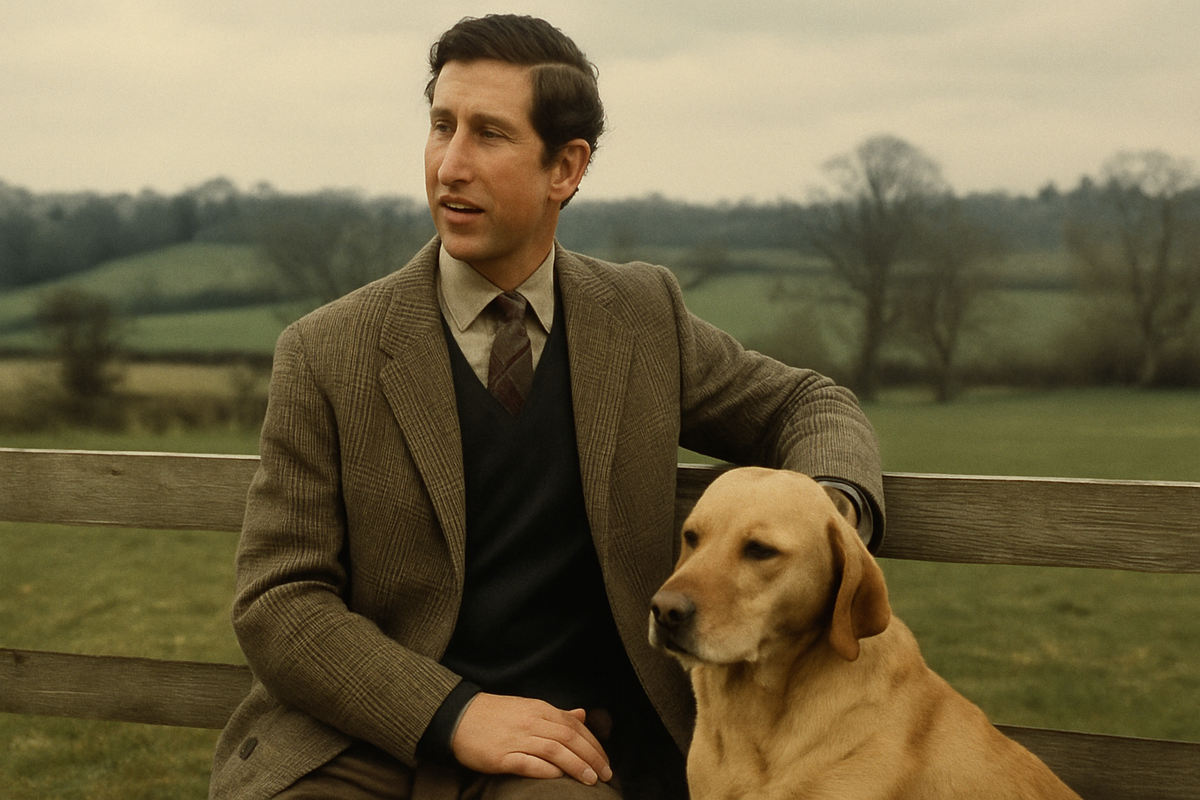
The Bachelor Prince: When Time Magazine Captured Charles at the Crossroads
May 15, 1978 — The portrait of a future king before Diana, before scandal, before the throne
May 15, 1978. Britain was fraying at the edges—inflation spiraling, unions striking, the empire a memory. And yet, millions of readers on both sides of the Atlantic opened their Time Magazines to find not economic forecasts or Cold War analysis, but the face of a 29-year-old prince who couldn't decide whom to marry.
This wasn't celebrity gossip. It was statecraft by other means.
Prince Charles, heir to Queen Elizabeth II, had become the most scrutinized bachelor in the Western world. Every girlfriend was vetted by tabloids. Every public appearance parsed for clues about his fitness to rule. The May 15, 1978 issue of Time didn't just profile a man—it diagnosed a monarchy struggling to justify its existence in the modern age. And in doing so, it created one of the most revealing portraits of Charles ever published, a document whose significance has only deepened with time.
Archive Details
Historical Figure: Prince Charles, Prince of Wales (later King Charles III)
Issue Date: May 15, 1978
Archive Source: Time Magazine
Historical Context: Published three years before Charles's marriage to Diana Spencer, during Britain's economic turbulence and at the height of public speculation about the heir's romantic life
Britain's Identity Crisis, Personified
The late 1970s were Britain's reckoning years. The postwar consensus had collapsed. The welfare state was buckling. Punk rock snarled from council estates while the Queen's Silver Jubilee bunting still hung in shop windows. The country didn't know whether to cling to tradition or burn it down.
Charles embodied that contradiction.
Born in 1948, educated at Gordonstoun's spartan regime and Cambridge's ivory towers, trained as a Royal Navy pilot, he was both product and prisoner of his lineage. Sensitive where his father was brusque. Intellectual where protocol demanded ceremony. The press couldn't decide if he was too weak for kingship or too thoughtful for a role that demanded projection over reflection.
The stakes were explicit: Would he become another Edward VIII, the king who abdicated for love in 1936, or would he mirror his mother's iron discipline? Time's feature landed at the exact moment that question consumed British society. Charles was approaching 30—the age when even princes were expected to settle down—and the throne had never seemed more precarious or more irrelevant.
Time's Portrait: The Soldier, The Clown, The Burden-Bearer
Time Magazine in 1978 wielded immense cultural authority. Its covers could make or break political careers. Its long-form features set the terms of public debate. The Charles issue deployed that power with surgical precision.
The photography alone told the story: Charles in his helicopter cockpit, aviator sunglasses reflecting sky. Charles at the wheel of an Aston Martin, grinning like any other young man with fast machinery and open road. Charles dancing the samba in Rio de Janeiro, awkward but game. Charles greeting tribal chiefs in Ghana, embodying Britain's last claim to global relevance through Commonwealth diplomacy.
Each image was a thesis statement. This prince is trying. He's not hiding in palaces. He's flying helicopters, shaking hands in Welsh mining towns, launching the Prince's Trust to help unemployed youth. He's hunting with friends, playing polo, walking his dog Harvey. He's both everyman and untouchable—a contradiction Time captured without resolving it.
For American readers who'd fought a revolution to escape monarchy, the feature made Charles comprehensible: a man born into a job he couldn't quit, performing a role he didn't entirely believe in, searching for love under conditions that made genuine intimacy nearly impossible.
The Marriage Trap: Romance as State Business
The article's most brutal section dissected Charles's romantic life with clinical detachment. Lady Jane Wellesley. Lady Sarah Spencer. Each relationship became a parliamentary debate. Was she aristocratic enough? Protestant enough? Virgin enough? (The last criterion, absurd and invasive, was genuinely part of the public discourse.)
Time noted the paradox: Charles was expected to marry for dynastic advantage while projecting authentic emotion. To choose a bride the public could love while satisfying courtiers who viewed marriage as strategic alliance. To fall in love on command, with the world watching.
Friends quoted in the piece described Charles's humor—his self-deprecating wit, his tendency toward harmless pranks—but also his isolation. He was surrounded by people yet profoundly alone. Every confidence risked becoming a headline. Every private moment was potentially public property.
The coverage was respectful but unflinching. Time didn't traffic in tabloid speculation, but it didn't pretend Charles's personal life was irrelevant to his public role. The article understood what many Britons sensed: A modern monarchy required a fairytale marriage to survive. Charles needed to deliver a love story, whether he felt it or not.
Why This Issue Endures
Forty-seven years later, the May 15, 1978 Time Magazine reads like prophecy written in code.
The bachelor prince who seemed so uncertain did marry—spectacularly, disastrously. The fairytale wedding to Diana Spencer in 1981 fulfilled every demand Time's article identified, and the subsequent implosion validated every anxiety it hinted at. The sensitive, thoughtful man who loved architecture and organic farming became a figure of ridicule for those very qualities, then was rehabilitated, then finally crowned at age 73 as King Charles III.
All of it—the duty, the romance, the burden—is visible in this single issue.
Collector Significance
Why the May 15, 1978 edition holds exceptional value
Historical Pivot Point
It captures Charles before Diana, before scandal, before the throne—the last moment when his future was genuinely uncertain.
Photographic Archive
The images of young Charles in motion—flying, laughing, working—are among the finest visual records of a royal in transition.
Cultural Artifact
The issue documents how American media interpreted British monarchy during the late Cold War, when soft power and symbolism mattered more than military strength.
Market Demand
Time's royal coverage issues consistently command premium prices, particularly those featuring Charles at defining moments. This issue predates the Diana phenomenon, making it rarer in the collecting hierarchy than the wedding coverage that flooded newsstands three years later.
The magazine isn't just memorabilia. It's primary source material—unfiltered 1970s journalism that reveals how institutions and individuals navigate the collision between private desire and public obligation.
The Verdict: A Monarchy on Trial
What makes this issue extraordinary is its refusal to offer easy answers. Time didn't predict Charles would be a great king or a failed one. It didn't condemn the monarchy as feudal relic or praise it as eternal institution. Instead, it presented a man caught in a system neither fully believed in anymore, both trying to make it work.
That honesty—that willingness to sit with ambiguity—is what gives the feature its lasting power.
Charles in 1978 was 29, unmarried, uncertain, and under impossible pressure. Charles in 2026 is 77, widowed, remarried, and finally crowned. The journey between those two moments contains some of the most dramatic royal history ever recorded. This Time Magazine issue is where that journey became visible to the world.
If you collect vintage magazines, if you study the evolution of celebrity culture, if you're fascinated by how institutions adapt or die—this issue belongs in your archive.
Explore the Archive
From the Jazz Age through the Reagan era, Time chronicled not just headlines but the psychological weather of each decade. Every issue is a time machine. Some, like this one, open doors to futures that were still unwritten.
Browse Time Magazine CollectionThe May 15, 1978 Time Magazine remains what it was intended to be: a portrait of a prince becoming himself, slowly, painfully, in full view of history. Hold it in your hands, and you're holding a question that took half a century to answer.