
The Ballot in Black and White: How Jet Magazine Mapped the 1960 Election
When five million Black voters held the balance of power, one magazine gave them the roadmap
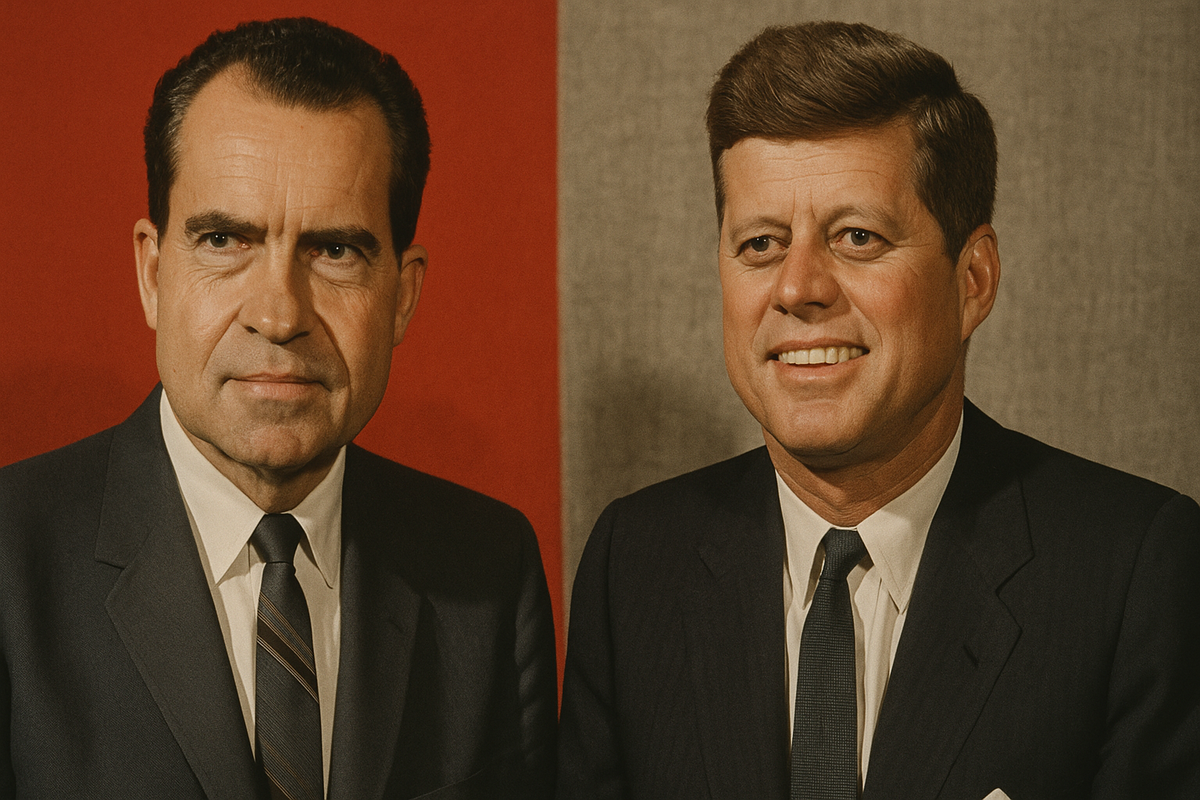
On November 10, 1960, six days before Americans would choose between Richard Nixon and John F. Kennedy, Jet Magazine published what amounted to a political contract. The cover was simple: two men in suits, side by side, smiling with the practiced ease of campaigners who knew the stakes. Inside, the headline cut straight to the point: "What the Candidates Promise Negroes."
No euphemisms. No buried paragraphs. Just a direct accounting of what two white men seeking the presidency were willing to offer five million Black voters who held the balance of power in America's industrial heartland.
This was not campaign coverage. It was a reckoning.
Archive Details
Publication: Jet Magazine
Issue Date: November 10, 1960
Historical Context: Six days before the Kennedy-Nixon election
Featured: Richard Nixon and John F. Kennedy campaign promises to African American voters
The Arithmetic of Power
By 1960, the geography of Black political influence had shifted. The Great Migration had moved millions of African Americans from the Jim Crow South to cities where they could actually vote—New York, Chicago, Detroit, Philadelphia. Jet reported the numbers plainly: 5,155,000 Black voters, concentrated in swing states that could flip the Electoral College.
Both parties understood the math. For the first time in American history, presidential candidates were forced to make public, specific promises to African Americans—not as a favor, but as a necessity.
The civil rights movement had made politics unavoidable. The Montgomery Bus Boycott had demonstrated the power of organized Black resistance. The Civil Rights Act of 1957 had passed, but its enforcement was anemic. In February 1960, four college students in Greensboro, North Carolina, had sat down at a Woolworth's lunch counter and refused to leave. By November, sit-ins had spread across the South like a brushfire.
Against this backdrop, Jet did what mainstream outlets would not: it treated Black voters as the central audience, not a demographic afterthought.
The Promises, Line by Line
Jet's breakdown was clinical. No endorsements. No editorial spin. Just the facts, sorted by category—jobs, voting rights, housing, education, civil rights, cabinet appointments, African affairs—so readers could judge for themselves.
Kennedy's platform was expansive: a $1.25 minimum wage for all workers, federal action to abolish poll taxes and literacy tests, aid for teachers and schools, executive orders to end housing discrimination, anti-lynching legislation, and Justice Department protection for sit-in demonstrators. He promised to appoint African Americans to federal judgeships and cabinet-level posts.
Nixon's approach was more cautious: enforcement of fair employment through existing federal committees, expanded powers for the Attorney General to prosecute voting rights violations, aid for school desegregation, an end to discrimination in federally-assisted housing, and support for demonstrations—provided they didn't conflict with local laws. He pledged more African American diplomats in Africa and Asia.
The differences were subtle but significant. Kennedy spoke in terms of legislative action and executive authority. Nixon emphasized enforcement and gradualism.
For Jet's readers—many of whom were first- or second-generation voters in families that had only recently escaped the violence of Southern disenfranchisement—these distinctions mattered. The magazine gave them a tool that mainstream newspapers rarely provided: a side-by-side comparison that treated their concerns as the story, not a sidebar.
Electoral Strategy
Both candidates recognized that 5.1 million Black voters in swing states could determine the Electoral College outcome.
Civil Rights Context
Sit-ins, boycotts, and the fight for voting rights had made racial equality a central campaign issue.
Media Innovation
Jet pioneered direct political accountability journalism for Black communities.
Cold War Pressures
African independence movements forced candidates to address U.S. racial injustice on the world stage.
The Magazine as Witness
Jet's pocket-sized format was part of its genius. Readers could fold the November 10 issue into a purse or jacket pocket, carry it to church basements and union halls, pass it around barbershops and beauty parlors. The magazine became a portable referendum on the promises white politicians were making to Black America.
The reporting, led by journalists like Simeon Booker and Larry Still, was deliberately spare. Jet did not editorialize. It did not tell readers how to vote. It simply laid out the record and trusted its audience to draw their own conclusions.
This restraint was itself a form of power. At a time when white-owned publications either ignored civil rights or treated it as a regional curiosity, Jet positioned African Americans as political arbiters whose judgment would determine the outcome of a national election.
The magazine understood something that would become undeniable in the years ahead: accountability begins with documentation. By printing what Nixon and Kennedy promised, Jet ensured those pledges would not evaporate into campaign rhetoric.
Why This Issue Endures
Six decades later, the November 10, 1960 issue of Jet remains one of the most sought-after editions among collectors. Its value lies not in rarity—Jet had wide circulation—but in its historical position.
Kennedy won the presidency by one of the narrowest margins in American history. Political analysts have long credited Black voters in Northern cities with delivering his victory. Jet captured the moment when that power became undeniable, when candidates could no longer afford vague gestures toward racial equality.
The issue is also a forecast. The promises documented in Jet would shape the legislative battles of the next decade—the Civil Rights Act of 1964, the Voting Rights Act of 1965, the Fair Housing Act of 1968. Some of those promises were kept. Others were abandoned. But the record remained.
For collectors of African American historical artifacts, this issue represents more than political ephemera. It is evidence of a turning point, a document that shows how Black Americans used the electoral system to force the nation toward justice, one calculated vote at a time.
Collector Significance
Historical Timing
Published days before one of the closest elections in U.S. history, this issue documents the moment when Black voters became kingmakers.
Documentary Value
A primary source record of campaign promises that shaped the civil rights legislation of the 1960s.
Journalistic Innovation
Represents Jet's pioneering approach to accountability journalism for African American communities.
Cultural Artifact
Evidence of how Black media empowered voters with tools mainstream publications withheld.
The Archive Lives
Jet Magazine was never just about documentation. It was about visibility, accountability, and the belief that African American readers deserved the same analytical tools as any other electorate. The November 10, 1960 issue exemplifies that mission—a straightforward, unsentimental guide to what two candidates were willing to offer, and what the Black community could demand in return.
To hold this magazine today is to hold a piece of the 1960 campaign trail, a reminder that political power begins with information and ends with the courage to use it.
Explore the Archive
Each issue is more than paper and ink. It is a record of how Black America rewrote the rules of American democracy—one election at a time.
Browse Jet Magazines Collection