
When Peace Was a Lie: The New Yorker's December 1938 Dispatch from a Doomed City
Emily Hahn's frontline journalism and the issue that captured America's last months of innocence
The couple on the cover looked utterly spent.
Slumped on a train seat in evening dress, the man's top hat resting on the woman's lap, they embodied a very particular kind of exhaustion—the fatigue of high society going through the motions while the world collapsed around them. It was December 3, 1938, and The New Yorker had just published what would become one of the most haunting pieces of prewar journalism: Emily Hahn's "A Reporter at Large: Peace Comes to Shanghai."
The title was cruel irony. There was no peace in Shanghai.
The City That Couldn't Stop Burning
By late 1938, Shanghai had already endured more than a year of systematic destruction. The Marco Polo Bridge Incident of 1937 had ignited full-scale war between Japan and China, and Shanghai—cosmopolitan jewel of Asia, playground of expatriates and refugees alike—became ground zero for Japan's imperial ambitions. Months of aerial bombardment had preceded brutal street-to-street combat. Thousands of civilians died. The Rape of Nanjing was unfolding even as Hahn's essay reached American breakfast tables, revealing the true machinery of Japanese militarism to a world that desperately wanted to look away.
Japan had seized control of the city, but control is not peace. What Hahn captured in her dispatch was something far more unsettling: the performance of normalcy in a city that had forgotten what normal meant.
Archive Details
Featured Reporter: Emily Hahn
Issue Date: December 3, 1938
Publication: The New Yorker
Featured Article: "A Reporter at Large: Peace Comes to Shanghai"
Historical Context: Published 10 months before World War II began in Europe
A Woman's Eye on Empire
Emily Hahn was not supposed to be there. Female foreign correspondents covering East Asian warfare were rare enough to be remarkable, which makes her work from this period doubly significant. She understood that the real story wasn't troop movements or diplomatic posturing—it was the nervous energy of expatriates returning to their clubs, the propaganda machinery insisting everything was fine, the refugees scavenging through rubble between modern skyscrapers.
Her reporting gave American readers something wire services couldn't: atmosphere. The bars were empty but open. The shops had customers but no confidence. Everyone performed the rituals of peacetime while waiting for the next wave of violence. Shanghai had become a city between worlds—neither fully at war nor remotely at peace, suspended in the terrible anxiety of knowing what comes next.
For readers in the United States, still clinging to neutrality, still hoping the European and Asian crises might somehow resolve themselves, Hahn's dispatch was a preview of their own future.
The Magazine That Refused to Choose
By 1938, The New Yorker had evolved beyond its origins as a humor magazine into something more dangerous: a publication that could make you laugh and then gut-punch you with reality within the same issue. This tonal range—this refusal to separate wit from gravity—gave the magazine its singular cultural power.
The December 3rd issue exemplified this perfectly. Turn one page and find cartoons skewering urban pretensions and modern anxieties. Turn another and confront Hahn's account of a civilization cracking under imperial occupation. The juxtaposition wasn't accidental. It was editorial philosophy. The magazine understood that humor and horror weren't opposites—they were the twin lenses through which sophisticated readers processed an increasingly unprocessable world.
That exhausted couple on the cover? They weren't just tired from travel. They were tired from knowing—from being the kind of people who read about Shanghai's collapse over cocktails, who understood the world was shrinking, who recognized that distance no longer meant safety.
The Illusion of Peace
Hahn captured the nervous routines of expatriates returning to clubs and homes while sensing instability all around them—a "peace" that was fragile at best.
Propaganda vs. Reality
Japanese authorities pushed narratives of stability even as locals remained wary, creating a tension Hahn documented with surgical precision.
Human Survival
The dispatch included intimate vignettes: refugees scavenging, families adjusting to occupation, soldiers masking fatigue—the small truths of war.
A City Between Worlds
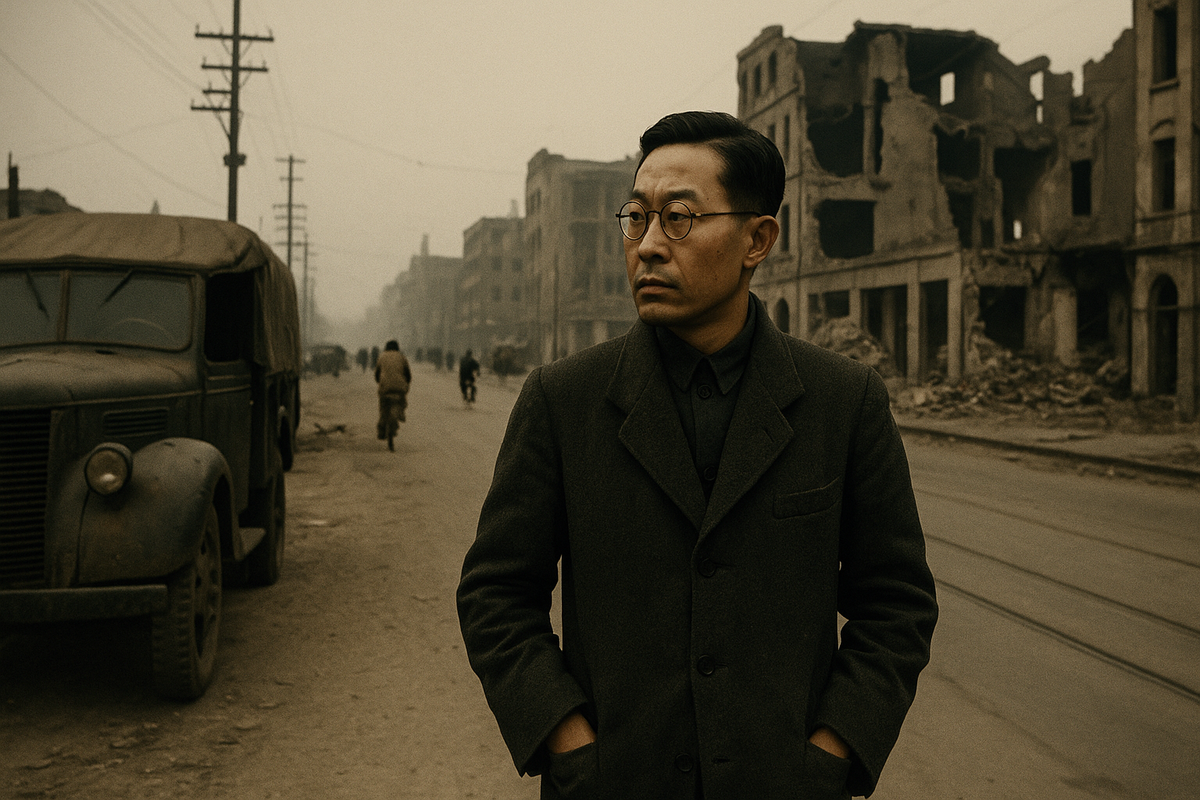
Shanghai was both cosmopolitan hub and war-torn frontline, where modern skyscrapers stood beside rubble—a portrait of civilization in collapse.
Why Original Magazines Matter
Digital archives offer text. Original issues offer texture—the weight of the paper, the advertisements for products that no longer exist, the subscription cards for a world that would be transformed within months. They offer something historians call "material culture": the physical evidence of how people lived, thought, and communicated in a specific moment.
The December 3, 1938 New Yorker isn't just about Shanghai or Emily Hahn or even World War II. It's about the American intellectual class in the last months before everything changed—their anxieties, their wit, their sophisticated denial and dawning recognition. It's about how a magazine could be frivolous and serious simultaneously, could sell perfume and describe atrocities, could make readers laugh and then force them to confront what laughter was hiding from.
The Artifact's Authority
Historical Precision
Published less than a year before World War II officially began, it captures the psychological landscape of a world that knew war was coming but hadn't yet accepted it. These are the thoughts of December 1938—not reconstructed through hindsight, but preserved in their original uncertainty.
Hahn's Rarity
As one of the few women covering the Asian theater, her byline immediately elevates any issue. Groundbreaking journalism doesn't age; it accrues value. Issues featuring her East Asian dispatches are highly sought after by serious collectors.
Cultural Compression
Where else can you hold in your hands the exact moment when American intellectuals were processing fascism through the filter of urbane sophistication? This issue is a time capsule of thought, not just events.
The Cover as Commentary
That weary couple has become an icon of prewar anxiety—elegant, defeated, in transit. The New Yorker's covers from this era are studied in design schools and reproduced in history books, but owning the original means possessing the artifact as it was encountered.
The Enduring Witness
What makes this issue extraordinary isn't just what it reported—it's what it was: a document of intelligent people watching their world disintegrate while trying to maintain civilized discourse. Emily Hahn's Shanghai wasn't at peace. The couple on the cover wasn't resting. America wasn't safe.
But The New Yorker kept publishing—kept balancing cartoons with catastrophe, wit with warning. And in doing so, it preserved not just history, but the experience of living through history when the ending was still unwritten.
That's what you hold when you hold this issue: not the past, but the present tense of 1938, still crackling with possibility and dread.
Explore the Archive
For collectors, historians, and anyone fascinated by the moment when the old world died and the modern one began, original New Yorker magazines from this era are irreplaceable primary sources.
Browse The New Yorker Magazine Collection