
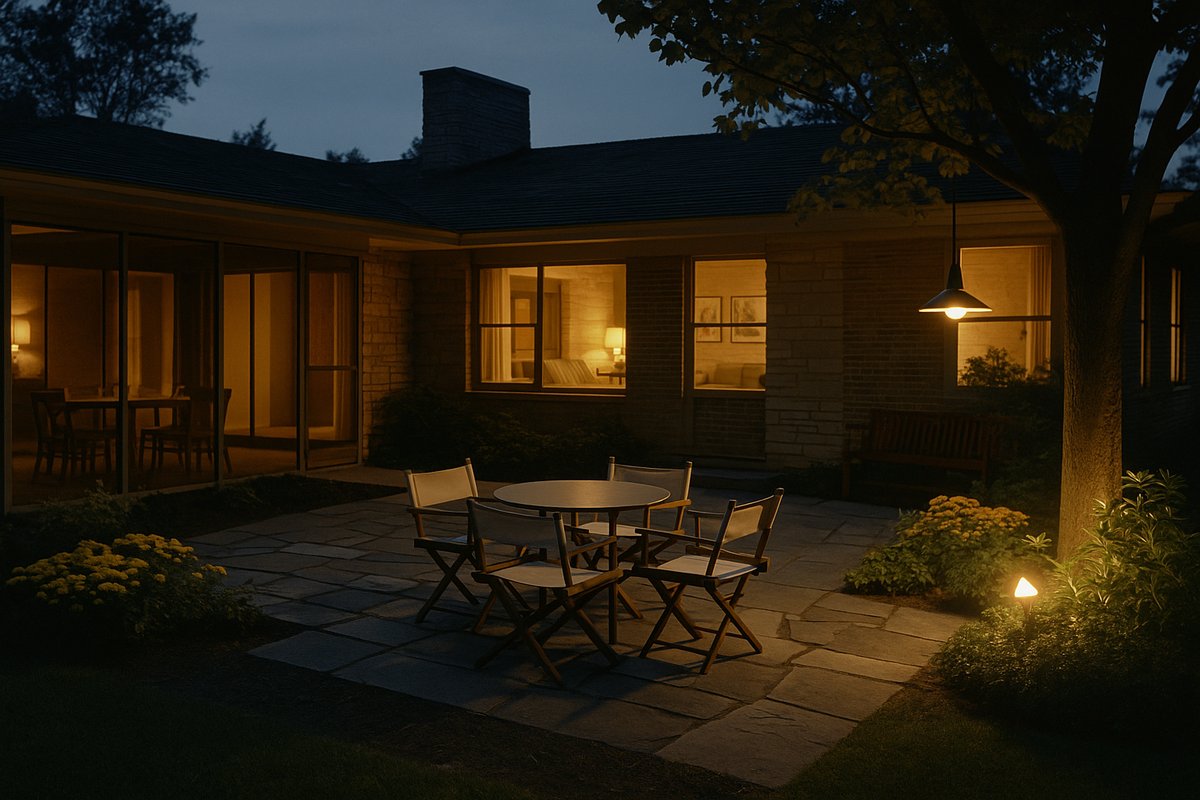
The Glamour Clause: How a 1957 Ladies' Home Journal Taught America to Dream in Floodlight
Portfolio 5, suburban pavilions, and the midcentury blueprint for living well within reach
When Americans opened the March 1957 issue of Ladies' Home Journal, they weren't just reading a magazine. They were holding a contract with the future—a blueprint for how life was supposed to feel once the war was over, the mortgage was signed, and the lawn finally grew in.
That month's issue featured "Portfolio 5: More House for the Money" alongside "With a Garden Glamorous Night or Day"—two features that, together, codified the postwar bargain: You could have elegance. You could have leisure. And you wouldn't need a fortune to get either.
This wasn't aspirational fluff. It was architectural instruction, cultural permission, and a masterclass in making middle-class life look like something worth photographing.
Archive Details
Publication: Ladies' Home Journal
Issue Date: March 1957
Featured Articles: "Portfolio 5: More House for the Money" and "With a Garden Glamorous Night or Day"
Archive Source: Original magazine collection
The Blueprint Generation
By 1957, the suburbs weren't new—they were inevitable. Veterans had come home, the GI Bill had unlocked homeownership, and developments were multiplying from Levittown to Orange County. But the cultural question remained: What do you do with all this space?
Ladies' Home Journal had an answer. The dream home wasn't about square footage or status symbols. It was about intelligent design—homes that stretched budgets without looking cheap, gardens that functioned as second living rooms, and a lifestyle that balanced utility with theater.
Portfolio 5 embodied this philosophy. The house plan prioritized flexibility and flow: open layouts, room to grow, indoor-outdoor connections that erased the boundary between family life and backyard escape. It wasn't just architecture—it was domestic strategy for a generation building their lives from scratch.
And the garden feature? That was where the magic happened.
Glamour by Floodlight
"With a Garden Glamorous Night or Day" did something audacious: it convinced American housewives that their backyards could compete with the country clubs they couldn't afford to join.
The secret was lighting.
The article showed how strategic illumination—dramatic spotlights, pendant lamps, deliberate shadows—could transform a suburban yard into a stage. By day, it was practical: screened pavilions for dining, benches for watching children play, low-maintenance plantings that didn't demand weekend labor. By night, the same space became something else entirely. Glamorous. Cinematic. Proof that sophistication wasn't reserved for Manhattan penthouses.
The specifics were deliberate:
This wasn't gardening advice. It was identity architecture. Ladies' Home Journal was teaching women how to stage their lives.
The Magazine That Taught Modern Living
By the mid-1950s, Ladies' Home Journal commanded millions of subscribers—not through celebrity gossip or escapism, but through a radical idea: that domestic life deserved the same intellectual attention as politics or art.
Unlike architectural journals aimed at professionals, the Journal translated design into vernacular. It didn't just show you the pavilion—it invited you to imagine your children playing beneath it, your friends gathered around the table, your evenings unfolding under soft light.
The March 1957 issue executed this formula flawlessly. The Portfolio 5 plans were affordable, adaptable, and modern. The garden photography—particularly the nighttime shots—delivered visual proof that suburban life could carry sophistication once reserved for urban elites.
This was cultural engineering. The magazine didn't reflect American life; it shaped it.
What Makes This Issue Matter
Decades later, collectors and historians seek out the March 1957 Ladies' Home Journal for reasons beyond nostalgia:
For anyone studying gender, domesticity, architecture, or postwar culture, this isn't just a magazine. It's primary source material.
The Pavilion as Philosophy
What stands out most about the March 1957 issue isn't any single design element—it's the underlying argument:
Glamour is not about wealth. It's about intention.
The screened pavilion. The strategic floodlight. The sorrel tree chosen for autumn color. These weren't luxuries—they were choices. And Ladies' Home Journal made it clear that women were the architects of those choices.
The magazine positioned homemakers not as decorators following trends, but as designers building environments. The backyard wasn't private space—it was a cultural statement. A place where you could demonstrate that you understood modern living, that you'd mastered the art of living well within reach.
This was the real glamour clause: You didn't need money. You needed vision.
Why It Still Resonates
Revisiting this issue today means confronting how deliberately culture was constructed in the 1950s. Ladies' Home Journal didn't document suburban life—it scripted it. And millions of families performed accordingly, building pavilions, stringing lights, planting rhododendrons because a magazine told them this was what the good life looked like.
That's not a criticism. It's a recognition of the magazine's power.
Just as Life brought the world into American living rooms through photojournalism, Ladies' Home Journal brought ideals of modern domesticity into the everyday imagination. For historians, that makes issues like March 1957 invaluable—they're time capsules not of what was, but of what Americans believed should be.
And for collectors, that makes them irreplaceable.
Collector Significance
Explore the Collection
Whether you're a serious collector, a cultural historian, or someone captivated by midcentury design, these magazines offer something rare: the chance to see history as it was first imagined—through the pages of one of America's most influential publications.
Browse Ladies' Home Journal Magazine Collection