
The Day Wealth Went Pop
Time Magazine's Prophetic 1977 Portrait of the New Rich
Cookies. Video games. Gumballs. Rock albums. In June 1977, Time Magazine declared these the new oil wells of American capitalism—and they weren't wrong.
When readers cracked open the June 13, 1977 issue, they encountered something radical: a cover story announcing that the old rules of wealth were dead. No longer did fortune require a family name, a seat on Wall Street, or an industrial empire. Instead, it could erupt from a home kitchen, an arcade console, or a recording studio. The headline—"The Hot: The New Rich"—wasn't just provocative. It was prophetic.
This wasn't business reporting. It was a cultural reckoning, arriving at the precise moment when America needed to believe in reinvention.
Archive Details
Publication: Time Magazine
Issue Date: June 13, 1977
Cover Story: "The Hot: The New Rich"
Featured Figures: Nolan Bushnell (Atari), Wally "Famous" Amos, Peter Frampton, Colleen McCullough, Joe Morgan
Historical Context: Post-Watergate, Mid-Stagflation Era
A Nation Searching for New Heroes
The mid-1970s had gutted American confidence. Stagflation choked traditional industries. Watergate left a cynicism that wouldn't wash away. Nixon's resignation in 1974 still hung in the air like smoke. The country was exhausted, disillusioned, hungry for proof that the game wasn't rigged.
Time answered with a gallery of mavericks who hadn't waited for permission.
Nolan Bushnell, the Silicon Valley engineer behind Atari, had turned Pong—a glorified ping-pong simulation—into a coin-operated empire worth tens of millions. Wally "Famous" Amos transformed homemade chocolate chip cookies into a national brand, proving that personality and packaging could turn flour and sugar into capital. Peter Frampton, the British rocker whose live album Frampton Comes Alive! moved millions of units, embodied the staggering earning power of 1970s rock stardom. Colleen McCullough, an Australian neurophysiologist turned novelist, saw her blockbuster The Thorn Birds mint a publishing fortune that rivaled Hollywood. Joe Morgan, the Cincinnati Reds second baseman, symbolized how athletes were finally commanding salaries that matched their cultural impact.
Each represented a different vector of America's fracturing wealth economy. Collectively, they proved that charisma, timing, and entrepreneurial instinct could rival inheritance and stock portfolios.
Visual Storytelling as Cultural Critique
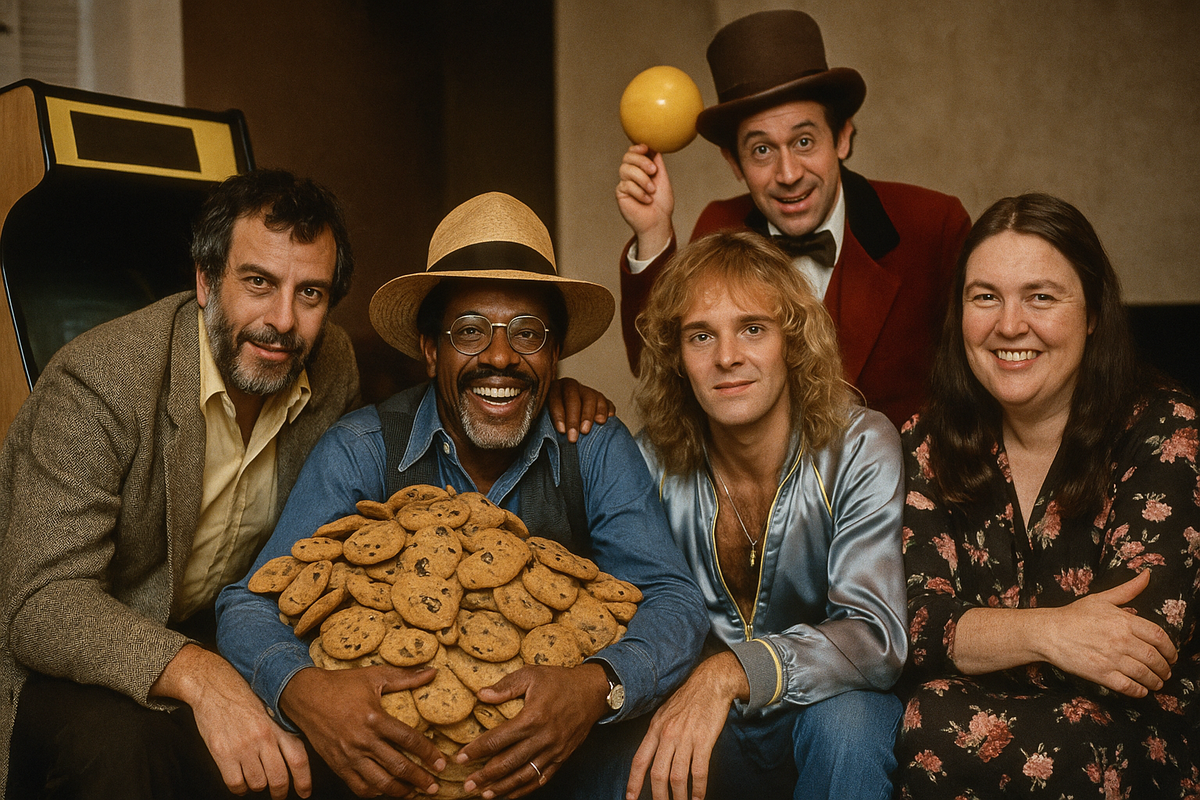
Time's editors understood that this story demanded more than statistics. The photographs were unforgettable acts of theater:
Wally Amos grinning beneath an avalanche of cookies. Nolan Bushnell hunched over a glowing console, foreshadowing the digital economy decades early. Peter Frampton sprawled in his Westchester home, the portrait of rock-star ease. Alan Silverstone, the gumball machine king, mugging like Willy Wonka in a candy-colored fever dream.
The typography matched the exuberance—psychedelic pink lettering screaming "The Hot" and "New Rich" in a pop-art flourish that rejected the gray sobriety of traditional business journalism. This was cultural reportage with swagger, designed to make readers feel equal parts envious and amused by this circus of overnight millionaires.
Unlike the Wall Street Journal's balance sheets, Time invited readers into homes, studios, and workplaces. It humanized wealth, making it feel attainable, even absurd.
The Editorial Edge: Celebration and Skepticism
Time's voice carried a sharp duality. It celebrated the entrepreneurial spirit while questioning what this gold rush meant for American values. Were these figures proof that meritocracy still functioned? Or were they symptoms of a culture addicted to celebrity and instant gratification?
The reporting delivered both admiration and analysis:
The Rise of Atari
Bushnell's creation of Pong and the arcade boom made video games a legitimate new industry, with company revenues already in the tens of millions.
Cookies as Capital
Amos proved branding could transform the ordinary into luxury—turning the simple chocolate chip cookie into a national phenomenon.
Sports Salaries
Joe Morgan's salary reflected a long-overdue shift in how athletes were compensated—finally treated as entertainers, not servants.
Publishing Fortunes
McCullough's blockbuster showed that a single novel could generate film-star wealth, rivaling Hollywood's earning power.
The subtext was clear: wealth in late-1970s America no longer required old money or industrial might. It required cultural resonance and impeccable timing.
The Document That Saw Tomorrow
From the vantage point of the 21st century, Time's "The Hot: New Rich" reads like a dispatch from the future. The rise of tech entrepreneurs, the monetization of personal brands, the blurring of culture and commerce—every dominant economic force of our era appears in embryonic form in these pages.
Nolan Bushnell wasn't just selling video games. He was prototyping the attention economy. Wally Amos wasn't just baking cookies. He was inventing the lifestyle brand. Peter Frampton wasn't just selling records. He was demonstrating how mass media could turn cultural capital into liquid wealth.
This wasn't a trend piece. It was a turning point.
Why This Issue Commands Collector Attention
Historical Timing
Published during an economic and cultural transformation, it captures America's shift from industrial wealth to celebrity and tech-driven fortunes—a pivot point in capitalist history.
Iconic Imagery
The photographs of Bushnell, Amos, Frampton, and others are instantly recognizable documents of 1970s ambition and style, rendered with pop-art flair.
Cultural Foresight
This issue anticipated Silicon Valley billionaires, influencer economies, sports mega-contracts, and the entertainment-industrial complex that dominates today.
Tangible Authenticity
Owning this magazine means holding an artifact from the moment when cookies and video games first stood beside oil and steel as engines of fortune.
For Collectors, Historians, and Cultural Archaeologists
If you're drawn to the intersection of economics, culture, and media history, the June 13, 1977 Time Magazine belongs in your archive. It doesn't merely chronicle eccentric millionaires—it documents the exact moment America rewrote its understanding of wealth creation.
Browse Time Magazine CollectionThe Artifact That Explains Now
Hold the June 13, 1977 issue in your hands and you're holding more than paper and ink. You're holding the birth certificate of modern capitalism—the moment when gumballs, novels, and arcade games joined the pantheon of American fortune-making.
For anyone who values history, culture, and the physical preservation of cultural memory, this isn't just a magazine. It's evidence that the future was visible all along, if you knew where to look.