
The Night Video Games Became Art: Inside the 1993 Electronic Gaming Awards
How a single magazine issue transformed gaming from kids' toys into a medium worthy of cultural recognition—and why collectors still chase it three decades later
January 1993. A magazine hits newsstands with Mario and Sonic standing side-by-side around a New Year's tree. Impossible, right? These were mascots locked in a blood feud—Nintendo vs. Sega, the console war that defined a generation. Yet there they stood, rendered in glossy ink, flanked by Mega Man and a roster of digital icons, as if declaring a truce.
They weren't celebrating peace. They were celebrating legitimacy.
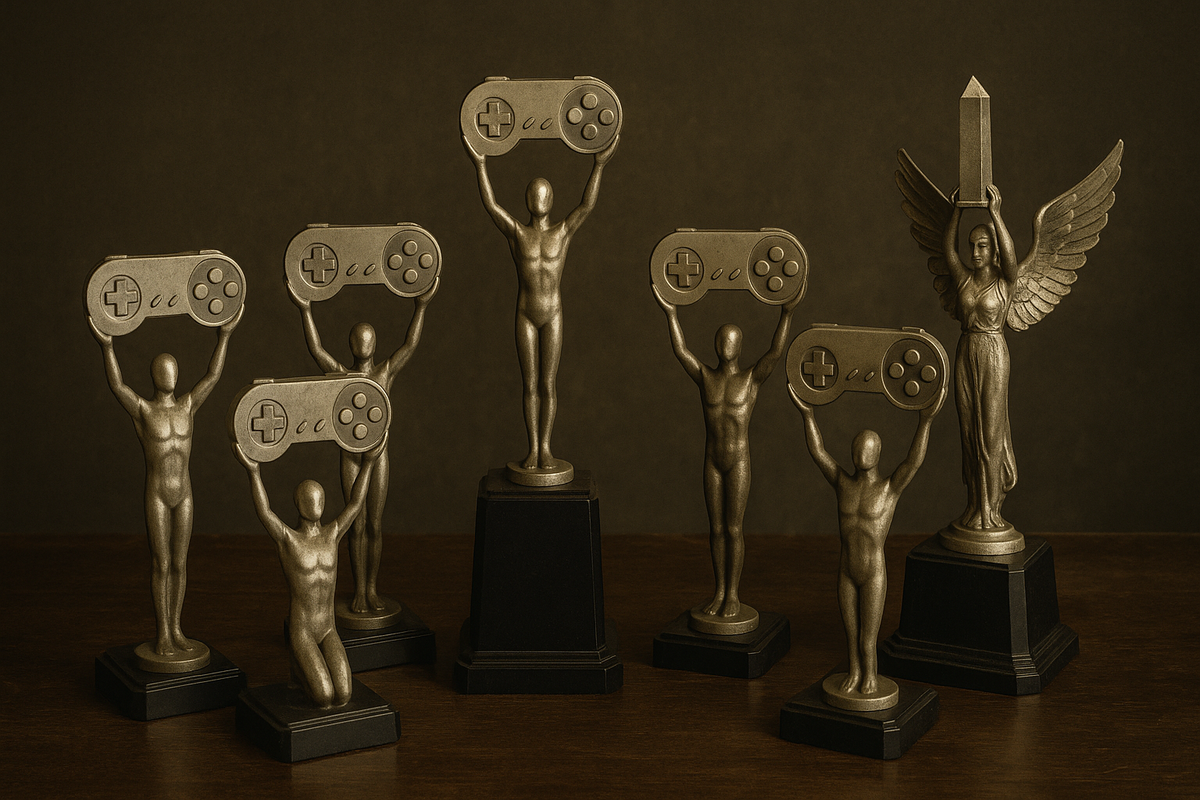
Inside that issue of Electronic Games magazine, something unprecedented was happening: video games were being judged, categorized, and honored with the same gravity as film at the Oscars. The Electronic Gaming Awards—a silver trophy emblem stamped across its pages—gave the industry what it had never received before. Not hype. Not marketing. Recognition.
For an art form that had nearly died a decade earlier, this was resurrection by committee.
Archive Details
Publication: Electronic Games Magazine
Issue Date: January 1993
Historical Significance: First major awards feature in gaming journalism
Cover Feature: Mario, Sonic, Mega Man celebrating New Year's together
The Crash, the Comeback, and the Reckoning
Ten years before this issue arrived, the video game industry collapsed. The 1983 crash buried Atari under mountains of unsold cartridges and sent retailers fleeing. Analysts wrote obituaries. Parents shrugged and bought their kids bicycles instead.
But by 1992, the skeptics had been proven catastrophically wrong.
The Super NES and Sega Genesis weren't just selling—they were dominating living rooms, redefining what 16-bit hardware could achieve. Arcades still thrived on quarters. PC gamers were building rigs to run Civilization and Wing Commander, titles that treated players like strategists and pilots, not children mashing buttons. Gaming hadn't just recovered. It had evolved into something the naysayers never predicted: a cultural juggernaut with artistic ambition.
The Electronic Gaming Awards captured that transformation in real time. This wasn't a press release disguised as journalism. It was Electronic Games drawing a line in the sand, announcing that the medium had matured enough to be critiqued, celebrated, and canonized.
The Categories That Defined an Era
Founded in the early 1980s, Electronic Games had always treated gaming with the seriousness it deserved—reviews, strategy guides, industry reporting—while mainstream outlets dismissed it as juvenile noise. By 1993, the magazine's authority was unquestioned, and the Awards reflected that credibility.
The categories read like a survey of gaming's new breadth:
Best Action Video Game
Best Adventure/RPG
Best Sports Game
Best Strategy Game
Best Graphics and Sound
Most Humorous Game
Game of the Year
Nominees spanned platforms and genres with surgical precision. Street Fighter II represented the fighting game revolution sweeping arcades and home consoles. Sonic the Hedgehog 2 showcased Sega's speed-obsessed answer to Nintendo's plumber, complete with split-screen multiplayer that made it a social event. John Madden Football '93 set the benchmark for sports simulation, a franchise already cementing its dynasty. Civilization proved that PC gaming was innovating beyond console limitations, offering turn-based empire-building that demanded hours of strategic thought.
Then there were the wildcards: Ultima VII, an open-world RPG so ambitious it required players to manage inventory weight and NPC schedules. Bart's Nightmare, a humor-driven platformer that acknowledged gaming's comedic potential. Darklands, Dragon Slayer II, Rampart, Space MegaForce—each nomination told a story about what 1992 valued: variety, experimentation, and competition across every conceivable genre.
This wasn't a popularity contest. It was a taxonomy of excellence.
Street Fighter II dominated arcades and living rooms, establishing competitive gaming as a legitimate spectator sport and social phenomenon.
Sonic the Hedgehog 2 vs. Nintendo's stable—the rivalry that defined the 16-bit era reached its creative and commercial zenith.
Civilization and Ultima VII proved that computer games could offer depth and complexity impossible on consoles.
John Madden Football '93 set standards for realism that would define an entire genre for decades to come.
The First Interactive Awards Ceremony
Here's what made the Electronic Gaming Awards radical: readers voted.
Decades before online polls became trivial, Electronic Games invited its audience to participate in shaping the canon. Mail-in ballots turned passive consumers into curators. Players weren't just buying games—they were defining which titles mattered, which innovations deserved immortality.
That interactivity was prescient. The magazine understood something the broader entertainment industry was still learning: gamers weren't content to watch culture happen. They wanted agency, even in how their medium was remembered.
The layout reinforced this sense of occasion. The silver "Electronic Games Award of Excellence" trophy graphic introduced each category with Oscar-worthy drama. Screenshots and promotional art filled the pages—Bart's Nightmare's surreal landscapes, Rampart's castle-building strategy, Ultima VII's sprawling towns—creating a visual archive of 1992's aesthetic diversity.
For readers in 1993, this was validation. For historians today, it's a Rosetta Stone.
The Legacy of a Silver Trophy
The Electronic Gaming Awards endure because they represented something larger than games: the moment a medium demanded to be taken seriously.
Long before livestreamed ceremonies with celebrity hosts, before publishers spent millions on reveal trailers, there was a magazine that believed gaming deserved the same cultural apparatus as film, literature, and music. Electronic Games gave developers their due, gave players their voice, and gave the industry its first taste of institutional recognition.
Every page radiates the optimism of early '90s gaming—the sense that technology and creativity were converging into something unprecedented. Today, with the industry worth hundreds of billions annually, that optimism feels almost quaint. But it's also foundational. The Electronic Gaming Awards were the first shot fired in gaming's war for legitimacy, and they won.
Why Collectors Hunt This Issue
This was the first major awards feature in gaming journalism, predating annual ceremonies like The Game Awards by decades. It established the template: categories, nominees, reader participation, and editorial authority combined.
Mario, Sonic, Mega Man, and rivals gathered in truce remains one of gaming's most symbolic images—a visual time capsule of the 16-bit wars at their peak, before corporate consolidation erased such rivalries.
Fighting games, RPGs, sports sims, strategy titles, and comedic platformers all received equal billing. The issue proves that 1992 wasn't dominated by a single genre or platform—it was a Cambrian explosion of ideas.
Unlike retrospectives written years later with the clarity of hindsight, this issue was written during the revolution. The editors didn't know Street Fighter II would spawn a genre or that Civilization would become a franchise spanning decades. They were documenting history as it happened, which makes every sentence—every screenshot—a firsthand account.
Where to Find It
Original issues of Electronic Games magazine are more than collectibles—they're archival artifacts preserving the conversations, controversies, and innovations of their era. For researchers, collectors, and enthusiasts who want unfiltered access to gaming's formative years, these magazines are irreplaceable.
Browse Electronic Games Magazine CollectionCoda
The January 1993 issue of Electronic Games and its Awards feature remain a landmark in gaming journalism. Its coverage of Street Fighter II, Sonic the Hedgehog 2, John Madden Football '93, and Civilization captured the medium at its most vital. Its call for reader votes anticipated the participatory culture that now defines gaming communities.
Holding this issue is holding proof that video games fought for respect—and won. Thirty-two years later, the silver trophy graphic on those pages still shines.