
The Cereal Box Whistle That Built Silicon Valley
How Esquire Magazine's 1971 exposé on phone phreaking inspired Steve Jobs, legitimized hacker culture, and became the blueprint for the digital revolution
In October 1971, a men's magazine printed instructions for committing federal wire fraud.
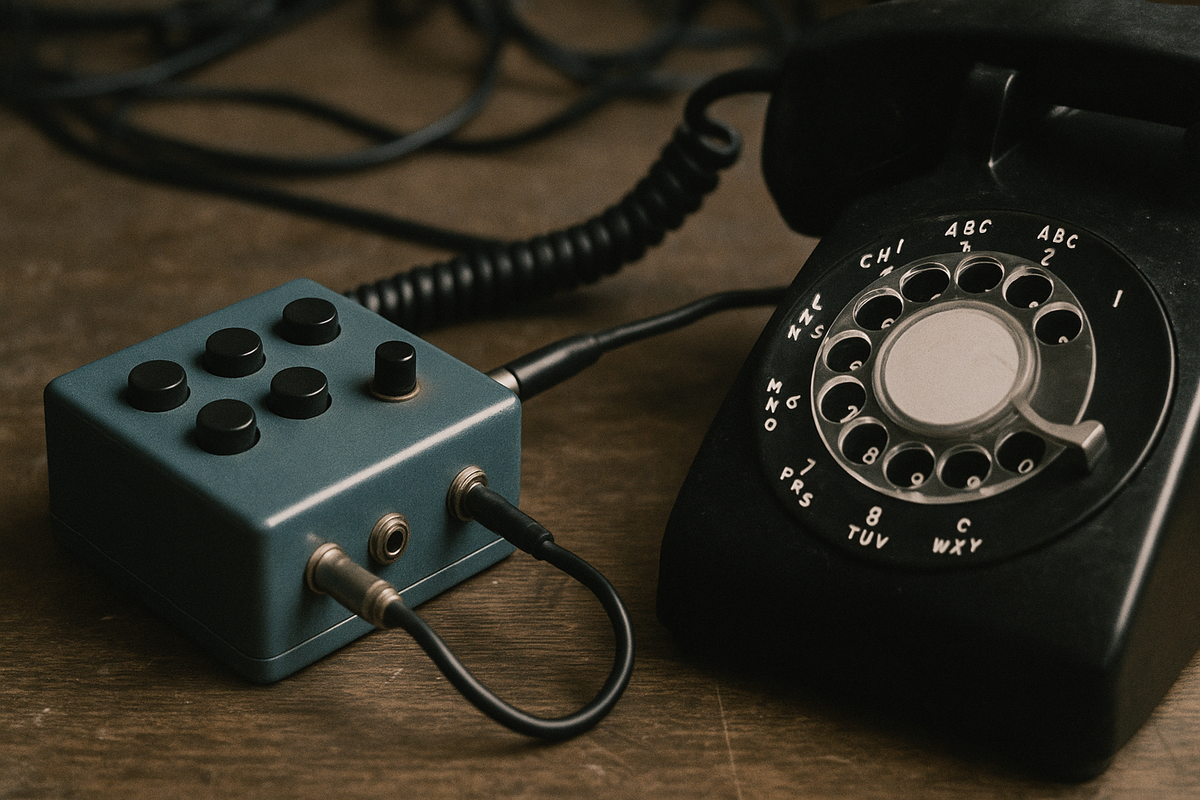
Esquire didn't bury the story in the back pages. They ran it as a feature—complete with a full-page photograph of the device itself, captioned "Actual size." The image showed a plain box with buttons, no larger than a cigarette pack. That box could steal long-distance calls from AT&T, the most powerful corporation in America.
The article was Ron Rosenbaum's "Secrets of the Little Blue Box," and it did something no mainstream publication had dared: it treated telephone hackers as folk heroes.
Two California teenagers read that issue. Steve Wozniak and Steve Jobs built their own blue boxes within weeks. They sold them out of dorm rooms. Years later, Jobs would say the experience gave them the confidence to start Apple. "If we hadn't made blue boxes," he told an interviewer, "there would have been no Apple."
The October 1971 Esquire didn't just document a subculture. It ignited one.
Archive Details
Publication: Esquire Magazine
Issue Date: October 1971
Featured Article: "Secrets of the Little Blue Box" by Ron Rosenbaum
Editor: Harold Hayes
Historical Significance: First mainstream coverage of phone phreaking; direct inspiration for Apple founders
When Ma Bell Was the Enemy
By 1971, America had learned not to trust institutions. The Pentagon Papers had exposed decades of lies about Vietnam. Nixon was wiretapping his enemies. And AT&T—"Ma Bell"—held an iron monopoly over every telephone line in the country.
Long-distance rates were extortionate. Calling across the country cost a day's wages for some families. International calls were reserved for emergencies or the wealthy. The phone company wasn't just a utility; it was a gatekeeper, deciding who could speak and who could afford to listen.
The blue box shattered that gate.
Phreakers—the name came from "phone" and "freak"—discovered that AT&T's switching system used audible tones to route calls. The network trusted those tones implicitly. Generate the right frequency, and you could command the system like a puppeteer pulling strings. A 2600 Hz tone told the network a call had ended, opening a routing channel. From there, phreakers could direct calls anywhere on earth.
Free. Untraceable. Theirs.
But this wasn't about saving money on phone bills. It was about power. "We were outlaws," one phreaker told Rosenbaum. "But we were good outlaws."
Captain Crunch and the Blind Experimenters
Rosenbaum's genius was recognizing that phone phreaking wasn't a crime story—it was a character study.
The article's breakout figure was Captain Crunch, whose real name was John Draper. He earned his nickname after discovering that a plastic whistle given away in Cap'n Crunch cereal boxes produced a perfect 2600 Hz tone. One blast from a toy whistle, and the entire Bell System opened up.
Draper became a legend in the underground. He'd call himself from coast to coast, bouncing his voice through switching stations in Tokyo, London, and Mumbai before landing back in California—all in under a minute. He treated the phone network like an instrument, composing symphonies of routing tones.
But Rosenbaum also profiled the phreakers no one else noticed: blind experimenters who could hear frequency shifts that sighted people missed. College students soldering circuits in dorm rooms. Garage tinkerers who taught themselves electronics from manuals. These weren't criminals in the traditional sense. They were explorers mapping a frontier that corporations claimed didn't exist.
Esquire's Editorial Gamble
Under editor Harold Hayes, Esquire had become the home of New Journalism—literary reporting that read like fiction. Gay Talese profiled Frank Sinatra without interviewing him. Tom Wolfe dissected status symbols and subcultures. The magazine treated fringe stories as worthy of the same rigor as politics or war.
Publishing "Secrets of the Little Blue Box" was a natural extension of that philosophy, but it was also a risk. Rosenbaum wasn't just describing illegal activity. He was explaining how to replicate it, step by step. The article included technical specifications, frequency charts, and interviews with active phreakers who described their methods in detail.
Other publications would have hedged. Esquire leaned in.
The magazine's design emphasized the subversive thrill. That stark photograph—"Actual size"—dared readers to imagine building their own. The prose balanced technical precision with narrative suspense, making complex electronics feel like the plot of a heist film. Rosenbaum painted phreakers as modern Robin Hoods, stealing from a monopoly that had been stealing from everyone else.
The article worked because Esquire understood something other outlets missed: by 1971, the counterculture had moved beyond communes and rock festivals. The new rebellion was technological. And it was just getting started.
The Artifact That Launched a Thousand Startups
Within months of publication, blue boxes proliferated. Electronics hobbyists built them from Rosenbaum's descriptions. College campuses became hotbeds of experimentation. AT&T security teams scrambled to track down the sudden surge in suspicious call patterns, but the knowledge had already spread too far.
For Wozniak and Jobs, the article was a blueprint. Wozniak, the technical genius, engineered a more sophisticated version than Rosenbaum had described. Jobs, the hustler, figured out how to sell them. They charged $150 per box and split the profits.
"The funny thing is," Wozniak later recalled, "we never made much money from them. But we learned we could build something and sell it. That was the beginning of everything."
The blue box taught them three lessons they'd carry into Apple: technology could be democratized, monopolies could be bypassed, and there was a market for devices that gave individuals power over systems designed to control them.
Without Rosenbaum's article, that education might never have happened.
The Themes That Echo
The Technology
Detailed explanations of how the blue box functioned, the precise tones it generated (particularly the 2600 Hz frequency), and how phreakers learned to manipulate AT&T's switching system.
The Personalities
Colorful figures like Captain Crunch (John Draper), who discovered that a toy whistle from a cereal box could mimic AT&T's control tones, and the blind experimenters who could hear what others couldn't.
The Illegality
Clear acknowledgment that blue boxing was wire fraud, alongside an exploration of why so many were willing to risk prosecution to circumvent the phone company's monopoly.
The Counterculture Ethos
Phreaking wasn't about saving money—it was about freedom, curiosity, and defiance of corporate control. The blue box became a symbol of individual power against institutional authority.
Why This Issue Still Matters
The Origin Document
This is the missing link between 1960s counterculture and 1980s Silicon Valley. Before there were hackers, there were phreakers. This article gave them legitimacy and an audience.
Direct Lineage to Apple
Steve Jobs and Steve Wozniak cited this article by name as their inspiration for building blue boxes. It's not metaphorical influence—it's cause and effect.
AT&T's Invincibility Challenged
A snapshot of when AT&T seemed untouchable. Within a decade, the government would break up the Bell monopoly. The phreakers won.
Esquire at Its Peak
Harold Hayes would leave the magazine in 1973. This issue captures the editorial vision that made Esquire essential reading for a generation—bold journalism that treated fringe stories with literary sophistication.
A Time Capsule of What Came Next
Today, when we talk about hacking, we mean data breaches and ransomware. But in 1971, hacking meant something simpler and stranger: outsmarting a system because you could, because it was beautiful, because no one said you were allowed.
Rosenbaum's article preserved that moment. The phreakers he interviewed weren't motivated by profit or politics. They wanted access. They wanted to know how things worked. They wanted to prove that the phone company's castle had a back door, and the key was a plastic whistle from a cereal box.
That spirit—playful, subversive, curious—became the foundation of Silicon Valley's self-mythology. Even as tech companies grew into the monopolies they once opposed, they still claimed the blue box as their origin story.
Own a Piece of History
The October 1971 Esquire is more than a magazine. It's the moment a subculture became a blueprint. For anyone tracing the roots of modern technology, this issue isn't optional reading—it's the first chapter.
Browse Esquire Magazine Collection