
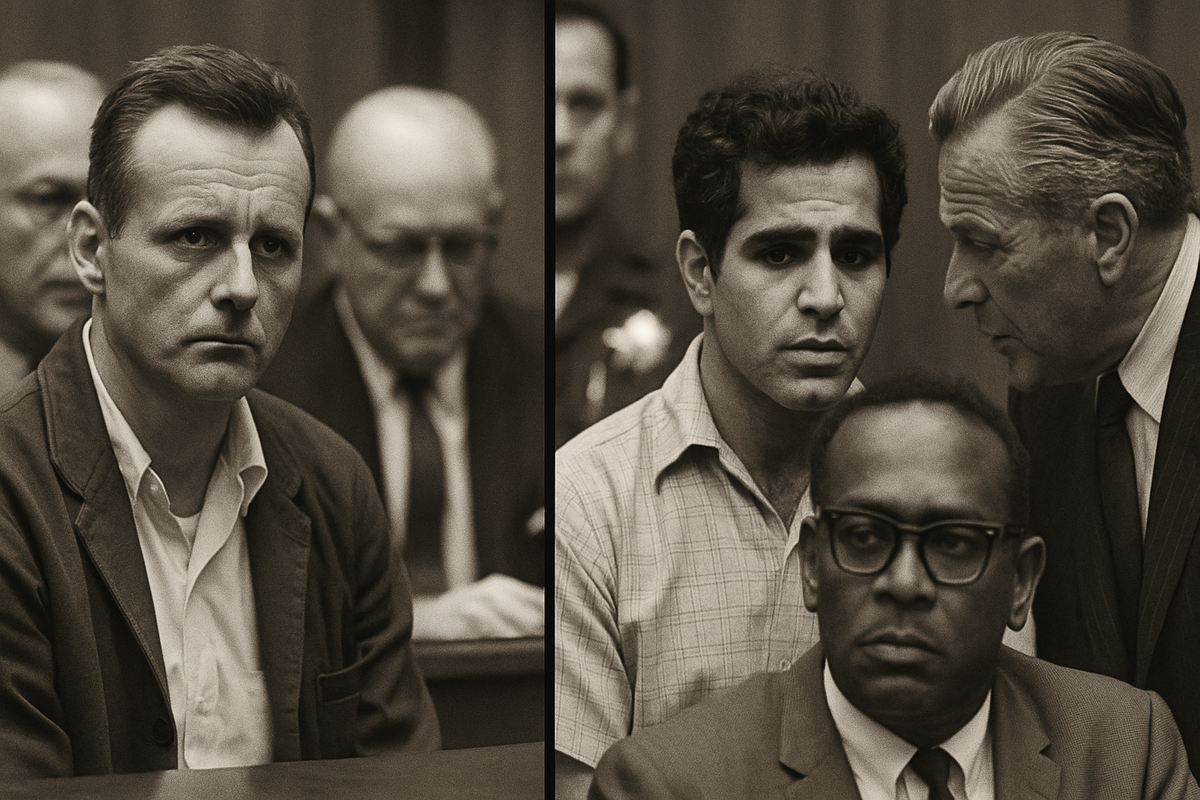
The Strange Case of King and Kennedy
When Jet Magazine Refused to Look Away
July 10, 1969. A pocket-sized magazine hit barber shops and beauty salons across Black America carrying a story most newspapers wouldn't touch. While mainstream media had moved on—filed the assassinations under "case closed"—Jet Magazine did something dangerous: it asked questions.
"The Strange Case of King and Kennedy" wasn't celebrity gossip or community uplift. It was an excavation. One year after bullets claimed both Dr. Martin Luther King Jr. and Senator Robert F. Kennedy, Jet's readers opened their copies to find the doubts they whispered in kitchens and church basements finally printed in ink.
For African Americans in 1969, this wasn't conspiracy theory. It was survival instinct.
Archive Details
Publication: Jet Magazine
Issue Date: July 10, 1969
Historical Context: One year after the assassinations of Dr. Martin Luther King Jr. and Senator Robert F. Kennedy
Article Title: "The Strange Case of King and Kennedy"
Significance: Rare documentation of Black America's collective skepticism toward official assassination narratives
Two Murders, Eight Weeks, One Unraveling Nation
April 4, 1968: Memphis. Dr. King falls on a motel balcony. Cities burn. More than 100 American cities erupt in grief and rage.
June 5, 1968: Los Angeles. Robert Kennedy bleeds out on a hotel kitchen floor, minutes after winning California's Democratic primary.
By the summer of 1969, America was hemorrhaging. The Vietnam War devoured young men. Student protests shut down campuses. The Civil Rights Movement, decapitated of its most luminous leader, splintered into factions. And two men sat in cells—James Earl Ray and Sirhan Sirhan—branded as lone gunmen while communities who'd lost everything refused to believe it was that simple.
Jet didn't just report this story. It held up a mirror to Black America's collective disbelief.
What Mainstream Media Wouldn't Print
While The New York Times and network news wrapped both assassinations in tidy narratives—disturbed loners, isolated incidents—Jet Magazine operated from a different premise: distrust was rational.
For readers who'd watched the FBI surveil civil rights leaders, who'd seen local police turn dogs and hoses on peaceful marchers, who'd buried Medgar Evers and Malcolm X and countless others, the official story felt like another lie wrapped in a press release.
Jet's coverage wasn't reckless. It was meticulous. The article presented court proceedings, trial sketches, and timeline forensics. But it also did something radical—it validated skepticism. It treated doubt not as paranoia but as pattern recognition.
This was Jet's genius: speaking directly to an audience the establishment press consistently failed.
Inside the Article: What Jet Dared to Document
This wasn't tabloid journalism. It was a community demanding accountability when institutions offered only closure.
The Enduring Power of Jet's Courage
More than fifty years later, "The Strange Case of King and Kennedy" reads like prophecy. In an era drowning in conspiracy theories and institutional distrust, Jet's 1969 coverage reminds us that some skepticism isn't paranoia—it's literacy.
The article didn't solve the mysteries. It didn't need to. It performed a different service: it told Black America that their questions were legitimate, their grief was justified, and their demand for truth was righteous.
That act of validation—that refusal to move on when justice remained incomplete—is why this issue endures.
Why This Issue Matters to Collectors
The July 10, 1969 Jet Magazine isn't just a collectible—it's a primary source document from a moment when history was still raw and unprocessed.
Temporal Proximity
Published exactly one year after the assassinations, before revisionist narratives hardened into accepted history. The pain here is unmediated, the skepticism unfiltered.
Singular Perspective
Few African American publications commanded Jet's reach and editorial courage. This issue captures how Black America processed trauma that white media rushed to explain away.
Cultural Artifact
Owning this issue means possessing a fragment of 1969's consciousness—the grief, the fury, the refusal to accept easy answers. It documents not just events but emotional truth.
Market Significance
Issues tied to Dr. King's legacy, particularly those exploring unsettled questions around his death, rank among the most sought-after Jet magazines. This isn't nostalgia. It's documentation of resistance.
For historians, this issue is evidence. For collectors, it's a relic of a moment when journalism meant bearing witness, not burying doubt.
Explore the Archive
Original copies of Jet Magazine are more than collectibles. They are records of a community that insisted on being heard when America wanted silence.
From the 1950s through the 2000s, Jet chronicled African American life with unflinching honesty—the triumphs, the tragedies, the struggles, the sublime. The July 10, 1969 issue on King and Kennedy stands among its most significant, but it's one chapter in a larger archive of resistance, resilience, and truth-telling.
Browse Jet Magazine CollectionThe July 10, 1969 issue of Jet Magazine remains what it was in that barbershop, that beauty salon, that kitchen table in 1969: proof that some communities refuse to forget, even when forgetting is easier. By confronting the unanswered questions around the King and Kennedy assassinations, Jet honored the dead and the living—those who fell and those who remained to demand justice.
Hold this issue in your hands, and you hold more than paper. You hold a refusal. A question mark that never became a period.