
What Price Painless Childbirth?
Fear, Medicine, and Women's Health in Postwar America
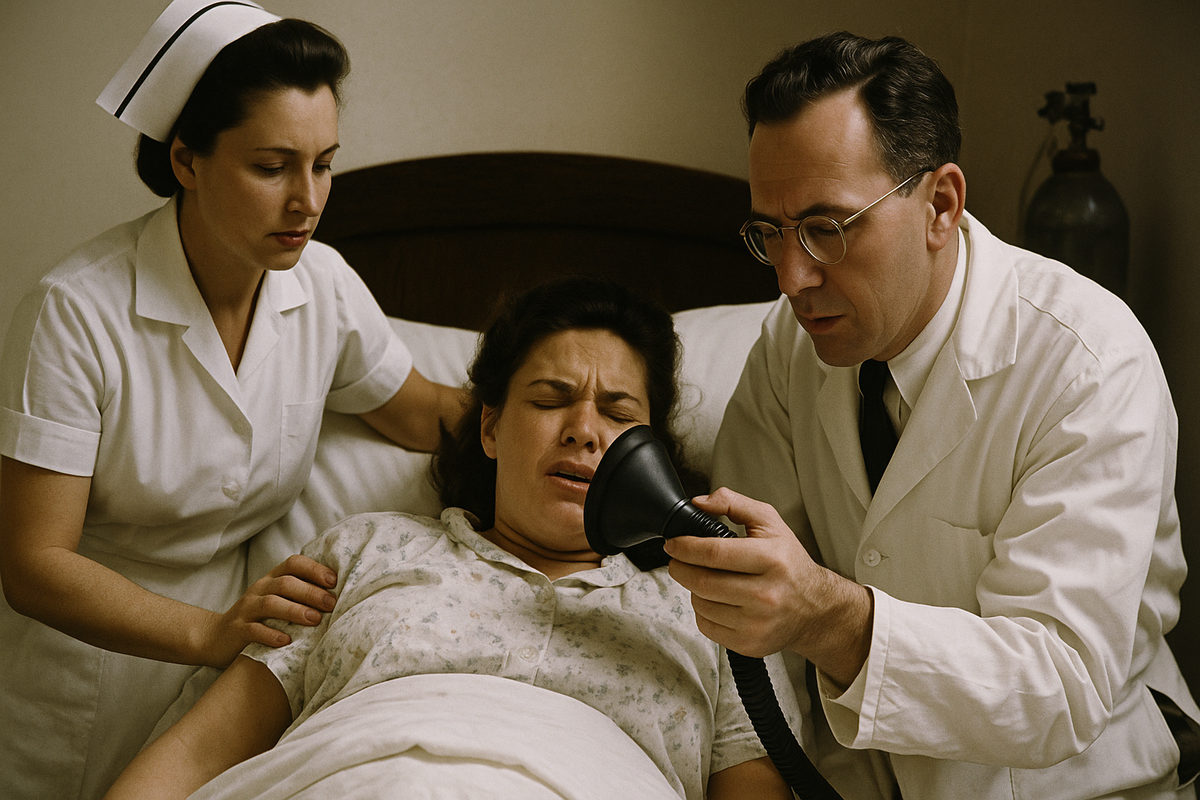
When American women opened the June 1948 issue of Ladies' Home Journal, they found something unexpected between the recipe cards and fashion plates: a frank, unflinching conversation about the pain of childbirth. Dr. Beatrice E. Tucker's feature, "What Price Painless Childbirth?", did what polite society rarely allowed—it named the fear, traced the history, and mapped the medical frontier of labor and delivery at a moment when millions of women were about to give birth.
This wasn't just another health column. It was a cultural pivot point, published at the height of the baby boom, when the promise of modern medicine collided with centuries of silence, superstition, and suffering.
Archive Details
Featured Article: "What Price Painless Childbirth?" by Dr. Beatrice E. Tucker
Publication: Ladies' Home Journal, June 1948
Historical Context: Baby Boom Era, Postwar America
Archive Source: Original Magazines Collection
The Baby Boom and the Burden of Memory
The year 1948 sat squarely in the middle of America's postwar baby boom. Soldiers had come home, suburbs were sprawling outward, and the birth rate climbed to heights unseen in generations. Optimism was the national mood. But in the delivery rooms of American hospitals, optimism met an older, darker inheritance: the generational memory of childbirth as a life-threatening ordeal.
A century earlier, as many as ten women died for every hundred babies born. Infections, hemorrhages, obstructed labor—these were the specters that haunted every pregnancy. By 1948, advances in hospital care, sterile technique, and anesthesia had brought maternal mortality to historic lows. The United States could claim one of the safest childbirth systems in the world.
Yet safety did not erase fear. Women carried stories passed down from mothers and grandmothers—stories of agony, trauma, and loss. Cultural taboos kept childbirth cloaked in silence. Even as medicine advanced, the emotional weight remained.
Dr. Tucker understood this. Her article began not with physiology, but with psychology.
Fear as the Amplifier
Dr. Tucker's central insight was radical in its simplicity: fear magnified pain. A woman who entered labor terrified—of doctors, of hospitals, of being left alone, of her own inadequacy—would suffer more intensely than a woman who felt informed, supported, and in control.
This was not pseudoscience. It was clinical observation, backed by the emerging field of psychosomatic medicine. Fear tensed muscles, elevated heart rates, and flooded the body with stress hormones. It turned labor into a battle against the body itself.
Eliminating fear, Dr. Tucker argued, was as crucial as managing pain. The two were inseparable.
A Global History of Relief
To contextualize the modern moment, Dr. Tucker took her readers on a tour through history. Women across cultures and centuries had sought ways to blunt the edge of childbirth:
Ancient Remedies
Chinese women used opium, Egyptians turned to beer, and African communities brewed herbal concoctions to ease labor pain.
European Innovation
Europeans experimented with hypnosis and early forms of pain management before modern medicine arrived.
The Anesthesia Revolution
The 19th century brought ether and chloroform, transforming surgery and eventually childbirth itself.
Royal Endorsement
Queen Victoria's use of chloroform during the birth of Prince Leopold in 1853 shattered moral objections and normalized pain relief.
But the true revolution came in the 19th century with the discovery of modern anesthesia. Ether and chloroform transformed surgery—and, eventually, childbirth. The turning point arrived when Queen Victoria herself used chloroform during the birth of Prince Leopold in 1853. Royal endorsement shattered the moral objections that had framed labor pain as divine punishment. If the Queen of England could seek relief, so could anyone.
By 1948, American women had access to a menu of options: ether, nitrous oxide (laughing gas), saddle block anesthesia, and "analgesia-amnesia" techniques that dulled pain and erased traumatic memories. The era of painless childbirth had arrived—though not without caveats.
The Physician's Dilemma: Relief vs. Risk
Dr. Tucker did not oversell the promise. She was clear-eyed about the trade-offs. No anesthetic was without risk. Ether could depress respiration. Chloroform carried cardiac dangers. Saddle blocks required precision. The physician's role was to balance relief against safety, calibrating interventions to protect both mother and child.
This was the paradox of progress: the tools that made childbirth safer also introduced new variables, new responsibilities, new ways for things to go wrong. The promise of painless childbirth was real, but it was tempered by medical judgment and individual circumstance.
For readers, this transparency must have been both reassuring and sobering. Dr. Tucker respected her audience enough to tell the truth.
Why Ladies' Home Journal Mattered
By 1948, Ladies' Home Journal was the most widely read women's magazine in America. It offered recipes, fiction, fashion advice—but it also tackled serious social and medical issues. Publishing Dr. Tucker's article was an editorial choice with cultural weight. It signaled that women's health was not a private matter to be whispered about in kitchens. It was public knowledge, worthy of mainstream discussion.
Unlike technical medical journals, the Journal translated complexity into accessibility. It bridged the gap between scientific progress and lived experience. For many women, this article may have been their first encounter with the actual mechanics of anesthesia, the first time they saw their fears named and validated.
This was empowerment through information. And in 1948, that was still a revolutionary act.
The Enduring Significance
The June 1948 issue of Ladies' Home Journal is more than a collectible artifact. It is a document of transition—a moment when American women stood between the old world of silent suffering and the new world of medical agency.
Historical Rarity
Published at the dawn of the baby boom, it captures the anxieties and aspirations of a generation navigating unprecedented social change.
Medical Milestone
One of the earliest mainstream discussions of anesthesia in women's magazines, predating the natural childbirth movement and feminist health activism of later decades.
Cultural Artifact
A window into how postwar America navigated the intersection of science, gender, and the body during a transformative era.
Family Legacy
For descendants of women who lived through this era, owning this issue is a way to honor maternal lineage and historical experience.
Vintage issues like these are not ephemera. They are primary sources, preserving voices and concerns that shaped mid-20th-century family life.
A Living Archive
Just as Life brought the war into American homes, Ladies' Home Journal brought the realities of women's lives—childbirth, marriage, health, domesticity—into the public conversation. The June 1948 feature endures because it speaks to both the timeless universality of childbirth and the specific pressures of postwar change.
It is a reminder that progress in women's health is never purely scientific. It is cultural, social, and deeply personal. And magazines like Ladies' Home Journal were the bridges that carried those conversations forward.
Explore the Collection
For collectors, historians, and families preserving maternal memory, these magazines are not just reading material—they are living archives of women's experience in 20th-century America.
Browse Ladies' Home Journal Magazine Collection