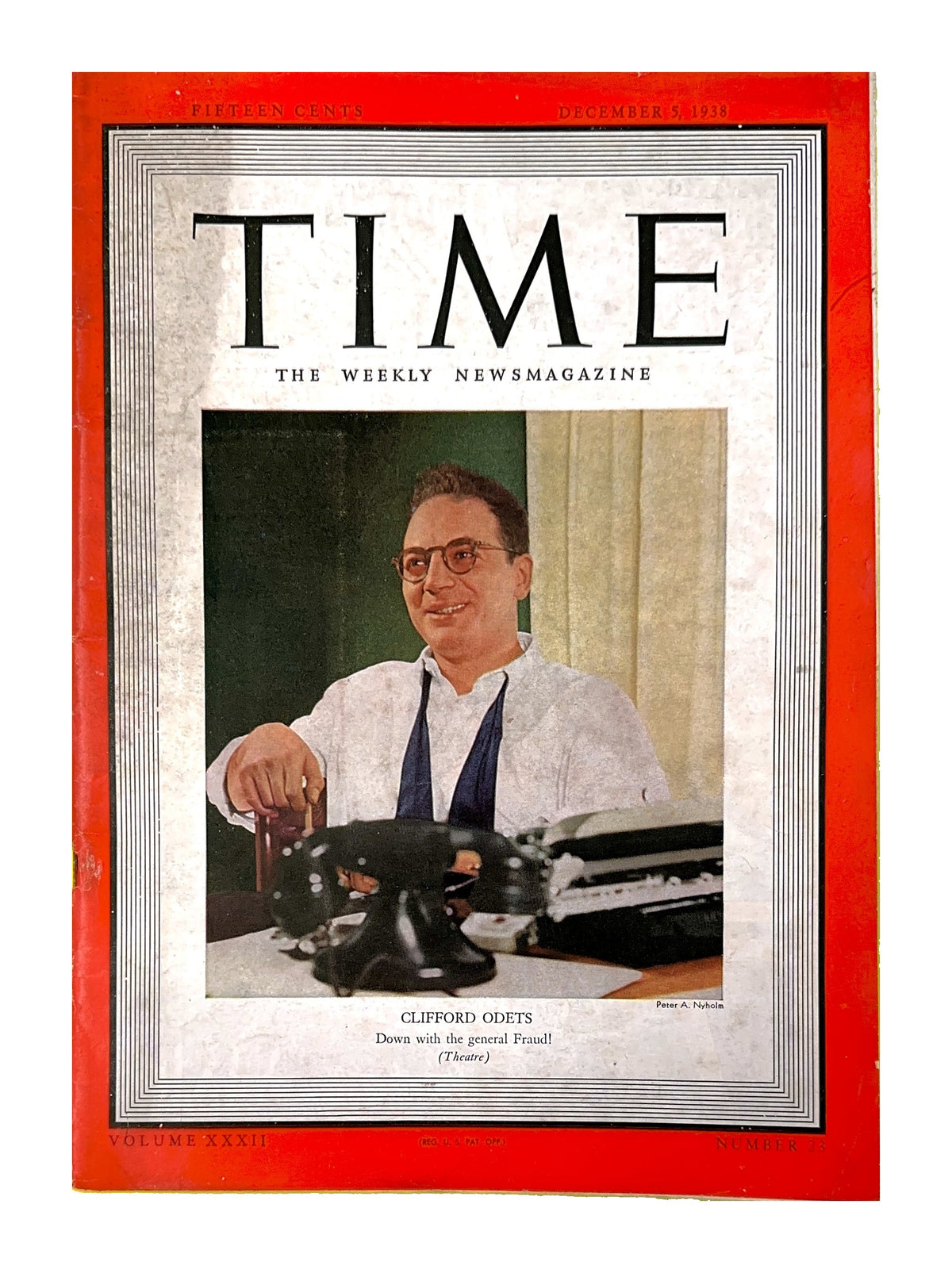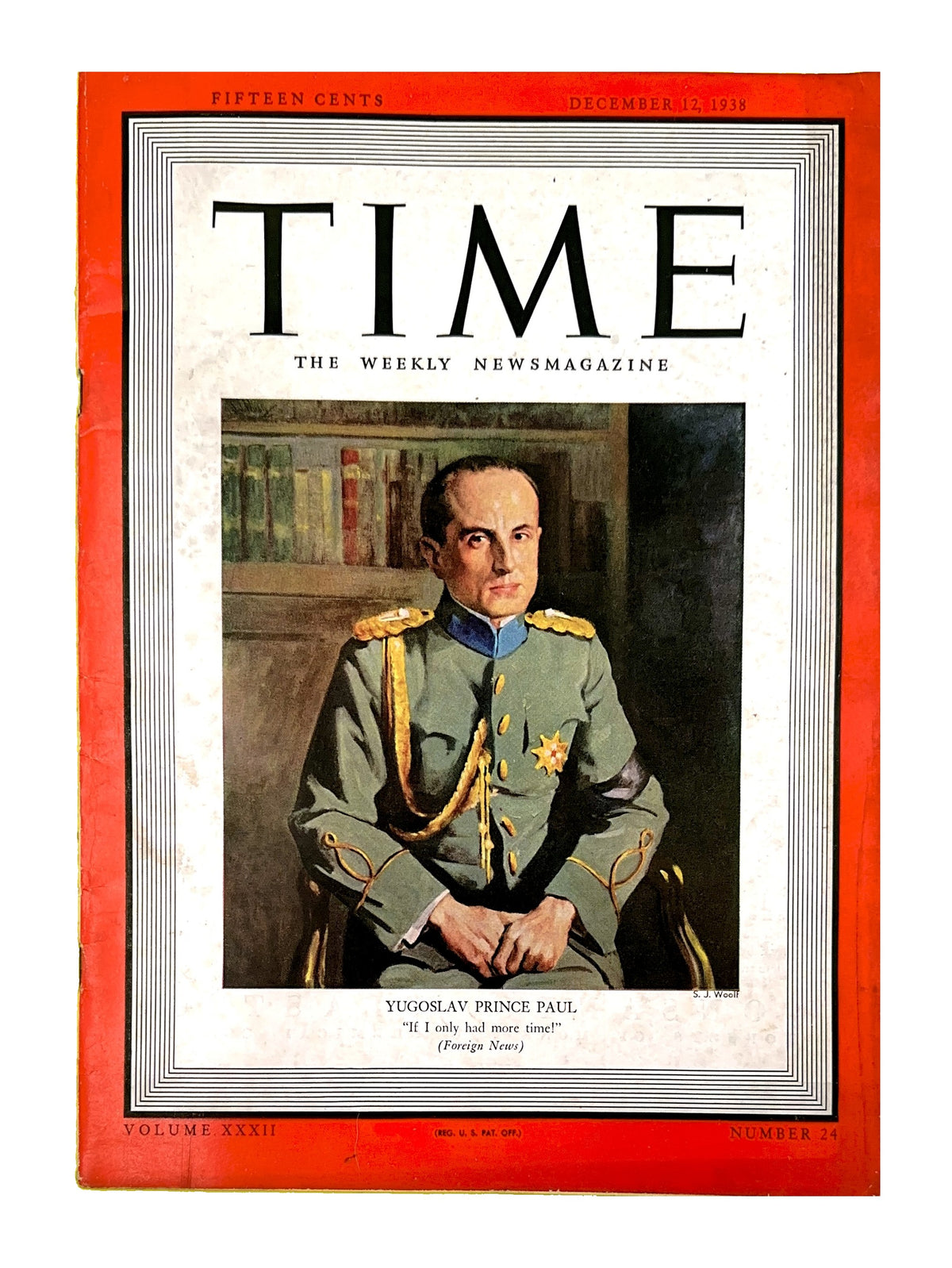
📖 About this Collection
1938: The Year America Needed Heroes
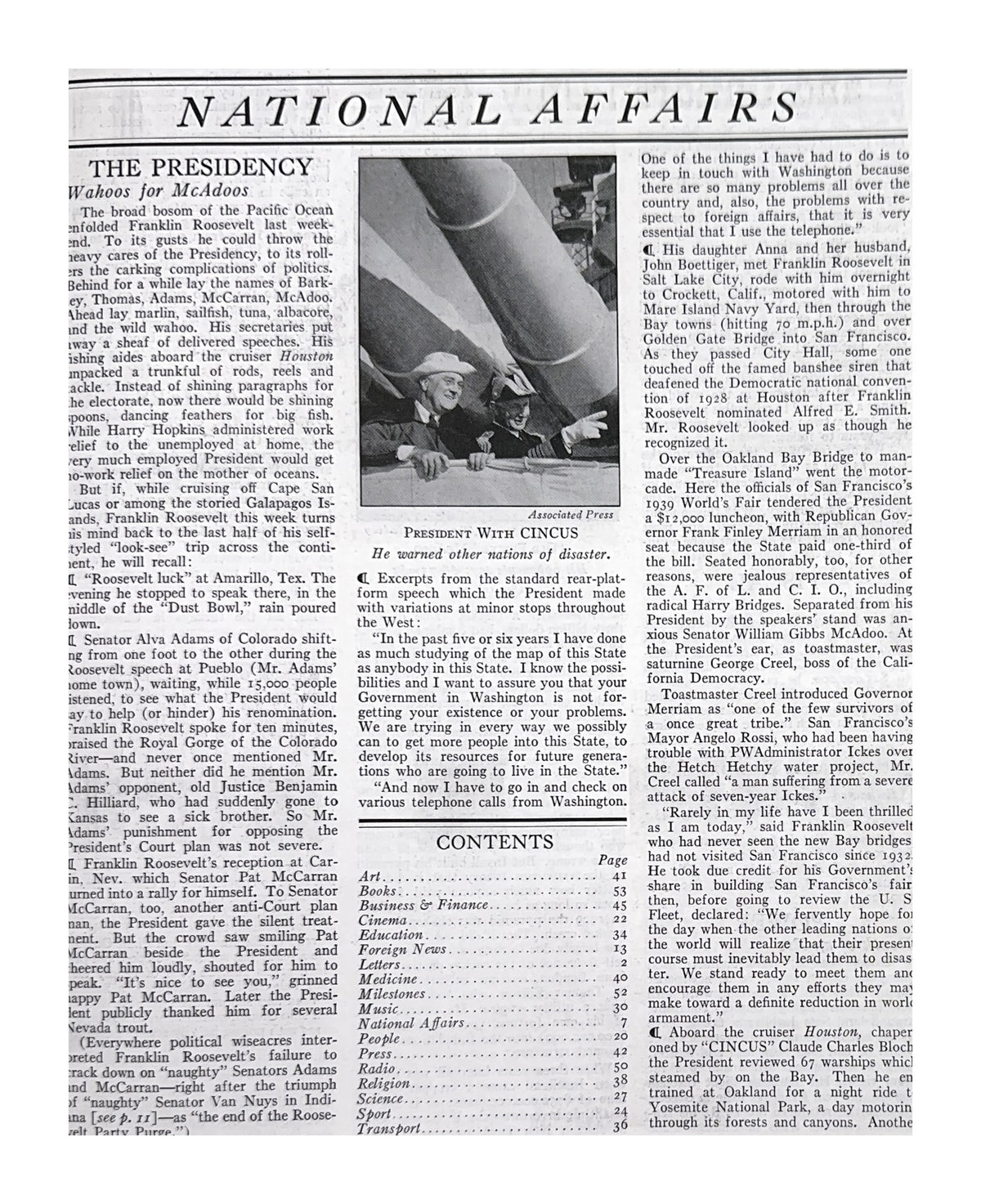
The world teetered on the brink in 1938, as Europe marched toward war and America struggled to lift itself from Depression-era despair. German forces annexed Austria in March, while Britain's Neville Chamberlain returned from Munich in September waving his ill-fated "peace in our time" agreement. Across the Atlantic, Americans sought reassurance and escape wherever they could find it. On June 25, President Franklin D. Roosevelt signed the Fair Labor Standards Act into law, establishing the 25-cent minimum wage, the 40-hour workweek, and ending child labor—a watershed moment for workers' rights that dominated headlines in Time and Newsweek. Yet even as Congress debated labor reform, the nation craved something more than political victories. They yearned for symbols of hope, for proof that underdogs could triumph and that extraordinary individuals could rise to meet impossible challenges. This was the world your loved one entered in 1938—a year suspended between the fading promise of the New Deal and the gathering storm across the ocean.
The cultural landscape of 1938 reflected America's hunger for heroism in all its forms. On April 18, Superman made his debut in Action Comics #1, introducing the superhero archetype that would dominate American mythology for generations. Detective magazines and pulp periodicals flew off newsstands, their lurid covers promising escapism through crime stories and adventure tales. On November 1, the nation stopped to witness "The Match of the Century" at Pimlico Race Course, where the scrappy underdog Seabiscuit defeated Triple Crown champion War Admiral in a race that Sports Illustrated would later call one of the greatest sporting events of the century. The victory resonated far beyond the track, becoming a metaphor for Depression-era resilience. Then, on October 30, Orson Welles' radio broadcast of The War of the Worlds caused genuine panic among listeners who believed Martians had invaded New Jersey—a testament to both the power of new media and the anxiety permeating American life. Original magazines from 1938 chronicle these moments in authentic detail, from Life's photo spreads of Seabiscuit's triumph to Variety's coverage of radio's expanding influence, preserving the advertisements, typefaces, and visual design that defined this pivotal year.
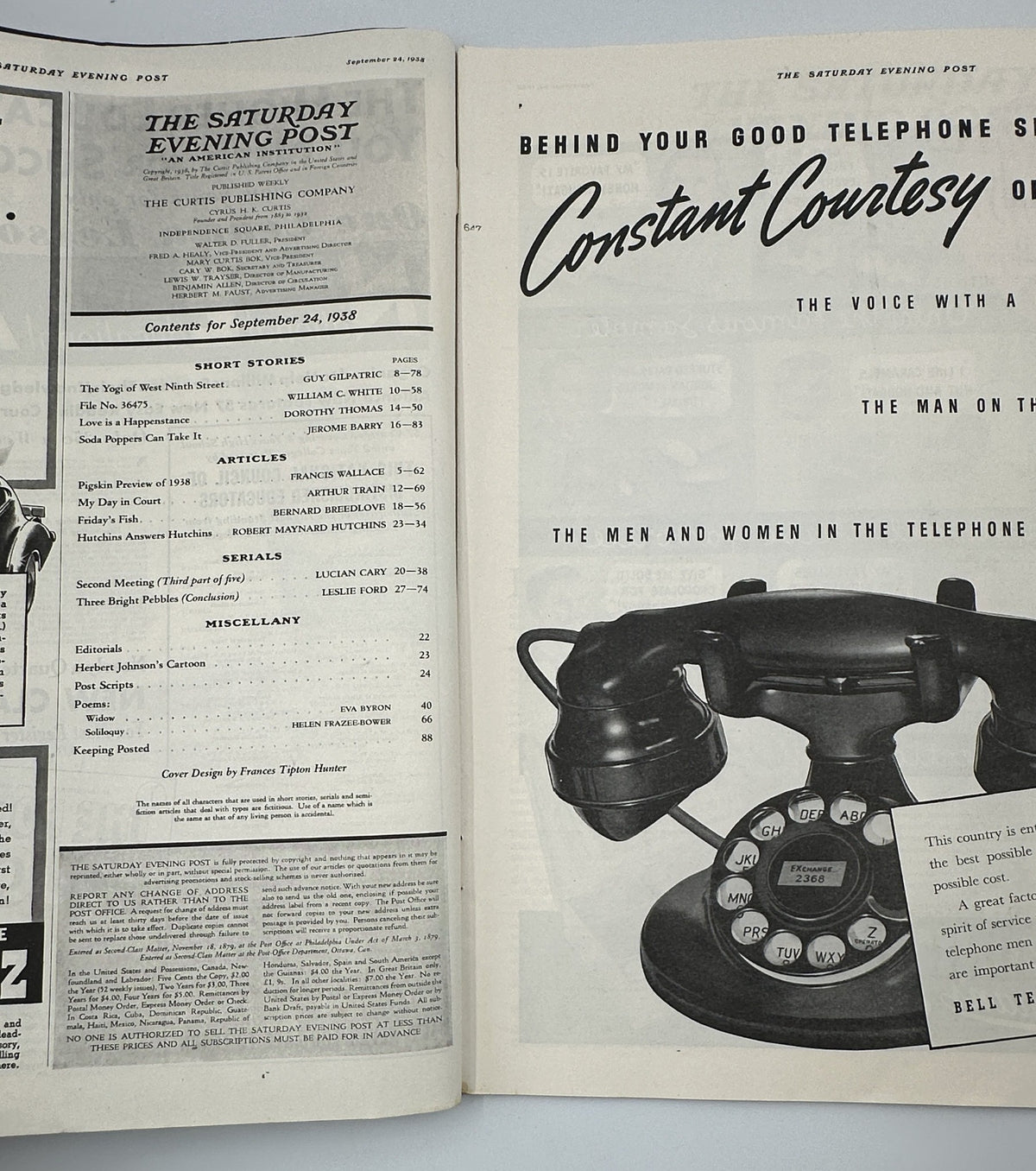
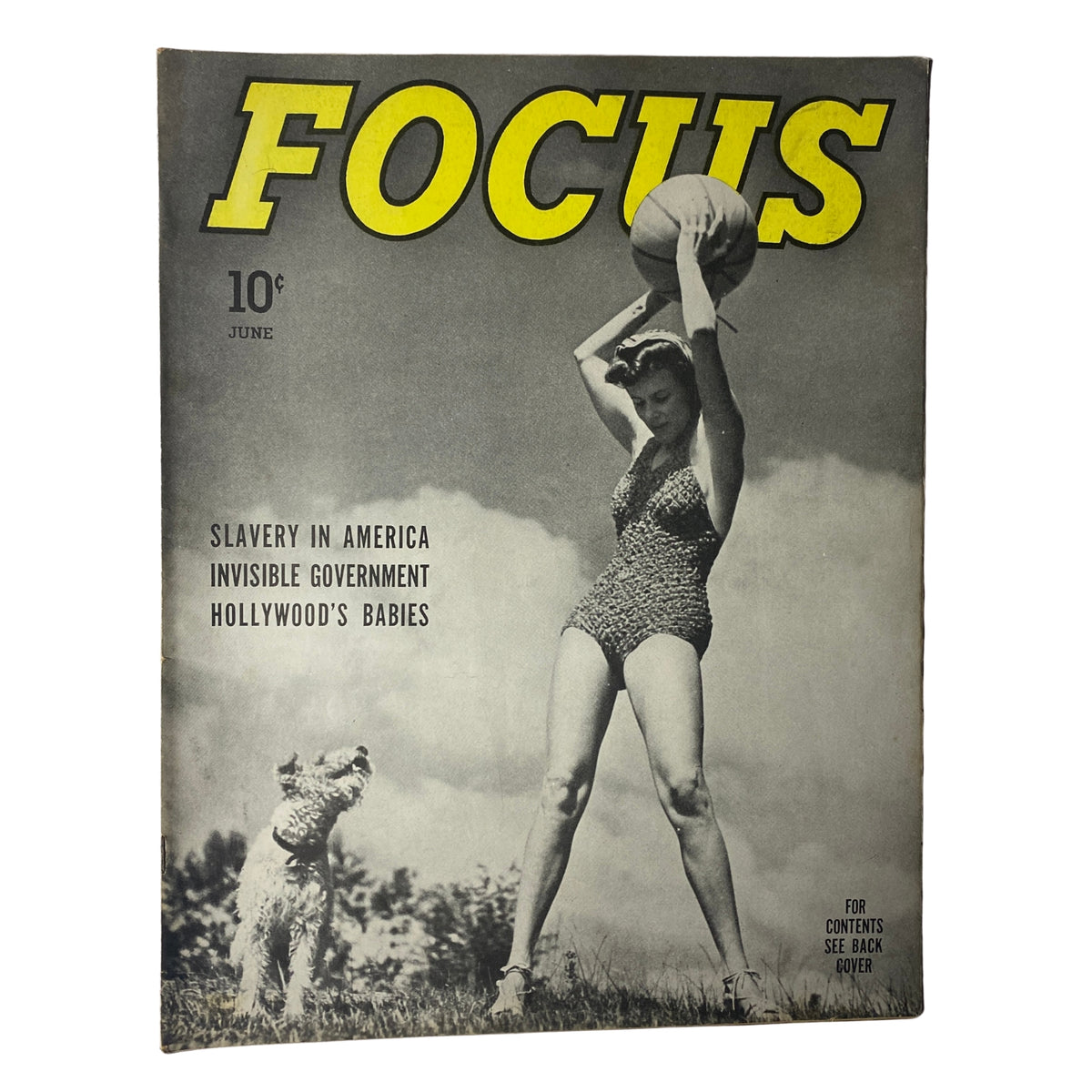
What You'll Discover in Original 1938 Magazines
-
Action Comics and the Birth of Superman: Detective magazines and comic-adjacent periodicals featuring early superhero advertisements and pulp fiction narratives, often illustrated with bold four-color printing and dramatic cover art that captured the era's appetite for larger-than-life heroes.
-
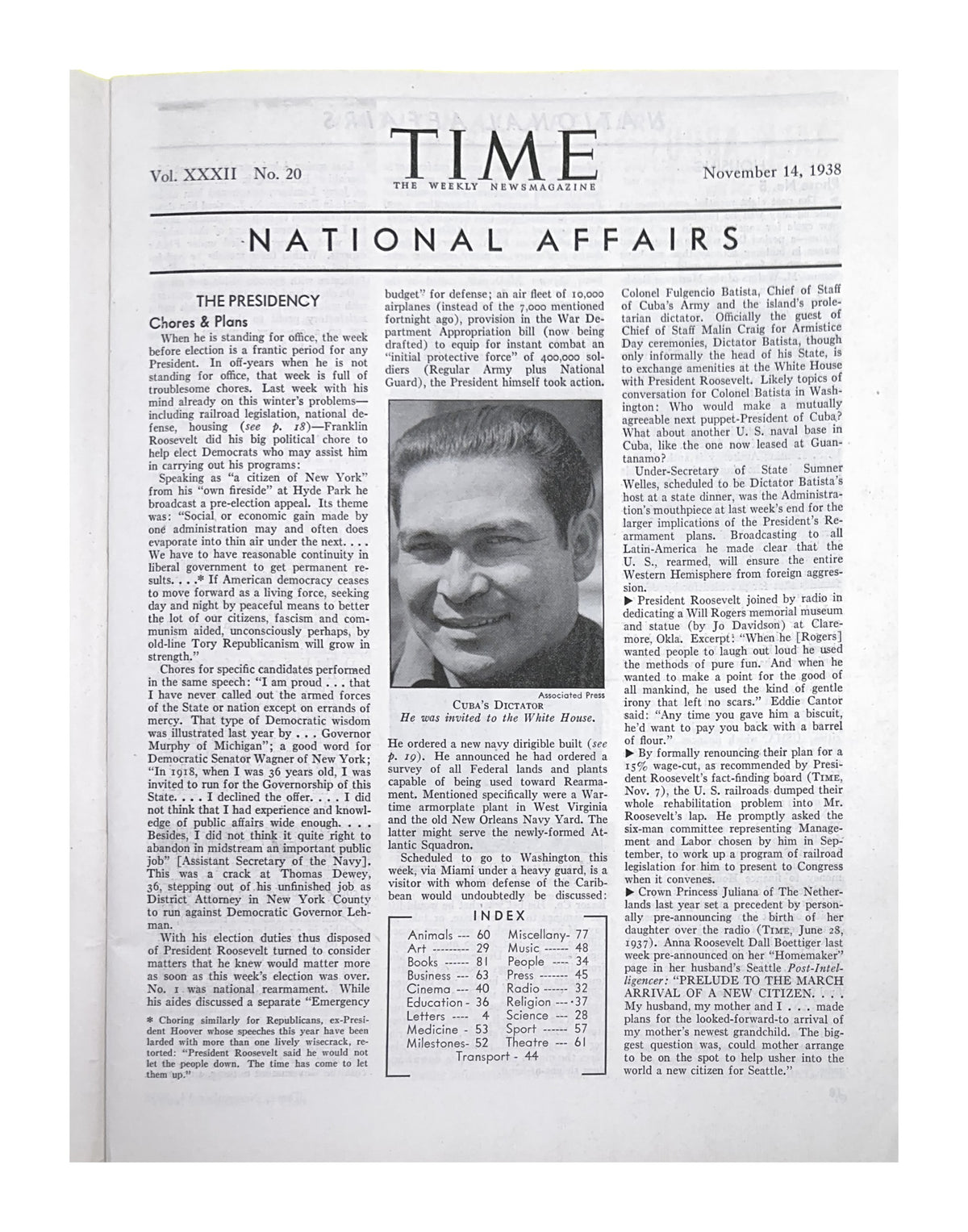
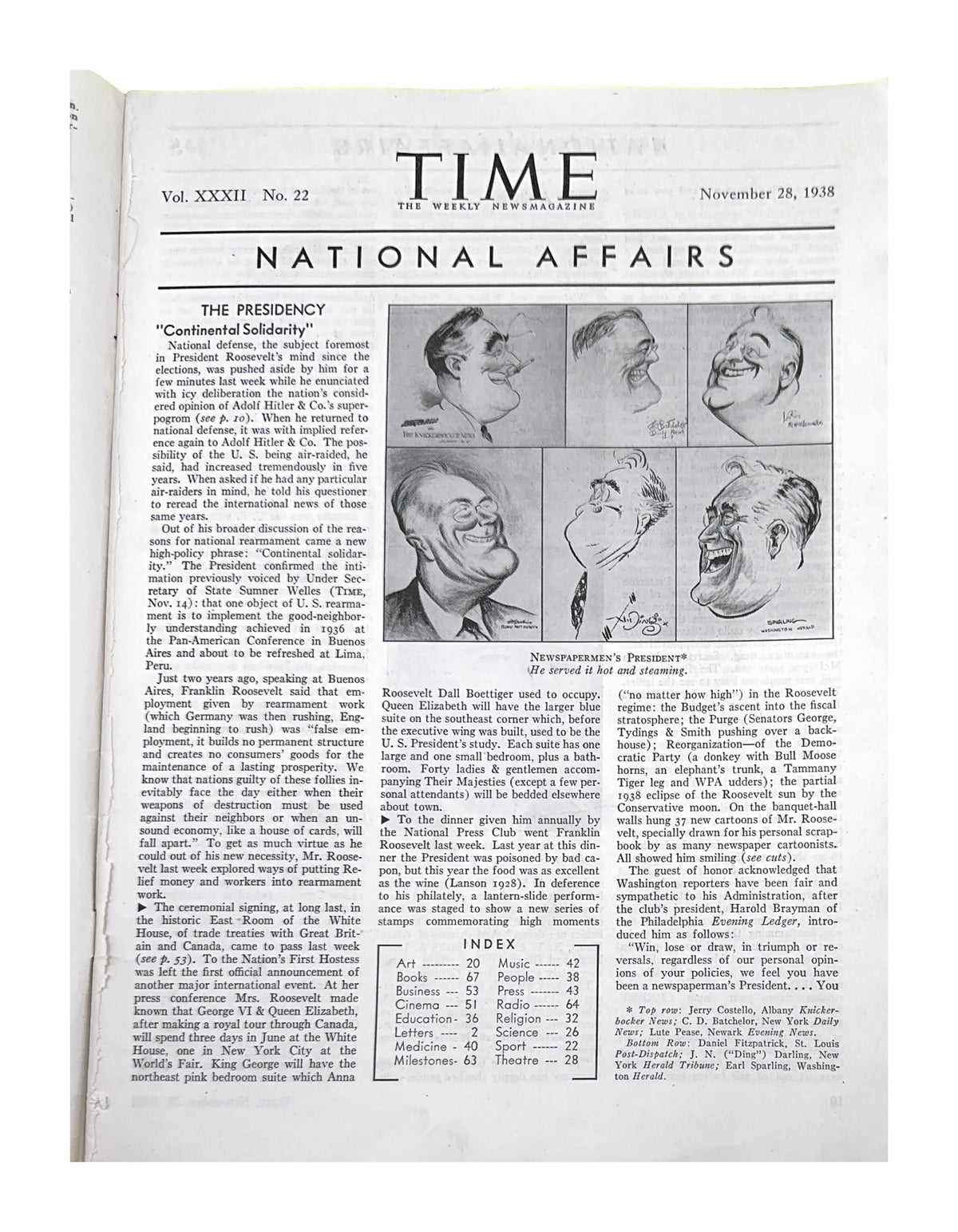
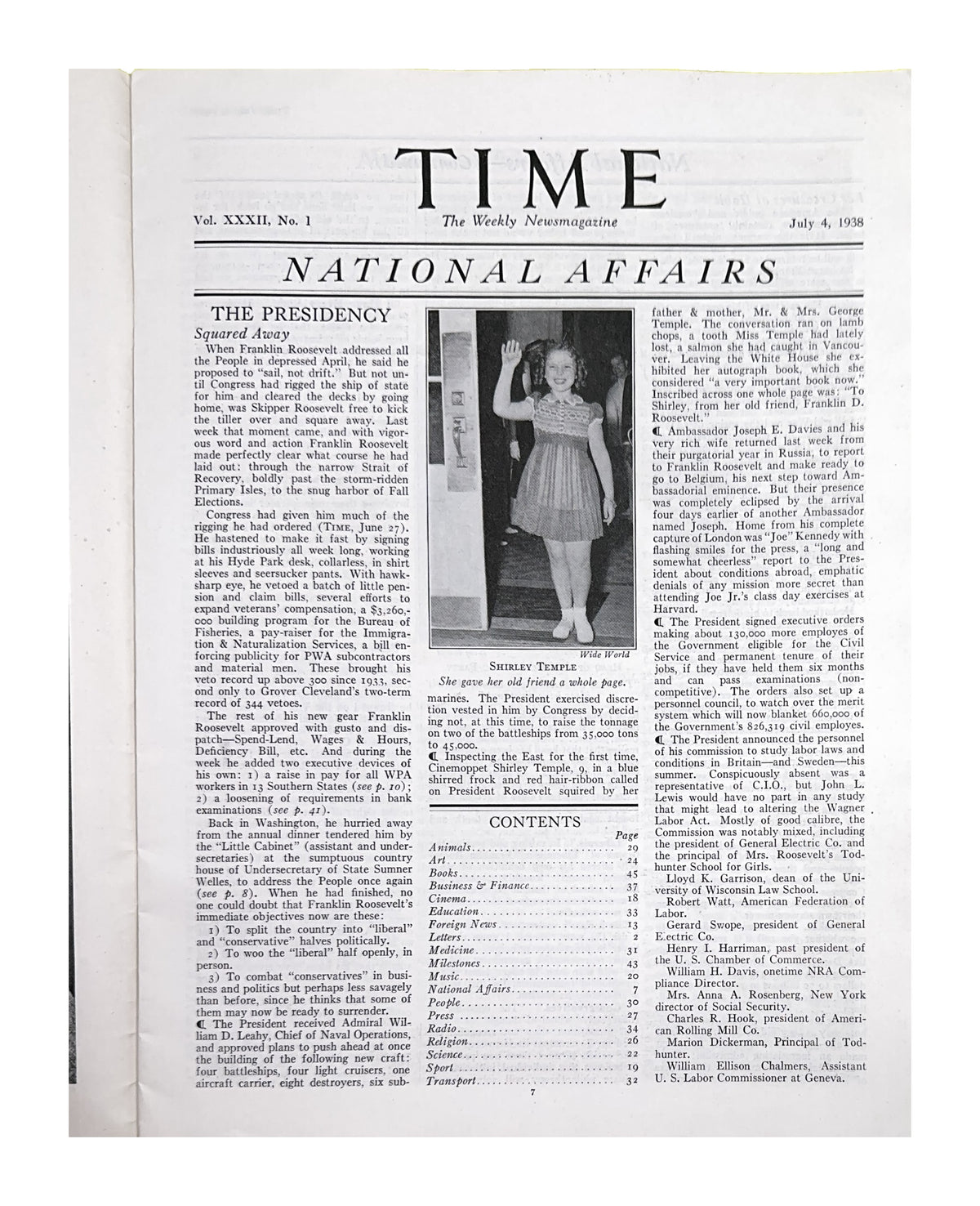
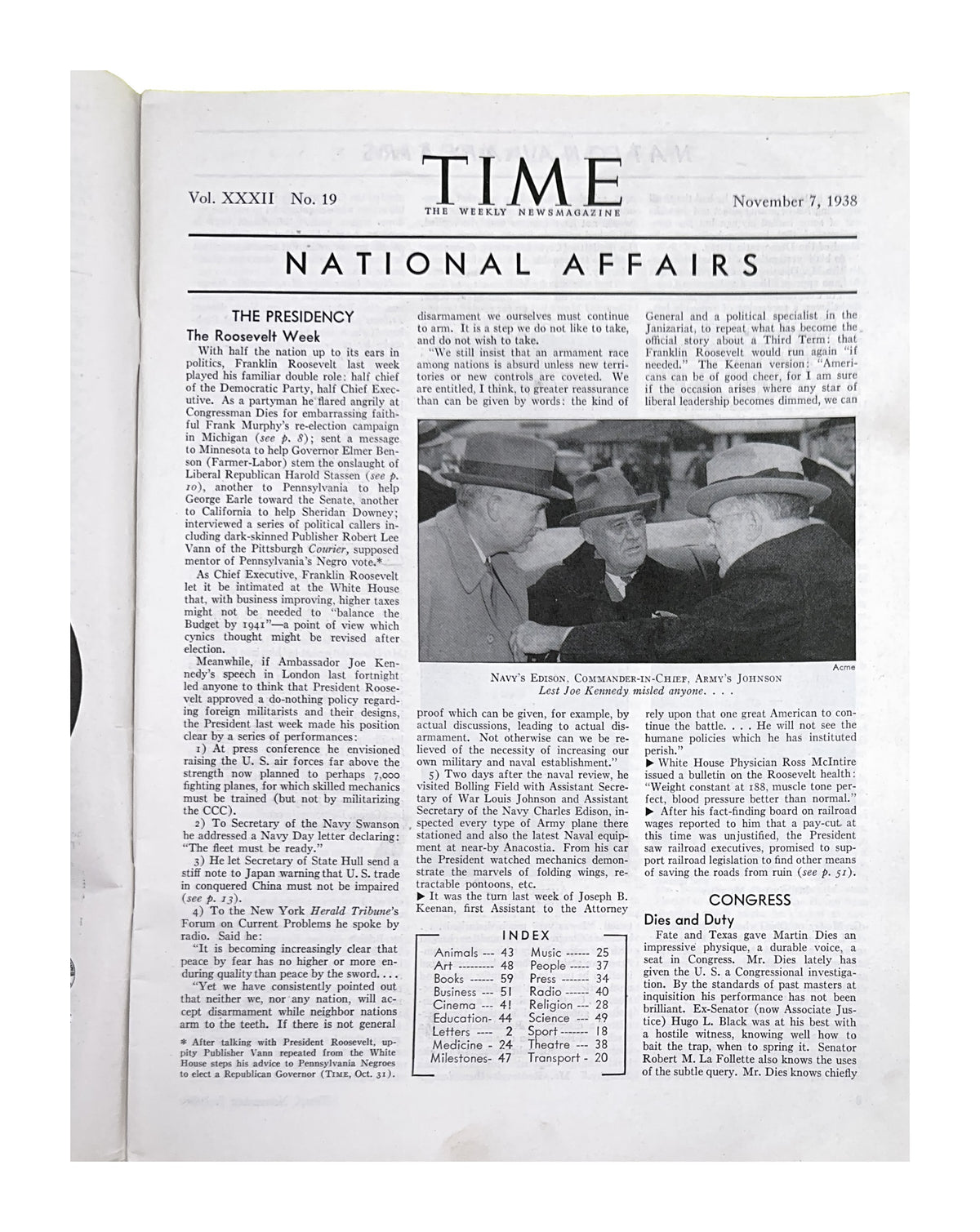
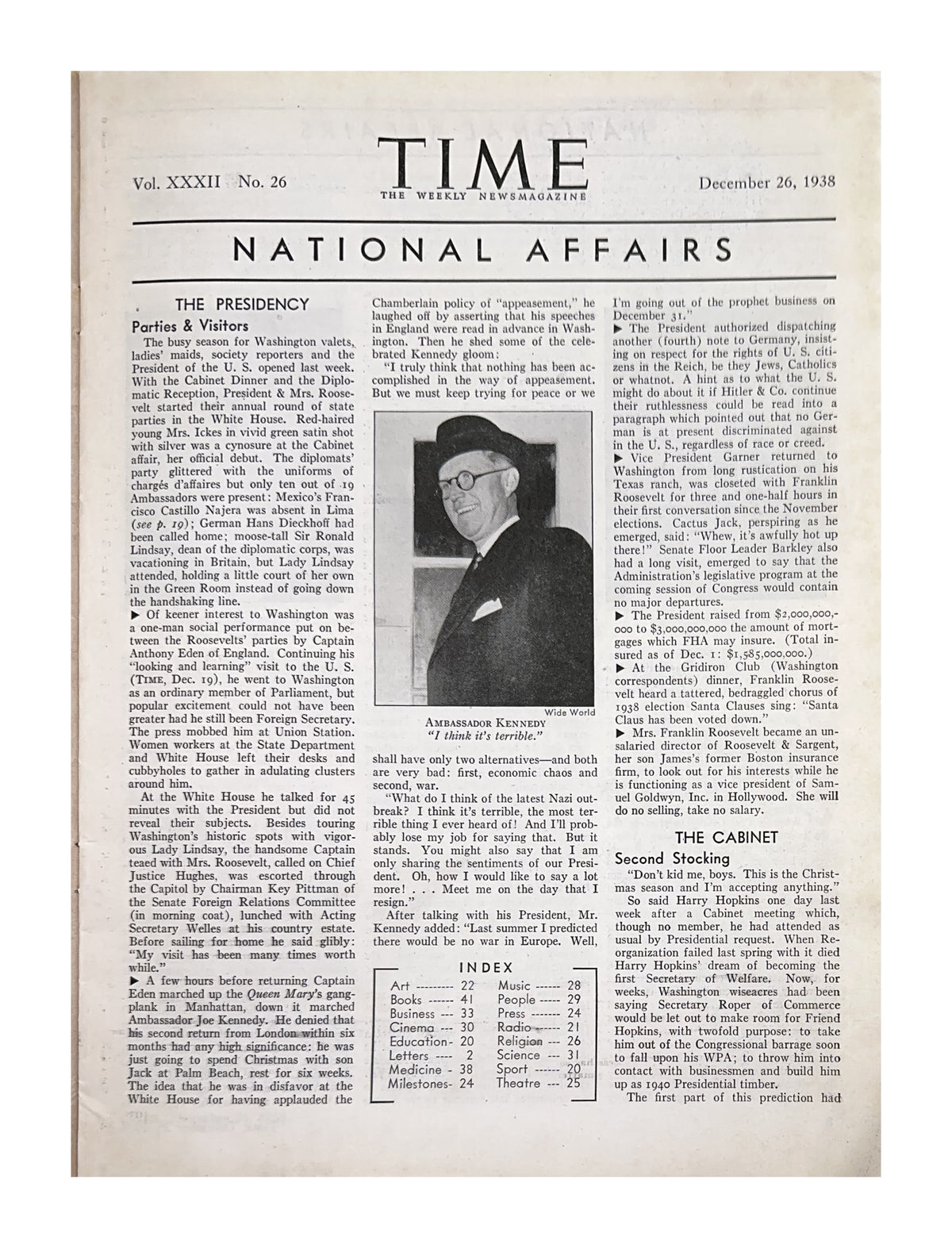
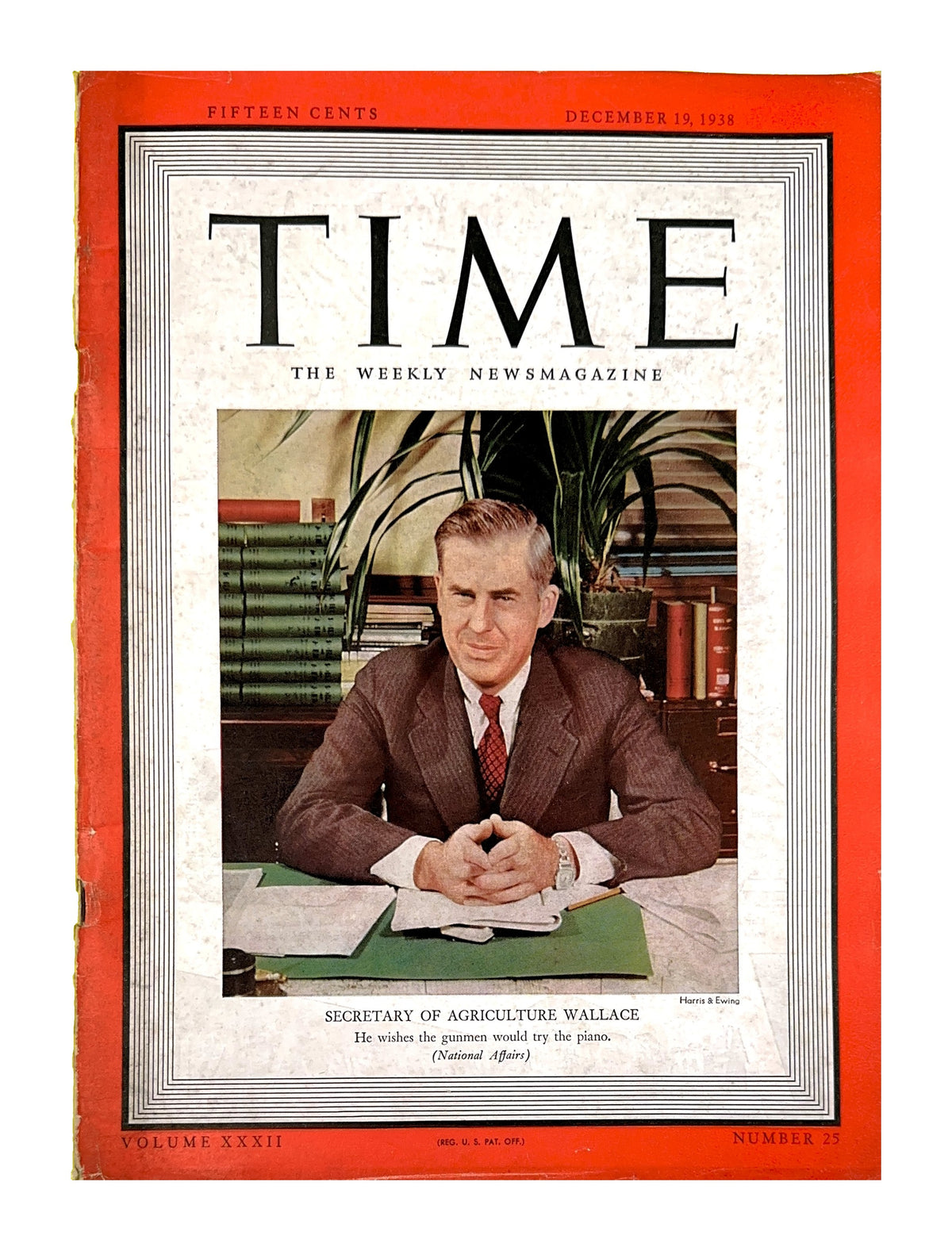
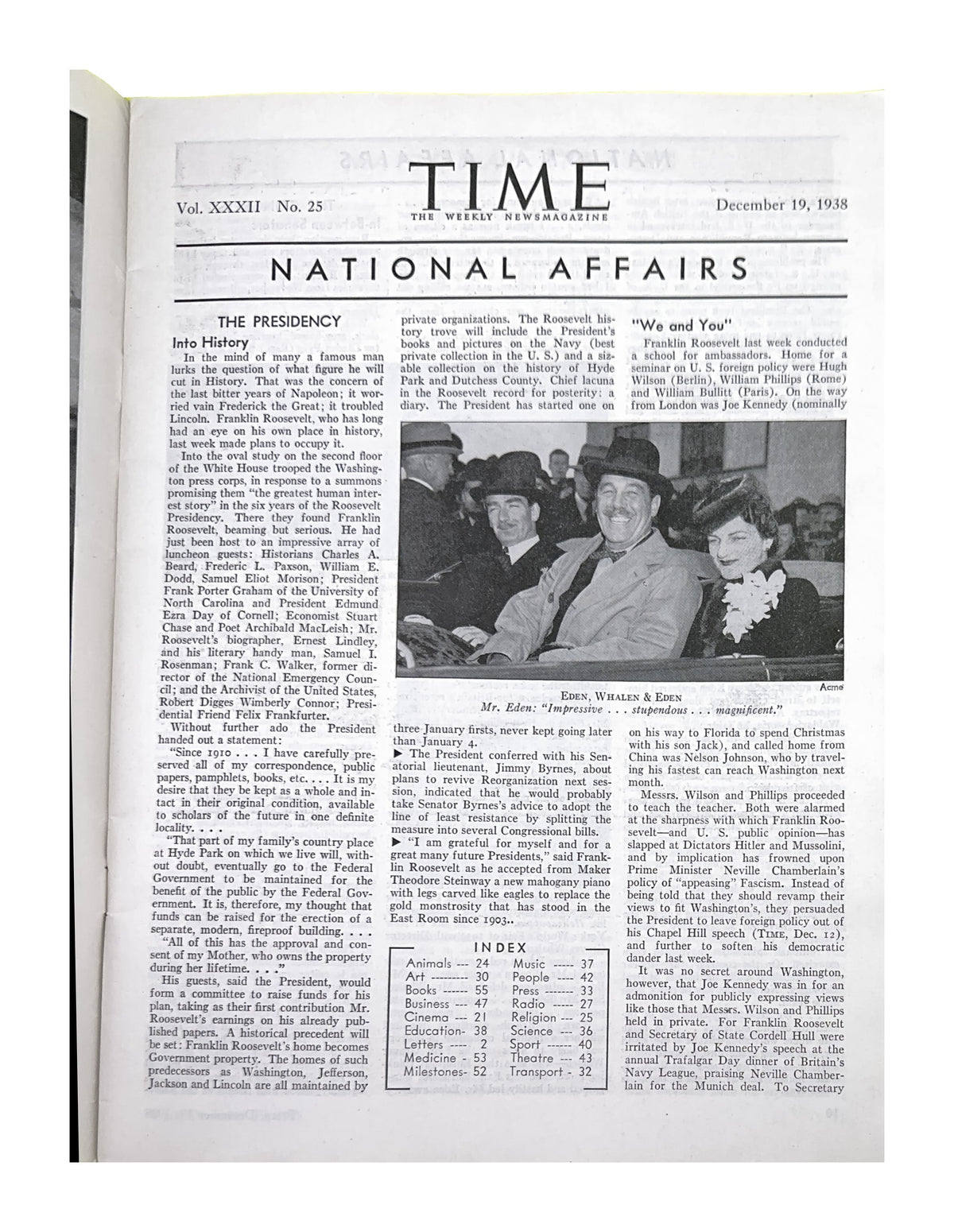
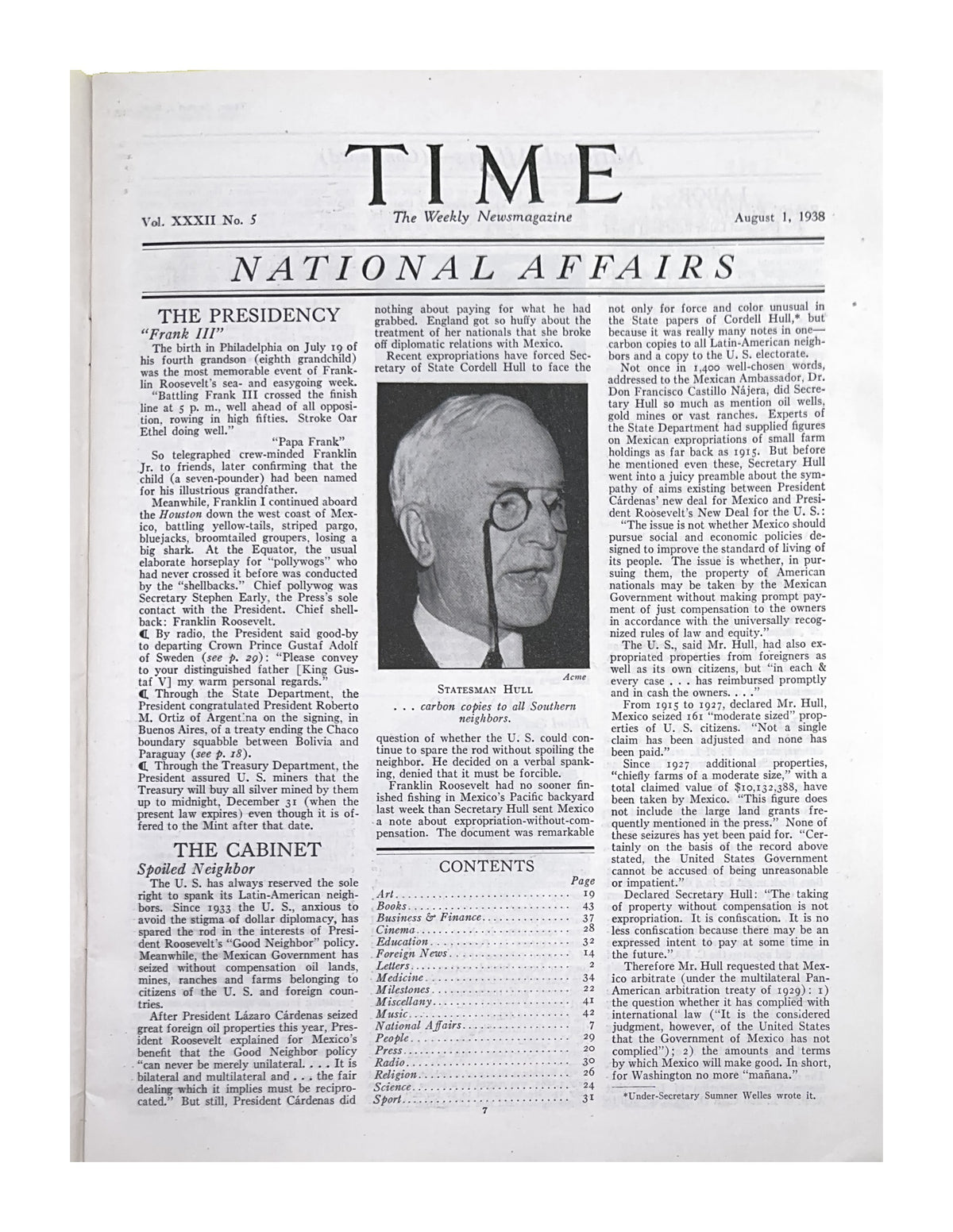
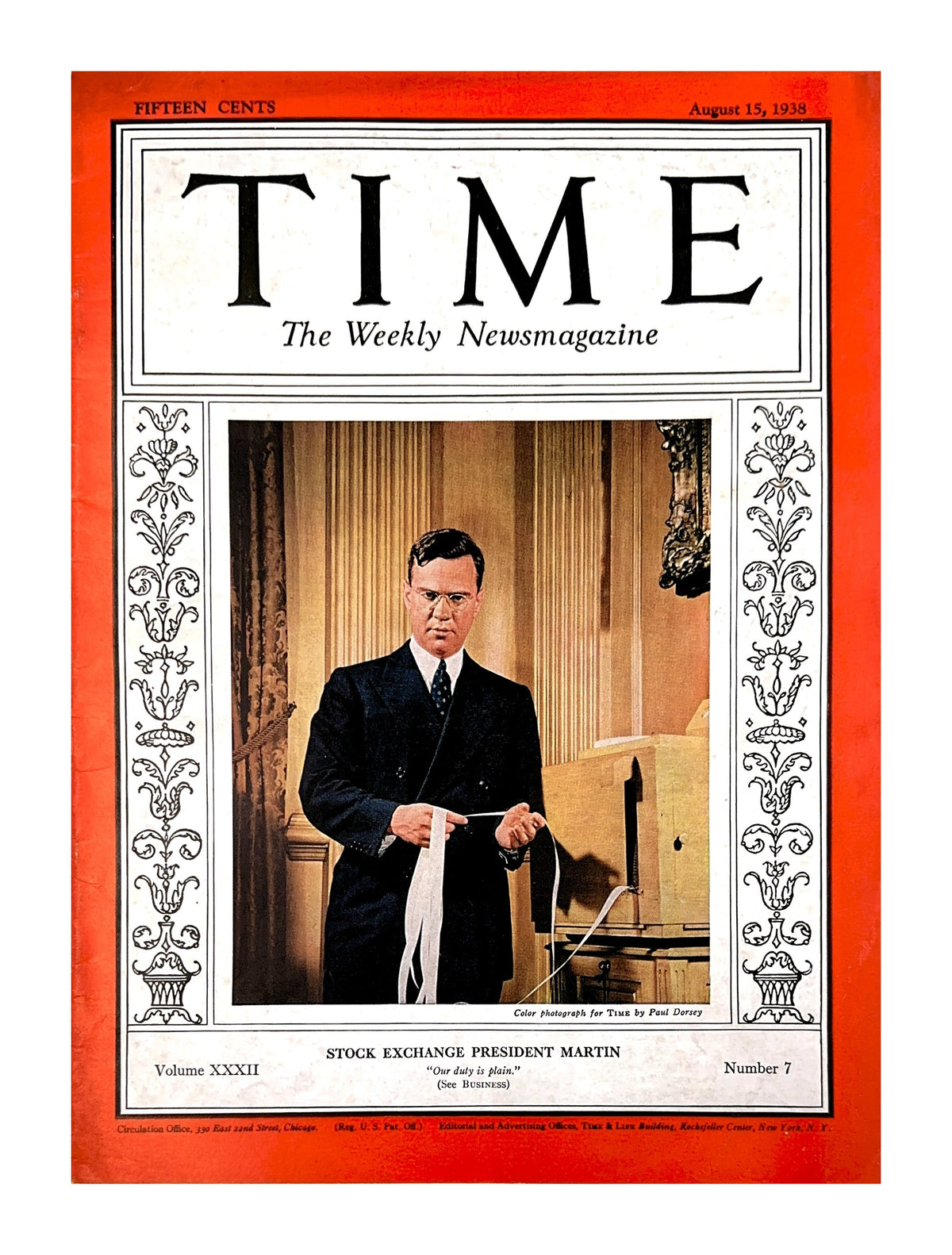
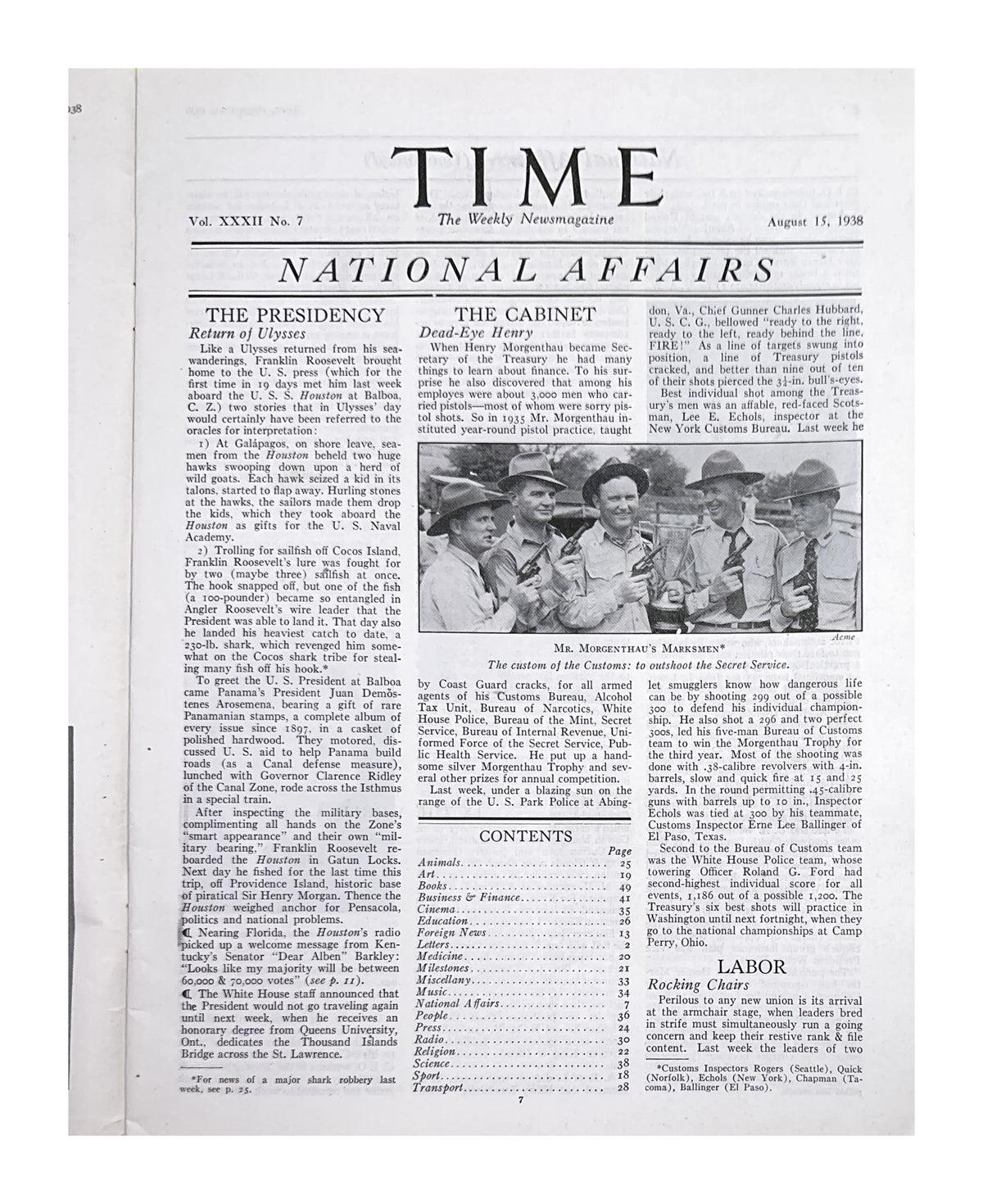
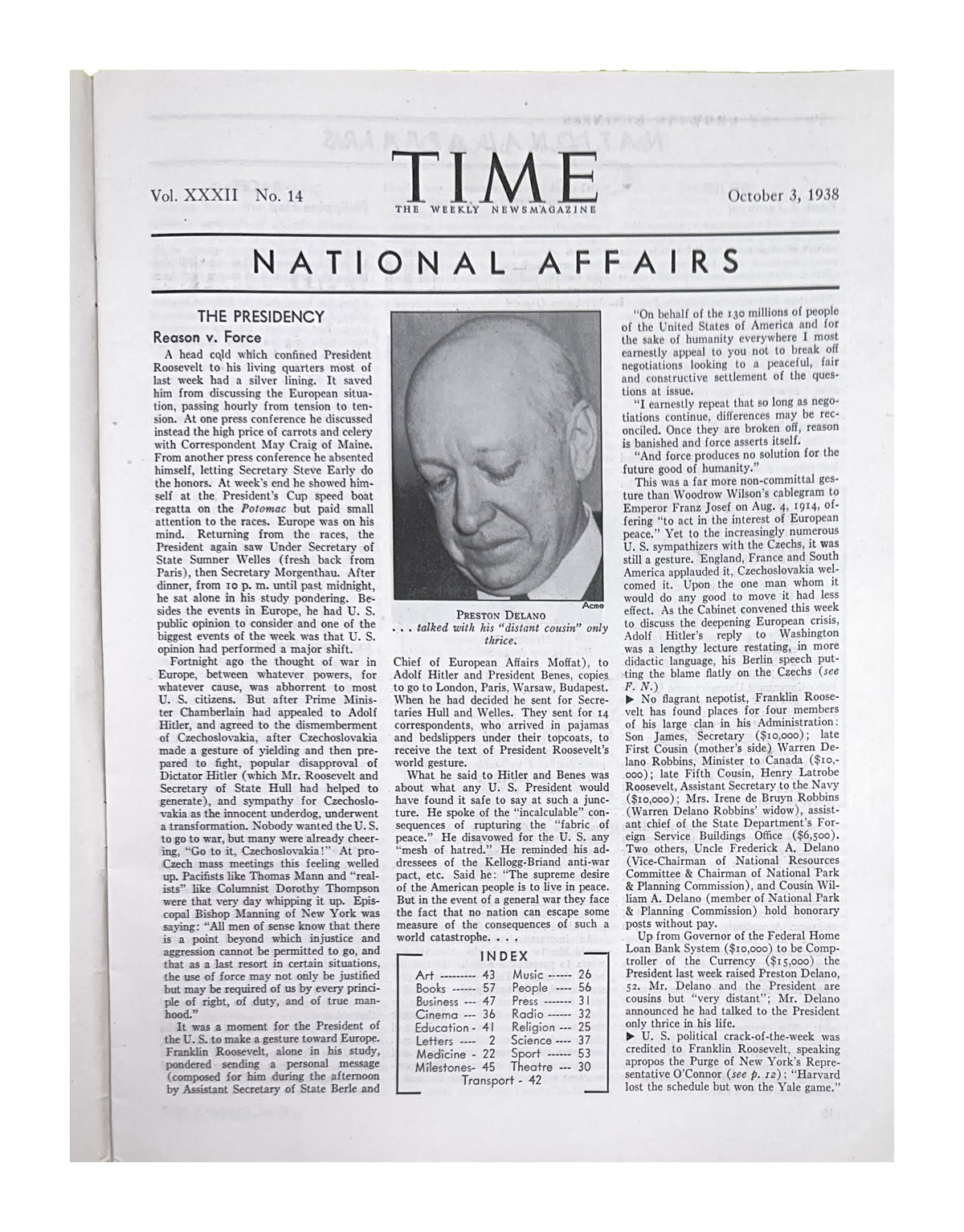
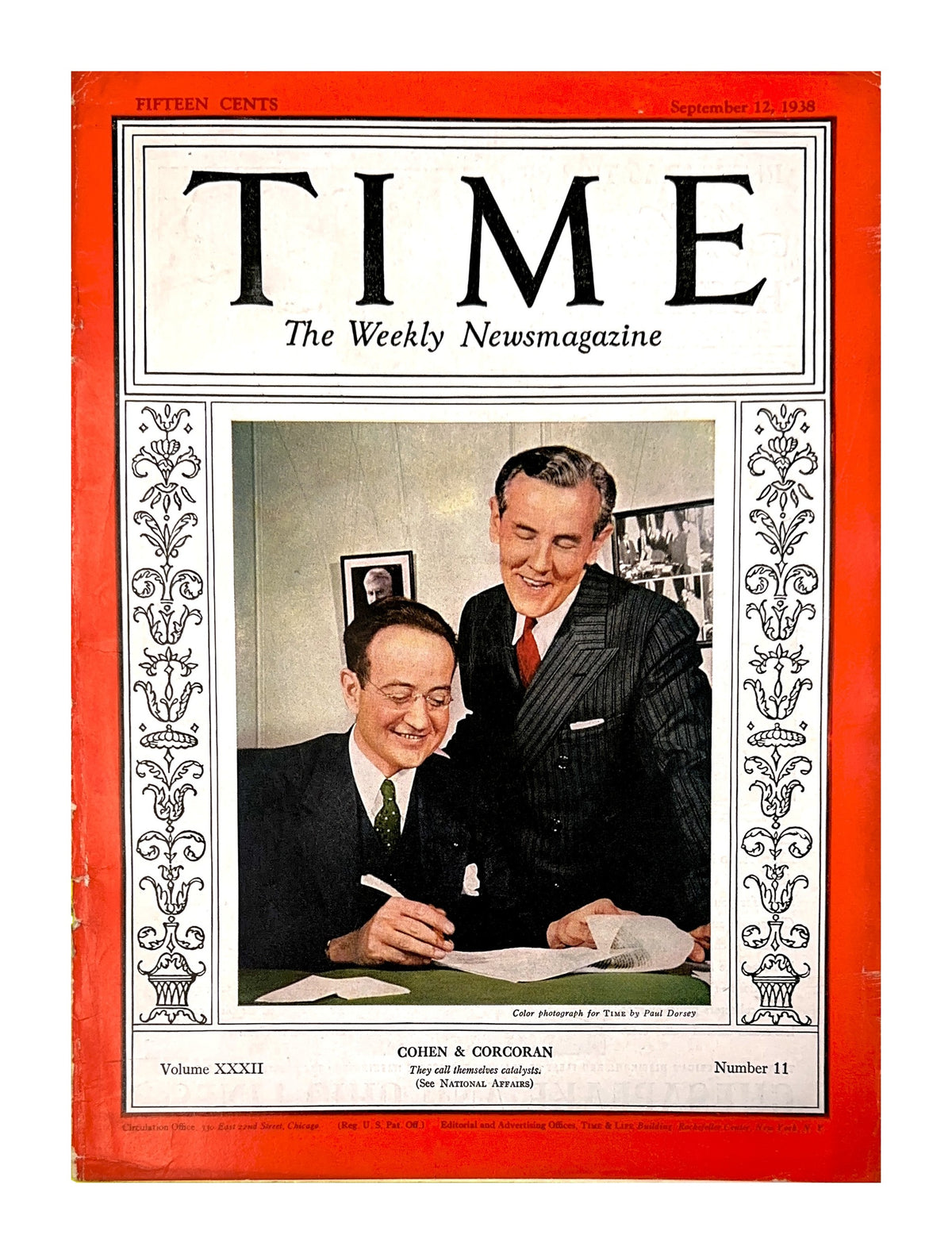
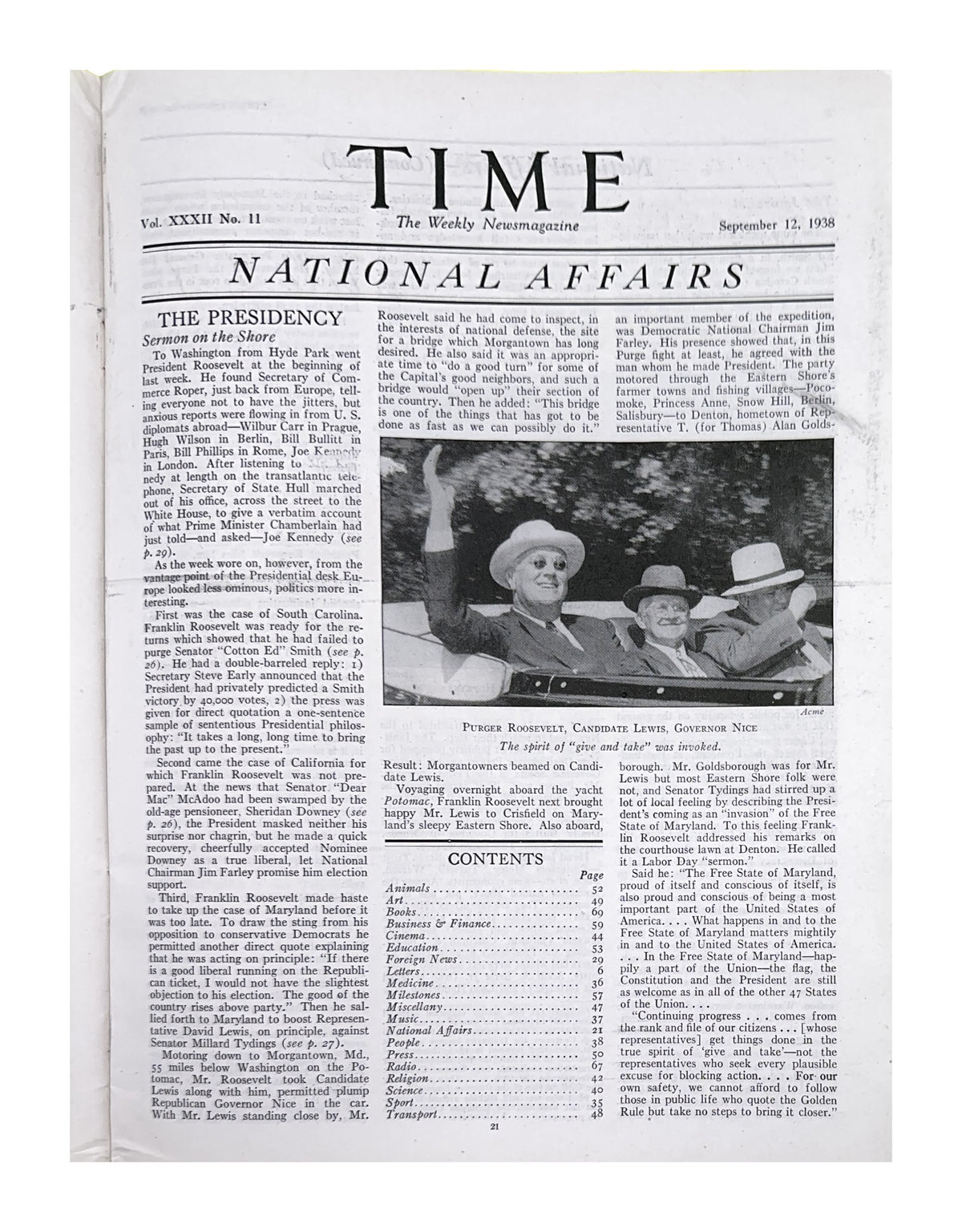
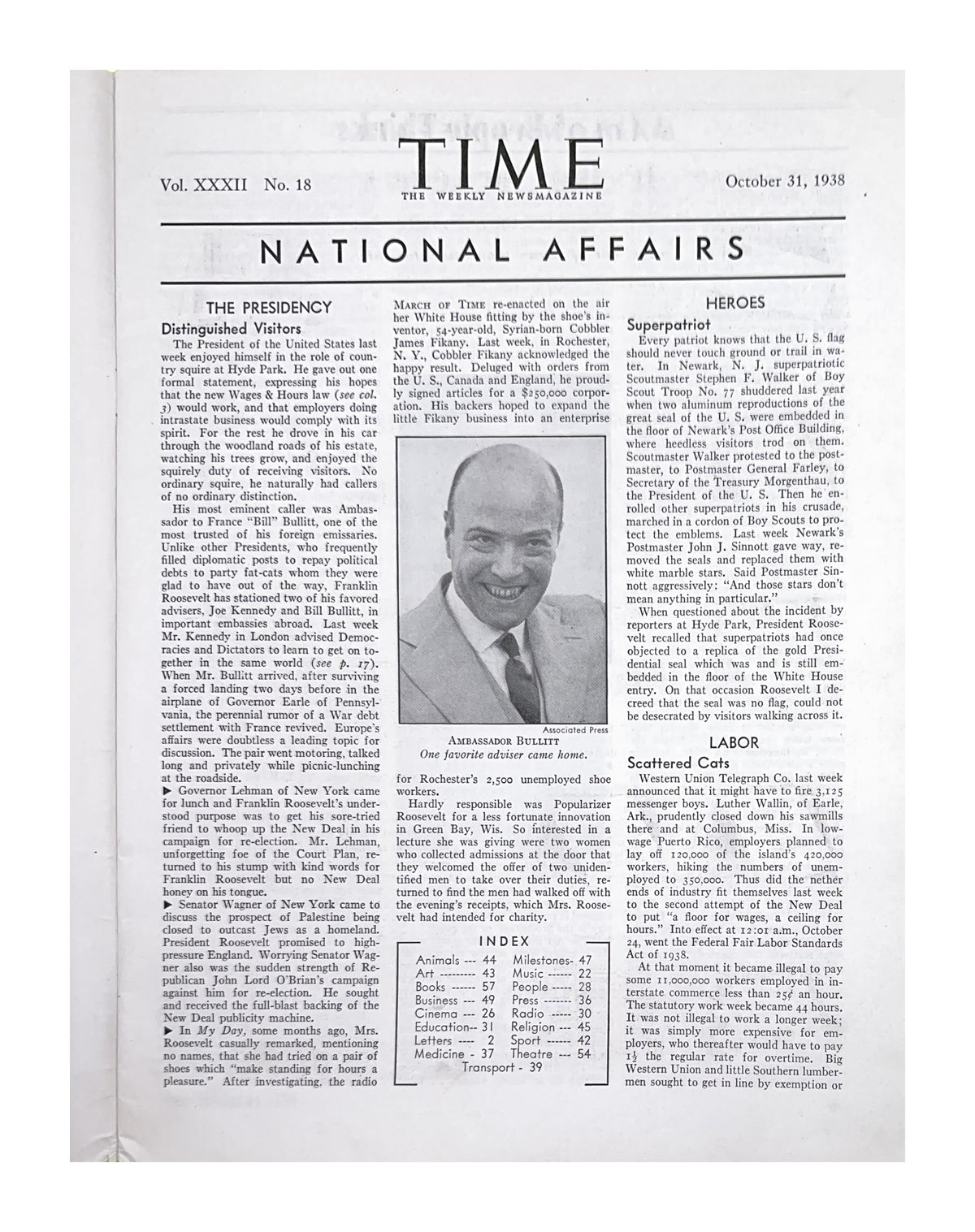
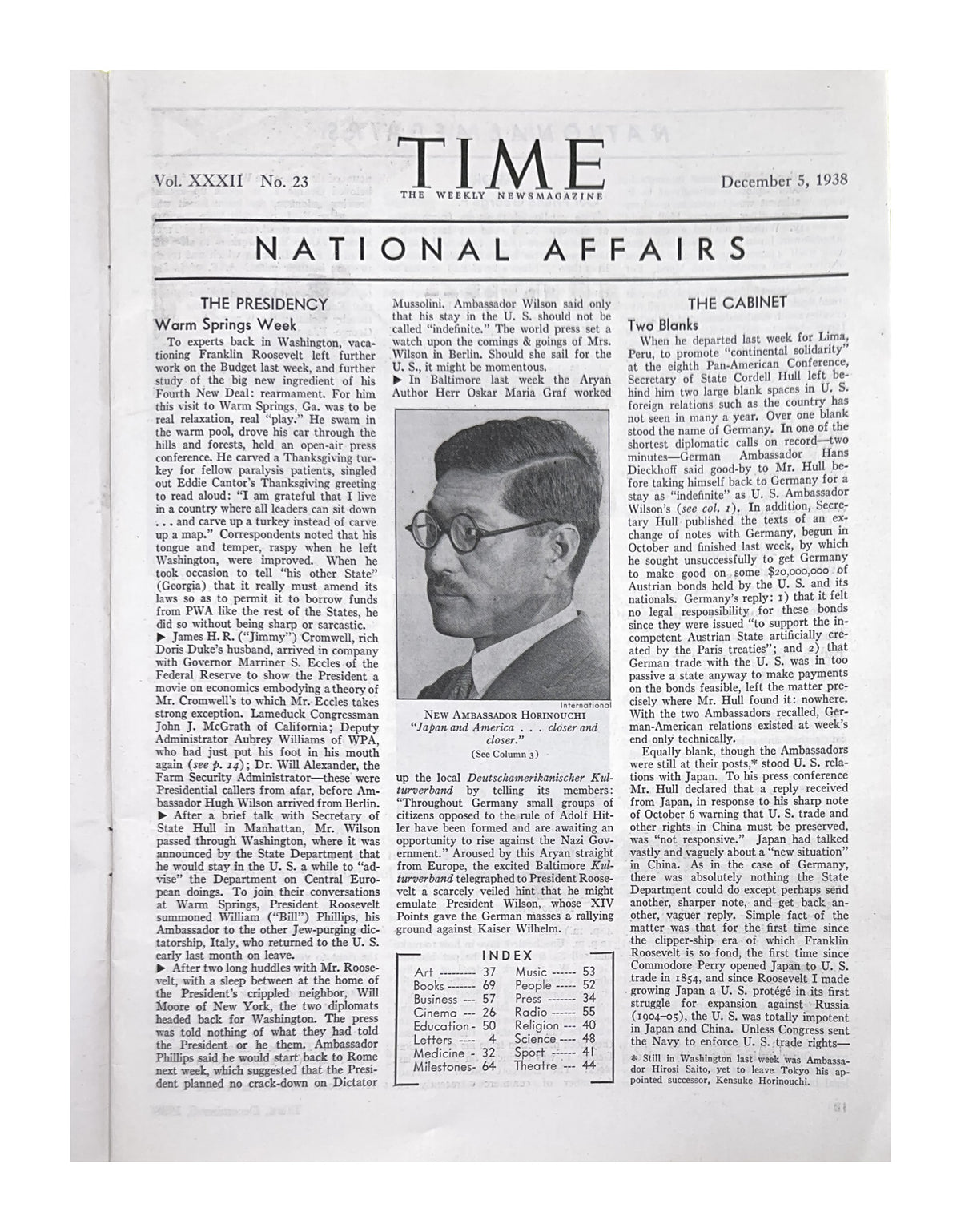
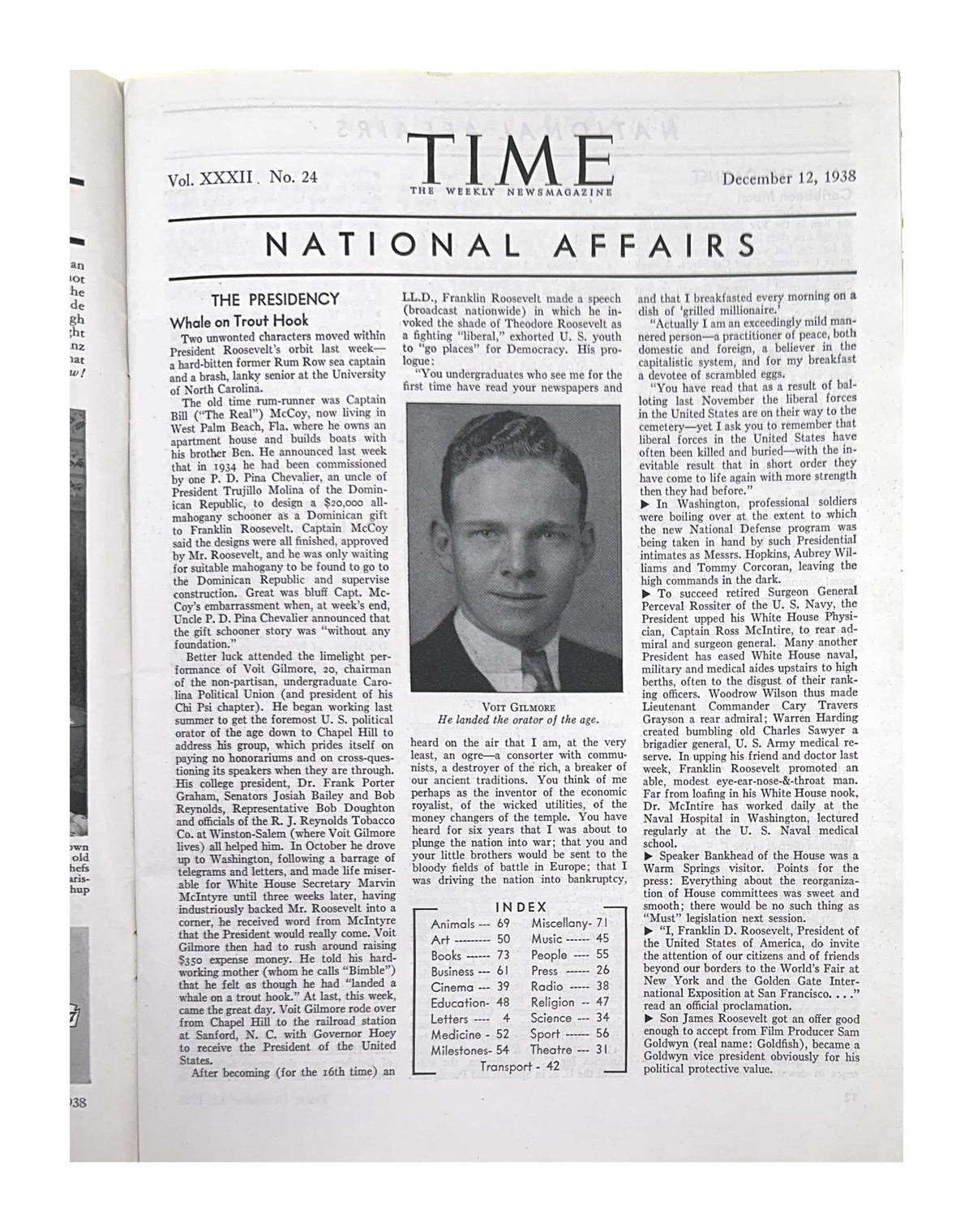
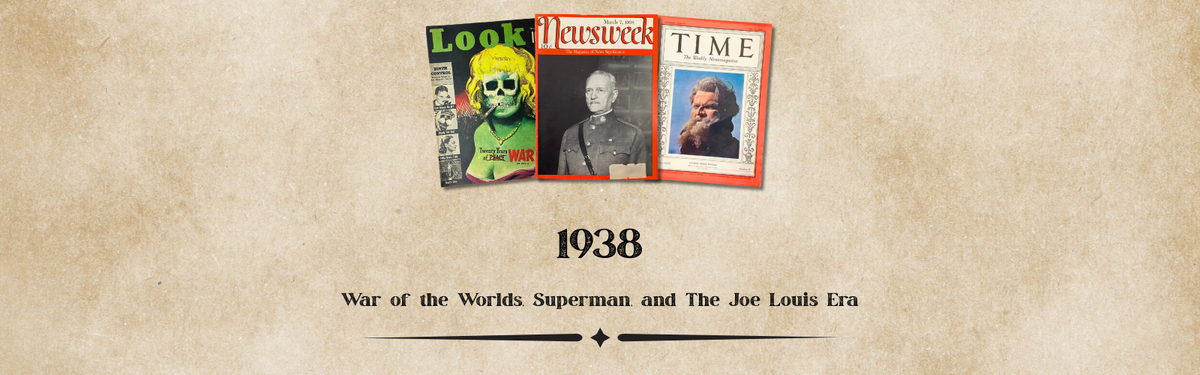
Fair Labor Standards Victory: Time and Newsweek featuring comprehensive coverage of Roosevelt's labor reforms, showcasing editorial cartoons depicting the minimum wage debate, photographs of factory workers, and advertisements revealing the consumer prices that made 25 cents an hour meaningful.
-
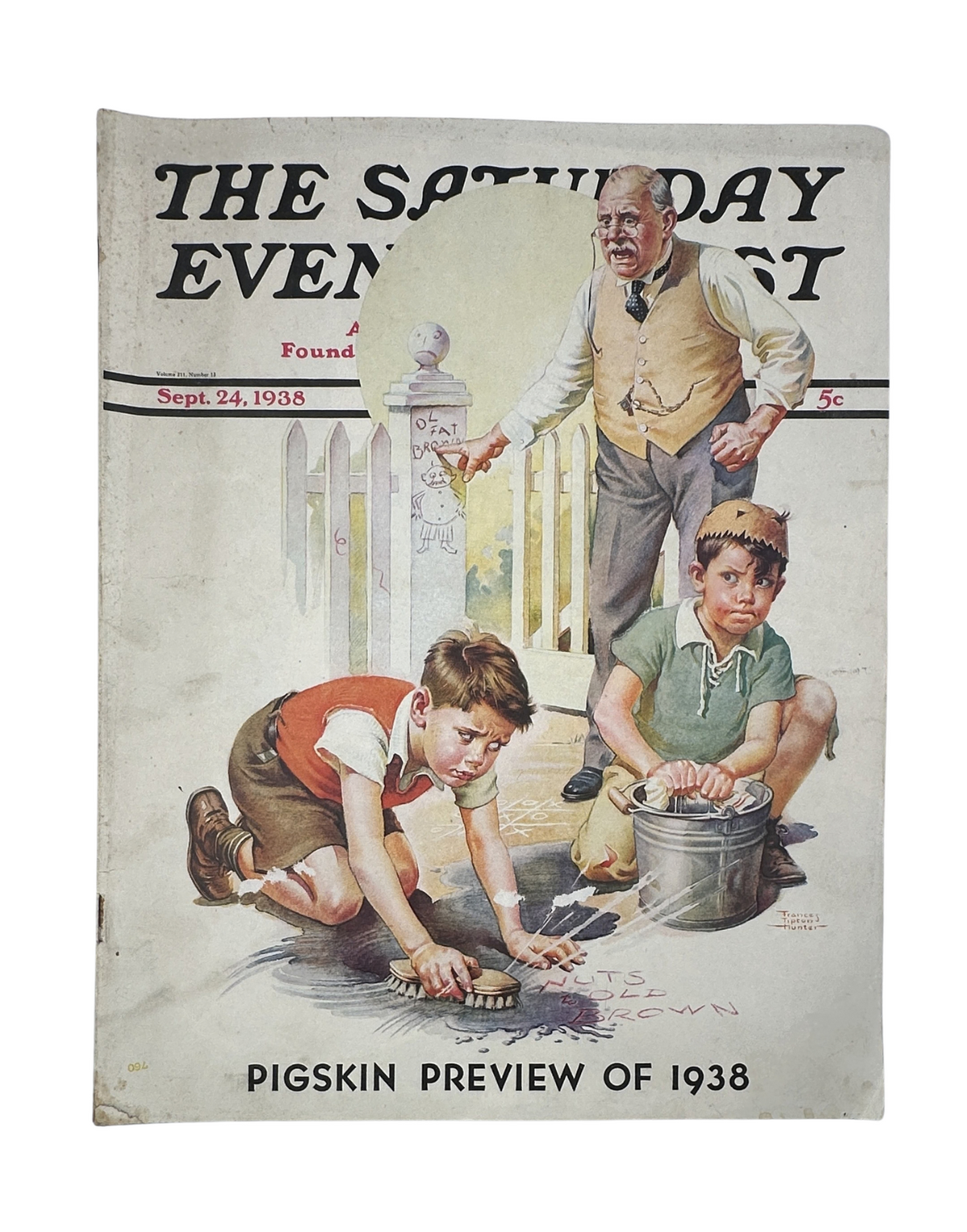
Seabiscuit's Legendary Triumph: Sports periodicals and general interest magazines chronicling the Match of the Century through dynamic racing photography, illustrated betting odds, and feature stories about Red Pollard's comeback, often accompanied by tobacco and whiskey advertisements targeting male readers.
-
The War of the Worlds Panic: Variety and radio industry publications documenting Orson Welles' infamous broadcast, featuring CBS programming schedules, vintage radio advertisements, and contemporary commentary on broadcasting's power to blur fiction and reality.
-
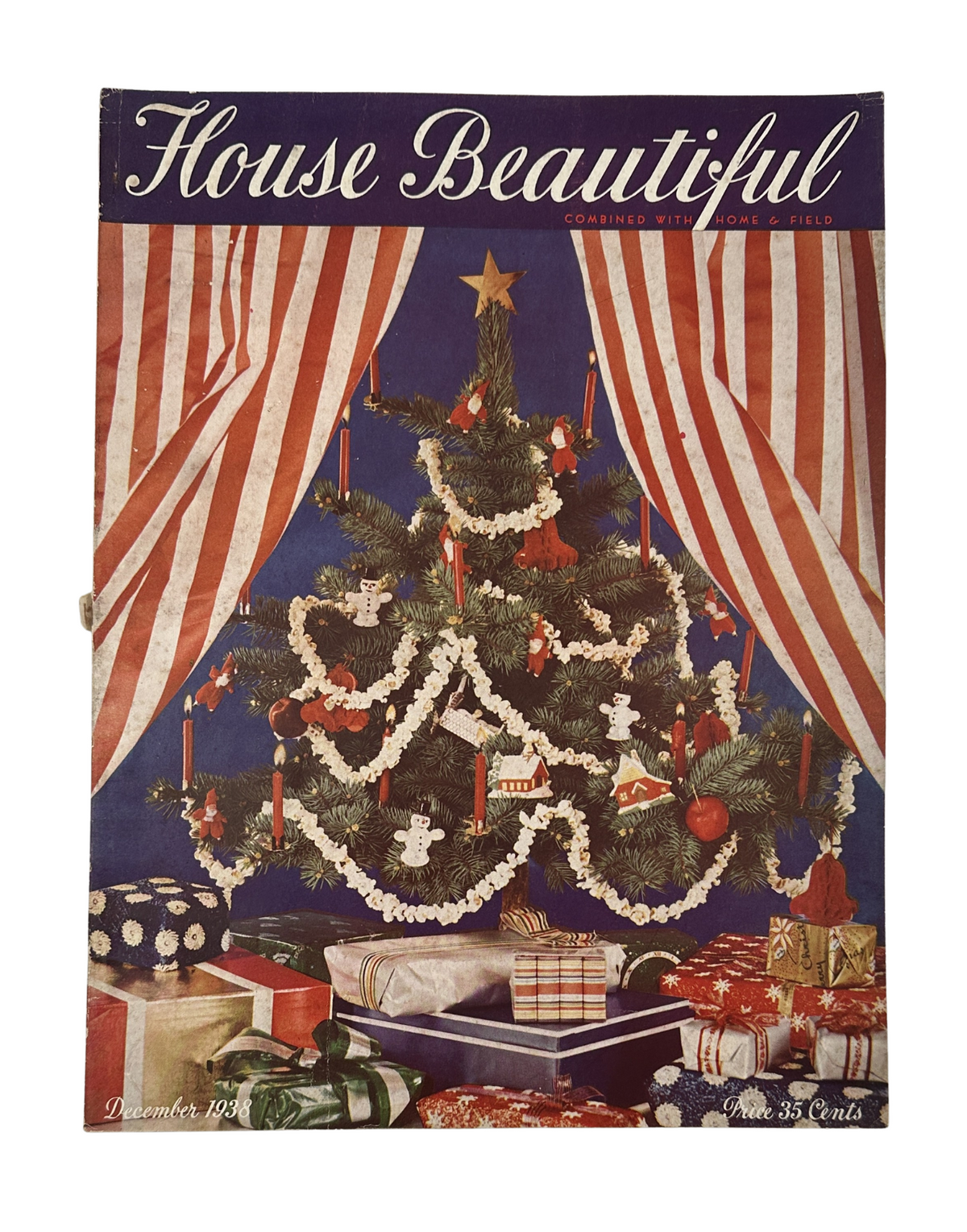
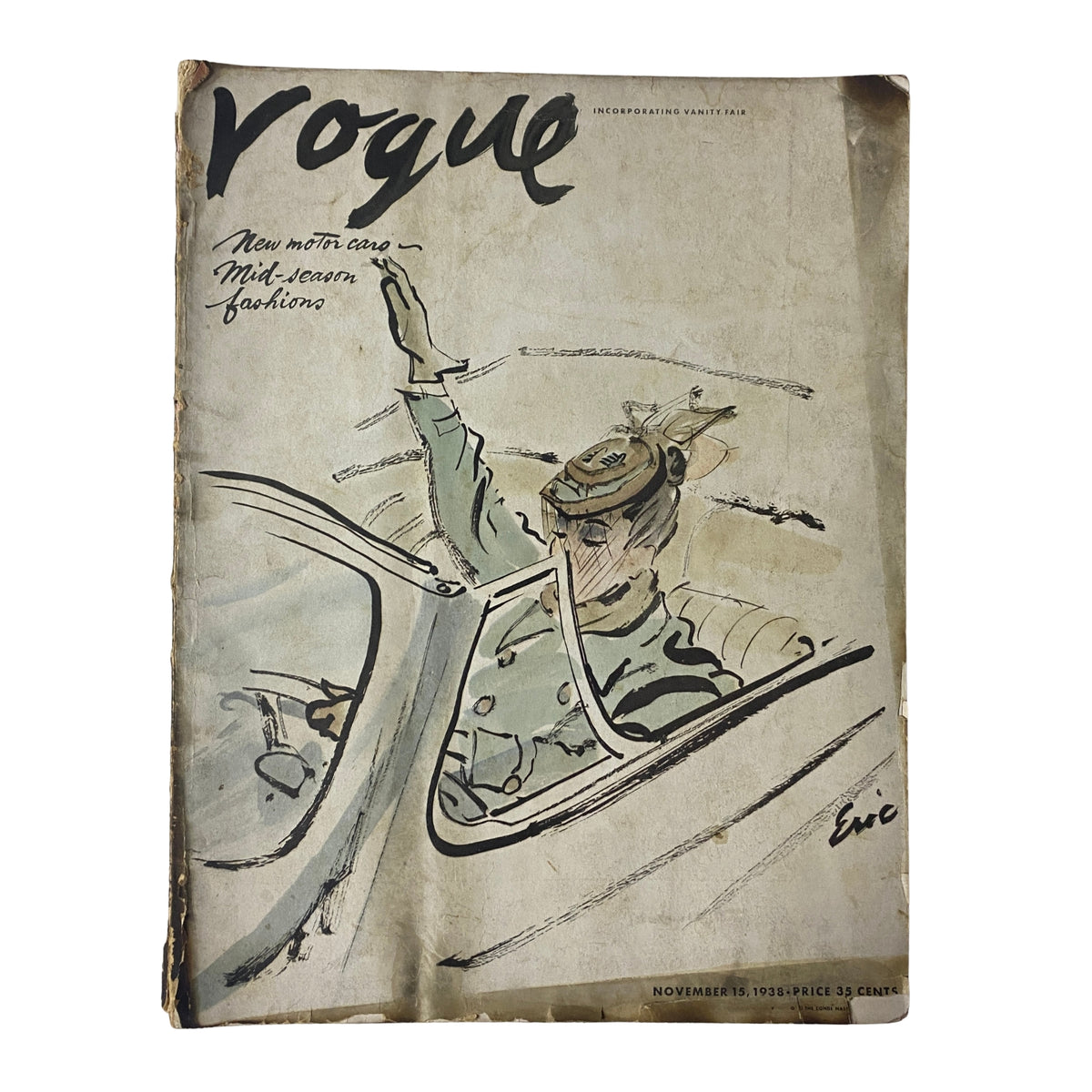
Pre-War Fashion and Domesticity: Vogue, Harper's Bazaar, and Ladies' Home Journal showcasing 1938's silhouettes—bias-cut gowns, tailored day suits, and early synthetic fabrics—preserved in genuine fashion photography and department store advertisements that capture the aesthetic before wartime rationing changed everything.
The Perfect Gift
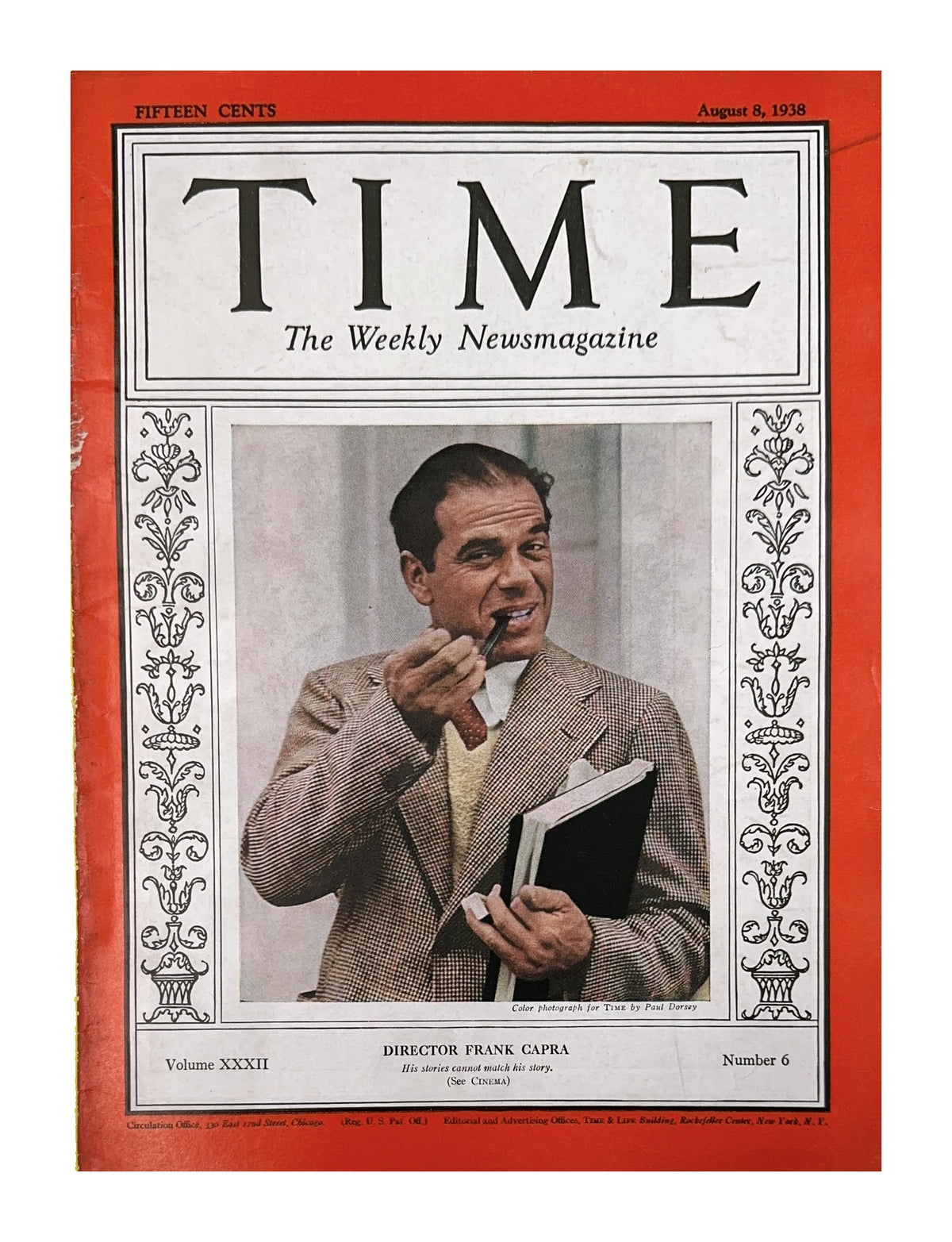
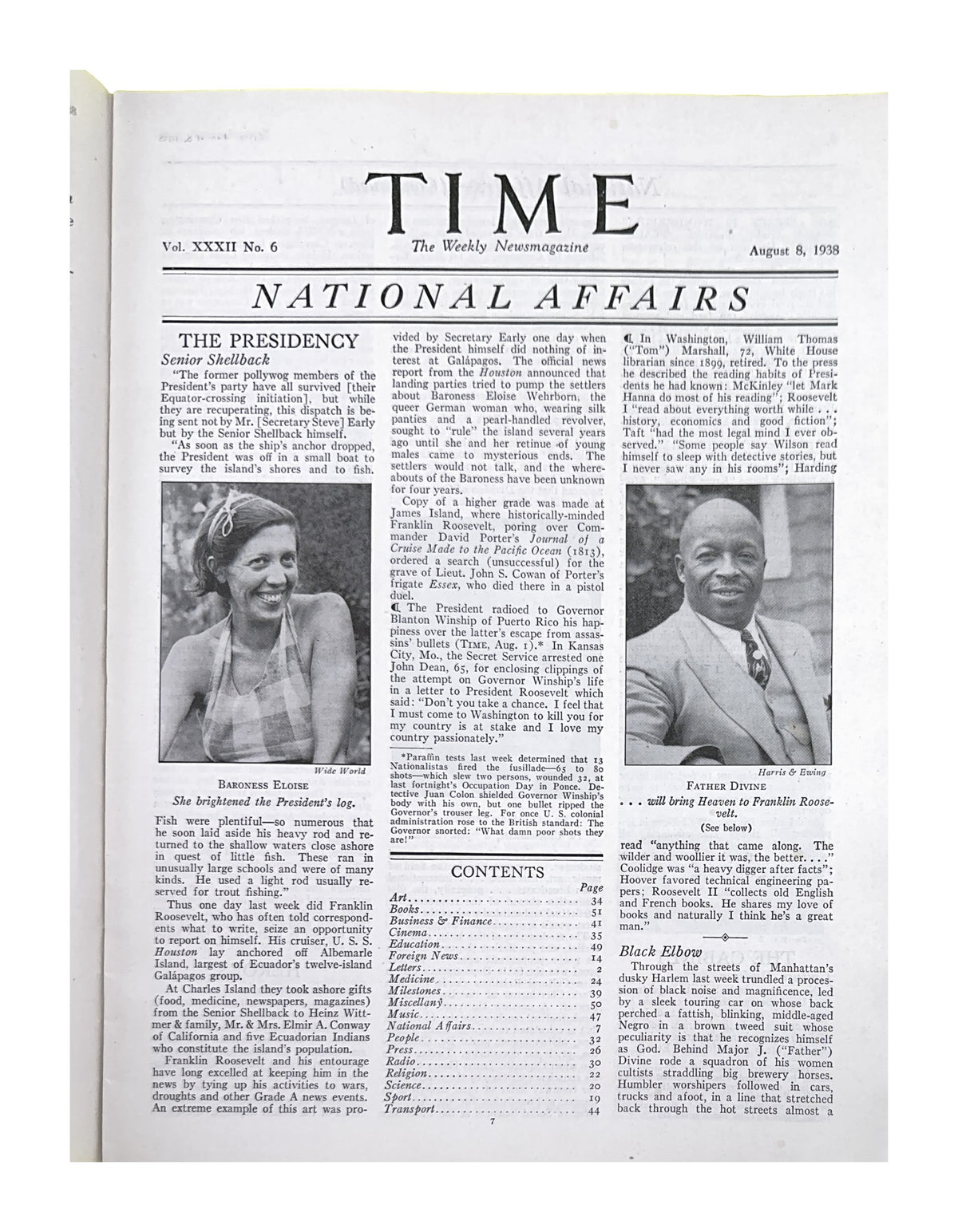
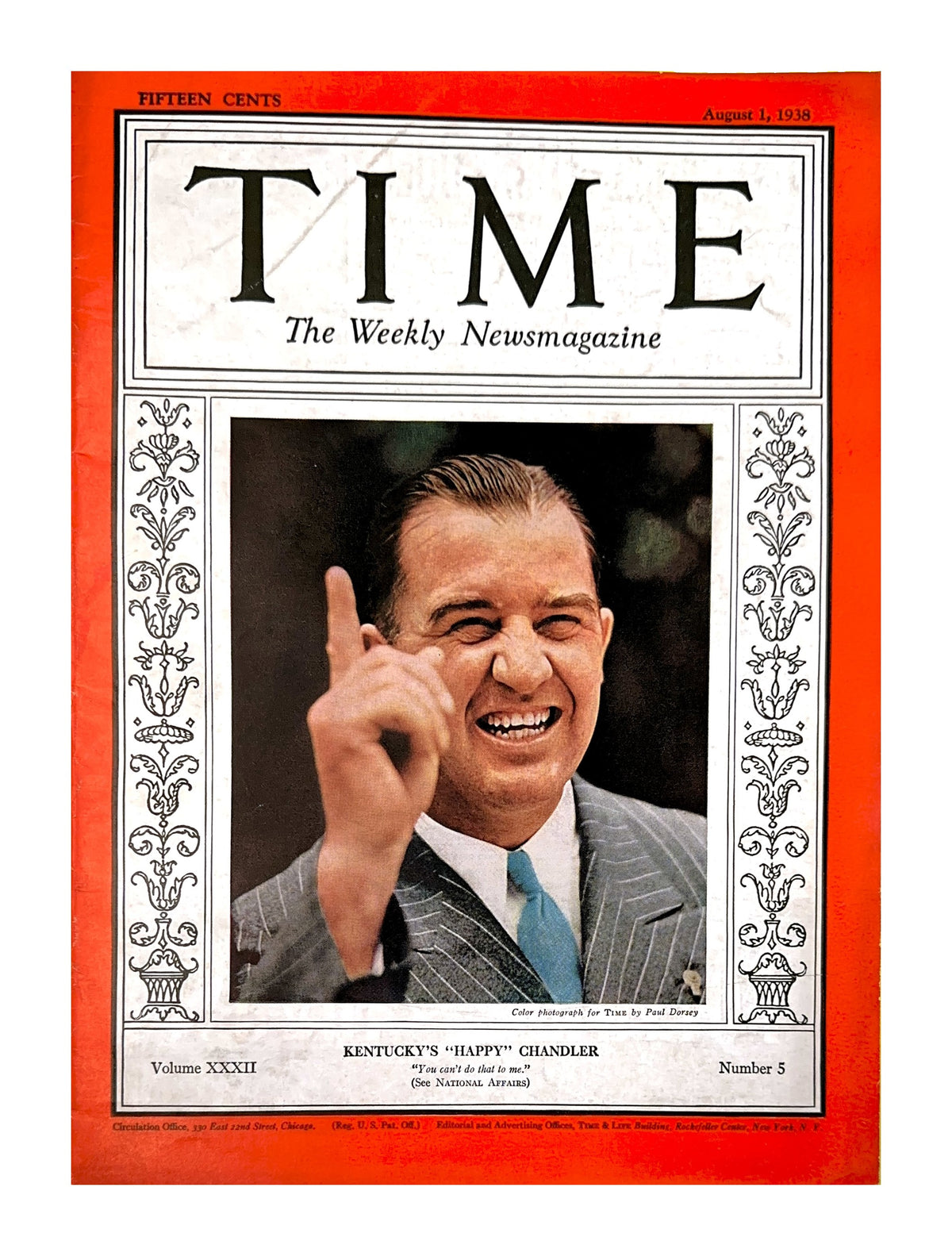
For someone born in 1938, an original magazine from this extraordinary year isn't just memorabilia—it's an authenticated portal to the precise moment when America sought heroes in comic books, horse races, and radio dramas, preserved in genuine advertisements, photography, and headlines that no reproduction can replicate.