📖 About this Collection
Bill Cosby: America's Mirror, Cracked and Complicated
The Legend & The Legacy
Few figures in 20th-century American culture rose as high — or fell as far — as Bill Cosby, and the arc of that journey was documented almost entirely through the pages of physical print. In the 1960s, he broke barriers as the first Black actor to co-star in a dramatic network television series, I Spy, earning three consecutive Emmy Awards and reshaping what mainstream America believed it could look like on screen. Through the 1970s and into the 1980s, he became something rarer still: a universally beloved institution. The Cosby Show, which premiered in 1984, didn't merely top the ratings — it single-handedly revived the American sitcom, challenged persistent stereotypes about Black family life, and became a shared cultural ritual for tens of millions of households. For decades, readers encountered him not as a celebrity to be consumed, but as a figure to be admired — a comedian, an educator, a philanthropist, and a symbol of dignified Black success in an era when such symbols carried enormous weight. That carefully constructed public image, and its eventual, devastating collapse following the exposure of decades of sexual assault, makes his archival print record one of the most historically complex and culturally instructive of the modern era.
Inside the Archive
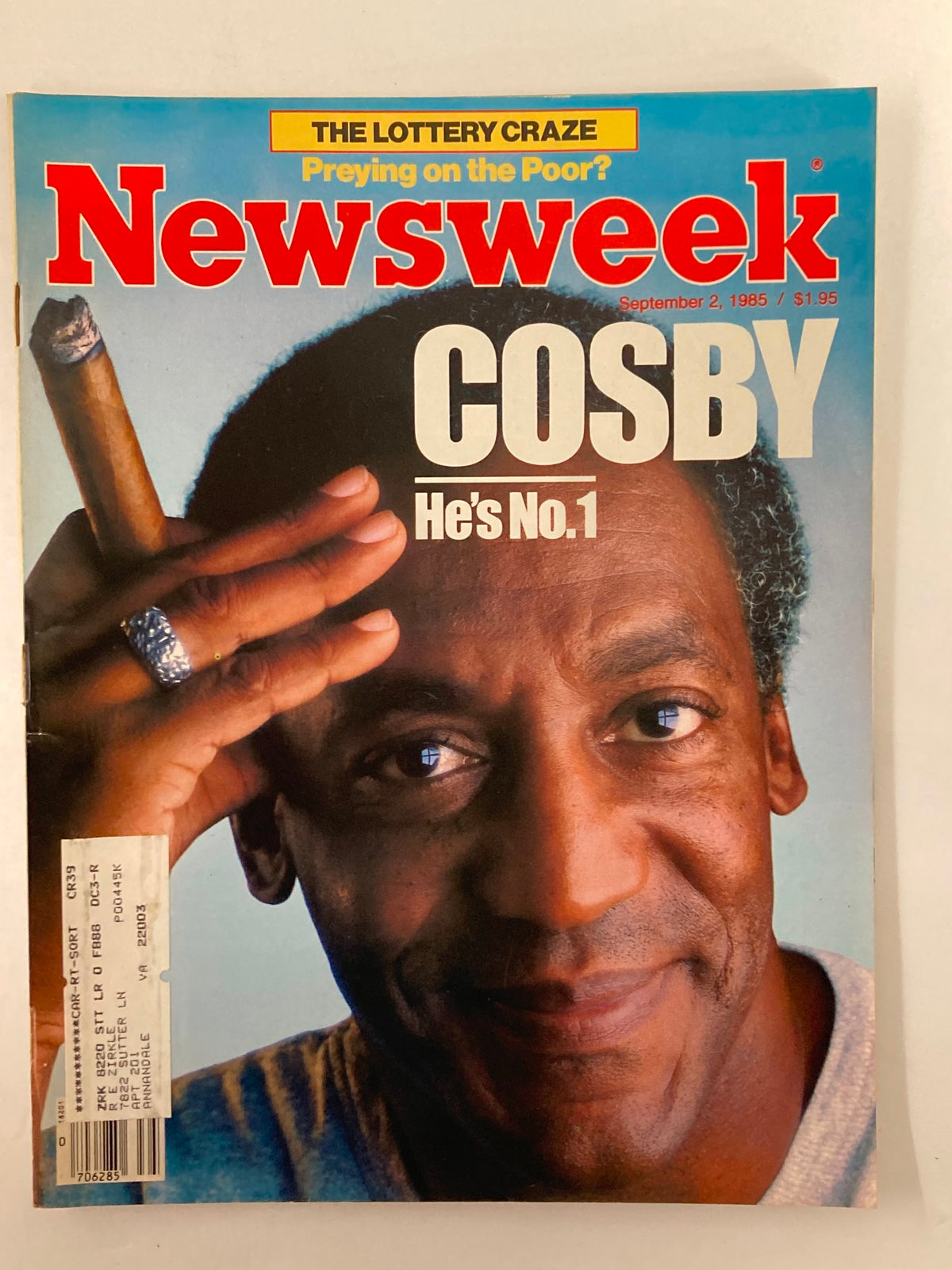
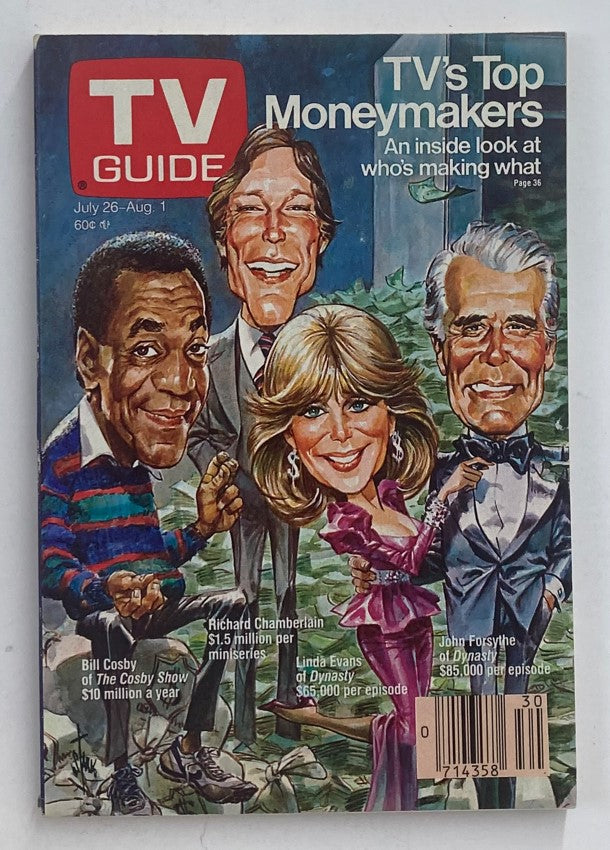
Vintage magazine coverage of Cosby spans several distinct and visually rich chapters. In the early years, publications like Ebony and Jet documented his ascent with a particular warmth and pride, framing him as a genuine ambassador of Black achievement — profiles were intimate, photography was aspirational, and the editorial tone carried the quiet urgency of a community watching one of its own rewrite the rules. TV Guide, the most widely circulated magazine in America for much of his peak era, featured him repeatedly across its decades of publication, capturing the evolution of his public persona from cool, wisecracking spy to the cardigan-wearing patriarch of The Cosby Show. Meanwhile, mainstream publications like People and Time elevated him to the status of national treasure, with cover stories that examined his philosophy on comedy, family, and education. The photography across these decades is a study in controlled image-making: warm studio lighting, relaxed poses, the carefully curated backdrop of family and success. To hold these issues today is to hold the primary evidence of how thoroughly — and willingly — American media participated in the construction of a legend.
Curator's Checklist: Highlights Often Include
- Barrier-breaking television profiles from the mid-1960s, when coverage of his I Spy co-starring role represented a quietly historic moment in American broadcasting and civil rights visibility
- Stand-up and comedy era features from the late 1960s and 1970s, including profiles tied to his celebrated comedy albums and his pioneering work in children's television with Fat Albert and the Cosby Kids
- The Cosby Show phenomenon coverage from the 1984–1992 run, when entertainment weeklies and cultural magazines devoted extensive editorial space to the series' sociological impact and record-breaking ratings
- Philanthropy and education spotlights tied to his $20 million gift to Spelman College in 1988 and his public advocacy for Black educational institutions — a facet of his public life extensively covered by both Black press and mainstream publications
- Later-era retrospectives and, ultimately, legacy reassessment pieces from the 2010s, when longstanding allegations resurfaced and the press undertook the difficult, necessary work of re-examining decades of uncritical coverage
The Collector's Value
There is something irreplaceable about encountering Bill Cosby's story through the original print media of his era — not on a screen, not filtered through an algorithm, but on the slightly rough, faintly yellowed newsprint of a 1985 issue of People or the heavier, glossy stock of an Ebony cover spread. The ink has a particular quality, slightly raised in the older offset-printed issues; the advertisements surrounding his profiles are themselves time capsules — cigarette brands, early home computers, long-defunct department stores — that root the reader irrefutably in the moment of publication. These are not reprints or digital facsimiles. They are primary sources, and in the case of this particular subject, they are also a remarkable study in the relationship between media, celebrity, and cultural mythmaking. The contrast between the adulation of those early decades and the knowledge available to us today gives each issue a layered, almost archaeological significance that no retrospective documentary can replicate. For collectors of vintage television history, African-American cultural archives, or the broader history of 20th-century American media, these publications offer an unfiltered window into how a nation constructs — and ultimately deconstructs — its heroes. Explore our current available inventory below to find the issues that speak to you.