📖 About this Collection
Hubert Humphrey: The Happy Warrior's Long March Through History
The Legend & The Legacy
In an era when Americans learned about their leaders through the weight of a magazine in their hands rather than a scroll on a screen, Hubert Horatio Humphrey occupied a singular place in the national imagination. The Minnesota senator and 38th Vice President of the United States was one of the most consequential — and ultimately tragic — figures of mid-twentieth century American politics. The architect of landmark civil rights legislation, a tireless advocate for the poor, and a man whose boundless optimism earned him the enduring epithet "The Happy Warrior," he rose from a South Dakota drugstore counter to the highest stages of the Cold War world. Yet history also remembers him as a man caught in the undertow of Vietnam, denied the presidency in 1968 by the narrowest of margins in one of the most turbulent elections the republic has ever witnessed. His was a career that embodied the full promise and heartbreak of postwar American liberalism — a political philosophy that believed, with almost religious conviction, that government could be a genuine instrument of human dignity. The American public consumed his story in real time, through ink and paper, across decades of headlines that swung between celebration and heartbreak, making the magazines of his era not merely publications, but dispatches from the front lines of a nation arguing passionately with itself about what it wanted to become.
Inside the Archive
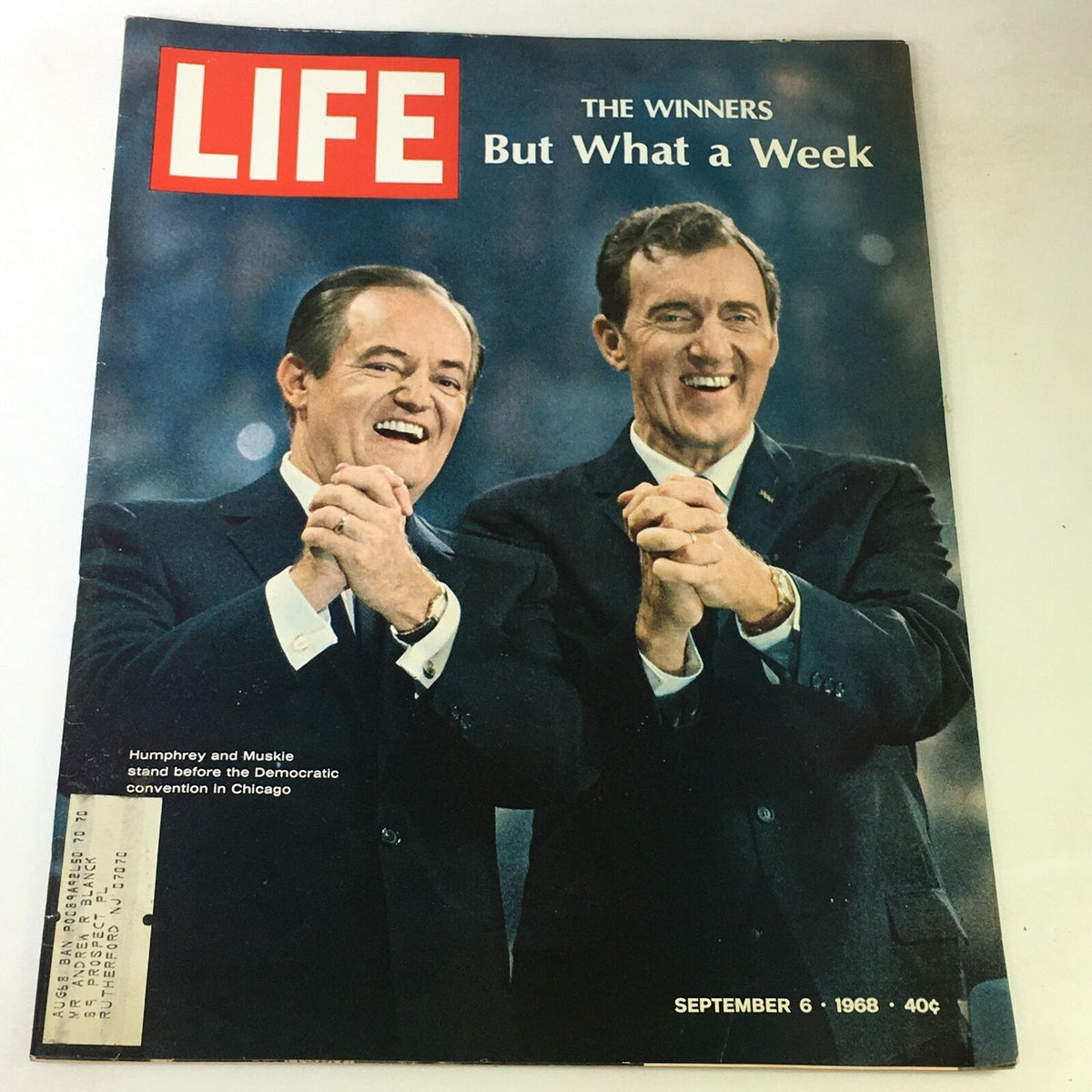
Vintage magazine coverage of the Happy Warrior spans the full arc of postwar American political life, and the visual record is extraordinary. In the 1950s and early 1960s, publications like Time and Life portrayed him as a barrel-chested idealist — photographs full of kinetic energy, the senator mid-speech, arms spread wide, as if trying to embrace the entire chamber. Staff photographers captured him in the corridors of power and in the living rooms of ordinary Minnesotans alike, presenting a politician who seemed equally at home in both worlds, a quality that made him endlessly compelling subject matter. As his national profile grew through his years as Lyndon Johnson's Vice President, Newsweek charted his increasingly complex position with probing cover portraits and in-depth policy analyses, capturing the tension of a man whose convictions were being tested by the obligations of office. The cataclysmic 1968 presidential campaign — waged amid assassinations, riots, and the chaos of the Chicago Democratic Convention — generated some of the most visceral political journalism of the entire decade, with Look magazine offering deeply reported, emotionally resonant narratives of a campaign that felt, to those living it, like the nation itself was on trial. Even international outlets took notice; European publications tracked the 1968 race with particular intensity, recognizing that the outcome would redefine America's relationship with the world at a moment of profound global instability.
Curator's Checklist: Highlights Often Include
- Civil Rights Era coverage featuring his galvanizing 1948 Democratic National Convention speech demanding the party embrace a civil rights plank — a moment that split the party, gave birth to the Dixiecrat walkout, and announced him as a moral force in American politics decades before the movement reached its crescendo
- Senate tenure profiles from the late 1950s and early 1960s documenting his authorship of the Peace Corps concept, his nuclear test ban advocacy, and his pivotal role in shepherding the Civil Rights Act of 1964 through Congress — coverage that frequently framed him as the conscience of the Senate
- Vice Presidential coverage alongside President Lyndon B. Johnson, often depicting the complicated loyalty and quiet anguish of a man who privately opposed Vietnam policy while publicly defending it, a moral tension that magazines of the era probed with increasing frankness as the war dragged on
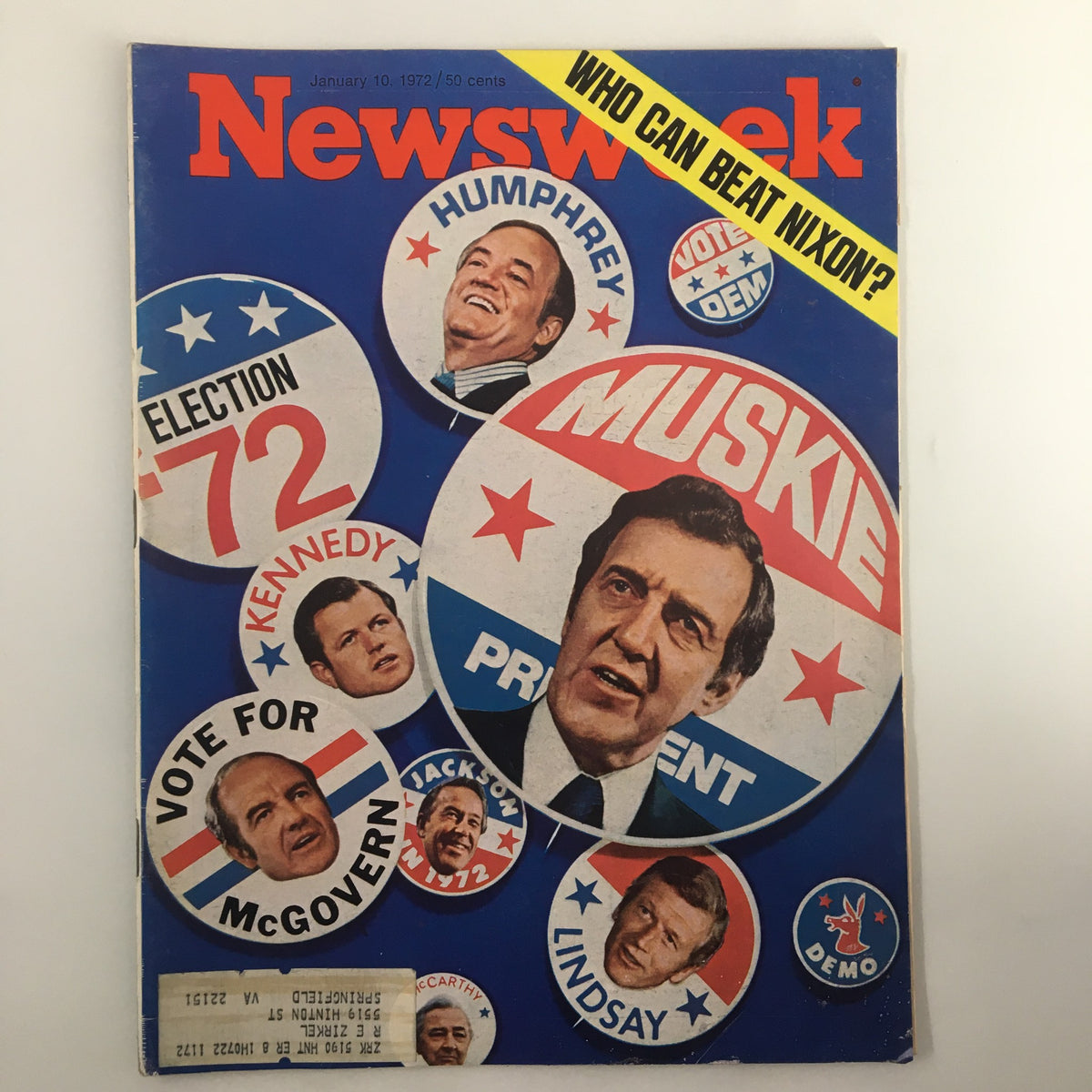
- 1968 presidential campaign issues — among the most collectible in American political history — covering the Democratic primary battle with Eugene McCarthy and Robert F. Kennedy, the violence of the Chicago convention, and his razor-thin loss to Richard Nixon in an election that remains one of the great what-ifs of the twentieth century
- Later-career retrospectives and tributes from the mid-1970s, when a re-elected senator facing terminal illness became a figure of profound national affection, his final years framed by magazines as the bittersweet coda of a life devoted entirely to public service — coverage that is often deeply moving and remarkably intimate by the standards of the era
The Collector's Value
To hold one of these original issues today is to hold a piece of the American Century in your hands — literally. The slightly coarse texture of mid-century magazine paper stock, the vivid but subtly oxidized color photography, the faint perfume of decades-old ink, and the surrounding advertisements for Studebakers, Lucky Strike cigarettes, and long-discontinued household appliances all conspire to transport you to the precise moment when these stories were still unfolding. Unlike a digitized scan, the original print carries with it the full sensory weight of its moment — the slightly uneven letterpress type, the bold graphic design sensibilities of a pre-digital art department, and occasionally even the marginalia of a previous reader, a pencil mark or a folded corner that connects you across the decades to someone who was there. There is no algorithm curating this experience, no autoplay pulling you elsewhere — only the deliberate, immersive act of reading history as it was first presented to the world, at the pace and with the gravity it was always meant to be received. These are not reproductions or commemorative facsimiles; they are original artifacts, each one a time capsule that survived the full journey from the newsstand to the present day. For collectors of American political history, Cold War–era Americana, or the landmark civil rights movement, these publications offer something no digital archive can replicate: the unmediated, primary-source texture of a pivotal era, radiating from every page. Explore the current available inventory below and discover which pieces of this remarkable legacy are waiting to find a new home.