📖 About this Collection
Jake "The Snake" Roberts: The Serpent's Gospel, Immortalized in Print
The Legend & The Legacy
Long before the algorithm decided what was trending, before highlight reels lived in every pocket, and before professional wrestling fractured into a thousand streaming channels, the story of Jake "The Snake" Roberts was told one breathless page at a time. Emerging in the territorial wrestling circuits of the late 1970s before ascending to national prominence with the WWF through the 1980s and into the '90s, he redefined what a professional wrestler could be — not merely a body in motion, but a psychological architect, a storyteller, a villain of Shakespearean depth. His DDT finishing move became one of the most feared signatures in the sport's history, and his use of a live python named Damien as a ringside prop elevated his character into something genuinely unsettling and unforgettable. In an era when kayfabe was still sacred and the wrestling world operated as its own closed mythology, fans turned to newsstand publications and fan magazines to make sense of the dark, brooding figure who seemed to have stepped out of a Southern Gothic novel. Print was the only lens through which the broader public could examine him, dissect him, and fear him.
Inside the Archive
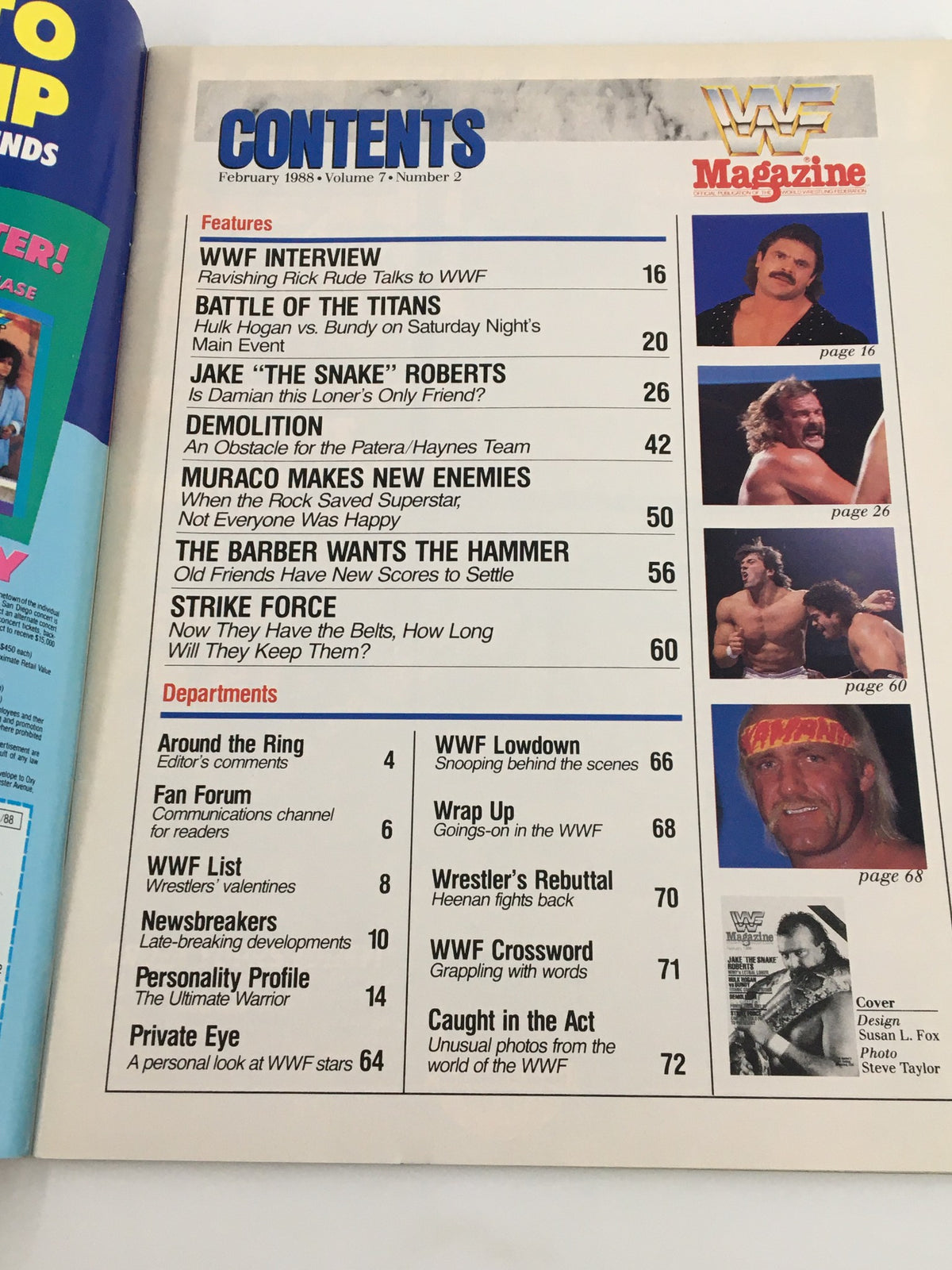
The publications that chronicled professional wrestling's golden television era — roughly spanning the mid-1980s through the early 1990s — captured him with a visual intensity that digital photography has never quite replicated. The grain of the film, the dramatic ringside flash photography, the sweat and shadow of arenas in Rochester and Madison Square Garden — all of it pressed permanently into newsprint and glossy stock. Specialty publications such as Pro Wrestling Illustrated, the pre-eminent journal of record for the sport, featured him repeatedly during his peak years, deploying long-form narrative profiles that read more like crime fiction than sports journalism. WWF Magazine, the federation's own flagship publication, gave collectors lavishly produced in-character spreads that blurred the line between promotion and portraiture. Meanwhile, broader sports and pop culture outlets occasionally reached into the wrestling world during its mainstream crossover moment, and publications like Sports Illustrated took note of wrestling's cultural eruption during the Hulkamania era — a moment in which the man with the snake was one of the defining antagonists. The editorial tone across these pages ranged from kayfabe-committed character studies to genuine journalistic curiosity about the phenomenon of wrestling's new, darker anti-hero.
Curator's Checklist: Highlights Often Include
- Championship-era profile pieces from the mid-to-late 1980s, when his WWF run placed him among the most talked-about figures in sports entertainment, with editorial coverage exploring his psychological approach to the craft
- Rivalry-focused features documenting his iconic feuds — particularly coverage of his history with Rick Rude, the Ultimate Warrior, and the saga surrounding his feud with Randy "Macho Man" Savage, which remains one of the most dramatically compelling storylines of the era
- Full-cover and centerfold appearances in dedicated wrestling publications, often featuring his signature pose alongside Damien — images that became some of the most iconic in the genre's visual history
- Redemption and comeback coverage from the early-to-mid 1990s and beyond, as his personal struggles became a matter of public record and the wrestling press grappled with the complexity of the man behind the character
- Cross-genre pop culture mentions during the peak of wrestling's mainstream visibility, where general interest and entertainment publications briefly turned their gaze toward the sport's most compelling and psychologically rich performers
The Collector's Value
To hold one of these publications is to hold a dispatched signal from another world entirely — the paper stock thick or brittle depending on its age, the ink carrying that particular mineral-and-must scent that no digital archive can approximate, the surrounding advertisements a vivid time capsule of consumer culture: mail-order merchandise, energy drinks that no longer exist, and VHS tape club memberships. These are not mere souvenirs. They are primary source documents — the historical record of how an entire generation processed the mythology of professional wrestling before it was dissected on podcasts or catalogued on wikis. The photography within them was composed for impact, not for a thumbnail, and printed at a scale and with a craft that demands to be experienced in hand. For collectors of professional wrestling memorabilia, 1980s pop culture ephemera, or outsider Americana and performance art history, these publications offer something irreplaceable: an unmediated, era-authentic encounter with a legend at the precise moment his legend was being made. Browse the current available inventory below, and discover which pieces of this dark and enduring chapter are waiting to find their next devoted keeper.