📖 About this Collection
January 1997: The Digital Dawn Meets the Analog Past
The Historical Context
The world crackled with millennial energy as January 1997 unfolded—a month suspended between centuries, where fax machines still dominated offices but PlayStation consoles were revolutionizing living rooms. Newt Gingrich narrowly secured re-election as Speaker of the House on January 7th, navigating the fractious Republican majority through its second term of congressional control. Across the Atlantic, Princess Diana stunned the international community by calling for a global ban on landmines, a humanitarian stance that angered UK ministers but elevated her legacy beyond royal protocol. In the Middle East, Yasser Arafat returned triumphantly to Hebron after three decades, celebrating the handover of the last Israeli-controlled West Bank city—a fragile moment of hope in the endless peace process. Meanwhile, space exploration continued its steady march as Atlantis docked with Mir, and closer to Earth, Norwegian explorer Boerge Ousland became the first person to cross Antarctica alone and unaided. This was the world your loved one entered, captured in genuine newsprint and glossy magazine layouts.
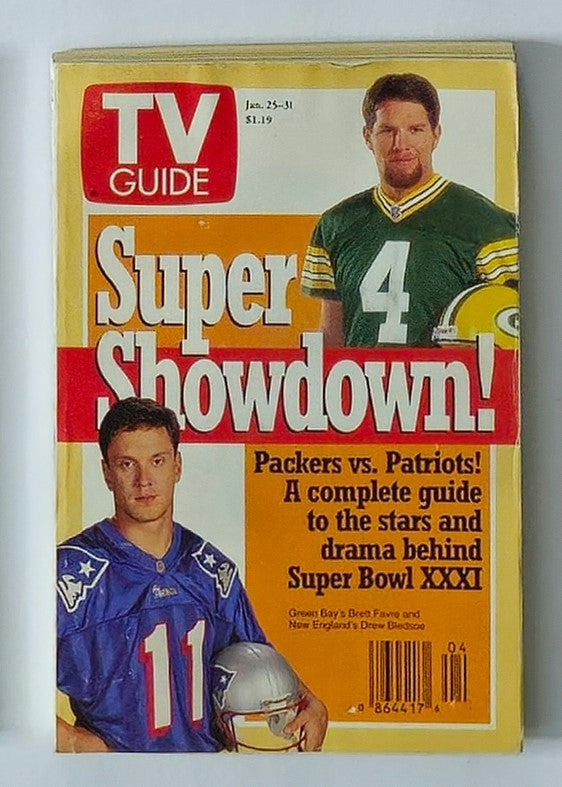
Entertainment and sports dominated the cultural conversation with visceral immediacy. The Green Bay Packers claimed Super Bowl XXXI in New Orleans, defeating the Patriots 35-21 in a game that restored the franchise's storied dynasty. Tennis witnessed Swiss history when Martina Hingis became the first Swiss player to win a Grand Slam singles title at the Australian Open, while Pete Sampras secured his second Australian crown. On Broadway, the revival of "Show Boat" closed after 947 performances, and the 54th Golden Globes celebrated "The English Patient" alongside Geoffrey Rush and Brenda Blethyn. Dennis Rodman made tabloid headlines twice—first for kicking a cameraman, then for his indefinite NBA suspension. Bookstores stocked John Gray's relationship phenomenon "Men Are From Mars, Women Are From Venus," which opened as a one-man show at the Gershwin Theatre. In original magazines from January 1997, these moments appear as they happened: Daft Punk's "Homework" album advertised in music magazines, Final Fantasy VII's PlayStation release captured in gaming publications, and Comet Hale-Bopp's celestial journey illustrated in science weeklies.
What to Look for in Vintage Magazines from This Month
-
Super Bowl XXXI Coverage: Sports Illustrated and ESPN The Magazine featuring Green Bay's championship return, with action photography of Desmond Howard's MVP performance and retrospectives on the Packers' storied franchise history from Lombardi to Favre.
-
Princess Diana's Landmine Campaign: Time, Newsweek, and Life chronicling Diana's humanitarian pivot with photojournalism from mine-affected regions, political analysis of her challenge to UK government policy, and the evolution of her post-divorce public role.
-
The Digital Gaming Revolution: Entertainment Weekly, Wired, and rare magazines like Next Generation documenting Final Fantasy VII's groundbreaking release, PlayStation's dominance, and the shift from cartridge to disc-based gaming that defined this transitional era.
-
Australian Open Tennis History: Sports publications showcasing Martina Hingis's teenage Grand Slam breakthrough at just 16 years old, contrasted with Pete Sampras's veteran precision—a generational changing of the guard preserved in tournament programs and vintage magazines with courtside photography.
-
Space Station Collaboration: Popular Mechanics, Discover, and science journals featuring Atlantis's Mir docking mission, illustrated with NASA photography and technical diagrams of post-Cold War space cooperation that symbolized the era's optimistic internationalism.
The Perfect Gift
For someone born in January 1997, an original magazine from this threshold month isn't just a collectible—it's an authenticated time capsule from the cusp of the digital age, preserved in advertisements for dial-up internet, celestial event coverage, and championship sports photography that museums simply cannot replicate.