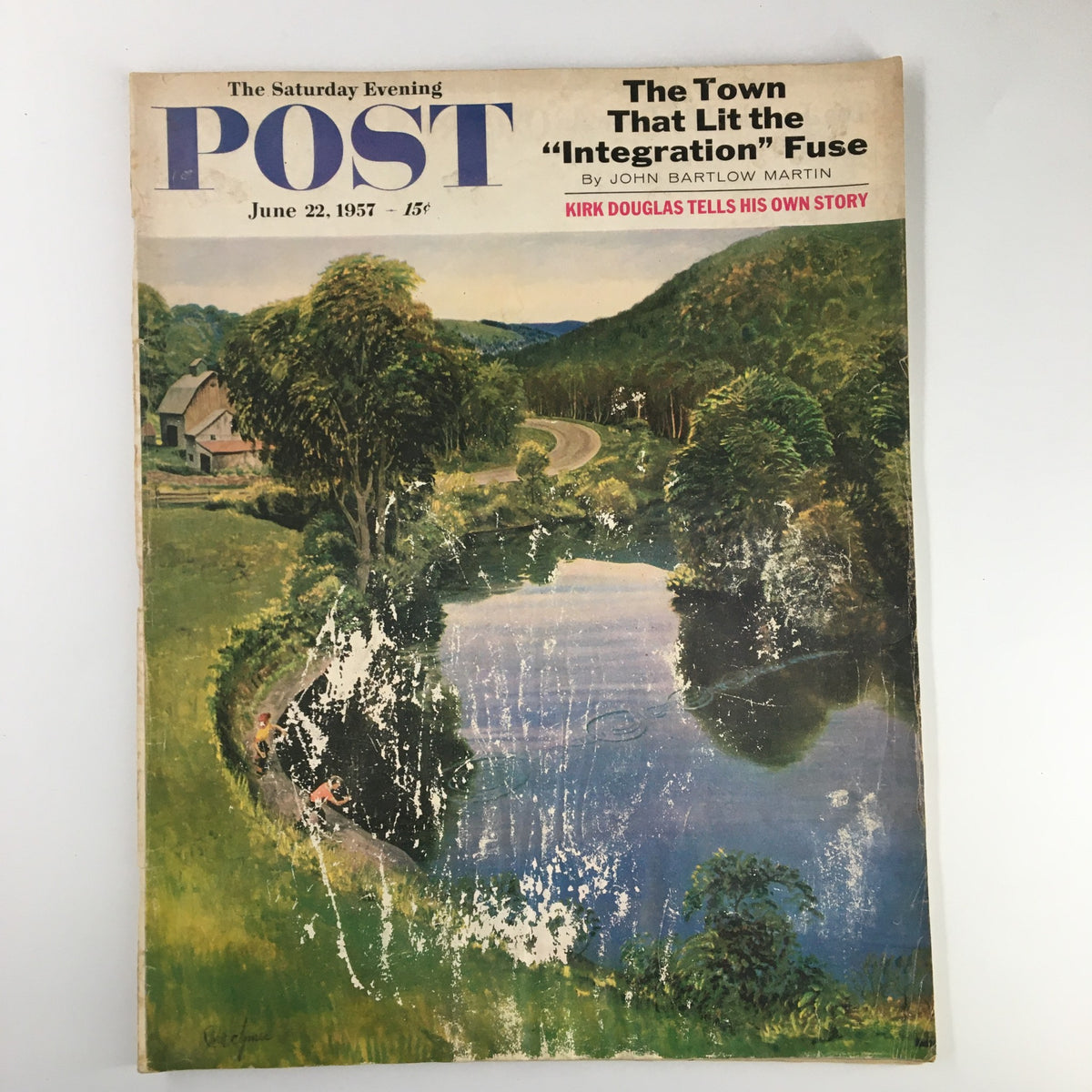
📖 About this Collection
June 1957: The Summer of Records and Reckoning
The Historical Context
The world crackled with tension in June 1957, as Cold War anxieties collided with extraordinary athletic achievement and political upheaval. U.S. television carried its first-ever interview with Soviet First Secretary Nikita Khrushchev on June 2nd, a media watershed that brought the enigmatic Soviet leader directly into American living rooms. Meanwhile, Canada underwent its own political transformation when John Diefenbaker was elected Prime Minister on June 10th, ending Louis St. Laurent's record-breaking tenure just days later. Nature delivered its own reckoning when Hurricane Audrey devastated Louisiana and Texas on June 27th, claiming 526 lives and dominating newspaper headlines across the nation. For someone born in June 1957, this was a month when the personal and political converged—a world watching history unfold on television screens while communities rebuilt from catastrophe, all preserved in the authentic magazines from June 1957 that documented these pivotal weeks.
Pop Culture & Lifestyle
On playing fields and in theaters, June 1957 belonged to barrier-breakers and record-setters. Don Bowden became the first American to run a sub-four-minute mile on June 1st in California, a triumph that graced the covers of Sports Illustrated and inspired a generation of athletes. Baseball history unfolded weekly: Stan Musial extended his consecutive-game streak to 823 games on June 12th, Ted Williams became the first American Leaguer to hit three home runs twice in a season on June 13th, and MLB Commissioner Ford Frick overruled Cincinnati fans' ballot stuffing on June 28th, personally naming Musial, Willie Mays, and Hank Aaron to the All-Star team. Cinema audiences flocked to see Sidney Lumet's "12 Angry Men," which captured the Golden Bear at Berlin's film festival on June 21st. The vintage magazines from June 1957 captured these moments through full-page spreads in Life and Look, sports photography in major periodicals, and entertainment coverage that defined the era's cultural sensibility—from fashion advertisements reflecting late-1950s elegance to automotive ads showcasing chrome-laden Detroit steel.
Curator's Checklist
When exploring rare magazines from June 1957, discerning collectors should examine these defining elements:
-
The Khrushchev Interview: News weeklies like Time, Newsweek, and U.S. News & World Report featuring extensive coverage of this unprecedented Cold War media event, often illustrated with CBS broadcast stills and diplomatic analysis that captured America's fascination with penetrating the Iron Curtain.
-
Hurricane Audrey Aftermath: Life and Look magazines chronicling the catastrophic Gulf Coast hurricane through powerful photojournalism, depicting rescue operations and the human cost of what became one of the deadliest natural disasters of the decade.
-
Baseball's Summer Surge: Sports Illustrated issues celebrating Musial's endurance record and the All-Star ballot controversy, featuring action photography, statistical breakdowns, and the emerging tensions between traditional baseball culture and fan engagement that would reshape the sport.
-
Canadian Political Transition: Newsmagazines documenting John Diefenbaker's Conservative victory and the appointment of Ellen Louks Fairclough as Canada's first woman Cabinet Minister on June 21st, marking a watershed moment in North American governance covered extensively in both U.S. and Canadian periodicals.
-
Sub-Four-Minute Mile Breakthrough: Track and field coverage in sports publications showcasing Don Bowden's historic achievement at Stockton, complete with timing photographs and technical analysis that made this milestone accessible to mainstream audiences captivated by Cold War athletic competition.
The Perfect Gift
For someone born in June 1957, an original magazine from this momentous summer isn't just a collectible—it's a time capsule preserving the exact world they entered, captured in genuine headlines, period photography, and authentic advertisements that museums simply cannot replicate.