📖 About this Collection
Spiro Agnew: The Voice of the Silent Majority
The Legend & The Legacy
Few figures in American political history ignited such fierce national debate as Richard Nixon's combative Vice President. Rising from the relative obscurity of Maryland's governorship to the second-highest office in the land, Spiro Agnew became the sharp-elbowed mouthpiece of a nation's conservative anxieties — a polarizing tribune who coined the phrase "nattering nabobs of negativism" and declared open war on the liberal press, student protesters, and the Eastern establishment. He was, in many ways, the era's most quotable political weapon: a man whose rhetorical gifts were deployed not to unite, but to divide with surgical precision, giving voice to a white middle-class America that felt culturally besieged and politically ignored. In an era before cable news and social media algorithms, Americans formed their opinions about the man through ink and paper alone: through the glossy pages of weekly newsmagazines, the thundering editorials of national publications, and the sardonic cartoons of political journals. His meteoric ascent, his alliterative broadsides, and ultimately his stunning 1973 resignation over a bribery and tax evasion scandal — the first Vice President to resign in disgrace — all unfolded in real time across the printed page. Each new issue of the nation's great magazines served as both chronicle and verdict, capturing a public that was simultaneously fascinated, outraged, and deeply unsettled by the man standing one heartbeat from the presidency.
Inside the Archive
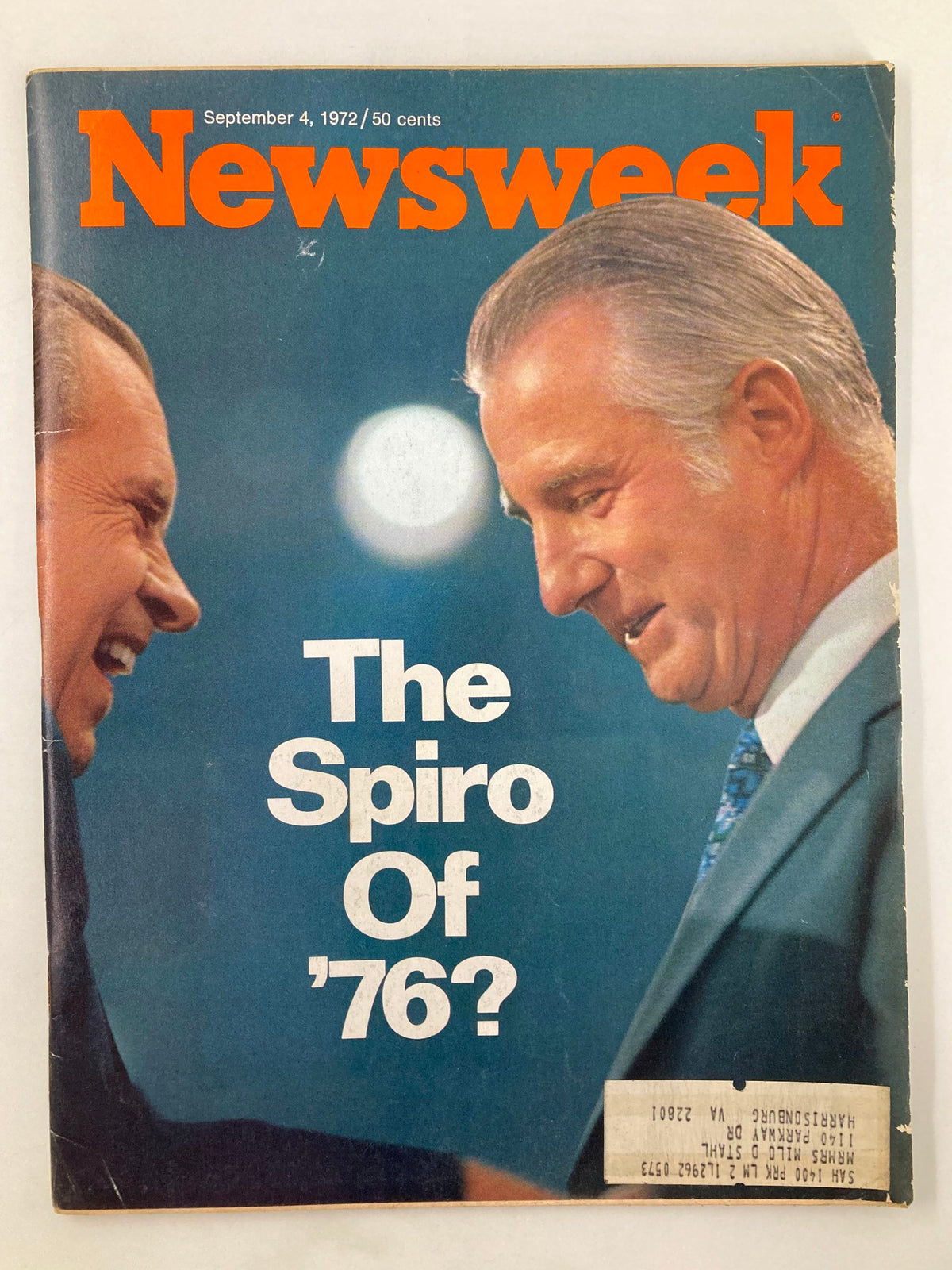
The press that Agnew so gleefully attacked nevertheless documented his every move with remarkable thoroughness. TIME and Newsweek placed him on their covers during the Nixon era with the gravitas reserved for men who genuinely unsettled the national mood — stern portraiture, dramatic lighting, and cover lines that crackled with the tension of an America splitting along cultural fault lines. Life magazine, in its sweeping photojournalistic tradition, captured the pageantry of the Nixon-Agnew administration with wide-angle authority, while publications like The New Republic and National Review sparred furiously over his ideological legacy in dense, passionate prose that reads today as a remarkable artifact of that era's intellectual combat. Political satire journals and editorial cartoon anthologies of the period frequently lampooned his bombastic style, preserving in pen and ink a portrait of a man who inspired both fervent loyalty and withering contempt in equal measure. International titles such as Der Spiegel and L'Express covered the Watergate-adjacent scandal with the particular fascination that European observers reserved for American political catastrophe, framing his fall within the broader unraveling of the Nixon White House. Taken together, the full spectrum of period publications — from mainstream weeklies to ideological quarterlies — offers collectors a remarkably three-dimensional portrait of a figure who was never merely a footnote, but a seismic force in his own right.
Curator's Checklist: Highlights Often Include
-
The 1968 Election Coverage — Issues documenting Nixon's selection of the then-unknown Maryland governor as his running mate, capturing the political world's initial bafflement and the subsequent campaign that brought them to power; early profiles from this period are among the rarest finds, as few anticipated just how consequential — and controversial — he would become
-
The Anti-Press Campaign — Features and editorials from 1969–1971 covering his notorious speeches attacking television networks and print media, often with the rich irony of those very publications reporting on his broadsides against them; these issues capture a pivotal moment when the relationship between government and the Fourth Estate turned openly adversarial
-
The Silent Majority & Cultural Wars — Coverage of his role as Nixon's attack dog against Vietnam War protesters, campus unrest, and the counterculture, reflecting the profound social divisions of the period; photo essays from rallies and campaign stops of this era often convey the raw emotional energy of an America locked in a battle for its own identity
-
The Resignation Crisis of 1973 — Some of the most collectible issues in this category, capturing the shock of his no-contest plea and resignation — a story that broke just weeks before Watergate consumed the presidency entirely; the breathless, history-in-real-time quality of these issues is palpable on every page, from the front-cover urgency to the hastily rewritten editorial columns within
-
The Post-Resignation Years — Rarer long-form profiles and retrospective pieces examining his quiet return to private life, his memoir, and his complicated place in the conservative political tradition; these later issues offer a more reflective, elegiac tone, grappling with the question of how a man of such rhetorical power could exit the stage so ignominiously
The Collector's Value
To hold one of these original issues is to hold the unmediated pulse of a nation in crisis. The paper stock of a 1973 Newsweek — slightly brittle at the edges, with that unmistakable warm, woody scent of mid-century offset printing — carries an authority no digital archive can replicate. The surrounding advertisements alone are a time capsule: full-page spreads for American automobiles, cigarette brands, and transistor radios that frame the political drama in its precise cultural moment, reminding us that history was lived, not merely observed. There is something irreplaceable, too, about the editorial voice of these publications in their original form — the typography, the column widths, the deliberate weight of a cover photograph chosen by an editor who understood that millions of Americans would encounter that image on a newsstand and make a split-second judgment about the fate of the Republic. These were not records made for posterity — they were urgent dispatches, printed by the millions and read in living rooms, barbershops, and waiting rooms across the country, their importance felt viscerally in the week of publication. Unlike the ephemeral scroll of a digital feed, a physical magazine demanded to be held, turned, and absorbed — and it is precisely that physical intimacy that makes surviving copies so resonant today. For collectors of American political history, Watergate-era memorabilia, or Cold War–era print media, these publications offer a rare, tactile connection to a constitutional drama that permanently reshaped the relationship between the American public and its government. Explore our current rotating inventory below and discover which original issues are available today.