📖 About this Collection
Woody Allen: The Neurotic Auteur Who Redefined American Comedy
The Legend & The Legacy
Few voices in American cinema have been as simultaneously celebrated and scrutinized as the bespectacled neurotic who turned existential dread into art house gold. From the jazz-soaked streets of Manhattan to the sun-drenched anxiety of European summers, this filmmaker transformed self-deprecation into a cinematic language—one where relationships unravel over psychoanalysis sessions, where intellectuals quote Kierkegaard while fumbling through romantic disasters, and where the camera lingers on autumn in Central Park as if capturing mortality itself. His films became mirrors for a generation grappling with modernity, ambition, and the terrifying freedom of urban life. The vintage press captured this evolution in real time: the stand-up comic who became an Oscar-winning auteur, the writer whose one-liners masked philosophical depth, the director who made a trademark of his own insecurities.
Inside the Archive
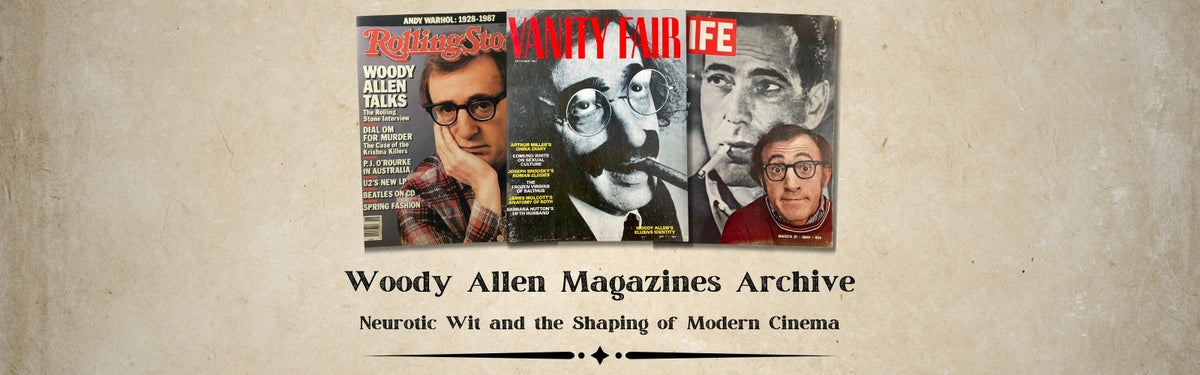
The magazine coverage traces a fascinating arc—from early profiles in comedy journals celebrating a fresh voice in stand-up, to glossy film quarterly deep-dives dissecting the visual poetry of black-and-white cinematography and Windsor typeface credits. Entertainment weeklies offered on-set glimpses of Manhattan locations and neurotic on-screen personas, while intellectual publications treated each new release as a cultural event worthy of existential analysis. The photography ranged from candid shots of script revisions in Upper East Side cafes to carefully composed portraits that mirrored the director's own aesthetic: moody, literary, self-aware. Critics wrestled with themes of mortality and morality in print, while feature writers explored the creative process behind that prolific annual output—one film per year, like clockwork, each a new meditation on love's complications.
Curator's Checklist: Highlights Often Include
- Early Comedy Chronicles: Features on the stand-up years, television writing rooms, and the transition from joke-crafter to cinematic visionary
- Golden Era Retrospectives: In-depth coverage of Academy Award triumphs, Diane Keaton collaborations, and the films that defined a generation's romantic anxieties
- Creative Process Exposés: Interviews revealing writing rituals, directorial techniques, and the literary influences—from Bergman to Chekhov—that shaped a distinctive voice
- Cultural Criticism & Legacy: Analytical essays examining themes of neurosis, Jewish identity, relationships, and the evolution of independent cinema through an auteur's lens
- Shifting Perceptions: Later reporting that documents controversies, public discourse, and the complicated conversation surrounding art versus artist
The Collector's Value
These original magazines represent more than film history—they're time capsules of American intellectual culture, capturing an era when independent cinema found mainstream success and when a single filmmaker could dominate cultural conversations for decades. Whether you collect auteur cinema, comedy history, or the New York creative renaissance of the 1970s and 80s, these authentic issues offer unfiltered access to the critical discourse and creative mythology of a polarizing yet undeniably influential figure. Explore our current inventory below to discover which chapter of this complex cinematic legacy is available today.