
The Magazine That Stopped America
LIFE's November 29, 1963 Issue and the Visual Record That Defined a Nation's Grief
On a cold Friday morning in November 1963, Americans woke to a country they no longer recognized. By Monday, they were searching for a way to understand what had happened. When LIFE Magazine hit newsstands and mailboxes on November 29th, it didn't just report the assassination of John F. Kennedy—it froze the moment in ink and paper, creating the first visual record most Americans would ever see of the seconds that severed the nation's innocence.
This wasn't journalism as usual. This was history, still warm to the touch.
Historical Record
Historical Figure: President John F. Kennedy
Issue Date: November 29, 1963
Archive Source: LIFE Magazine
Photographer: Abraham Zapruder (film frames)
Event Date: November 22, 1963
The Week That Shattered Camelot
November 22, 1963. Dallas, Texas. 12:30 PM Central Time.
President John F. Kennedy, forty-six years old and embodying what felt like America's limitless future, was riding in an open-top Lincoln Continental through Dealey Plaza. The Texas trip was meant to mend political fences ahead of the 1964 election—a routine campaign swing through a state the Democrats needed to win.
Instead, it became the coordinates of a national trauma.
By that weekend, the entire country had witnessed something unprecedented: history unfolding live on television. They'd seen Lyndon Johnson's hasty swearing-in aboard Air Force One, Jackie Kennedy standing beside him in her blood-stained pink suit. They'd watched, in real-time on Sunday morning, as nightclub owner Jack Ruby shot Lee Harvey Oswald in a Dallas police basement, turning the accused assassin into a murder victim before millions of eyes.
But television, for all its immediacy, was ephemeral. The images vanished as quickly as they appeared, leaving only memory and confusion.
LIFE Magazine understood that Americans needed something more permanent. Something they could hold. Something they could return to, again and again, trying to make sense of the incomprehensible.
The Magazine That Bought History
LIFE's position in 1963 was unassailable. For two decades, it had been America's visual narrator, the publication that turned photojournalism into an art form. Its oversized pages and glossy prints had documented World War II, the atomic age, the space race, and every cultural shift in between. When LIFE covered something, it became real. It became official. It became history.
But the Kennedy assassination presented a challenge unlike any the magazine had faced.
Within hours of the shooting, LIFE's editors learned that a Dallas dressmaker named Abraham Zapruder had captured the assassination on his 8mm home movie camera. Working from an elevated concrete abutment in Dealey Plaza, Zapruder had inadvertently filmed the only complete visual record of the murder. The footage was raw, accidental, and devastating.
LIFE moved fast. The magazine purchased the film rights and rushed still frames from the footage into the November 29th issue—just seven days after the assassination. No other publication had access to these images. No American had seen the assassination unfold in sequence, frame by frame, until they opened their mailbox that Friday morning.
What Americans Saw
The Cover: Silence and Blood
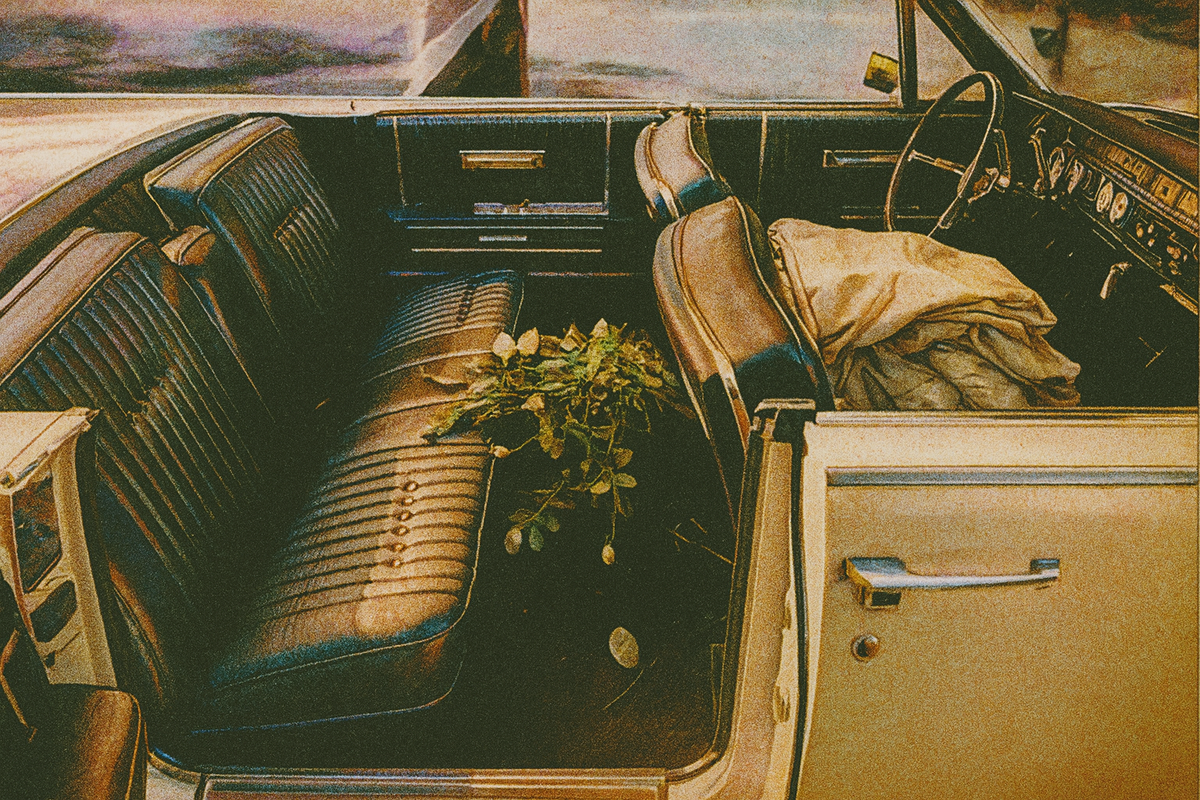
LIFE's cover dispensed with portraits or symbolic artwork. Instead: the empty presidential limousine, its leather seats stained, roses scattered across the interior like funeral flowers abandoned mid-ceremony. No faces. No flag. Just the physical evidence of violence—a car that had carried hope and now carried only absence.
The image hit harder than any headline could.
Inside: The Zapruder Sequence
For the first time, Americans saw the assassination as it actually happened. Frame by frame, LIFE printed Zapruder's film stills with forensic precision: Kennedy and Jackie waving to the Dallas crowds, smiling; the President suddenly clutching his throat, his face contorting; Governor John Connally reacting to being struck; Jackie Kennedy scrambling onto the trunk of the limousine; Secret Service agent Clint Hill throwing himself onto the car; the final, terrible moments.
LIFE's captions were clinical but devastating. They described trajectories, reactions, split seconds. Readers could study the sequence, trace the timeline, and confront the reality that television's chaos had obscured: this had happened quickly, violently, and irreversibly.
"Jackie Crawled for Help"
This was LIFE's most intimate reporting—a section devoted to Jacqueline Kennedy's actions in the seconds after her husband was shot. The photographs showed her climbing toward the trunk of the moving limousine, her stockings stained with blood, reaching desperately for Agent Hill. The captions quoted her cries: "Oh no! Oh no!"
The coverage transformed Jackie from First Lady into something more primal—a wife watching her husband die, acting on instinct and horror. LIFE's prose walked a careful line between documentation and dignity, presenting her not as a political figure but as a woman in unimaginable agony.
The Morning That Was
LIFE's writers understood the power of contrast. The issue included photographs and descriptions of that morning at Love Field airport in Dallas—Kennedy in shirtsleeves, Jackie holding roses, both of them radiant in the Texas sun. Optimism. Confidence. The future, still intact.
Then came the motorcade. The turn onto Elm Street. The shots. And those same roses, scattered and forgotten in the bloodstained limousine.
The narrative arc was devastating: from joy to grief, from sunshine to shadow, from roses to blood.
The Empty Limousine
A haunting cover image of the bloodstained car with roses left behind, symbolizing the sudden collapse of joy into mourning.
The Zapruder Frames
Published for the first time, these stills became the defining visual record of the assassination.
Jackie's Heroism
Photographs and captions showing her climbing onto the trunk in search of help, then cradling her husband's head in her lap.
The Morning in Dallas
Written passages describing JFK and Jackie's buoyant arrival at Love Field, smiling and confident.
Contrast of Symbols
Roses, smiles, and optimism turning to blood, confusion, and tragedy in a matter of seconds.
The Swearing-In
Documentation of Lyndon Johnson's rapid transition to power aboard Air Force One.
Why This Issue Changed Everything
LIFE's November 29, 1963 issue didn't just report an event—it created the visual grammar through which Americans would remember it forever. Before this magazine, the assassination was chaos: television footage, radio bulletins, conflicting reports, and national confusion. After LIFE, it had a shape, a sequence, a visual logic.
The Zapruder frames, in particular, became the assassination's definitive record. For decades afterward, every documentary, every book, every analysis would return to these images. They were inescapable. They were canonical.
But LIFE's coverage did something else, too: it marked the end of an era. The magazine captured not just Kennedy's death but the death of early-1960s optimism—the belief that America's trajectory was inevitably upward, that youth and vigor could solve any problem, that Camelot was more than a myth.
After Dallas, that innocence was gone. LIFE's November 29th issue was its obituary.
Where Screens End, Paper Endures
We live in an age of infinite images, instant replay, and algorithmic memory. News breaks, trends, and vanishes before we can process it. But LIFE's November 29, 1963 issue reminds us that some moments demand permanence—not just digital archives, but physical objects you can return to, study, and preserve.
This magazine is a witness. It doesn't change. It doesn't update. It doesn't disappear when the server goes down or the platform shuts off. It simply remains—a fixed point in time, holding the grief and shock of a nation that woke up one Friday morning and discovered that everything had changed.
That's why these magazines matter. That's why collectors preserve them. And that's why, sixty years later, this single issue of LIFE still has the power to stop you cold when you turn its pages.
The Collector's Grail
Historical Primacy
Published just seven days after the assassination, it captured the nation's grief in real-time. This wasn't retrospective analysis—it was raw, immediate testimony.
Exclusive Access
The Zapruder frames were a LIFE exclusive. No other publication had them. No other visual record existed for the public.
Cultural Watershed
The issue documented the precise moment when postwar American optimism collapsed. It's the hinge between two different countries.
Personal Connection
Millions of Americans saved this issue as a memorial. For many families, it became a way to say, "I was there. I remember."
Enduring Demand
Alongside LIFE's coverage of Pearl Harbor and Apollo 11, the November 29, 1963 issue remains one of the most iconic magazine publications of the 20th century.
Physical Testimony
To hold an original copy is to hold what Americans held in 1963—to touch the paper they touched, to see the images they saw, to feel the weight of history in physical form.
Own a Piece of History
Thousands of original LIFE magazines from the 1930s through the 1970s are available in our collection, documenting every major cultural, political, and artistic moment of the 20th century as it was reported in real-time.
Browse Life Magazine CollectionWhether you're a collector, a historian, or someone honoring the memory of where your family was when Kennedy fell, these magazines offer something rare: the chance to hold history exactly as it was first printed, preserved, and remembered.