
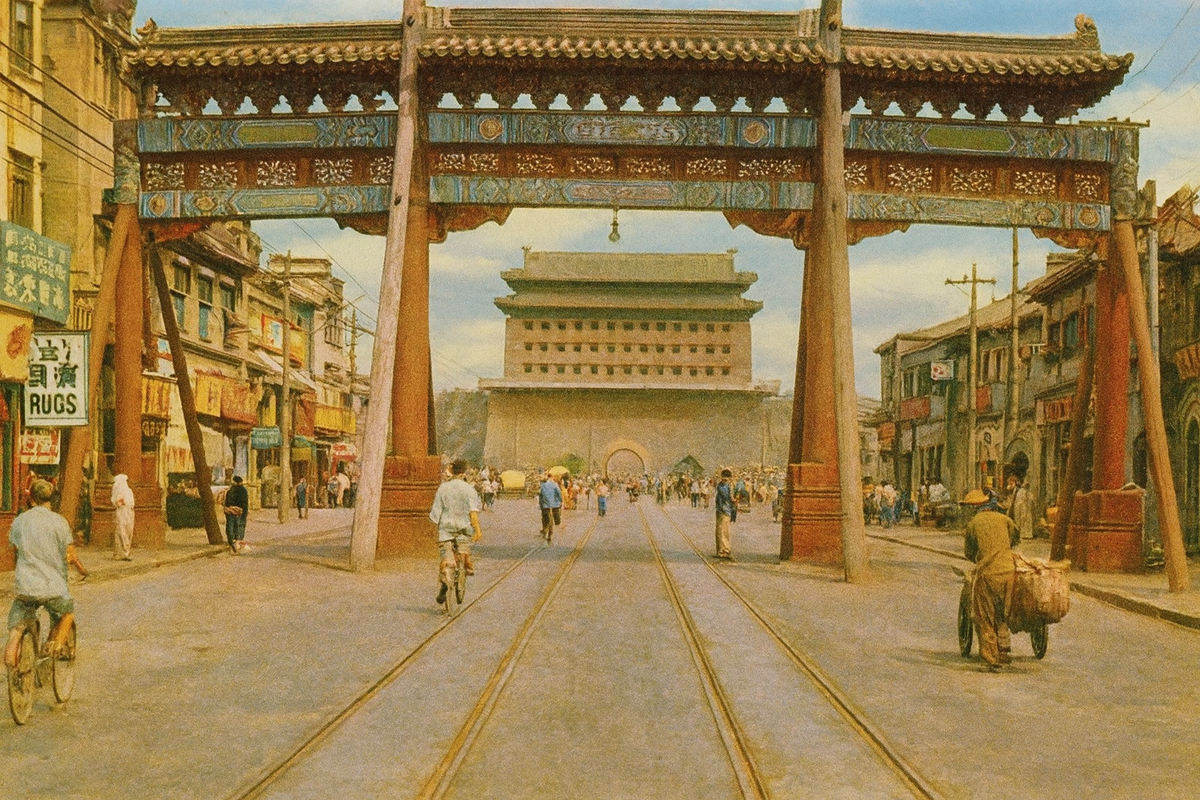
When History Met the Lens: Life Magazine Captures Peiping on the Eve of Occupation
How the August 23, 1937 issue documented China's imperial monuments as Japanese forces advanced—and why it remains one of photojournalism's most significant wartime records
On August 8, 1937, Japanese troops under General Masakazu Kawabe marched into Peiping. Two weeks later, American breakfast tables received something extraordinary: photographs of the city's monuments—the Forbidden City, the Summer Palace, the Great Wall—rendered in Life Magazine's stark black-and-white, accompanied by captions that didn't flinch from the truth. These weren't postcards. They were dispatches from a civilization under siege.
The August 23, 1937 issue arrived at a moment when most Americans couldn't place Peiping on a map, much less understand why its fall mattered. Life's editors understood their assignment: make distant catastrophe immediate. What resulted was one of the magazine's most significant early issues—a photographic record of imperial China's last monuments standing against the machinery of modern war.
For collectors today, this issue represents more than vintage ephemera. It's a primary document from the opening act of World War II, published when the outcome was still unwritten.
The Summer of 1937: When the War Began
One month before Life's presses rolled, the Marco Polo Bridge Incident ignited full-scale conflict between China and Japan. What began as a skirmish near Peiping on July 7 escalated within weeks into a coordinated Japanese offensive across North China. By early August, Kawabe's divisions had taken the ancient capital—a city that had stood as the seat of Mongol khans, Ming emperors, and Qing dynasties for seven centuries.
Life's coverage appeared with remarkable speed, barely two weeks after occupation. The timing was no accident. Henry Luce, Life's founder, had grown up in China as the son of missionaries. He understood what was at stake: not just territory, but the physical embodiment of Chinese identity. The magazine's Peiping feature became an urgent act of cultural documentation, preserving images of monuments that might not survive the coming years.
The article positioned Peiping as a city of 1.4 million souls living among the ruins and relics of dynasties—from Kublai Khan's 13th-century conquest through the Qing collapse in 1911. In 1937, these weren't museum pieces. They were contested ground.
Archive Metadata
Publication: Life Magazine
Issue Date: August 23, 1937
Cover Subject: Transoceanic Transport Plane
Key Figure: General Masakazu Kawabe (Japanese occupation commander)
Historical Context: Published two weeks after the fall of Peiping (Beijing), during the opening phase of the Second Sino-Japanese War
Significance: One of the earliest American photojournalistic records of China's wartime crisis, predating U.S. involvement in World War II by four years
What Life's Cameras Captured
The genius of Life's early issues lay in their refusal to separate beauty from crisis. The August 23 edition delivered both in equal measure.
The Summer Palace spreads showed Empress Dowager Tzu Hsi's 1889 masterwork—the "Mountain of 10,000 Ages" rising above lotus-choked lakes, ornamental pavilions frozen in their Qing-era grandeur. Life's photographers captured the palace not as exotic curiosity but as testament to a woman who ruled China for nearly half a century and bent the empire to her architectural vision.
The Ming Tombs sequence was even more pointed. Stone camels, horses, and warriors lined the Sacred Way in photographs that emphasized scale and solemnity. Life's caption noted, with characteristic bluntness, that Japanese forces were now encamped nearby. The implication hung in the air: how long before these sentinels, guarding emperors dead for centuries, became casualties themselves?
The Great Wall photographs remain among the issue's most striking images. Stretching 1,500 miles with watchtowers every 600 feet, the Wall had once symbolized China's ability to repel northern invaders. In 1937, it was being tested again—this time against an enemy arriving with artillery, aircraft, and modern logistics. Life's cameras captured the Wall's serpentine path through mountains with a clarity that made its inadequacy against 20th-century warfare painfully obvious.
The Forbidden City sequences—both aerial views and ground-level studies—showed the palace complex in its pre-tourism state. This was still a functioning symbol of imperial continuity, recently repurposed by the Republic but not yet sanitized for visitors. Life photographed the Temple of Heaven, the Dragon Wall, the ceremonial halls with their gilded roofs. These weren't attractions. They were contested symbols of what China had been and what it was fighting to remain.
The Magazine as Historical Witness
Life's August 23, 1937 cover featured a transoceanic transport plane—an odd choice for an issue dominated by ancient Chinese monuments. But the juxtaposition was deliberate. Aviation represented the modern world's promise: speed, connection, progress. Inside, the Peiping feature delivered the counterpoint: what progress destroys.
Unlike illustrated weeklies such as The Saturday Evening Post, which relied on artists' renderings and idealized compositions, Life committed itself to photographic realism. Its editors believed Americans needed unfiltered access to the world beyond their borders—whether that meant Depression-era breadlines, Spanish Civil War rubble, or Chinese imperial architecture under threat.
The Peiping photo-essay exemplified this philosophy. Each spread moved between sweeping landscape shots and forensic detail: carved stone, ornamental tiles, crowded streets. Captions didn't simply identify subjects—they argued. They explained why the Summer Palace mattered, who Empress Tzu Hsi was, what the Ming Tombs represented. Most importantly, they connected centuries-old monuments to breaking news, making cultural heritage inseparable from geopolitical crisis.
This was Life's innovation: collapsing the distance between permanence and immediacy, making readers understand that history wasn't safely past—it was unfolding in real time, and it was fragile.
The Summer Palace
Empress Dowager Tzu Hsi's 1889 masterwork, featuring the "Mountain of 10,000 Ages" and lotus-filled lakes—a monument to imperial extravagance photographed as Japanese forces approached.
The Ming Tombs
Stone sentinels—camels, horses, warriors—lining the Sacred Way, with Life noting Japanese encampments nearby, raising questions about their survival.
The Great Wall
Stretching 1,500 miles with watchtowers every 600 feet, photographed in stunning detail as it faced its greatest test against modern warfare.
The Forbidden City
Aerial and ground photographs of the palace complex in its pre-tourism state, capturing the Temple of Heaven, Dragon Wall, and gilded ceremonial halls.
Why This Issue Commands Collector Attention
Vintage Life magazines from the 1930s occupy a unique position in the ephemera market. They're abundant enough to be acquirable but significant enough to matter. The August 23, 1937 issue rises above the field for several reasons.
Historical Proximity: Published just weeks after the Second Sino-Japanese War's eruption, this issue captured the conflict before anyone understood its scale. In August 1937, World War II was still an unimaginable four years away. Life's coverage exists in that brief window when the war was China's alone—a regional catastrophe that hadn't yet merged into global conflagration.
Photographic Authority: The images of Peiping's monuments represent some of the highest-quality visual documentation of these sites before decades of war, revolution, and modernization altered them irrevocably. For researchers and institutions studying pre-1949 China, these photographs carry archival weight.
Cultural Bridging: Few American publications in 1937 attempted serious engagement with Chinese history. Life's feature provided millions of readers with their first sustained look at dynastic architecture, imperial tradition, and the physical landscape of a civilization most knew only through stereotype. As a pedagogical artifact, the issue is unmatched.
Condition and Completeness: Eighty-eight years later, intact copies with clean pages, original advertisements, and unfaded photographs are increasingly scarce. Each surviving issue represents not just content but physical continuity with 1937—the paper stock, the printing process, the tactile experience of how Americans first encountered this story.
The Artifact as Time Machine
There's a reason collectors seek original magazines rather than reprints or digital scans. These objects were designed for a different relationship with information. In 1937, Life arrived weekly, each issue meant to be studied, discussed, passed between neighbors, saved in stacks on side tables. Families kept them. Schools used them for current events classes. They were physical anchors in a world moving too fast to process.
Holding an original August 23, 1937 issue means handling the same pages readers turned while Hitler consolidated power in Germany, while the Spanish Republic fought its final battles, while Americans debated whether Europe's troubles were their concern. The advertisements—for Chesterfield cigarettes, Buick sedans, Lux soap—provide accidental social history. The paper's texture, the ink's slight bleed, even the musty smell of eight decades: these aren't nostalgic affectations. They're part of the historical record.
That's what separates original magazines from reproductions. Digital archives preserve content; physical artifacts preserve context.
Building Your Collection
The August 23, 1937 issue is one gateway into Life's extraordinary run from 1936 through the 1970s. The magazine chronicled everything that mattered: wars and politics, scientific breakthroughs, cultural shifts, the rise and fall of movements and icons. Each issue is a snapshot of American consciousness at a specific moment.
For serious collectors, the strategy is straightforward: identify milestone issues tied to major events, prioritize condition, and build thematically. Someone interested in World War II's origins might acquire Life's coverage of Spain (1936-1939), the Anschluss (1938), Kristallnacht (1938), and Poland's invasion (1939) alongside this Peiping issue. Together, they form a narrative arc visible only through primary documents.
For enthusiasts honoring family history, the appeal is more personal. If your grandparents lived through the 1930s, they likely saw Life on newsstands, possibly owned issues, certainly discussed the photographs. Acquiring magazines from their era creates tangible connection—a chance to see the world as they first encountered it, before hindsight simplified everything.
Why Collectors Prize This Issue
Historical Timing
Published just weeks after the Second Sino-Japanese War erupted, capturing a regional conflict before it merged into World War II—a rare window into August 1937's uncertainty.
Photographic Record
High-quality documentation of Peiping's monuments before decades of war and modernization. These images carry archival weight for institutions studying pre-1949 China.
Cultural Documentation
One of the first serious American engagements with Chinese imperial history, providing millions their first sustained look at dynastic architecture and tradition.
Physical Rarity
Eighty-eight years later, intact copies with unfaded photographs and original advertisements represent physical continuity with 1937—increasingly scarce artifacts.
Explore the Complete Archive
Discover thousands of original Life magazines from the 1930s through 1970s—from wartime dispatches to cultural milestones, each issue a window into American consciousness at a defining moment.
Browse Life Magazine CollectionThe Enduring Record
The August 23, 1937 Life Magazine endures because it captured a hinge moment—when ancient and modern collided, when cultural monuments became military objectives, when Americans began understanding that China's war might become everyone's war.
The photographs of Peiping's Summer Palace, Ming Tombs, Great Wall, and Forbidden City weren't just architectural documentation. They were arguments for preservation, warnings about fragility, evidence of what was at risk. Life's editors knew they were creating a record that might outlast the structures themselves.
Eighty-eight years later, that record remains vital. For historians studying how Americans understood China in the 1930s, for collectors seeking primary documents from World War II's opening chapter, for anyone curious about how photojournalism shaped 20th-century consciousness, this issue delivers.
It's not just a magazine. It's a window into August 1937, when readers opened their copies and saw, perhaps for the first time, that history's monuments were never as permanent as they seemed—and that bearing witness mattered more than ever.