
The Magazine That Predicted Woodstock
Inside Rolling Stone's Lost Atlantic City Chronicle
Two weeks before half a million people descended on Max Yasgur's farm, another story was already written.
On newsstands across America in early September 1969, readers opened Rolling Stone to find something unprecedented: a full-throttle documentary account of 150,000 young people storming the Atlantic City Racetrack, tearing down barriers, and turning a commercial festival into a referendum on control itself. The issue dated September 6, 1969 didn't just review a concert. It captured the exact moment when the counterculture realized it had the numbers to overwhelm any system designed to contain it.
And almost nobody remembers it happened.
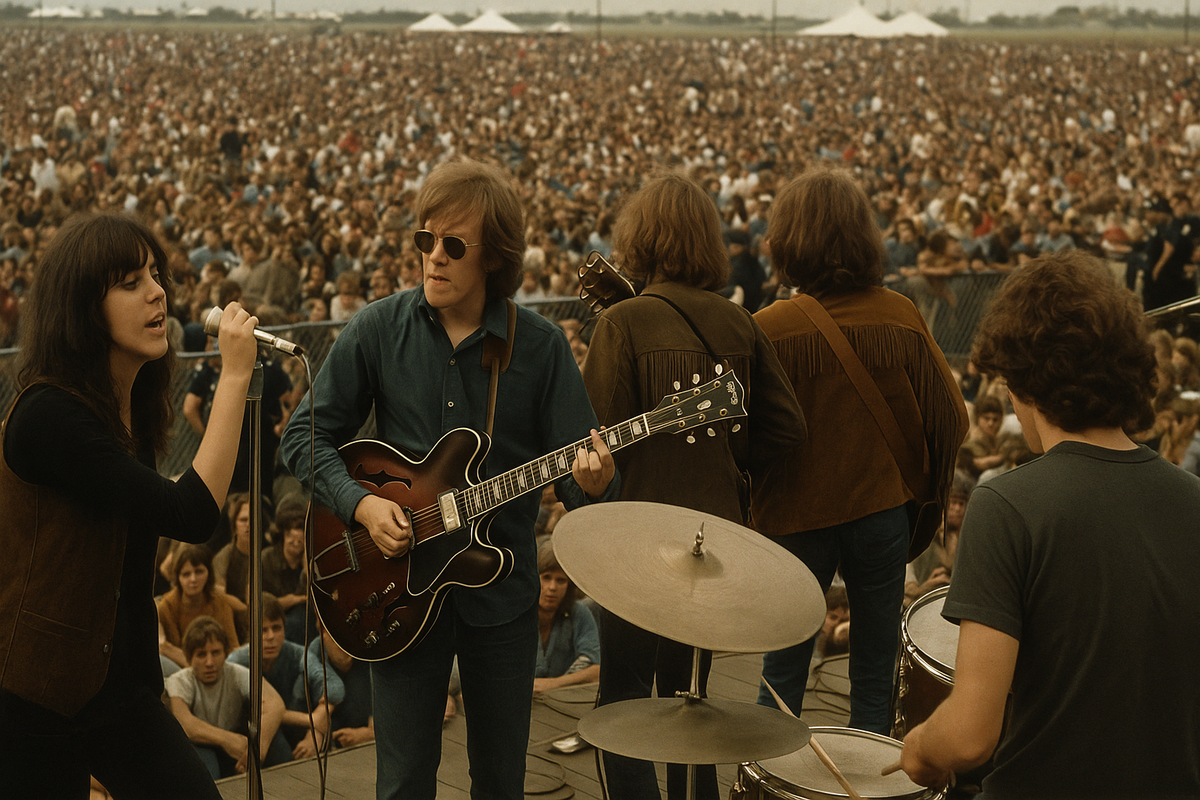
While Woodstock would be mythologized into the defining event of a generation, Atlantic City—held August 1-3, 1969, featuring Jefferson Airplane, Janis Joplin, B.B. King, Creedence Clearwater Revival, Santana, and Iron Butterfly—served as the dress rehearsal. Rolling Stone's coverage, titled "Atlantic City: Pop! Goes the Boardwalk," gave America its first full look at what happens when reserved seating means nothing and a generation decides the field belongs to everyone.
This issue is one of the rarest and most significant festival documents of the era. Here's why it matters.
The Rehearsal Nobody Watched
The summer of 1969 wasn't building toward one climax. It was exploding in multiple directions simultaneously.
Richard Nixon occupied the White House. Half a million students had marched against Vietnam only months earlier. Civil rights, women's liberation, and environmental awakening filled the streets with a volume that matched the Marshall stacks on festival stages. Music wasn't the soundtrack to the revolution—it was the revolution, the one space where young Americans could gather in staggering numbers without asking permission.
Monterey Pop in 1967 had proven the concept. By August 1969, the Atlantic City Pop Festival demonstrated the scale. One hundred thousand people—possibly 150,000—converged on the New Jersey shore to see a lineup that reads like a greatest-hits compilation of the entire decade. Jefferson Airplane. Janis Joplin. B.B. King. Creedence. Santana. The Byrds. Canned Heat.
Then the barricades came down.
Rolling Stone sent photographers and writers to document the collapse. What they captured wasn't chaos—it was inevitability. The "reserved seat" system, designed to impose order and extract maximum revenue, buckled under sheer demographic force. Thousands of fans stormed the field. Security evaporated. The police circled outside the fences, unable or unwilling to intervene. And the music played on.
This was the story Rolling Stone published two weeks before Woodstock. The blueprint was already drawn. The East Coast had already watched it happen.
Archive Details
Publication: Rolling Stone Magazine
Issue Date: September 6, 1969
Feature Article: "Atlantic City: Pop! Goes the Boardwalk"
Festival Dates: August 1-3, 1969
Location: Atlantic City Racetrack, New Jersey
Estimated Attendance: 100,000-150,000
Why Rolling Stone Owned the Moment
By 1969, Rolling Stone had established itself as something no other publication could match: a magazine that treated rock music with the seriousness of political journalism and the craft of literary reporting.
Jann Wenner's editorial vision rejected the breathless celebrity worship of fan magazines. Instead, Rolling Stone deployed long-form narrative, unfiltered photography, and a commitment to documenting youth culture as a legitimate force in American life. For readers in landlocked towns who would never see the coasts, the magazine became the only credible witness to history in motion.
The September 6, 1969 issue exemplified this approach. The Atlantic City coverage combined visceral black-and-white photography with narrative prose that placed readers in the crush of the crowd. You could see the collapsed barriers. You could feel the surge of bodies onto the field. You could sense the police presence at the perimeter and the unspoken understanding that this was no longer just a concert—it was a demonstration of generational power.
Grace Slick's voice. Paul Kantner's guitar. Janis Joplin's raw, soul-baring intensity. B.B. King grounding the weekend in the blues traditions that made rock possible. The surreal juxtaposition of countercultural youth flooding a venue blocks from Atlantic City's tourist casinos and neon-lit boardwalk.
Rolling Stone didn't report the festival. It embedded readers inside it.
What the Coverage Revealed
The article laid out a story in five movements:
The Collapse of Control
Thousands of fans overwhelmed security and stormed the field, rendering the reserved seat system meaningless within hours.
Jefferson Airplane's Defining Set
Grace Slick's commanding presence and Paul Kantner's biting edge delivered one of the festival's most powerful performances.
Janis Joplin's Electrifying Performance
Joplin's set combined soul and unvarnished emotional intensity, cementing her status as one of the era's essential voices.
B.B. King and the Blues Connection
King's presence reminded the crowd that rock was built on African American traditions, grounding the weekend in history deeper than any single generation.
The Atlantic City Boardwalk Spirit
The festival's location—youth revolution colliding with old-guard tourism—captured the absurdity and inevitability of cultural change.
Together, these details constructed a larger argument: the counterculture wasn't fringe. It was national, unstoppable, and rewriting the rules for both music and American society.
Two weeks later, Woodstock proved the argument at even greater scale.
The Durability of Print
Rolling Stone's festival issues endure because they function as time capsules. Every page carries the urgency, chaos, and defiance of its moment. In an era when music coverage evaporates within hours online, these printed magazines remind us that history was once experienced slowly—studied, preserved, and passed down through physical objects.
That permanence is what gives vintage Rolling Stone issues their authority. They are witnesses to the 20th century. They hold stories that remain essential for understanding how we arrived at the present.
Why This Issue Commands Collector Attention
Historical Timing
Published in the narrow window between Atlantic City and Woodstock, this issue captures the precise moment when music festivals transformed from concerts into cultural landmarks.
Photographic Power
The images of Jefferson Airplane, the surging crowds, and the collapsing barriers remain among the most striking festival photographs ever published.
Physical Witness
Owning this issue means holding the same pages read in real time during the summer of 1969—a direct link to the counterculture as it happened, not as it was later mythologized.
Collector Demand
1960s Rolling Stone issues consistently rank among the most valuable music magazines. Milestone festival coverage, especially material that directly preceded Woodstock, holds premium status.
This isn't nostalgia. It's primary source material.
Explore the Archive
Hundreds of original Rolling Stone magazines spanning the late 1960s through subsequent decades are available in our collection. Trace entire eras of music, politics, and counterculture as they were documented in real time.
Browse Rolling Stone Magazine CollectionThe September 6, 1969 issue of Rolling Stone remains one of the most important festival-era publications ever produced. Its coverage of the Atlantic City Pop Festival delivered both documentary evidence and atmospheric immersion at a crucial moment in American culture. The photographs and reporting are not only historically significant—they are highly collectible artifacts.
Holding this issue is holding proof that the transformation happened before Woodstock. That the blueprint was already drawn. That Rolling Stone was there to witness it.
The past speaks through physical objects. This magazine is one of them.