
The Farmhouse Photographs That Redefined Audrey Hepburn
Inside Vogue's April 1, 1971 profile of Hollywood's most luminous star—and her radical choice to walk away
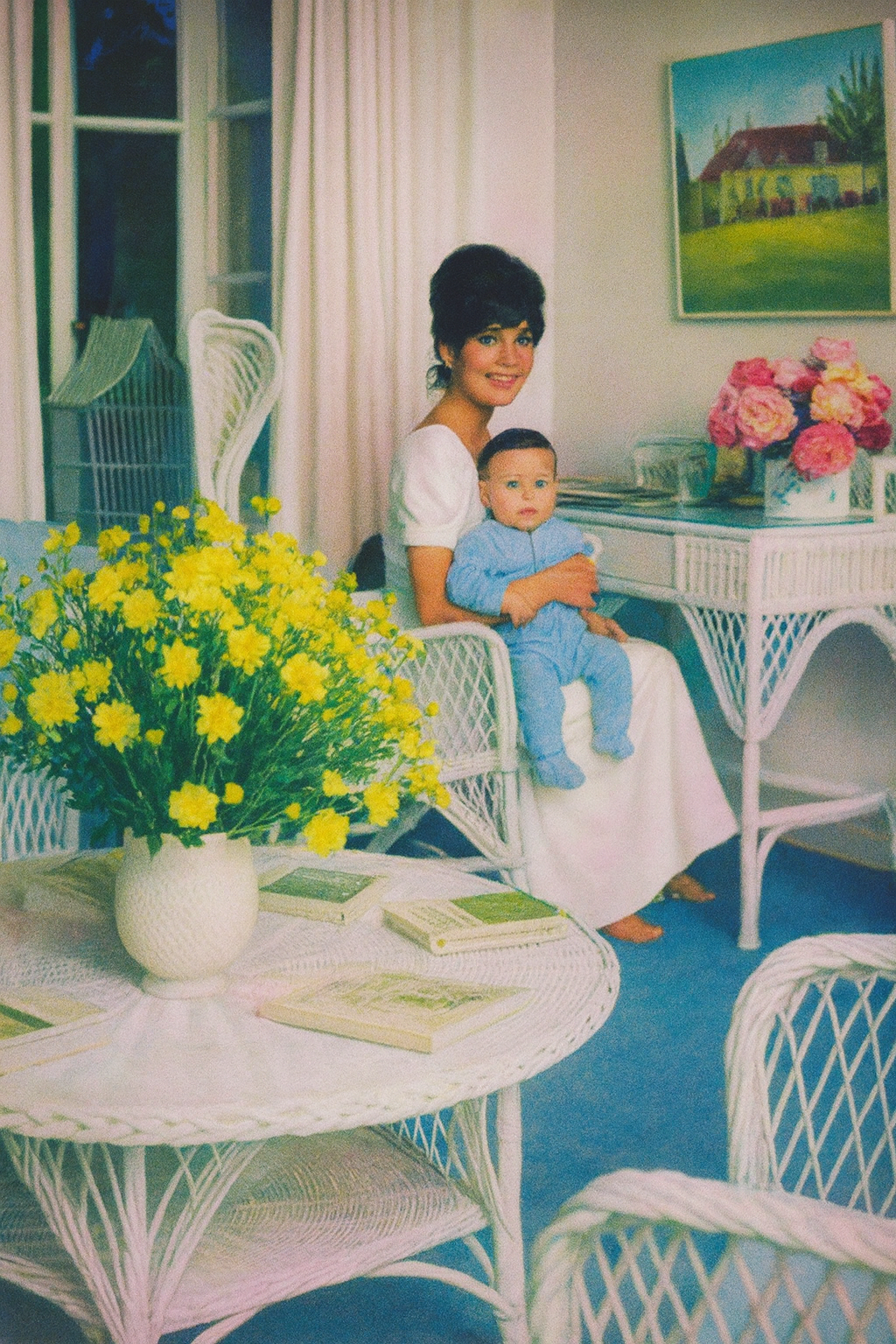
On April 1, 1971, Vogue readers expecting spring couture and studio glamour found something else entirely: Audrey Hepburn barefoot in a Swiss garden, pushing an old-fashioned pram. No jewels. No Givenchy gown. Just a woman who had walked away from Hollywood at the height of her powers—and Henry Clarke's camera was there to witness why.
"Audrey's Loving World" wasn't a fashion spread. It was a declaration.
The Woman Who Chose Silence Over Stardom
By 1971, Audrey Hepburn had earned everything the film industry could offer: an Oscar for Roman Holiday, immortality as Holly Golightly, and a place in the cultural vocabulary of mid-century elegance. She was 42. She was done.
Two years earlier, she had married Dr. Andrea Dotti, an Italian psychiatrist practicing in Rome, and retreated to La Paisible—"The Peaceful"—a centuries-old farmhouse in Tolochenaz, Switzerland. There, she was raising two sons: Sean, her teenager from her marriage to Mel Ferrer, and Luca, her toddler with Dotti. Film offers arrived regularly. She declined them all.
Curtis Bill Pepper's text and Clarke's photographs captured a woman constructing a life according to her own blueprint—one forged not in Hollywood but in the wreckage of Nazi-occupied Holland.
Archive Details
Historical Figure: Audrey Hepburn (1929–1993)
Issue Date: April 1, 1971
Archive Source: Vogue Magazine
Photographer: Henry Clarke
Writer: Curtis Bill Pepper
Feature Title: "Audrey's Loving World"
War's Long Shadow: The Dutch Famine and the Architecture of Peace
Hepburn rarely spoke publicly about her childhood, but the 1971 Vogue profile cracked that silence. She described watching Jewish families torn from their homes during the Occupation. She remembered the Hongerwinter—the Dutch famine of 1944–45, when she survived on tulip bulbs and endive. She recalled the silence that followed liberation: the absence of those who never returned.
"I saw families destroyed," she told Pepper. The memory never left her.
What Vogue documented wasn't escapism. It was survival strategy. Hepburn didn't retreat to Switzerland for privacy alone—she built La Paisible as a bulwark against chaos. The wicker furniture, the flower gardens, the deliberate rhythms of domestic life: these were choices made by someone who understood how quickly the world could collapse.
Serenity wasn't a luxury for her. It was architecture.
Henry Clarke's Radical Intimacy
Clarke, Vogue's chief photographer, had shot everyone from Coco Chanel to Diana Vreeland. His genius lay in making haute couture feel inevitable, as if Balenciaga gowns were simply what elegant women wore to buy milk.
But the Hepburn assignment required something else. No studio. No styling team. Just natural light, a Swiss farmhouse, and a subject who refused to perform.
The result was revolutionary for a fashion magazine: photographs that treated domesticity as a form of grace. Hepburn kneeling in a garden. Hepburn reading to her son. Hepburn standing in a doorway, backlit, holding flowers—not as a prop but as something she'd just cut herself.
Clarke understood what Vogue's audience was ready to see in 1971: that a woman could walk away from fame and still command attention. That motherhood and intellectual life weren't incompatible. That you could be Audrey Hepburn and choose not to be Audrey Hepburn.
What the Article Revealed
On Motherhood Across Generations
Hepburn described raising a teenager and a toddler simultaneously—navigating Sean's adolescent independence while teaching Luca to wonder at flowers. "Children lose their sense of magic so quickly," she said. She treated preservation of that wonder as a moral duty.
On Swiss Discretion
She praised Switzerland's cultural reserve, contrasting it with Rome's operatic intensity. "Here, people let you be," she explained. For a woman hunted by paparazzi for two decades, that privacy was oxygen.
On Marriage as Partnership
Her description of life with Dotti emphasized intellectual respect. He brought psychiatric insight; she brought hard-won emotional wisdom. The article never used the word "balance," but that's what it documented.
On Aging Without Apology
At 42, Hepburn rejected the film industry's panic over women's aging. "I'm not interested in playing ingénues anymore," she said. "I'm interested in living." It was 1971. Betty Friedan had published The Feminine Mystique eight years earlier. Hepburn's retreat wasn't regression—it was redefinition.
The Cultural Crossroads
The April 1, 1971 issue of Vogue arrived at a hinge moment. Jean Shrimpton in mod psychedelia graced the cover. Inside, Audrey Hepburn tended roses. The juxtaposition was deliberate: Vogue understood its readers were navigating competing visions of womanhood.
The feminist movement was dismantling the domestic ideal. Yet here was Audrey Hepburn—no one's victim, no one's fool—choosing domesticity on her own terms. The profile didn't resolve that tension. It documented it.
For some readers, Hepburn's choice felt like betrayal: Why would a woman with her platform withdraw? For others, it was permission: You could have the career, make the impact, and then stop. Walk away while the world still wanted more.
The Manifesto in the Margins
What made "Audrey's Loving World" endure wasn't the celebrity access. It was the philosophy beneath it.
Hepburn had learned, at ten years old, that security was provisional. That beauty couldn't protect you. That survival required building structures—emotional, relational, physical—that could withstand collapse.
So she built La Paisible. She planted gardens that would bloom after her death. She raised children in multiple languages, preparing them for a mobile world. She loved a man who respected her need for solitude. She said no to film roles worth millions because she'd already calculated what mattered.
The Vogue profile documented all of this without sentimentality. Pepper's prose was clear-eyed. Clarke's photographs were unsentimental. Together, they created a portrait of a woman who had solved the problem of fame by refusing to let it define her.
Epilogue: The Barefoot Photographs
In 1988, seventeen years after the Vogue profile, Audrey Hepburn became a UNICEF Goodwill Ambassador. She spent her final years in Somalia, Sudan, and Ethiopia—places experiencing the famine and displacement she'd survived as a child.
The farmhouse photographs weren't an ending. They were preparation.
La Paisible gave her the serenity to return to the world's war zones, this time with institutional backing and a camera crew documenting suffering rather than style. The woman who'd walked away from Hollywood in 1971 spent the 1990s testifying before the U.S. Congress about children's malnutrition.
The Vogue article captured the intermission. The stillness before the final act. The moment when Audrey Hepburn stopped performing and started living—so she'd have something real to give away.
That's why collectors hold onto this issue. Not for the fashion. For the blueprint.
Why Collectors Seek This Issue
The Hepburn Factor
Any magazine featuring her commands attention, but issues documenting her private life—especially this farmhouse era—are exceptionally rare in the archival market.
Clarke's Photography
His work bridged editorial fashion and fine art. These images appear in museum exhibitions on mid-century photography.
Cultural Artifact Status
The issue captures a specific moment when American culture was renegotiating fame, femininity, and family structure. It's primary source material for historians studying post-war gender dynamics.
Condition Scarcity
Vogue was a working magazine. Readers tore out pages, folded issues into purses, discarded them after reading. Clean copies with intact spines are increasingly difficult to find.
A Time Capsule of Substance
Original issues like Vogue April 1, 1971 are more than collectibles—they're preserved primary sources. For collectors seeking original Vogue magazines from pivotal cultural moments, this issue represents the intersection of celebrity, domesticity, and Cold War-era psychology.
Browse Vogue Magazines CollectionEach issue is a time capsule—not just of fashion, but of how women navigated identity during the 20th century's most transformative decades.