
When The Beatles Sat Down With Playboy
February 1965 and the Interview That Defined a Generation
In February 1965, America's newsstands offered an unlikely collision: four working-class Liverpudlians staring out from the pages of Hugh Hefner's cultural empire. The Beatles—already global conquerors, already millionaires—had agreed to one of Playboy Magazine's legendary long-form interviews. What readers found inside wasn't the sanitized fan-magazine pablum they'd grown accustomed to. It was something rawer: four young men caught between amusement and exhaustion, fame and identity, speaking with the kind of unguarded wit that would vanish once PR machines tightened their grip.
This wasn't just another press junket. This was Playboy bestowing its imprimatur on youth culture itself—declaring that rock and roll had graduated from teenage distraction to genuine cultural force.
Archive Details
Featured Artists: The Beatles (John Lennon, Paul McCartney, George Harrison, Ringo Starr)
Issue Date: February 1965
Publication: Playboy Magazine
Historical Context: Peak Beatlemania, One Year After Ed Sullivan Debut
The Moment: Winter 1965
Twelve months earlier, The Beatles had detonated on American television. The Ed Sullivan Show appearance—73 million viewers, a crime rate that mysteriously dropped during the broadcast—marked the beachhead. But by early 1965, Beatlemania was metastasizing into something stranger and more profound. The screaming hadn't stopped, but beneath it, a shift was occurring. These weren't just pop stars anymore. They were becoming symbols of generational rupture.
The timing mattered. Birth control pills were rewriting the rules of sexuality. Victorian morality was crumbling in real time. College students were questioning authority with new urgency. And Playboy—already controversial, already influential—had positioned itself at the crossroads of this upheaval, mixing centerfolds with Kerouac, jazz criticism with civil rights essays.
When Playboy's editors chose to profile The Beatles with the same seriousness they'd given Vladimir Nabokov or Martin Luther King Jr., they weren't chasing a trend. They were codifying one. The message was clear: these four musicians from Liverpool mattered as much as presidents and philosophers.
Playboy's Formula: Provocation Meets Prestige
By 1965, Playboy had perfected a formula that scandalized parents and captivated their children. The magazine sold sex, certainly—but it packaged it alongside literary fiction, serious journalism, and cultural commentary that newspapers couldn't or wouldn't touch.
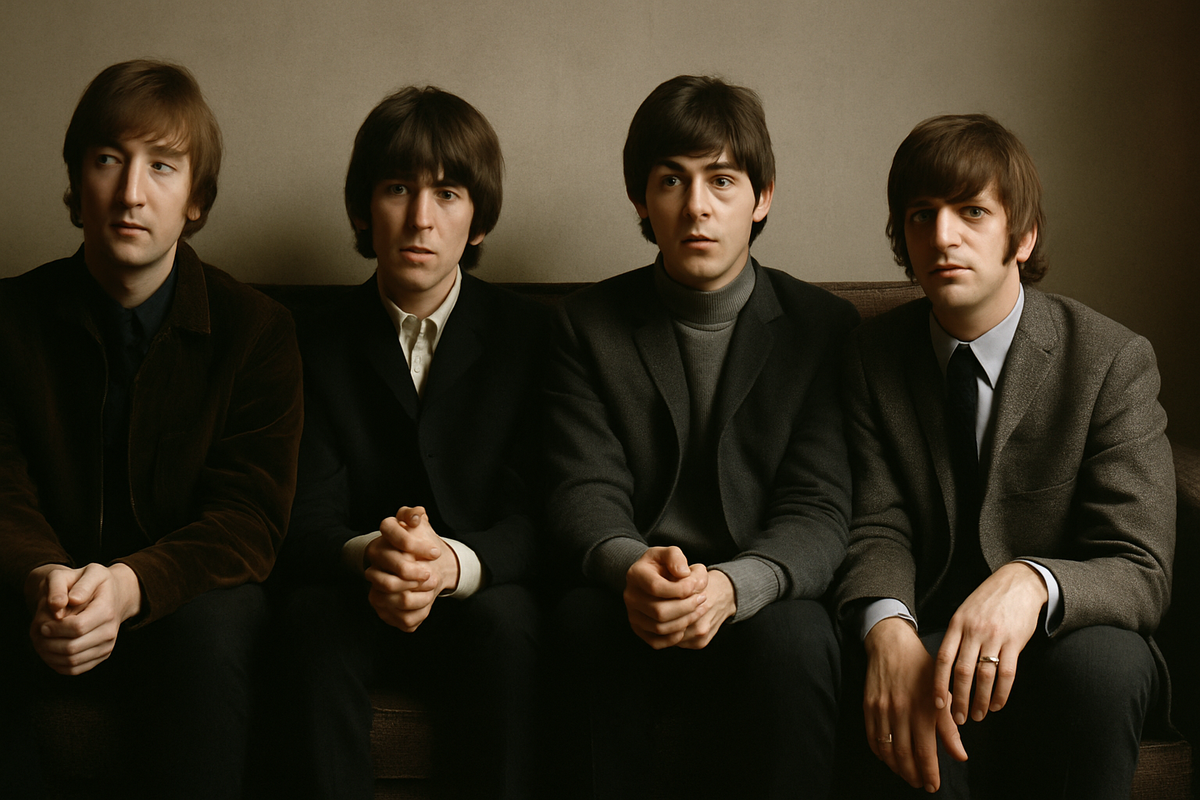
The February 1965 issue embodied this duality. The cover featured a model wrapped in red-and-white striped fabric, pulling it playfully over her head—the Playboy bunny logo stitched into the material like a badge of rebellion. Inside, the aesthetic shifted. Black-and-white portraits of John, Paul, George, and Ringo commanded the layout, each Beatle captured in sharp individual focus despite being treated as a collective phenomenon.
The design choices were deliberate. Playboy wanted readers enticed by the glamour but retained by the substance. This wasn't fan service. This was the magazine's attempt to archive a cultural moment while it was still unfolding—to give readers the sensation of sitting across from The Beatles themselves, unfiltered and uncensored.
The Interview: Four Voices, One Revolution
What did America learn when The Beatles spoke freely?
On Fame's Absurdity
John Lennon captured the surrealism—audiences screaming so loud the band couldn't hear their own amplifiers, a wall of sound that drowned out everything. Paul McCartney reflected on the strangeness of instant recognition, the loss of anonymity that came with global celebrity.
On Music as Identity
They acknowledged the pop machinery that launched them but hinted at deeper ambitions. George Harrison, typically the quietest, observed the absurdity of their situation with dry humor, already signaling the spiritual restlessness that would later pull him toward Indian music and philosophy.
On Money and Class
With disarming honesty, they admitted to making incomprehensible sums while insisting they still felt like Liverpudlians at heart. Ringo Starr's working-class roots came through clearly—this was a drummer who remembered what poverty looked like, even as wealth redefined his reality.
On Authority and Change
Though not yet the political provocateurs they'd become by decade's end, their playful dismissals of establishment thinking foreshadowed everything to come. The anti-war anthems, the psychedelic experimentation, the public clashes with censors and governments—all of it was germinating here, visible to anyone paying attention.
The interview revealed four young men navigating fame's vertigo in real time, before media training calcified their public personas. It captured The Beatles at the pivot point—still recognizable as the mop-topped pop sensations, but already evolving toward the experimental artists who would produce Rubber Soul, Revolver, and Sgt. Pepper's Lonely Hearts Club Band.
The Endurance of Print
Playboy's 1960s issues endure because they documented revolution in real time. Every page carries the optimism, anxiety, and electricity of the sexual revolution, the youth uprising, the wholesale reimagining of American identity.
These weren't magazines designed for quick consumption and disposal. They were cultural statements, archived by readers who understood they were living through something unprecedented. That impulse to preserve—that recognition of historical weight—is what makes these issues so powerful for collectors today.
We read history differently when we encounter it through primary sources rather than textbooks. The voices sound clearer. The stakes feel higher. The humanity comes through unfiltered.
Why Collectors Covet This Issue
Historical Positioning
Published at peak early Beatlemania, just before the band's sound deepened and darkened, this issue captures a fleeting moment. The innocence was fading but not yet gone. The experimentation was beginning but not yet dominant.
Interview Candor
Unlike the controlled publicity appearing in mainstream outlets, this conversation let The Beatles speak unguarded. The wit was sharper, the observations more cynical, the self-awareness more pronounced. Playboy's editorial approach—long-form, uninterrupted, minimally edited—produced quotes that fan magazines couldn't extract.
Cultural Fusion
Beatles memorabilia drives one of the strongest markets in pop culture collecting. Vintage Playboy issues, particularly from the 1960s, command serious prices among magazine collectors. This issue merges both worlds, appealing to music historians and publishing archivists simultaneously.
Tangible History
In an era when media evaporates into digital ephemera, physical magazines from 1965 offer something irreplaceable—the actual artifact, printed on the presses, distributed to newsstands, held in the hands of readers watching their world transform. This is history you can hold, smell, and preserve.
Experience the Archive
Whether you're a Beatles obsessive, a student of 1960s counterculture, or a collector preserving 20th-century media history, the February 1965 issue offers something singular: four young men at the height of their powers, speaking candidly about fame, music, and a world in flux.
Browse Playboy Magazine CollectionThe Artifact Remains
The February 1965 Playboy Magazine endures as one of its era's essential cultural documents. It captured The Beatles when they were still becoming, still discovering what their fame meant and what it would cost. It captured Playboy when the magazine was simultaneously America's most controversial publication and one of its most intellectually ambitious.
Together, they produced an artifact that transcends both music journalism and magazine publishing—a snapshot of the moment when youth culture stopped asking for permission and started rewriting the rules entirely.
Hold this issue in your hands, and you're holding February 1965. The screaming hasn't stopped. The revolution is just beginning.