
The Cover That Held Two Americas
Jet Magazine's September 22, 1955 Double Exposure
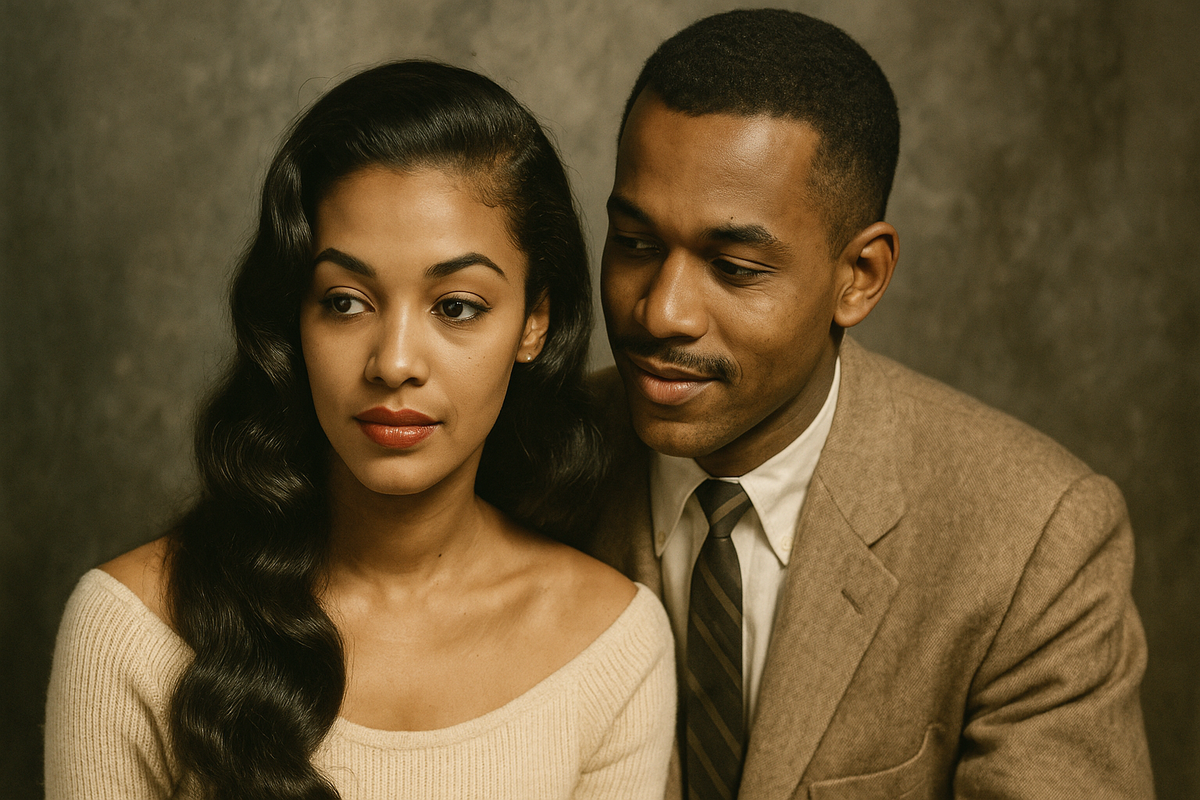
Pick up the September 22, 1955 issue of Jet Magazine and you're holding a paradox. On the cover, Sue Williams of Louisville gazes out with flowing hair that cascades past her shoulders—the visual anchor for a feature titled "Why Men Prefer Longer Hair." Above her image, in bold type: "Will Mississippi 'Whitewash' the Emmett Till Slaying?"
Beauty and brutality. Glamour and grief. A lynching trial and a debate about hemlines and hairpins.
This wasn't editorial confusion. This was Black America in full.
Issue Archive Details
Publication: Jet Magazine
Issue Date: September 22, 1955
Cover Model: Sue Williams, Louisville
Featured Article: "Why Men Prefer Longer Hair"
Historical Context: Emmett Till Trial Coverage
The Year Everything Changed (And Everything Stayed the Same)
Nineteen fifty-five wasn't subtle about its contradictions. Brown v. Board of Education had declared segregation unconstitutional the year before, yet Emmett Till's mutilated body was pulled from the Tallahatchie River in August. The Supreme Court promised equality. Mississippi delivered acquittals.
Against this backdrop, the Black beauty industry thrived—not in spite of the violence, but as an act of defiance against it. Since Madam C. J. Walker's pioneering work at the turn of the century, hair had been more than follicles and fashion. It was capital. Independence. A declaration that Black women would define beauty on their own terms, even as white America told them they had no terms to set.
The conversation about long hair versus short hair in 1955 wasn't trivial. It was territory.
What Jet Did That No One Else Could
While Life and Time treated Black communities as sociological curiosities—if they covered them at all—Jet made something radical: a magazine that assumed Black life was the story, not a sidebar to it.
The September 22 issue executed this philosophy with surgical precision. The Emmett Till coverage asked the hardest questions about American justice. The hair feature asked softer ones about desire, femininity, and the male gaze. Together, they formed a complete picture: Black Americans navigating tragedy and triumph, terror and tenderness, in the same breath.
Jet's pocket-sized format wasn't an accident. It moved through beauty salons, barbershops, church pews, and Pullman cars. It was designed to be passed hand to hand, read standing up, folded into a purse. The magazine's physicality matched its mission: to be everywhere Black people were, covering everything they cared about.
What the Men Said (And What It Revealed)
The "Why Men Prefer Longer Hair" feature pulled no punches about its thesis: men wanted their women to look like women, and long hair was the proof.
Barbers and stylists interviewed for the piece reported that men associated length with femininity, softness, traditional beauty. Short hair, one stylist explained, threatened male ego. Long hair flattered it.
The article traced fashion cycles—the bobbed hair of the flapper twenties had given way to the flowing styles of the fifties. What went around came around, as it always did with hemlines and hair.
But the women interviewed pushed back, quietly. Career women preferred shorter styles for practicality. Busy schedules demanded efficiency. The tension between what men preferred and what women needed hummed beneath every paragraph.
What went unspoken—but understood by every Black reader—was the deeper politics at play. Hair wasn't just personal. It was political. Straightened or natural, long or short, every choice carried weight in a society that policed Black women's bodies with particular cruelty. Respectability, class, and perception tangled together in every strand.
This wasn't a beauty column. It was a referendum on control.
The Male Gaze and Femininity
Men saw long hair as a symbol of femininity and beauty. Barbers and stylists explained that men preferred their wives and girlfriends to maintain long hair because it gave them a "softer" and more traditionally "feminine" look.
The Psychology of Style
One stylist interviewed explained that short hair could be read as a threat to male ego, while long hair was perceived as flattering to men's pride—revealing how deeply intertwined hair and gender expectations were in the 1950s.
Cultural Cycles of Fashion
The feature noted that hair trends often shifted. Shorter cuts had surged in popularity during the flapper era of the 1920s. By the mid-1950s, however, long hair was back in vogue—a swing in the cycle of cultural taste.
Women's Voices
While the article centered male perspectives, it also acknowledged that women sometimes preferred shorter hair for its practicality, especially for career women and busy schedules—reflecting the tension between personal convenience and societal expectations.
Symbolism in Black Beauty
The way Black women wore their hair—long, short, straightened, or natural—was tied to ideas of class, respect, and how they were perceived in both Black and white spaces. Hair was a site of negotiation over gender, identity, and pride.
The Magazine That Refused to Pick a Lane
Jet endured because it understood something other publications didn't: Black life isn't a monolith or a tragedy or a trend. It's all of it, all at once, all the time.
Martin Luther King Jr. shared pages with fashion spreads. Lynching trials ran alongside hair debates. The sacred and the mundane coexisted because that's how life actually worked.
The "Why Men Prefer Longer Hair" feature reminds us that beauty is never trivial when your humanity is constantly questioned. Every choice about appearance becomes a choice about identity, agency, and refusal.
Why This Issue Became a Time Capsule
The Timing
This issue hit newsstands as the Till trial unfolded in Mississippi, making it both journalism and evidence—a record of how Black media covered a national wound in real time.
The Cultural Layering
The hair debate captured in these pages echoes forward to every conversation about natural hair movements, respectability politics, and who gets to define Black beauty. The questions haven't changed. The answers keep shifting.
The Iconic Cover
Sue Williams embodied mid-century glamour with precision—hair, pose, and gaze calibrated for maximum impact. It's a collector's piece on aesthetics alone.
The Scarcity
Original Jet issues from the 1950s, particularly those tied to civil rights milestones, grow harder to find each year. Families preserve them. Institutions archive them. The open market thins.
Own this issue and you own a document that refuses to choose between the political and the personal. Because for Black Americans in 1955, there was no choice to make. Both were survival.
The Final Frame
The September 22, 1955 issue of Jet Magazine shouldn't work. A beauty feature and a murder trial shouldn't share a cover. But they did, and that dissonance is precisely why this issue matters.
It captured the impossible balance Black Americans maintained in 1955—and maintain still. The need to be beautiful and safe. Stylish and seen. Human and heard.
For collectors, this issue isn't an artifact. It's a mirror held up to a moment when America was forced to look at itself. Some of what it saw was Sue Williams' flowing hair and mid-century elegance.
The rest was Emmett Till's mother, insisting the world see what they'd done to her son.
Both belonged on the cover. Both belong in your collection.
Your Next Move
If this issue speaks to you, understand that it's one thread in a decades-long tapestry. From the 1950s through the 1970s, Jet documented Black America as it happened—no filter, no delay, no apology.
Browse Jet Magazine CollectionThese aren't just magazines. They're arguments. Evidence. Memory. Pride.