
When Dorothy Dandridge Cut Her Hair, She Cut a Path to Freedom
Inside the August 6, 1953 issue of Jet Magazine—where beauty choices became political statements and Black women redefined independence
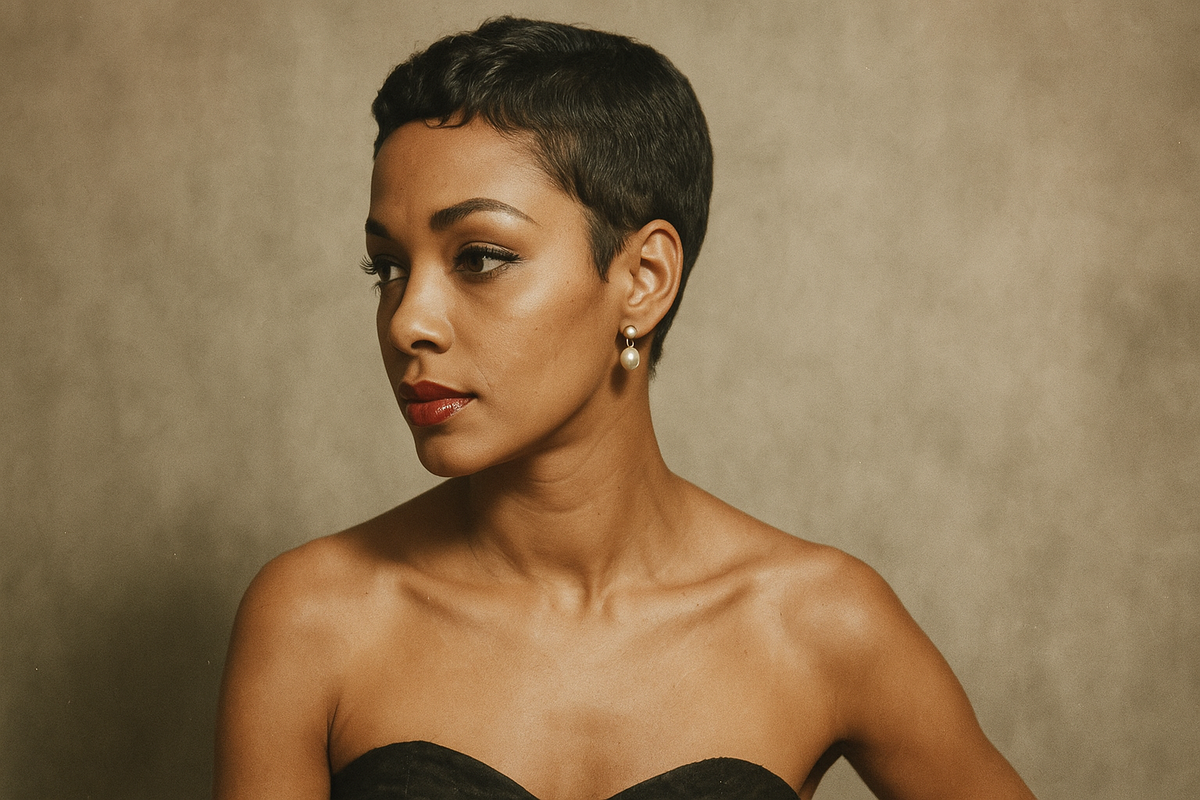
The August 6, 1953 issue of Jet Magazine landed in Black homes, barbershops, and beauty parlors with a cover that stopped conversations mid-sentence. Dorothy Dandridge—luminous against a crimson background—gazed out with the confidence of a woman who had made a choice. The headline read simply: "Why Women Prefer Short Hair."
To the casual observer, this looked like fluff. A style piece. Summer filler between the hard news of segregation battles and political theater. But the women who read Jet that week understood what mainstream America missed entirely: in 1953, when a Black woman cut her hair short, she wasn't following fashion. She was claiming territory.
This single issue captured a turning point in African American culture—a moment when beauty became inseparable from autonomy, when style choices carried the weight of political statements, and when women at the height of their careers used something as intimate as a haircut to redraw the boundaries of Black femininity.
Archive Details
Cover Feature: Dorothy Dandridge
Issue Date: August 6, 1953
Publication: Jet Magazine
Historical Context: Pre-Montgomery Bus Boycott, one year before Dandridge's historic Oscar nomination
Featured Voices: Dorothy Dandridge, Dinah Washington, Pearl Bailey, Eartha Kitt, Joyce Bryant, Dorothea Towles
The Cultural Flashpoint of 1953
The early 1950s presented Black America with a paradox. Legally, segregation still strangled opportunity across the South. Socially, Jim Crow dictated where African Americans could eat, sleep, work, and even sit. Yet culturally, Black artists, intellectuals, and entrepreneurs were building an empire of influence that would soon reshape the entire nation.
Beauty culture sat at the heart of this transformation. Since Madam C. J. Walker revolutionized Black hair care in the early 20th century, beauty salons had functioned as more than grooming spaces—they were economic engines, political organizing hubs, and laboratories of self-definition. By 1953, these salons were staging grounds for a quiet revolution in how Black women saw themselves and demanded to be seen.
Jet Magazine grasped what others overlooked: the politics of appearance mattered. Founded in 1951 by John H. Johnson, Jet arrived at precisely the moment when African Americans needed a publication that treated their complete lives—not just their struggles, but their style, their humor, their complexity—with journalistic seriousness. Where Life Magazine might feature Black Americans as subjects of sociological curiosity, Jet placed them at the center of their own stories.
The decision to dedicate cover space to women's hairstyle preferences wasn't trivial editorial judgment. It was strategic cultural documentation.
The Stars Speak: Beauty as Declaration
Jet's genius lay in its source selection. Rather than quote anonymous women or rely on beauty "experts," the magazine assembled voices that commanded authority: Dorothy Dandridge, Dinah Washington, Pearl Bailey, Eartha Kitt, Joyce Bryant, and Dorothea Towles. These weren't just celebrities—they were women who performed on international stages, signed major contracts, and navigated white-dominated industries while refusing to diminish themselves.
Their testimonials revealed the calculation behind what appeared spontaneous:
Dinah Washington called short hair "easier, cleaner, and even sexier," noting it made women look younger and more confident. For a vocalist whose career demanded constant travel between segregated venues, this wasn't vanity—it was logistics.
Pearl Bailey explained that short hair "solved many problems" and gave her freedom, particularly since her husband was a barber who could trim it himself. Independence, even from the beauty salon, meant money saved and time reclaimed.
Eartha Kitt spoke candidly about the burden of managing long hair while maintaining an active performance schedule. Her admission carried weight—here was a woman whose exotic beauty had become her trademark, conceding that practicality sometimes trumped presentation.
Dorothy Dandridge made the economics explicit: short hair allowed her to "fix it herself instead of relying on expensive salon visits." For a woman on the verge of becoming the first Black actress nominated for an Academy Award (which would happen the following year), this statement announced a refusal to be held hostage by beauty industry economics.
Joyce Bryant and Dorothea Towles—a gospel-turned-pop sensation and a groundbreaking model, respectively—praised short styles for their "sophistication, chic appeal, and ability to make women look fresh and modern." Their language borrowed from haute couture, positioning Black women's beauty choices within global fashion discourse rather than relegating them to ethnic curiosity.
These weren't beauty tips. They were manifestos.
What the Magazine Format Revealed
Jet's physical form amplified its message. Pocket-sized, affordable at 20 cents, printed on accessible paper stock—everything about its design said "this magazine belongs in your hands, not on some distant newsstand you can't access." The bold red cover photography and urgent typography created immediacy. This was news you needed now.
The August 6, 1953 issue demonstrated Jet's editorial range within a single edition. Readers could find coverage of civil rights legal battles, entertainment industry news, sports achievements, and this feature on beauty culture—all treated with equal journalistic respect. The implicit argument was revolutionary: Black life contained multitudes, and all of it deserved documentation.
Unlike mainstream publications that compartmentalized African Americans into social problem stories or entertainment oddities, Jet operated from a fundamentally different premise. Black readers weren't a niche audience to be explained to white America. They were the primary audience, and their complete lives—their joys, style debates, career ambitions, and beauty experiments—constituted legitimate front-page material.
The Dorothy Dandridge cover wasn't representing Black women to outsiders. It was Black women seeing themselves reflected with dignity and invited into a national conversation about who they were becoming.
Why Short Hair Meant Long-Term Change
Strip away the celebrity glamour and the testimonials revealed patterns that extended far beyond 1953:
Economic Autonomy
Multiple women cited reduced salon dependence as a factor. In a segregated economy where Black women earned a fraction of white women's wages, beauty choices that saved money weren't superficial—they were survival strategy.
Professional Mobility
For women whose careers required travel, unpredictable schedules, or public appearances under hot stage lights, short hair eliminated a variable. Control over one's appearance meant control over one's professional image.
Generational Defiance
Calling short hair "youthful" and "modern" signaled a break from previous generations' beauty standards. These women weren't rejecting their mothers' choices—they were insisting their generation deserved different options.
Aesthetic Redefinition
By describing short hair as "sophisticated" and "chic," these celebrities claimed language typically reserved for white European fashion standards and applied it to Black women's choices. They weren't asking permission to be beautiful—they were announcing new criteria.
Psychological Liberation
The repeated emphasis on confidence, freedom, and self-assurance suggested something deeper than convenience. Short hair became shorthand for women who refused to perform exhausting beauty labor that primarily benefited others' expectations.
Cultural Rehearsal
In a nation that would explode into open civil rights conflict within two years—Rosa Parks would refuse to give up her bus seat in December 1955—these everyday acts of self-definition were rehearsals for larger refusals to come.
Jet's Enduring Legacy: When Representation Required Documentation
Most media histories focus on desegregation battles and access to mainstream platforms. They ask: when did Black Americans break into white publications? But Jet asked a different question: why wait for invitation when you can build your own institution?
For readers in 1953, Jet delivered something psychologically essential—regular proof that Black life was substantial, complex, and worthy of professional documentation. The magazine didn't simply report on African American communities; it assumed those communities possessed culture worth analyzing, debates worth covering, and beauty worth celebrating.
The "Why Women Prefer Short Hair" feature exemplifies this approach. No condescension. No anthropological distance. No translation for white readers. Just straightforward coverage of a conversation happening within Black communities, treated with the seriousness that conversation deserved.
This editorial philosophy created an archive of immeasurable value. Jet documented not just the major political moments but the everyday cultural shifts, the style evolutions, the career triumphs, the social debates that together constituted lived experience. Future historians studying mid-century Black America must reckon with Jet's pages because no other publication captured that world so completely.
The Collector's Perspective: Why This Issue Endures
Cultural Documentation
This issue captures Black women articulating their own beauty standards in their own words during a transformative historical period. It's primary source material for understanding mid-century African American gender politics.
Celebrity Significance
Dorothy Dandridge's star would ascend dramatically over the next year. This cover captured her at the precise moment before Hollywood recognition, making it both a prediction and a time capsule.
Visual Impact
The bold red cover, Dandridge's arresting portrait, and Jet's distinctive digest format make this issue instantly recognizable. It photographs well, displays beautifully, and carries aesthetic weight beyond its editorial content.
Historical Timing
Published in the calm before the civil rights movement's national explosion, this issue documents the cultural foundation that made later political activism possible.
Increasing Scarcity
Early 1950s Jet issues were printed on affordable paper stock designed for immediate consumption, not archival preservation. Copies that survived six decades in readable condition are genuinely rare.
Research Value
The advertisements reveal economic realities, the design choices reflect editorial priorities, and the juxtaposition of articles exposes the texture of Black American life in ways that history books flatten.
Collecting History, Preserving Memory
Vintage Jet magazines represent more than collectibles—they're fragmentary rescue operations. Each preserved issue saves voices, images, and perspectives that mainstream archives systematically excluded. They prove that Black Americans weren't waiting in history's wings for their political moment; they were living full, complex, culturally rich lives that deserved documentation and study.
The August 6, 1953 issue, with Dorothy Dandridge declaring her beauty independence, captures a specific truth: style is never just style. For communities denied full citizenship, every choice about appearance, every assertion of preference, every claim to beauty on one's own terms becomes a small act of sovereignty.
Explore the Archive
Whether you collect for investment, research, or family heritage preservation, vintage Jet magazines offer unfiltered access to how Black Americans saw themselves during the most transformative century in American history.
Browse Jet Magazine CollectionThe Deeper Truth
When Dorothy Dandridge looked into Jet's camera in August 1953, her short hair immaculately styled, she wasn't modeling a trend. She was modeling possibility. She and the other women in that feature were telling their community: you can be beautiful and practical, glamorous and independent, traditional and modern, all at once. You don't need anyone's permission.
That message—delivered through something as seemingly simple as a hairstyle preference—carried revolutionary weight. It suggested that Black women could define beauty for themselves, make choices based on their own needs, and reject standards imposed by either white supremacy or restrictive community expectations.
Seventy years later, the issue remains urgent. It reminds us that cultural battles and political movements aren't separate struggles—they're the same fight, waged on different terrain. And it preserves the voices of women who understood that freedom begins with the simple, radical act of deciding for yourself.
That's not a fashion article. That's a freedom document.