
When Time Magazine Declared War on Pac-Man
The 1982 cover story that predicted gaming's future and captured America's arcade obsession at its peak
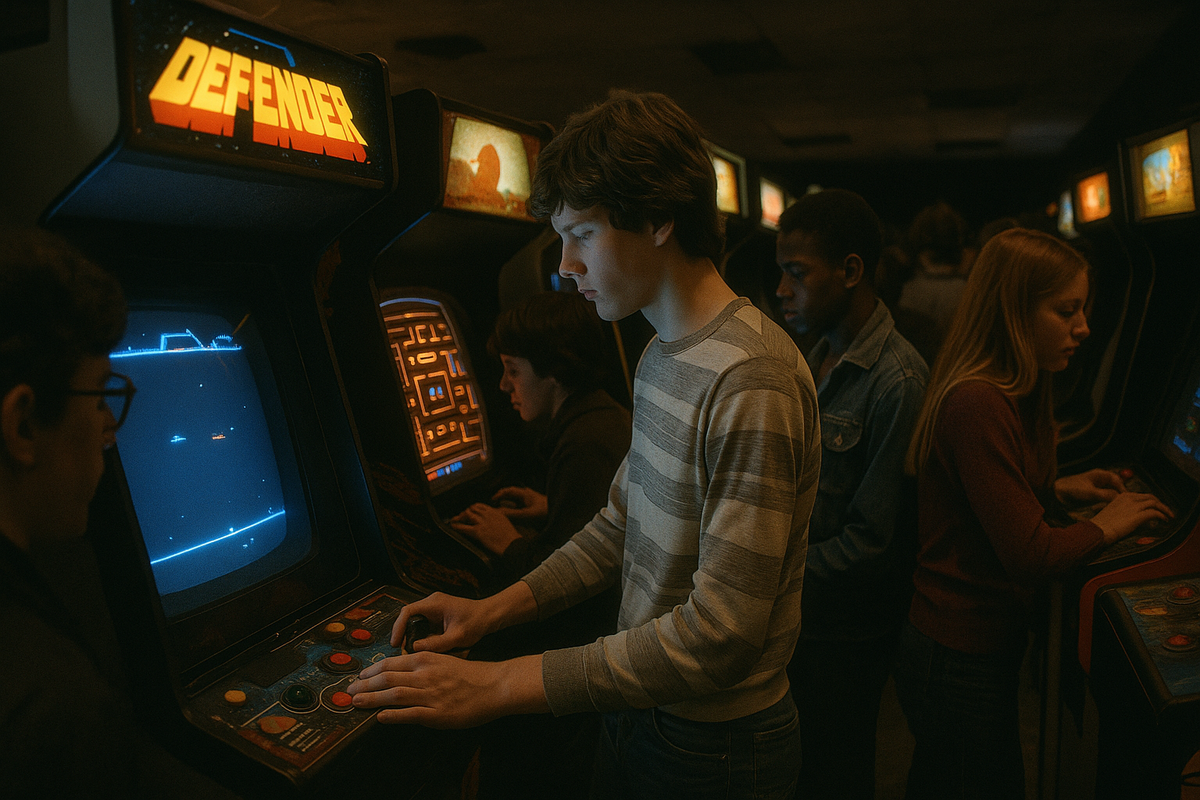
The teenager's face glows blue in the dark. His eyes track the yellow chomping mouth through the maze. Behind him, twenty more kids wait their turn, quarters already warm in their palms. It's 1981, and the local pizza parlor has become a battlefield.
When Time Magazine hit newsstands on January 18, 1982, its cover story didn't just document this scene—it declared video games a national emergency. "Games That Play People" wasn't hyperbole. It was journalism treating arcade cabinets with the same gravity the magazine reserved for Cold War summits and economic recessions.
Four decades later, this issue remains one of the most significant artifacts of gaming's golden age—and one of the most sought-after pieces in the vintage magazine market.
Archive Details
Publication: Time Magazine
Issue Date: January 18, 1982
Cover Story: "Games That Play People"
Historical Context: Peak of the arcade boom, dawn of home console gaming
Cultural Significance: Documents video gaming's transition from novelty to mainstream phenomenon
The Moment America Realized the Machines Had Won
Early 1982 occupied a strange cultural crossroads. Ronald Reagan had just entered the White House. Star Wars and Close Encounters had primed Americans to imagine electronic futures. Personal computers were appearing in homes, though most families had no idea what to do with them.
Then came the beeping.
Arcades metastasized across America like neon-lit fungi. Shopping malls, bowling alleys, pizza parlors—anywhere teenagers congregated, someone installed a Pac-Man cabinet. For a quarter, you could chase ghosts. For five dollars, you could lose an afternoon.
Cities like Los Angeles and New York saw arcades packed tighter than movie theaters. But unlike movies, these machines didn't end after two hours. They kept going as long as you kept feeding them.
Time recognized what many adults feared to admit: this wasn't a fad. This was a shift in how an entire generation would spend their leisure time, their money, and their imagination.
The Anxiety Beneath the Neon
The magazine's reporting captured both the exhilaration and the dread. Critics didn't hold back. Video games promoted idleness. They encouraged truancy. Some municipalities debated ordinances to limit arcade hours or ban them entirely from certain neighborhoods.
The parallels were obvious to anyone with historical memory: comic books in the 1950s, rock 'n' roll in the 1960s. Each generation finds its moral panic. The early 1980s found theirs in glowing screens and electronic sound effects.
But Time also documented something the critics missed: the games weren't just addictive—they were sophisticated. Defender's relentless alien swarms required genuine skill and spatial reasoning. Pac-Man's maze design represented a masterclass in game theory. These weren't slot machines. They were challenges that demanded mastery.
The magazine walked this tightrope with unusual balance, neither dismissing parental concerns nor condescending to the young people who had made arcades their social headquarters.
The Home Invasion Nobody Expected
The real story wasn't just the arcades—it was what was happening in living rooms.
The Atari 2600, released in 1977, had spent years as a curiosity for early adopters. By 1982, it had become a Christmas morning staple. Space Invaders alone moved millions of units. Suddenly, parents who worried about their kids wasting quarters at the mall were watching those same kids play Missile Command and Asteroids in their pajamas.
Time devoted a sidebar—"Alien Creatures in the Home"—to this phenomenon. The piece captured the bewildering speed of the transformation: arcade culture hadn't just stayed in arcades. It had shrunk itself down, packaged itself in cartridges, and infiltrated American homes with barely a fight.
The magazine understood this mattered beyond entertainment. This was the beginning of a multi-billion-dollar industry that would eventually rival Hollywood.
Arcade Culture
Documentation of arcades as "neon-lit temples" where teenagers gathered, competed, and transformed pizza parlors into social headquarters.
Home Gaming Revolution
Analysis of the Atari 2600's transformation from curiosity to household staple, with sidebar "Alien Creatures in the Home."
Cultural Anxiety
Balanced reporting on moral panic surrounding video games—comparisons to earlier generations' fears of comic books and rock music.
Economic Impact
Recognition of video gaming as the birth of a multi-billion-dollar industry that would reshape American entertainment.
Why Time Got the Story Right
What distinguishes this issue from typical trend pieces is its refusal to condescend.
The magazine described arcades as "neon-lit temples of the new electronic age"—language that acknowledged the quasi-religious devotion games inspired without mocking it. The reporting noted how Defender could keep players hooked for hours, sometimes skipping meals or appointments, but presented this as genuine cultural analysis rather than pearl-clutching.
The photography elevated the subject further. Candid shots showed kids clustered around machines, their faces illuminated by the glow of Pac-Man's maze. One spread captured an adult sneaking plays in a Washington arcade, briefcase at his feet—proof that this wasn't just a youth phenomenon.
The layout matched the subject: bold typography, chaotic energy, colors that practically buzzed off the page. Time designed the story the way arcades felt—overwhelming, electric, impossible to ignore.
The Echo Across Decades
The debates Time documented in 1982 never really ended—they just found new vocabulary.
Today's concerns about screen time, gaming addiction, and esports echo the anxieties about quarters and truancy. The difference is scale: what was once happening in pizza parlors now happens in bedrooms, on phones, in stadiums filled with thousands watching professional gamers.
The January 18, 1982 issue proves why serious collectors value vintage magazines. They're not just paper and ink—they're audio recordings of cultural moments, capturing voices and fears and thrills before history sanitizes them.
The Collector's Perspective: Why This Issue Endures
Cultural Documentation
Captures video gaming at its inflection point—the moment it stopped being a curiosity and became mainstream culture. The Pac-Man mania it describes became template for every gaming phenomenon that followed.
Visual Archive
Photographs represent an irreplaceable window into early 1980s arcade culture. Images of teenagers hunched over joysticks and families gathered around Atari consoles have become iconic representations of the era.
Balanced Historical Record
Unlike promotional materials or purely critical screeds, Time preserved both the excitement and anxiety surrounding games. That duality makes it invaluable for understanding how new technologies get absorbed into culture.
Retro Gaming Renaissance
As gaming nostalgia has exploded—with arcade bars, documentary films, and collectors paying thousands for vintage cabinets—primary sources from the golden age have become increasingly valuable.
Explore the Archive
This issue is part of a comprehensive collection of original Time magazines, each documenting pivotal moments in American and world history. From Reagan-era politics to the pop culture phenomenon of Pac-Man, these magazines transform historical moments into tangible artifacts.
Browse Time Magazine CollectionTime Magazine's "Games That Play People" cover story stands as one of the most culturally significant features of the 1980s. With sharp reporting, unforgettable photography, and commentary that respected its subject, the magazine chronicled video games' transformation from novelty to social force.
For collectors, it remains essential—a glossy artifact that captured the exact moment America discovered its future was being played, one quarter at a time.
The machines won that war. This magazine documented the invasion.