
The Magazine That Refused to Let America Forget
Ebony's July 1962 Reconstruction Bombshell and the History That Armed a Movement
In July 1962, while white-owned newspapers fixated on James Meredith's battle to integrate Ole Miss and Martin Luther King Jr.'s Albany campaign, Ebony Magazine did something quietly revolutionary: it reached back ninety years to prove the Civil Rights Movement wasn't new at all.
Inside that month's issue, beneath Diahann Carroll's luminous Broadway cover portrait, staff historian Lerone Bennett Jr. published "Black Power in Dixie: Negro Voters Elected Judges, Representatives"—a historical essay that landed like a manifesto. For African American readers facing poll taxes, literacy tests, and firebombs, Bennett's message was electrifying: Your ancestors already won this fight once.
Today, this single issue stands as one of the most significant artifacts in African American publishing history—a magazine that functioned as corrective, arsenal, and heirloom all at once.
Archive Essentials
Publication: Ebony Magazine
Issue Date: July 1962
Cover Subject: Diahann Carroll
Feature Article: "Black Power in Dixie: Negro Voters Elected Judges, Representatives" by Lerone Bennett Jr.
Historical Context: Published during the height of the Civil Rights Movement, bridging Reconstruction history with 1960s activism
When History Becomes Ammunition
Bennett's timing was surgical. In 1962, mainstream textbooks still taught Reconstruction as a cautionary tale of "Negro incompetence" and carpetbagger corruption. White historians painted the era as democracy gone wrong—a period when unqualified freedmen briefly held power before order was "restored."
Ebony torched that narrative.
"Black Power in Dixie" resurrected the political architects erased from American memory:
P.B.S. Pinchback – Louisiana's governor in 1872, the first Black man to hold a statehouse anywhere in America.
Hiram Revels – Mississippi senator in 1870, who occupied Jefferson Davis's former Senate seat with such eloquence that even hostile newspapers called him "orator of the first rank."
Blanche K. Bruce – The first African American to serve a complete Senate term (1875–1881), a man who presided over the Senate itself.
Robert Brown Elliott – South Carolina congressman whose 1874 speech defending civil rights was so commanding it silenced the chamber.
John W. Menard – Elected to Congress in 1868 but denied his seat—a theft Bennett connected directly to 1960s voter suppression.
These weren't footnotes. They were senators, governors, judges, sheriffs. They presided over interracial juries, funded public schools, and briefly made Southern democracy look like what the Constitution promised.
Bennett didn't present them as tragic heroes. He presented them as proof.
The Strategic Genius of the Cover
The July 1962 cover shows Diahann Carroll in full Broadway radiance—elegant, poised, the embodiment of Black achievement in the arts. Then you open the magazine and find political history most Americans had never heard.
This wasn't an accident. It was editorial philosophy.
Ebony understood something other magazines didn't: cultural power and political power are inseparable. A reader could learn about Carroll's triumph in Richard Rodgers' No Strings, then turn the page and see engravings of freedmen voting in 1867. Fashion spreads ran alongside congressional portraits. Beauty and democracy shared the same real estate.
That juxtaposition—glamour on the cover, statesmanship inside—was Ebony's signature move. No other publication in America could pull it off because no other publication took Black life seriously as both subject and audience.
What Bennett Actually Documented
"Black Power in Dixie" wasn't nostalgia. It was forensic history.
Bennett traced the architecture of Reconstruction democracy: how freedmen's schools became leadership incubators, how Black voters organized despite Ku Klux Klan terror, how white propagandists invented the myth of "Negro domination" to justify violent suppression.
He documented the backlash in detail—the murder campaigns, the fraudulent elections, the Supreme Court decisions that gutted federal protection. But he also showed something textbooks wouldn't admit: Reconstruction didn't fail because Black leadership was incompetent. It was dismantled because it worked.
The parallels to 1962 were unavoidable. Denied congressional seats in the 1870s. Denied voting rights in the 1960s. The tactics had barely changed.
For readers fighting those same battles, Bennett's history wasn't abstract. It was a roadmap written in their ancestors' handwriting.
Reconstruction as Black Political Ascendancy
African Americans held unprecedented numbers of offices across the South, from local sheriffs to U.S. Senators.
The Role of Education
Freedmen's schools and colleges became incubators for leadership and literacy, fueling political participation.
The Backlash
The rise of the Ku Klux Klan and violent suppression campaigns showed the lengths to which white supremacists would go to restore control.
The Myth of "Negro Domination"
White propagandists painted Black leadership as corrupt, but Ebony's portraits revealed professionalism, intelligence, and dignity.
Why This Issue Changed Publishing
Before Ebony's Negro History series, most African Americans learned their own history from white-authored textbooks that either ignored them or caricatured them. Public schools didn't teach about Pinchback or Bruce. Encyclopedias glossed over Elliott's speeches. The official record had been whitewashed.
Ebony became the counter-archive.
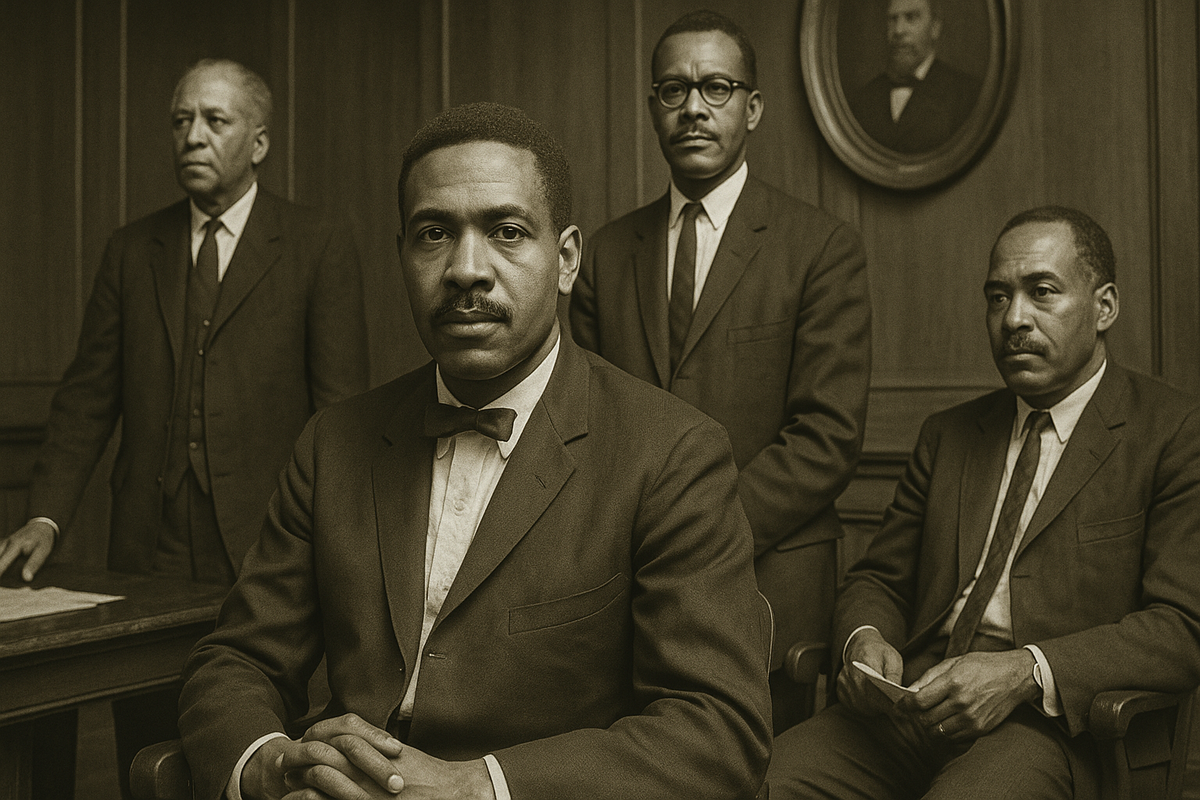
Bennett's essays—illustrated with period engravings and dignified portrait photographs—gave Black families something textbooks wouldn't: visual proof that their ancestors had governed, legislated, and shaped American democracy at its highest levels.
These weren't sketches or cartoons. They were formal portraits of men in Senate chambers, at judicial benches, in legislative halls. The images themselves were arguments.
In 1962, that visual authority mattered as much as the words. Ebony didn't just tell readers they had a political heritage. It showed them what their senators looked like.
The Legacy: When a Magazine Becomes a Monument
Ebony's importance in American culture can't be overstated. For decades, it was the only national magazine that consistently presented Black life in its full complexity—not as a problem to be solved, but as a civilization to be documented.
By publishing "Black Power in Dixie" in July 1962, Ebony did more than educate. It armed a generation with historical precedent. It told readers that their fight wasn't desperate or unprecedented—it was a continuation.
That message still resonates. The Reconstruction leaders Bennett resurrected have since been restored to textbooks, commemorated in monuments, and taught in schools. But in 1962, Ebony was doing that work alone.
To hold this issue is to hold the moment when African American history stopped being hidden and started being reclaimed.
The Collector's Case: Why This Issue Endures
Sixty-three years later, the July 1962 Ebony commands serious attention in archival and collector markets. Here's why:
Historical Weight
Lerone Bennett Jr.'s Negro History series remains one of the most influential popular histories of Black America ever published. This Reconstruction installment is the centerpiece.
Civil Rights Era Provenance
Published during the movement's most volatile year, this issue bridges past and present struggles with surgical precision.
Visual Documentation
Original photographs and engravings of Reconstruction leaders are preserved in museum-quality reproduction.
Cultural Symbolism
The Diahann Carroll cover links the issue to Black achievement in the arts at a breakthrough moment.
Educational Rarity
Most libraries don't hold complete Ebony runs from this era. Original issues are increasingly scarce.
For historians, educators, and families preserving heritage, this isn't just a magazine. It's primary source material—a window into how African Americans reclaimed their own narrative when no one else would.
For Collectors, Educators, and Historians
If you're researching Ebony magazine July 1962, exploring vintage Ebony magazines, or building a collection of African American history artifacts, this issue is essential. Bennett's Reconstruction coverage makes it one of the most historically significant magazines of the Civil Rights era.
Related searches and collection themes:
- "Ebony magazine Black Power in Dixie"
- "Reconstruction history in Ebony magazine"
- "Lerone Bennett Jr. Ebony history articles"
- "Original 1960s Ebony magazines for sale"
- "Civil Rights era magazine artifacts"
- "African American political history archives"
For readers, educators, and collectors alike, this issue offers more than stories—it offers evidence.
Explore This Landmark Issue
Discover decades of African American history preserved in Ebony's pages. Every vintage issue is an artifact—documentation of struggles, achievements, and the everyday dignity of African Americans across the 20th century.
These aren't reproductions. They're the original record.
Browse Ebony Magazine CollectionConclusion: The Magazine as Archive
The July 1962 issue of Ebony Magazine, anchored by Lerone Bennett Jr.'s "Black Power in Dixie", represents a turning point in African American publishing. By reframing Reconstruction as a period of achievement rather than failure, Ebony gave Civil Rights activists something invaluable: historical legitimacy.
It proved that Black political power wasn't a radical demand. It was a restoration.
For collectors, this issue remains what it was in 1962—a rare intersection of memory, activism, and cultural authority. To own it is to preserve a piece of the historical record that mainstream America tried to erase.
That's not nostalgia. That's inheritance.