
When India Chose a Woman: The Time Magazine Cover That Stopped the World
How the January 28, 1966 issue captured Indira Gandhi's historic rise and changed the conversation about women and power forever
January 11, 1966. Prime Minister Lal Bahadur Shastri collapses in Tashkent, hours after signing a peace treaty with Pakistan. Dead at 61. India—a nation of 500 million, still raw from war, still mourning Nehru—loses its second leader in two years.
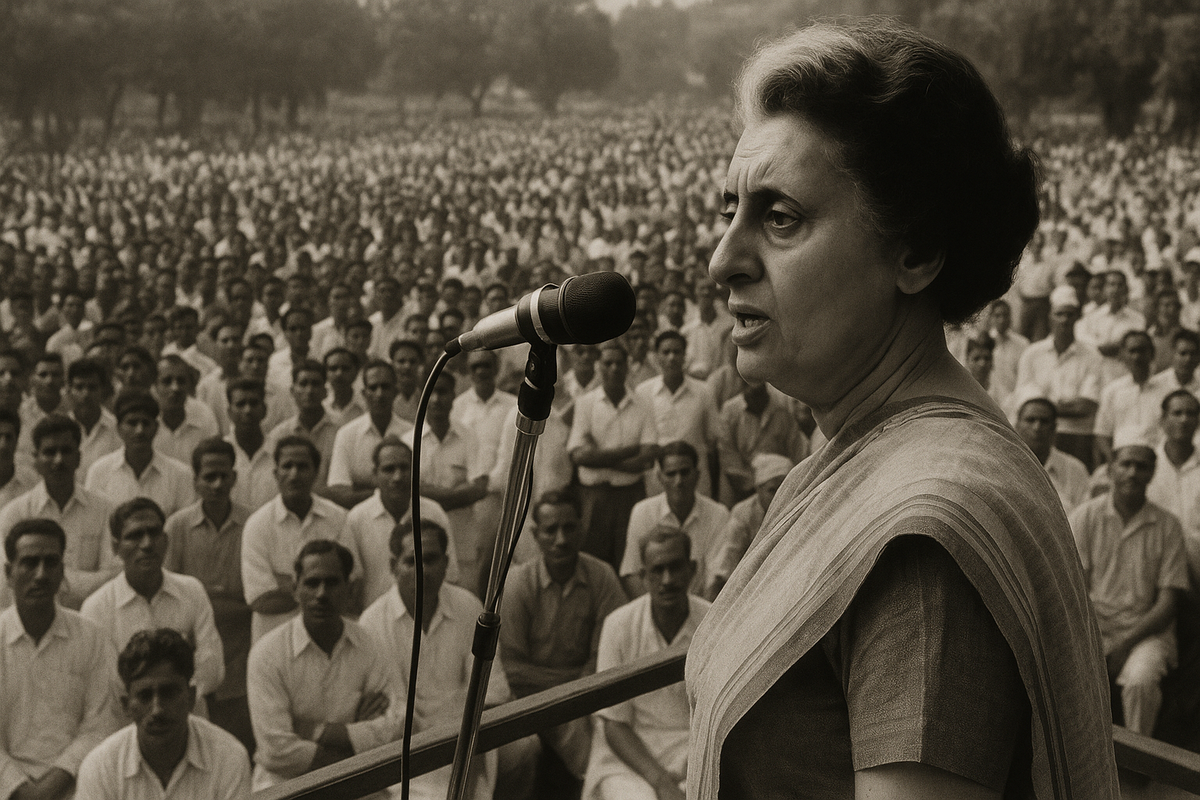
Seventeen days later, Americans open their mailboxes to find Indira Gandhi staring back at them from the cover of Time Magazine. Steady gaze. No smile. The caption might as well have read: Ready or not, history has arrived.
The January 28, 1966 issue didn't just report a political transition. It captured the exact moment when the world's largest democracy did the unthinkable—and handed power to a woman.
Archive Details
Historical Figure: Indira Gandhi, Prime Minister of India
Issue Date: January 28, 1966
Archive Source: Time Magazine
Cover Story: "The Return of the Rosebud"
Historical Context: Published 17 days after Shastri's death, 9 days after Gandhi's elevation
The Succession Crisis That Shook a Subcontinent
Shastri's death was a geopolitical earthquake. India had barely survived the 1965 war with Pakistan. The Tashkent Agreement—brokered under Soviet pressure—was supposed to end the bloodshed. Instead, it ended with a prime minister dead on foreign soil and a nation paralyzed by uncertainty.
Inside the Congress Party, the factions circled. Morarji Desai wanted the job. So did a dozen others. But the kingmaker, K. Kamaraj, saw something the rest missed: Indira Gandhi could unite where others would fracture. She was 48. She was Nehru's daughter. And she had spent a lifetime being underestimated.
On January 19, 1966, she became Prime Minister. Not because she was the most experienced. Not because she was the most powerful. But because she was the only candidate the party wouldn't tear itself apart over.
Time knew what this meant. So did the world.
How Time Framed the Story for Cold War America
By 1966, Time Magazine wasn't just chronicling history—it was curating it for American living rooms. Henry Luce's vision of the "American Century" had made Time the lens through which millions understood global power shifts, and this issue delivered that understanding with surgical precision.
"The Return of the Rosebud," the cover story declared—a literary nod wrapped around raw politics. Time gave American readers everything: Indira's childhood in the Nehru household, her years organizing protests during the independence movement, her quiet mastery of Congress Party machinery. But it also gave them the doubts. Could this "shy daughter" govern a nation teetering between famine and war? Would she bend to party bosses? Could a woman command respect in a society still bound by tradition?
The photography did what words couldn't. Indira addressing crowds in a white sari. Indian Army patrols along the Pakistani frontier. Rickshaw drivers nodding in deference. Time wasn't asking whether she should lead. It was documenting that she already was.
For American readers watching their own women fight for equal pay and political voice, Gandhi's ascension felt both impossibly distant and uncomfortably close. India had leapfrogged the question entirely.
What the Issue Actually Contained
Open this magazine today and you're not reading retrospective analysis. You're reading the real-time shock:
The diplomatic mystery, the sudden collapse, the nation thrown into mourning while the ink on the peace treaty was still wet.
K. Kamaraj, Morarji Desai, C. Subramaniam—the men who thought they'd control her, and the Congress Party machinery that would soon learn otherwise.
Time understood that Indira's surname was both her greatest asset and her heaviest burden. Every decision would be measured against her father's legacy.
India's non-aligned status was already a tightrope. Now a new, untested leader had to navigate between Washington and Moscow while both sides watched for weakness.
1966 was a year of crop failures. Gandhi inherited a nation where millions faced starvation. Time didn't flinch from the stakes.
This wasn't puff piece diplomacy. This was Time doing what it did best: connecting individual biography to geopolitical consequence, showing Americans why a woman's rise in New Delhi mattered in Washington, Moscow, and every capital in between.
The Durability of Time's Archive
What separates Time from ephemera is permanence. In 1966, these weren't disposable weeklies. They were kept, studied, argued over. Families saved them. Libraries bound them. Teachers assigned them.
That's why the archive endures. Because even as the world moved on, the magazines stayed behind—physical evidence of how events were understood before the outcome was known. No digital archive, no retrospective essay, no documentary can replicate that immediacy.
When you read this issue, you're not learning what happened. You're experiencing what it felt like when it happened.
Why Collectors Hunt This Issue
Published within days of Gandhi's elevation, it captured the transition while the outcome was still uncertain. This isn't hindsight. It's foresight trapped in amber.
That cover image became iconic. Indira Gandhi as the world first saw her in command: unsmiling, unflinching, undeniable.
This was a newsstand issue, not a commemorative keepsake. Most copies were read, discarded, recycled. Survival rates were never high. Clean copies command attention.
Historians of South Asia want it. Scholars of women in politics want it. Cold War archivists want it. When three collecting communities converge on a single issue, value follows.
1966 was the year the conversation about women and power changed permanently. This magazine was ground zero.
Hold this issue and you're holding the moment when 500 million people proved democracy could survive anything—even its own success.
The Last Word
The January 28, 1966 issue of Time Magazine remains a masterclass in political journalism under pressure. It captured Indira Gandhi at the threshold—neither saint nor tyrant, just a daughter of independence who inherited a nation in crisis and refused to blink.
History would prove her complex, controversial, and utterly consequential. But in January 1966, she was simply this: the first woman to lead the world's largest democracy, and Time was there to document the beginning.
These magazines aren't collectibles because they're old. They're collectibles because they're irreplaceable—the first draft of history, written before anyone knew how the story would end.
Explore the Full Collection
This issue is one thread in a vast archive we've spent years assembling. From World War II's turning points to civil rights upheavals, from Cold War brinkmanship to cultural revolutions, thousands of original Time magazines await.
Browse Time Magazine CollectionWhether you're preserving institutional memory, building a research library, or connecting with a specific moment in your family's history, these magazines offer what nothing else can: unfiltered primary sources, exactly as they were published.