
The Magazine That Made History: When Time Put Althea Gibson on the Cover
August 26, 1957—The issue that transformed a tennis champion into a national symbol
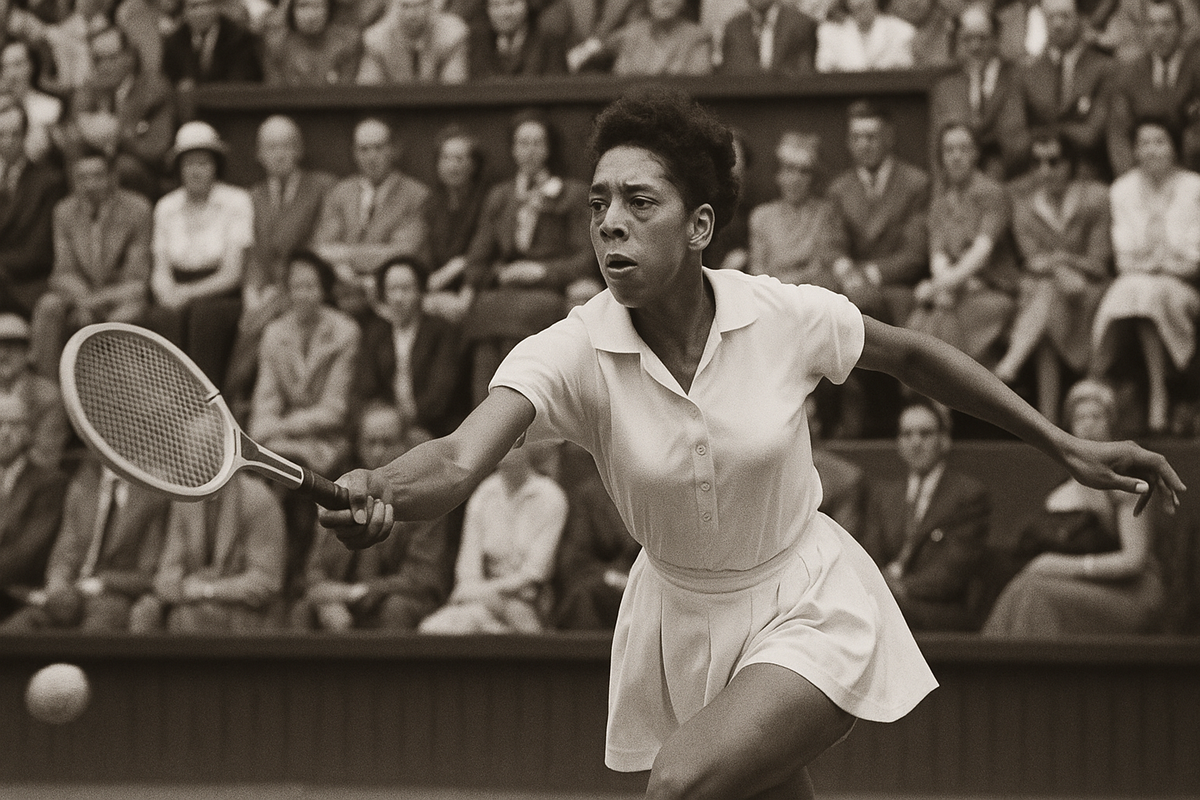
August 26, 1957. A Black woman athlete stares out from the cover of America's most influential newsweekly, racket poised mid-swing, her image landing on breakfast tables from Boston to Birmingham. For millions of readers that Monday morning, it was the first time they'd seen Althea Gibson's face. For many, it was the first time they'd seen any Black woman on Time's cover who wasn't a singer or actress.
Six weeks earlier, Gibson had done what no African American—man or woman—had ever done: she'd won Wimbledon. Now Time was betting that her story mattered to the entire nation, not just the sports page.
They were right.
Historical Record
Featured Figure: Althea Gibson, First African American Wimbledon Champion
Issue Date: August 26, 1957
Cover Story: "That Gibson Girl"
Archive Source: Time Magazine, Volume 70, Number 9
The World Outside the Tennis Court
The summer of 1957 belonged to contradictions. The Soviet Union was weeks away from launching Sputnik, igniting the space race and Cold War paranoia. In Little Rock, Arkansas, Governor Orval Faubus was preparing to block nine Black students from entering Central High School, forcing President Eisenhower to send in federal troops. Three years after Brown v. Board of Education declared school segregation unconstitutional, American classrooms remained battlegrounds.
Against this fractured landscape, Althea Gibson's victory at Wimbledon on July 6, 1957—a straight-sets defeat of Darlene Hard—offered something rare: a triumph no one could dispute, legislate away, or resist with fire hoses. She had won on merit, on grass, on the world's most prestigious tennis court. When she returned to New York, the city gave her a ticker-tape parade down Broadway, the same honor it had given Charles Lindbergh.
Time Magazine recognized what was happening. This wasn't just sports. This was the story.
Why Time's Coverage Mattered
In 1957, Time wielded cultural power that's difficult to overstate. With a weekly circulation exceeding 2 million, it didn't just report events—it shaped how Americans understood them. A Time cover story could elevate an athlete into a national figure, transform a regional issue into a crisis, or reframe a cultural moment as a turning point.
The magazine's editors understood Gibson's Wimbledon victory as all three.
The August 26 issue, titled "That Gibson Girl"—a deliberate echo of the turn-of-the-century ideal, now radically redefined—gave Gibson the full Time treatment. Readers found biographical depth: her birth in Harlem in 1927, her rise through the segregated American Tennis Association circuit, her years of being barred from major tournaments simply because of her race. They learned about her near-retirement from tennis in frustration, and her decision to return after prominent figures like Jackie Robinson urged her to persist.
But Time did something else, too. It placed Gibson's story within the larger struggle for civil rights, treating her victory not as an isolated athletic achievement but as evidence of what was possible when barriers finally cracked. The editorial voice balanced celebration with clear-eyed acknowledgment of how recently those barriers had stood—and how many remained.
The Cover That Broke the Mold
Time's cover was striking in its simplicity: Gibson caught mid-serve at Wimbledon, athletic power and grace frozen in a single frame. For a magazine whose covers typically featured presidents, generals, and captains of industry, placing a Black woman athlete in that position was itself an editorial statement.
Inside, the coverage refused to reduce Gibson to statistics and match scores. Time traced her journey from playing paddle tennis on Harlem streets to dominating Centre Court. It examined her personality—her confidence, her sometimes aloof demeanor, her refusal to become a spokesperson for causes she hadn't chosen. The portrait was complex, even occasionally critical, which paradoxically made it more powerful. Time wasn't mythologizing Gibson. It was taking her seriously.
The article also looked forward. At press time, Gibson was preparing for the U.S. National Championship (the precursor to the U.S. Open) scheduled for September. Time's readers didn't yet know she would win that title too, completing a historic double. But the magazine's coverage positioned her as someone whose story was still unfolding, not a one-time phenomenon.
What the Issue Captured
Wimbledon's First
Gibson's July 6, 1957 victory made her the first African American champion in the tournament's history—a milestone that reverberated far beyond tennis.
From Harlem to History
Born to working-class parents in Harlem, Gibson's path from public courts and police athletic leagues to Wimbledon's Centre Court embodied a particularly American story of improbable ascent.
The Ticker-Tape Parade
New York City's official welcome—a Broadway parade reserved for astronauts, war heroes, and rare achievements—signaled that Gibson's victory belonged to civic history, not just sports history.
Unfinished Business
The issue appeared between Gibson's two greatest triumphs of 1957. Readers were witnessing the inflection point of her career, not its conclusion.
Civil Rights in Real Time
Time's coverage placed Gibson squarely within the emerging civil rights narrative, even as she herself resisted being reduced to symbolism. The tension between her personal achievement and its larger meaning became part of the story itself.
The Enduring Power of Primary Sources
Vintage magazines occupy a unique space in the collector's world. Unlike retrospective histories written with the benefit of hindsight, they capture how events were understood at the time—including the blind spots, the language, the assumptions that would later change. They're time capsules that preserve not just facts but context, not just events but the texture of daily life.
The Althea Gibson issue demonstrates this perfectly. Reading it now reveals both how much has changed and how many of 1957's struggles remain unresolved. Gibson broke tennis's color barrier the same year federal troops were needed to integrate a high school. Her ticker-tape parade happened in a nation still decades away from a Black president. The issue's power lies partly in that distance—the reminder of how recently these barriers stood, how hard-won these victories were.
Why Collectors Seek This Issue
Historical Convergence
Multiple collecting communities value this issue simultaneously—African American history, women's history, tennis history, and vintage magazine collectors—making it a rare crossover piece with broad appeal.
Real-Time Documentation
This wasn't a retrospective or anniversary issue—it captured history mid-flight, before anyone knew how Gibson's story would end. That immediacy gives it documentary power that retrospectives cannot match.
Iconic Cover Design
Gibson mid-serve at Wimbledon remains one of the most striking sports covers of the 1950s. For a magazine dominated by political and business figures, placing a Black woman athlete there was groundbreaking.
Condition Rarity
Issues that survived 67 years without significant wear, spine damage, or page loss are increasingly difficult to locate. Clean examples with intact covers represent preserved artifacts, not just collectibles.
Explore the Archive
If the August 26, 1957 issue resonates with you, thousands of other original Time magazines await discovery in our collection. From the 1920s through the 1970s, trace decades of American history exactly as it was first reported.
Browse Time Magazine CollectionThe August 26, 1957 issue of Time Magazine remains what it was on publication day—a document of transformation. Althea Gibson's Wimbledon victory would be followed by her U.S. Championship win weeks later, then by continued dominance in 1958 before her surprising retirement to pursue golf and music.
But this issue caught her at the apex, when everything seemed possible and nothing was yet decided. It gave mainstream America a figure to admire at a moment when such figures were desperately needed. And it demonstrated that a newsweekly could cover sports as something more than entertainment—as a lens through which to examine who Americans were and who they might become.
For collectors, historians, and anyone who believes the past still speaks if we're willing to listen, this issue endures. Not as nostalgia. As evidence. As testament. As proof that one woman's serve could, in fact, echo across generations.