
The Champion Who Saved Wrestling
Inside the 1993 Magazine That Ended an Era
The pink backdrop should have been garish. Instead, it was perfect.
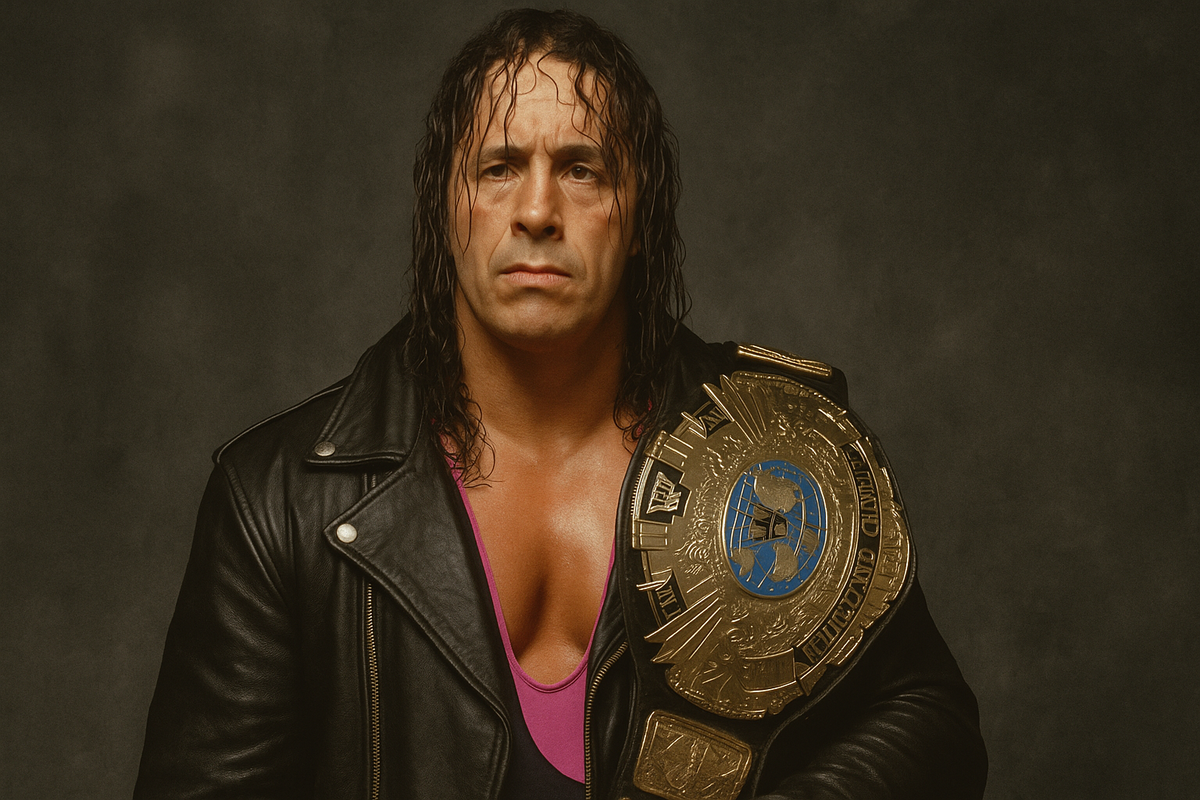
There stood Bret Hart on the cover of WWF Magazine's January 1993 issue—leather jacket, championship belt, that calculated intensity in his eyes—framed in hot pink like a neon sign announcing the future. Readers who picked up this issue at newsstands that winter didn't know they were holding a eulogy and a birth certificate in the same thirty-two pages. The Hulk Hogan era was dead. The New Generation had arrived. And "Night of Crisis" was its manifesto.
This wasn't just another wrestler-wins-belt puff piece. This was the WWF admitting, in glossy magazine form, that everything had to change.
Archive Details
Featured Champion: Bret "The Hitman" Hart
Publication: WWF Magazine, January 1993
Primary Feature: "Night of Crisis" / "Moment of Truth"
Historical Significance: Documentation of Hart's WWF Championship victory over Ric Flair in Saskatoon, Canada
Cultural Context: Transition from Rock 'n' Wrestling Era to the New Generation
When the Magazine Was the Story
In 1993, WWF Magazine occupied territory that no longer exists. No Twitter. No Reddit live threads. No instant replays on YouTube five minutes after a match ended. Between Saturday morning television and the next pay-per-view, this magazine was the canon—the official record of what mattered and why.
The January issue wielded that authority like a weapon. Its centerpiece feature—"Night of Crisis" paired with "Moment of Truth"—didn't merely recap Bret Hart's championship victory over Ric Flair in Saskatoon. It constructed a narrative of redemption that reframed what a wrestling champion could be. Not a cartoon strongman. Not an action figure. A technician. A craftsman. Someone who lost, admitted it, and clawed his way back.
The storytelling married action photography with confessional intimacy. Images of Hart grappling with Flair and the British Bulldog bled into posed portraits—exhausted, victorious, human. The typography leaned hard into drama: "Moment of Truth" splashed across spreads like a movie poster. This was journalism that understood kayfabe as mythology, not deception.
The Crossroads Match That Wasn't Supposed to Matter
SummerSlam 1992 at Wembley Stadium broke Bret Hart in front of 80,000 people.
His loss to the British Bulldog—his own brother-in-law—for the Intercontinental Championship wasn't just a scripted defeat. It was emotional demolition, documented in the magazine with surgical precision. The article didn't sugarcoat Hart's crisis of confidence. It quoted him directly:
"I realized that I had faced adversity before and used the experience to make myself stronger."
That admission—a champion acknowledging doubt—would have been unthinkable in the Hogan playbook. Hulk didn't question himself. He posed and flexed. But Hart's vulnerability became the story's engine. The magazine framed his father Stu Hart and the family legacy as the foundation that kept him standing. When Bret finally defeated Flair for the WWF Championship in Saskatoon, the victory wasn't presented as inevitable destiny. It was earned.
Then came the promise that separated Hart from every champion before him:
"I don't intend to sit back. That's never been my way. As far as I'm concerned, I have to prove my right to be champion each time I go into the ring."
A fighting champion. Not a trophy holder. The magazine positioned this vow as revolutionary—because it was.
The Architecture of a New Era
The article's genius lay in its thematic scaffolding. It didn't just celebrate Hart's technical brilliance (though it did that, cataloging his mastery of holds and ring psychology). It used his story to justify the WWF's entire pivot away from spectacle toward athletic legitimacy.
The Rock 'n' Wrestling crossover era—MTV, celebrities, neon—had run its course. Pay-per-view events like SummerSlam, Royal Rumble, and Survivor Series were expanding, demanding champions who could carry narratives across months, not just flex through three-minute squash matches. Hart, alongside emerging stars like Shawn Michaels and The Undertaker, represented skill over size, storytelling over gimmicks.
The magazine made all of this explicit. It positioned Hart's championship reign as both personal triumph and corporate strategy—the WWF reinventing itself before fans even realized the old model was broken.
The visual design reinforced the message. That pink-and-black color scheme wasn't accidental; it matched Hart's signature ring gear, turning the entire issue into branded iconography. The layout felt cinematic: full-page action shots, pull quotes isolated like poetry, Hart's leather-jacketed champion portrait positioned as the issue's emotional anchor.
This was publishing that understood its subject as both sport and theater, athlete and character.
Deep Dive: The Issue's Defining Elements
Emotional Honesty
Hart's vulnerability and self-doubt after losing to the British Bulldog created a champion narrative unlike anything in the Hogan era.
Family Legacy
Stu Hart and the Hart wrestling dynasty positioned as Bret's moral and technical foundation during crisis.
Technical Excellence
The magazine emphasized Hart's mastery of holds and ring storytelling as his defining weapon—skill over spectacle.
The Fighting Champion Vow
Hart's promise to defend constantly separated him from champions who treated the belt as a trophy.
Visual Storytelling
Pink-and-black branding, cinematic photography, and dramatic typography turned the issue into branded iconography.
Generational Shift
The article explicitly positioned Hart's reign as the end of one era and the beginning of the New Generation.
Why Collectors Hunt This Issue
Three decades later, the January 1993 WWF Magazine commands attention in the vintage collectibles market for reasons beyond nostalgia.
Historical inflection point: It captured the exact moment the WWF changed philosophies. Not gradually. Not quietly. This issue announced it.
Visual distinction: The pink-and-black aesthetic, the dramatic photography, the typographic ambition—it looks like nothing else from early '90s wrestling journalism.
Emotional authenticity: Hart's confessional quotes, the acknowledgment of defeat and doubt, the family dynamics—this read more like sports literature than promotional copy.
Cultural documentation: Beyond wrestling, the issue reflects early 1990s media's broader shift toward "authenticity" in entertainment. Reality television was still a decade away, but audiences were already craving something that felt less manufactured than the '80s spectacle.
For collectors of Hart memorabilia, WWF historians, or students of pop culture's evolution, this magazine functions as primary source material. It's not just about what happened. It's about how the story was told when it mattered most.
The Last Word Before the Internet Changed Everything
WWF Magazine operated in a narrow window—after wrestling became sophisticated enough to demand real journalism, but before the internet democratized information. These pages were authoritative because they had to be. Fans couldn't fact-check. They couldn't crowdsource alternative narratives. They trusted the magazine to tell them what was true.
The January 1993 issue honored that trust by delivering something substantial: a champion who admitted weakness, a company that acknowledged change, and a magazine that treated both with the seriousness they deserved.
Bret Hart's story—defeat, doubt, family, redemption, mastery—became the story of wrestling's New Generation. And this issue remains the definitive document of that transformation.
The Hitman's championship may have been scripted. But the magazine that immortalized it? That was real.
Collector Significance
Historical Documentation
Primary source material capturing the WWF's transition from the Rock 'n' Wrestling Era to the New Generation—a turning point in professional wrestling history.
Visual Iconography
The pink-and-black design, dramatic photography, and cinematic layout make this one of the most visually distinctive wrestling magazines of the early 1990s.
Cultural Artifact
Beyond wrestling, this issue documents early '90s media's shift toward authenticity in entertainment—before reality TV, before the internet democratized storytelling.
Hart Legacy
Essential for collectors of Bret Hart memorabilia, offering intimate documentation of his first WWF Championship reign and the personal crisis that preceded it.
Own a Piece of Wrestling History
For those seeking to preserve this pivotal moment in professional wrestling's evolution, the January 1993 WWF Magazine represents far more than vintage paper—it's the artifact that proves how the WWF moved from cartoon to craft, from Hulkamania to the Hitman, from one era to the next.
Browse WWF Magazine Collection