
Busing, Bigotry, and the Battle for Equal Education in 1972 America
How Jet Magazine documented one of the fiercest domestic battles of the Civil Rights era
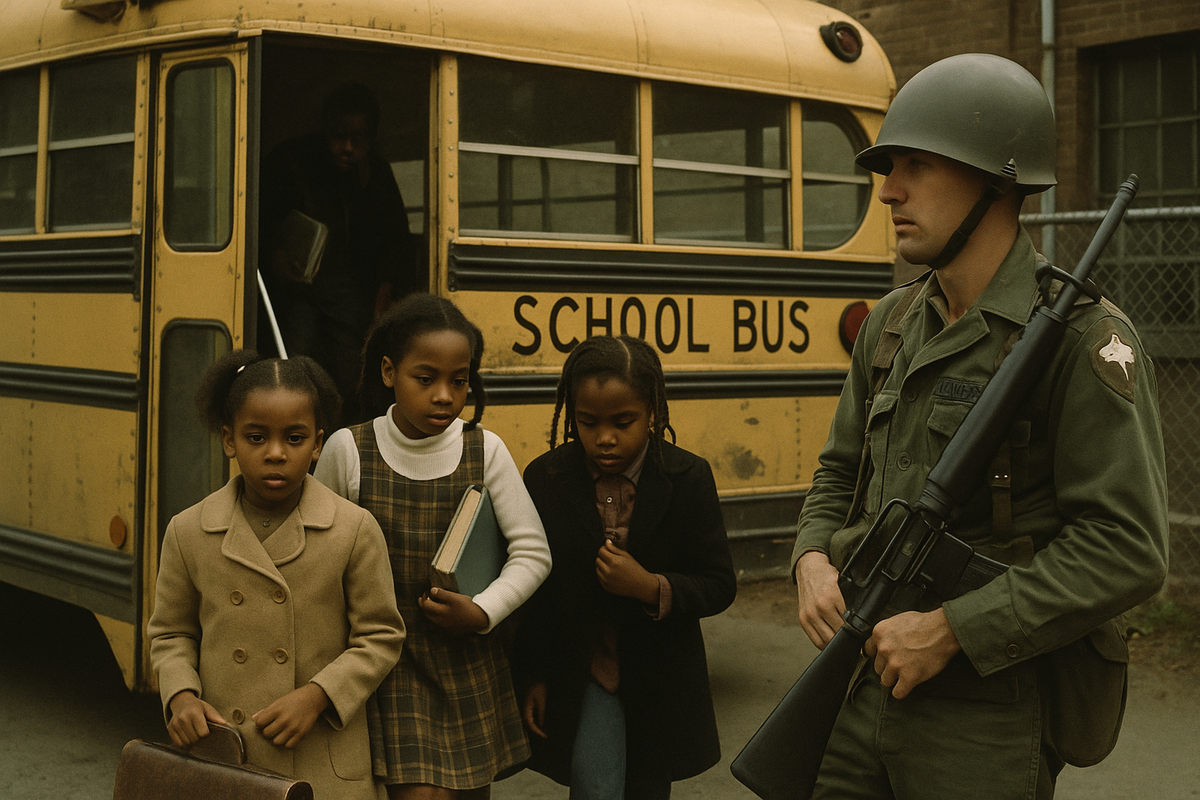
On May 18, 1972, a yellow school bus appeared on newsstands across America—not rolling down a street, but printed in stark color on the cover of Jet Magazine. Above it, red letters delivered a message that white America preferred to ignore: "Busing: Bigots Battle to Keep Blacks Separate and Unequal."
For African American families who picked up that issue, this wasn't journalism at a comfortable distance. It was a mirror held up to their daily lives—to the morning rituals of sending children onto buses that might carry them toward opportunity or into hostility. At a moment when President Richard Nixon was publicly undermining court-ordered desegregation, Jet refused to look away.
Historical Context
Publication: Jet Magazine
Issue Date: May 18, 1972
Cover Story: "Busing: Bigots Battle to Keep Blacks Separate and Unequal"
Historical Moment: Two months after Nixon's busing moratorium announcement
Archive Source: Original Magazine Collection
Eighteen Years After Brown, the Promise Remained Broken
The Supreme Court's 1954 Brown v. Board of Education decision had declared "separate but equal" unconstitutional. By 1972, nearly two decades later, American schools remained profoundly segregated—not by law, but by residential patterns that mirrored decades of racist housing policy.
Courts turned to busing as a remedy, ordering districts to transport Black children into white schools and vice versa to achieve racial balance. The backlash was immediate and vicious. Across both North and South, white parents and politicians mobilized against what they framed as "forced busing"—a term calculated to obscure what was actually being forced: continued segregation.
The Jet issue hit stands just two months after Nixon announced a "moratorium" on new busing orders, a move the NAACP Legal Defense Fund condemned as unconstitutional. Civil rights leaders understood what was at stake. Without enforcement, Brown v. Board would become a dead letter, and Black children would remain trapped in underfunded, inferior schools.
The danger wasn't abstract. In Lamar, South Carolina, white mobs overturned buses carrying Black children, pelting them with rocks and shattered glass. Across the country, students needed National Guard escorts to reach classroom doors. The photographs Jet published told the story plainly: for many Black children, attending school meant entering a war zone.
What Jet Saw That Mainstream Media Wouldn't Show
By 1972, Jet Magazine had earned its reputation as essential reading in Black America. Founded by John H. Johnson in 1951, the pocket-sized weekly covered what white publications ignored or sanitized—the full spectrum of African American life, from Motown glamour to the daily humiliations of Jim Crow's afterlife.
The May 18 cover announced its position without equivocation. Against that yellow bus backdrop, the headline made clear this was no "both sides" policy debate. This was about justice, dignity, and whether America would honor its stated ideals.
Inside, readers found what they'd come to expect from Jet: powerful photography, first-hand reporting, and analysis that centered Black experience. Children boarding buses under armed guard. Classrooms still divided by race despite court orders. The human cost of America's failure to integrate fully documented in images and words.
The article dismantled Nixon's rhetoric piece by piece. When the administration claimed to support "quality education" while opposing busing, Jet quoted the Civil Rights Commission's blunt assessment: "What you really say to Black children when you say no busing is, 'stay in your place and attend your inferior schools.'"
The Constitutional and Political Battlefield
Jet's coverage combined constitutional analysis with ground-level reporting. The magazine explained how Nixon's moratorium collided with the Supreme Court's 1971 Swann v. Charlotte-Mecklenburg Board of Education ruling, which had affirmed busing as a legitimate desegregation tool. Civil rights attorneys argued that delaying or canceling integration plans violated the Equal Protection Clause of the 14th Amendment.
The article exposed the political calculation behind Nixon's stance. Alongside segregationist figures like George Wallace, the president portrayed busing as government overreach rather than a remedy for systemic racism. This framing allowed white voters to oppose integration without openly defending segregation—a distinction that mattered for public relations but not for Black children stuck in crumbling school buildings.
Jet amplified voices the mainstream press marginalized: Black parents insisting the fight wasn't about transportation but about opportunity. Students who understood they were claiming their constitutional rights. Church leaders who saw the struggle for equal education as inseparable from the larger movement for Black survival in America.
As one observer quoted in the article put it: "The Black Church is struggling for the same thing we are—the survival of Black people."
Constitutional Crisis
Nixon's moratorium challenged the Supreme Court's Swann ruling and raised questions about Equal Protection under the 14th Amendment.
Violence and Resistance
From Lamar, South Carolina to cities nationwide, white mobs attacked buses and terrorized Black children seeking education.
Separate Still Meant Unequal
Jet documented stark disparities in funding, facilities, and resources between segregated schools.
Political Exploitation
Nixon and Wallace reframed integration as "forced busing" to rally white voters while masking systemic racism.
A Time Capsule That Still Speaks
Like the best historical journalism, Jet's 1972 busing coverage transcends its moment. It documented lived experience with honesty and urgency, creating a record that grows more valuable as memories fade and narratives get revised.
Today, when debates over education equity and racial justice continue, these pages remind us how much was at stake—and how much remains unresolved. They echo with the voices of children who braved hostility for the promise of better schools, and with the determination of parents and activists who refused to let America retreat from its constitutional obligations.
In an era of ephemeral digital content, these magazines endure as printed witnesses. They preserve not just facts and dates, but the texture of a struggle—what it felt like to live through a moment when the nation stood at a crossroads.
Why This Issue Endures as a Collectible Artifact
Historical Timing
Published at the height of the busing controversy, this issue captures the collision between Nixon's White House and the federal courts, between white resistance and Black persistence.
Iconic Cover Design
The stark yellow bus image paired with the blunt headline "Busing: Bigots Battle to Keep Blacks Separate and Unequal" makes this issue instantly recognizable.
Primary Source Documentation
This magazine represents unfiltered contemporary reporting from the African American community at the center of the crisis—a perspective mainstream outlets often ignored.
Collector Demand
Issues of Jet covering civil rights milestones, Supreme Court battles, and racial justice struggles rank among the most sought-after by historians, archivists, and families preserving their heritage.
Explore the Archive
Thousands of original Jet magazines are available in our collection, spanning the 1950s through the 1990s. Trace entire decades of African American culture, politics, music, and civil rights history as they unfolded in real time.
Browse Jet Magazine CollectionThe May 18, 1972 issue of Jet Magazine stands as one of the defining civil rights publications of its era. Its coverage of the busing crisis exposed both the violence of white resistance and the courage of Black families determined to secure equal education for their children.
To hold this issue is to hold a moment when America faced a choice: honor the promise of Brown v. Board of Education, or retreat into segregation under another name. Thanks to Jet's uncompromising reporting and powerful photography, that moment remains accessible—ready to teach anyone willing to look honestly at where we've been and how far we still need to go.