
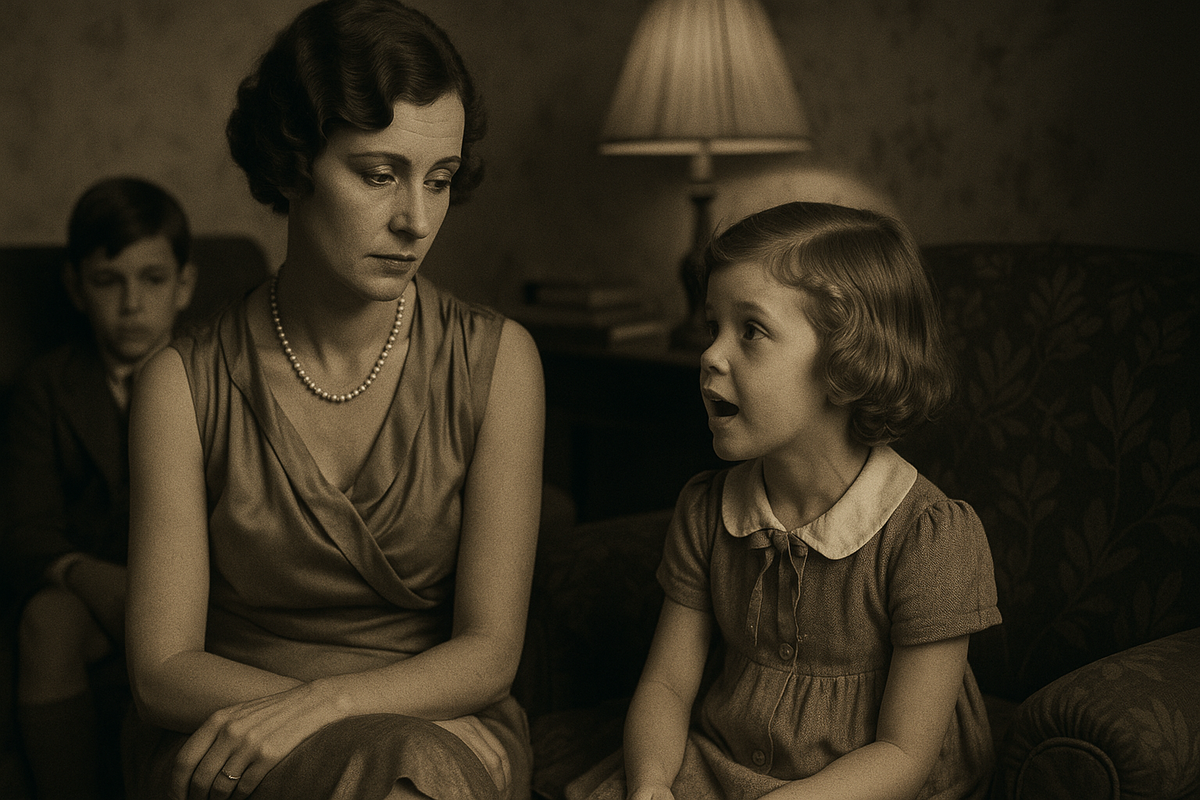
Childhood Whispers, Adult Anxieties: Reading 1929 Through The New Yorker
Six months before the crash, America was still dancing—and The New Yorker was documenting every step
Six months before the market crashed, America was still dancing. The April 20, 1929 issue of The New Yorker arrived on newsstands as a dispatch from a world that had no idea it was ending—a magazine full of jazz-age swagger, metropolitan wit, and the kind of casual brilliance that comes right before everything changes.
Tucked among its cartoons and commentary was "Dream Children: A Reverie," a piece that used children's voices to dissect adult hypocrisies. It was whimsical. It was cutting. And it was perfectly calibrated to a readership that prided itself on seeing through the performance of modern life—even as they performed it themselves.
This wasn't just entertainment. It was cultural x-ray, catching a society mid-transformation: consumer culture tightening its grip, gender roles fracturing, nostalgia and modernity locked in their eternal argument.
Archive Details
Publication: The New Yorker Magazine
Issue Date: April 20, 1929
Historical Context: Six months before the Wall Street Crash
Featured Content: "Dream Children: A Reverie"
Spring 1929: The Last Season Before Winter
By April 1929, the United States had convinced itself the party would never end. Jazz poured from speakeasy doors. Skyscrapers climbed higher. Department stores became secular cathedrals, promising salvation through purchase.
New York City—The New Yorker's home and obsession—stood at the white-hot center of this moment. The magazine wasn't documenting the era; it was performing it, turning urban anxiety into urbane prose.
But read these pages now and you can feel the undertow. October's collapse was six months away. "Dream Children" captures that unstable energy: playful on the surface, restless underneath. The children in the piece complain, observe, judge—miniature critics armed with the bluntness adults had polished away. Their voices anticipate the disillusionment that was already gathering in the margins of the decade.
The New Yorker at Four: Sophistication as Strategy
Harold Ross launched The New Yorker in 1925 with a manifesto disguised as a tagline: "Not for the old lady in Dubuque." By 1929, the magazine had sharpened that promise into something lethal—a publication for readers who wanted to laugh at the world they inhabited while recognizing themselves in the joke.
"Dream Children" is pure distilled New Yorker-ism. It takes something deceptively simple—conversations with children—and turns it into a hall of mirrors. The kids echo adult anxieties about fashion, money, religion, social performance. They're parrots, yes, but parrots reveal what their owners actually say when no one's listening.
The brilliance lies in the format: whimsy with a knife edge. This was 1929, when advertising had metastasized into a philosophy and consumption had become a kind of citizenship. The New Yorker positioned itself as both participant and autopsy report—selling ads for the same consumer goods it satirized in its editorial pages.
Inside the April 20, 1929 Issue: Architecture of Irony
The cover captured the magazine's aesthetic instinct: a modernist street scene rendered in bold, flat colors. Pedestrians moved through urban geometry with the stylized precision of chess pieces. It was both documentary and abstraction—New York as it actually was and as it imagined itself.
Inside, the magazine delivered its signature cocktail:
Literary profiles that treated culture like a blood sport—smart, merciless, occasionally generous.
Satire disguised as reporting, where the absurdities of daily life became material for vivisection.
Cartoons that weaponized understatement, turning the one-panel gag into an art form.
Fiction and poetry that blurred journalism into literature, making the magazine something more than either.
"Dream Children" sits perfectly within this ecosystem. The piece reads like a sketch, moves like a short story, cuts like an essay. Children become vessels for adult contradictions—their complaints about pajamas and fashion accessories double as commentary on how consumer culture colonizes every corner of life, including innocence itself.
What the Piece Reveals About Its Moment
Children as Unwitting Cultural Critics
The kids in "Dream Children" parrot concerns about style, money, religious instruction, social standing. Their directness exposes what adults have learned to camouflage. Modernity's anxieties, it turns out, seep down through generations.
Consumer Culture's Creep
References to designer garments and fashionable accessories aren't incidental. By 1929, advertising had infiltrated the American psyche so thoroughly that even children spoke its language.
The Erosion of Traditional Authority
Humorous asides about great-grandmothers and moral instruction signal a society negotiating between inherited values and invented ones. Religion and tradition appear as punch lines—not dead, but certainly embarrassed.
Optimism Performing Over Unease
The piece vibrates with the decade's characteristic tension: bright surfaces concealing structural rot. Entertainment and critique occupy the same sentences.
For readers in 1929, this wasn't academic. It was recognition. The New Yorker held up a mirror and made the reflection funny enough that people would look.
Why These Pages Endure
The New Yorker's early issues survive as more than nostalgia. They're literary time capsules—sealed containers of mood, texture, voice.
Daily newspapers reported events. The New Yorker captured atmospheric pressure. Its blend of essay, satire, art, and reportage froze cultural weather systems in print. For 1929, that meant preserving the final flush of Jazz Age bravado before the Depression rewrote the national story.
The magazine understood something newspapers didn't: tone survives longer than facts. The how of 1929 matters as much as the what. These pages preserve not just information but feeling—the specific flavor of being alive and urban and convinced that cleverness could outrun consequence.
Why This Issue Matters to Collectors
Historical Positioning
Published six months before Black Tuesday, this issue captures Jazz Age confidence at its apex. It's the last photograph before the decade falls off a cliff.
Editorial Mastery
"Dream Children" demonstrates the magazine's early command of its signature form—satire that entertains while it autopsies. This is The New Yorker learning to be The New Yorker.
Visual Distinction
Late-1920s covers represent the magazine's formative aesthetic—modernist, stylized, self-consciously sophisticated. These images defined what urban wit looked like.
Cultural Timestamp
This isn't a magazine. It's a three-dimensional artifact from a specific American moment—the overlap between what was ending and what was about to begin.
Vintage New Yorker issues from the 1920s consistently command premium attention from serious collectors. Milestone issues from this period don't just document history; they are history, preserved in ink and irony.
For Collectors, Historians, and the Historically Curious
If you're drawn to the intersection of wit, artistry, and cultural archaeology, the April 20, 1929 issue of The New Yorker repays attention. It offers what all great magazines offer: not just content, but context—the texture of an era, frozen at the moment of transformation.
Whether you collect, research, or simply feel the gravitational pull of cultural history, these issues provide something increasingly rare: unmediated access to how people thought, laughed, and worried in real time. Not reconstructed. Not reinterpreted. Just preserved.
Final Frame
The April 20, 1929 New Yorker remains one of the sharpest windows into late Jazz Age America. "Dream Children: A Reverie" used childhood as a satirical lens, revealing how adult absurdities colonize even innocence. The piece is playful, yes—but it's also precise, catching a culture in the act of performing confidence it didn't quite feel.
To hold this issue is to hold a paradox: the last swagger of the 1920s, captured in a magazine that was smart enough to suspect it wouldn't last.
For anyone who values history that speaks in full sentences—witty, insightful, and unflinchingly honest—vintage New Yorker magazines aren't collectibles. They're voices from the past, still talking, still worth hearing.
Explore the Archive
Browse our complete collection of original vintage magazines—each one a portal to the past, preserved in print.
Browse The New Yorker Magazine Collection