
Brazil's Coffee Crisis of 1937
Dumping Beans into the Atlantic to Save the Market
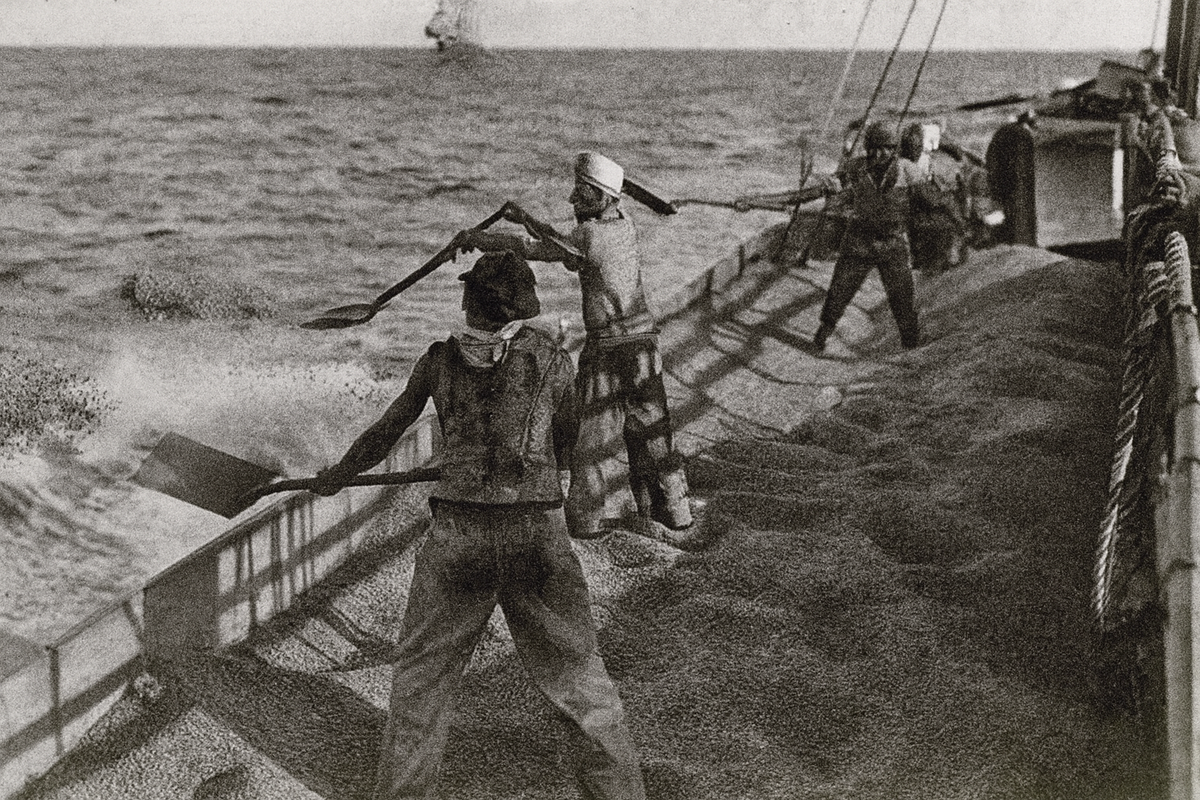
On a sweltering dock in Rio de Janeiro, under the shadow of Sugar Loaf Mountain, men with shovels performed an act that defied reason. Bag after bag of premium coffee beans—the kind that filled American breakfast cups each morning—was slit open, dumped into ship holds, and pushed through chutes straight into the Atlantic Ocean. This wasn't sabotage. It wasn't protest. It was official government policy, captured in stark black-and-white by Life Magazine photographers and delivered to American breakfast tables on August 2, 1937.
The headline offered no euphemism: "Brazil Destroys Its Coffee to Keep the Price Up."
For a nation still nursing Depression wounds, the images struck a nerve. Here was abundance—billions of coffee beans—being systematically annihilated while breadlines stretched across American cities. Yet Brazil's calculus was brutally simple: in a world drowning in coffee, survival meant destroying what you grew.
The Economics of Catastrophe
Brazil's predicament was the agricultural paradox writ large. The nation controlled more than half the world's coffee supply, and coffee accounted for the majority of its export revenue. But abundance had become a curse. Between 1930 and 1937, Brazilian plantations—home to billions of coffee trees—harvested an average of eighty million bags annually. Global demand? Twenty-five million bags.
The mathematics were merciless. With prices collapsing to unsustainable lows, Brazil faced a choice between controlled destruction and total economic collapse.
In July 1937, the government announced its strategy: destroy thirty percent of the new harvest, store forty percent in reserve, release only thirty percent to international markets. The target price: 11.5 cents per pound. By the time Life's photographers arrived at the docks, Brazil had already consigned 48.35 million bags to oblivion—burned in furnaces, compressed into fuel bricks for locomotives, or dumped into the sea.
The American audience understood the logic, if not the scale. Their own New Deal had slaughtered pigs and plowed under cotton fields. But Brazil's effort dwarfed those domestic interventions. This was a nation betting its future on strategic scarcity.
Life Magazine's Visual Coup
Life didn't explain Brazil's coffee policy—it showed it, frame by unforgettable frame.
The magazine's photographers transformed economic abstraction into visceral reality. One image captured burlap sacks stacked to the rafters, guarded by police to prevent theft. Another froze the moment of rupture: workers slitting bags open, beans cascading into the dark holds of waiting ships. The most arresting photograph showed laborers shoveling coffee overboard by hand, the caption brutal in its simplicity: "Coffee beans are shoveled into the Atlantic Ocean by hand and dumped through chutes in the hold."
Sugar Loaf Mountain loomed in the background—not as scenic decoration, but as geographic proof. This wasn't rumor. This was happening, at scale, in broad daylight.
For readers gathered around kitchen tables in August 1937, these photographs accomplished what a thousand words of economic analysis could not. Policy became tangible. Destruction became real. The paradox of capitalism—that prosperity could demand waste—materialized in every shovelful of beans hitting the Atlantic surf.
Archive Details
Life Magazine
August 2, 1937
A nun mixing salad for a retreat at Hinsdale, Illinois
Late Depression era, during height of agricultural commodity interventions globally
The Architecture of the Issue
The August 2, 1937 cover offered no warning of what lay inside. A nun mixing salad at a religious retreat in Hinsdale, Illinois—quintessential Life domesticity. But turn the pages, and the magazine delivered its signature punch: everyday America on the cover, the weight of the world inside.
This was Life's editorial genius. The coffee story didn't require lengthy economic essays or academic hand-wringing. Short, sharp captions anchored photographs that spoke for themselves. The destruction needed no interpretation—tons of beans tumbling into the ocean carried their own terrible logic.
This visual-first journalism separated Life from every newspaper and magazine of its era. Words informed; images imprinted. Decades later, collectors and historians remember these photographs not because they illustrated the story, but because they were the story.
The Anatomy of Destruction
Announced July 1937—destroy 30%, store 40%, export 30%.
Global demand at 25 million bags, Brazilian production at 86 million. Collapse was inevitable.
48.35 million bags destroyed by August 1937—a figure that staggers even today.
Armed police guarded docks. Coffee had become too valuable to waste through theft, too abundant to sell.
Ocean dumping, industrial burning, compression into fuel bricks. Every disposal method served a purpose—none involved feeding people.
On July 9, Brazil invited chemical companies to propose alternative uses. Could coffee become fertilizer? Caffeine extract? Industrial adhesive? Cardboard? Rayon? The invitation spoke to desperation and ingenuity in equal measure.
American readers saw their own agricultural policies reflected back at magnified scale. The New Deal's crop destruction had been controversial. Brazil's approach was that controversy multiplied by millions of bags.
Life's photographers captured the dockworkers—the men who executed policy with shovels and sweat. Their labor humanized what could have been mere statistics.
Why This Issue Matters to Collectors
The August 2, 1937 issue of Life Magazine holds permanent value for reasons beyond nostalgia.
Historical Gravity
This documented one of the most extreme economic interventions of the Depression era—a nation deliberately destroying its primary export to save itself.
Photojournalistic Achievement
No other publication captured Brazil's coffee destruction with this clarity, immediacy, or visual power. These images defined how a generation understood commodity markets and government intervention.
Cultural Resonance
Coffee isn't academic—it's daily ritual. This issue connects that morning cup to a moment when coffee beans became weapons in an economic war.
Archival Authenticity
To own this issue is to hold the same pages Americans turned in 1937, confronting the same images that shocked a Depression-weary nation.
Market Demand
Pre-war Life magazines command increasing collector interest, and issues documenting globally significant events rank among the most sought-after. This issue checks every box: iconic imagery, economic history, cultural paradox.
Permanent Witness
This is more than a magazine—it's a preserved witness to the contradictions that defined an era.
The Permanence of Print
Depression-era Life magazines carry unique power in our digital age. Before television news, these photographs represented the closest most Americans came to witnessing global events. Today, when images scroll past in seconds, the printed permanence of Life reminds us of a time when history was absorbed slowly, studied carefully, and preserved in family collections for generations.
These weren't disposable—they were archives in waiting.
Explore the Collection
Thousands of original Life magazines spanning the 1930s through the 1970s are available in our collection. Each issue offers a window into decades of world events, cultural shifts, and human stories as they were first reported—unfiltered, unrevised, complete.
Browse Original Life Magazines
Whether you're a historian tracking commodity markets, a collector building a Depression-era archive, or someone drawn to the craft of photojournalism, vintage Life magazines offer something irreplaceable: history you can hold.
Browse Life Magazine CollectionThe August 2, 1937 issue of Life Magazine stands as Depression-era journalism at its most potent. Through photographs that refused to look away, it forced readers to confront an economic paradox: in a world still marked by hunger and want, nations could be forced to destroy abundance to ensure survival.
For collectors and historians, issues like this transcend their function as reading material. They are artifacts of human struggle, resilience, and the choices societies make when survival demands the unthinkable. Thanks to Life's photojournalism, those choices remain preserved, studied, and valued more than 85 years after the last bag of coffee hit the Atlantic waves.