
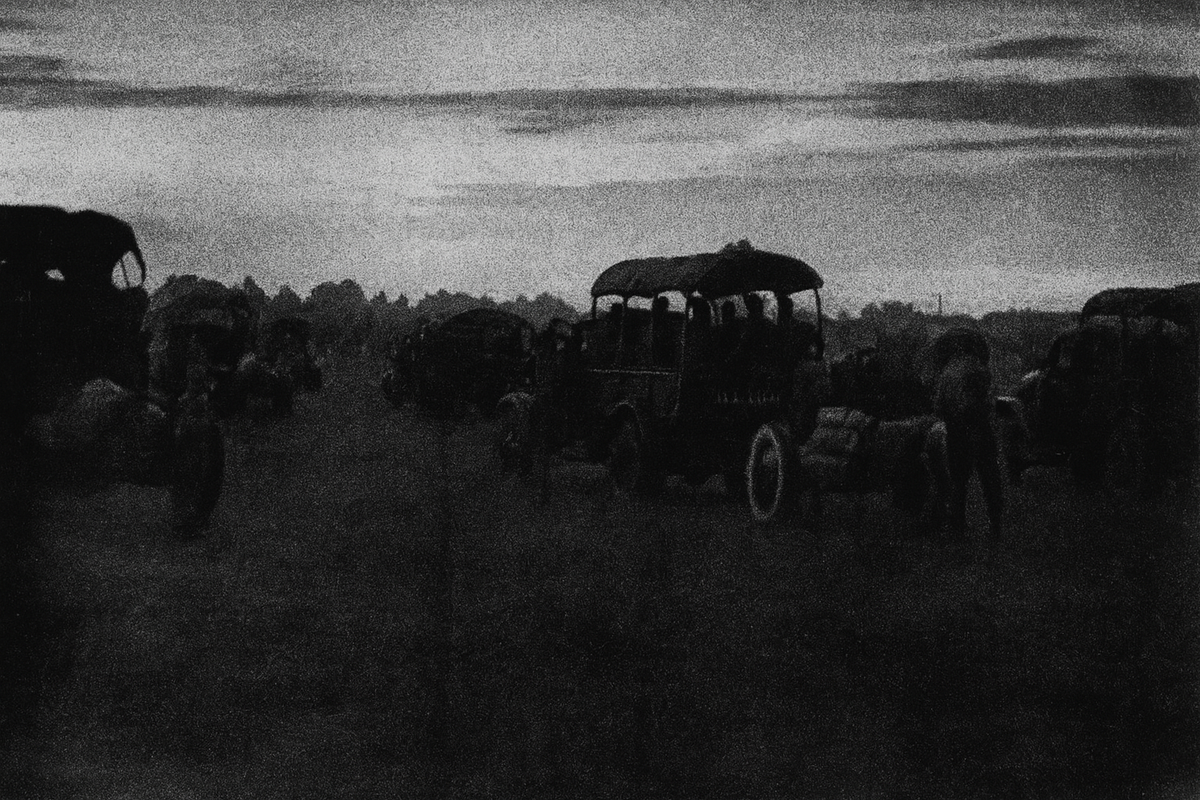
When America Rehearsed for War
Life Magazine's Unflinching Look at the National Guard, August 1937
The shrapnel nearly took the camera.
LIFE photographer Thomas McAvoy crouched behind his telephoto lens as the French 75mm howitzer erupted, capturing the exact instant of detonation—muzzle flash, recoil, smoke—in what would become one of the most visceral military photographs Americans had ever seen in a mass-circulation magazine. It was August 1937. The United States had no intention of going to war. And yet here, in the mud and heat of Fort Bragg, North Carolina, 2,400 citizen-soldiers of the National Guard were training as if the next war had already begun.
The August 9, 1937 issue of Life Magazine brought those maneuvers into American living rooms with an intimacy no publication had achieved before. Readers accustomed to sanitized government reports or abstract newspaper prose suddenly faced something else entirely: the exhausted faces of men who sold insurance and farmed tobacco by day, now covered in Carolina red clay, hauling modernized artillery across impossible terrain, rehearsing for a conflict the nation refused to name.
This was not propaganda. It was something more unsettling—a mirror held up to a country in denial about its own future.
Archive Details
Publication: Life Magazine
Issue Date: August 9, 1937
Featured Subject: National Guard 56th Brigade Maneuvers, Fort Bragg, North Carolina
Lead Photographer: Thomas McAvoy
Cover Image: Watermelon Wagon, Adel, Georgia (Al Fenn)
Historical Context: Pre-World War II military modernization during American isolationist period
The Storm Clouds of 1937
By the summer of 1937, the world had fractured along fault lines that would soon erupt. Nazi Germany had remilitarized the Rhineland. Italy had crushed Ethiopia. The Spanish Civil War raged as a proving ground for fascist and communist arsenals. In Asia, Japan's forces had crossed the Marco Polo Bridge in July, launching full-scale war against China.
Yet the United States remained locked in isolationist paralysis. The Great Depression had not merely emptied bank accounts—it had drained the nation's appetite for foreign entanglements. Neutrality Acts passed by Congress in the mid-1930s reflected a public consensus: never again would American boys die in Europe's quarrels.
President Franklin D. Roosevelt understood the contradiction. He watched the international order collapse while facing a domestic electorate that wanted no part in its reconstruction. His solution was characteristically shrewd: modernize American defenses without alarming isolationists, prepare the military without declaring whom it might fight, and use the National Guard—those part-time soldiers with full-time civilian lives—as the acceptable face of readiness.
The Fort Bragg maneuvers embodied this delicate balance. These were not professional soldiers itching for combat. They were salesmen, students, and shopkeepers who drilled on weekends, men whose presence in uniform signaled vigilance without aggression, capability without commitment.
LIFE's cameras caught them at a transformative moment: the last summer Americans could pretend the coming storm might pass them by.
The Mechanization of Citizen Defense
What readers saw in the August 9 issue was startling in its modernity. The National Guard was shedding its World War I skin. Horse-drawn artillery—the romantic but obsolete symbol of 19th-century warfare—had given way to trucks hauling French 75mm field guns mounted on balloon tires. These weapons, deadly relics from the trenches of 1918, had been retrofitted for speed and mobility across rough terrain.
The 56th Brigade demonstrated a new doctrine: rapid deployment, mechanized firepower, coordination through aerial reconnaissance. Photographs taken from 20,000 feet guided artillery crews to targets miles away. Gun teams worked with industrial efficiency—aligning trajectories, cleaning barrels, oiling recoil mechanisms—while trucks rumbled at 35 miles per hour across terrain that would have bogged down cavalry units a generation earlier.
Yet the human cost of this modernization remained brutally physical. LIFE's photographers captured Guardsmen straining to extract wheels from deep Carolina mud, their shirts dark with sweat. Training days stretched to 13 hours, beginning at dawn and ending after nightfall. Men grabbed sleep wherever they could—slumped in truck beds, sprawled beneath trees, too exhausted to remove their boots.
One image showed a traveling bar, liquor poured by an officer who sold spirits in civilian life—a reminder that these soldiers retained their peacetime identities even while rehearsing for war. Another displayed a general scribbling orders beneath a tree, the makeshift headquarters of a mobile command staff. The juxtaposition was deliberate: LIFE wanted readers to see both the professionalism of the operation and its provisional nature, the seriousness and the improvisation.
The magazine made no claims about whether this force could stop a modern army. It simply documented what existed: a hybrid force of civilians training to defend a nation that hoped never to need them.
The Revolution in Visual Journalism
LIFE Magazine, launched barely a year earlier in November 1936, had already redefined American journalism. Publisher Henry Luce understood that the era of text-dominant reporting was ending. His readers wanted immediacy, intimacy, visual proof. The photo-essay became LIFE's signature weapon.
The August 9, 1937 issue demonstrated that power in full. Other magazines could describe the Fort Bragg maneuvers. LIFE made readers feel the mud on their hands.
The layout unfolded cinematically. Wide shots established scale—batteries of artillery, columns of trucks, sprawling encampments. Tight frames revealed individual struggle—a soldier's face contorted with effort, hands gripping a stuck wheel, eyes squinting against sun and dust. Action sequences captured artillery crews in motion, the choreography of loading, aiming, firing. And then McAvoy's extraordinary head-on shot of the French 75 at the instant of detonation, the image so dangerously obtained it became legend among photojournalists.
Captions provided context without condescension. LIFE assumed its readers were intelligent enough to grasp the implications: that these exercises tested not just equipment but endurance, that mechanization demanded new skills, that citizen-soldiers faced the same exhaustion and mud as professionals.
The genius lay in the balance. LIFE never turned the Guardsmen into heroes or pawns. They remained recognizably human—tired, determined, ordinary men in extraordinary circumstances. After the day's exercises, photographs showed them dancing with local civilians, shedding their military personas for a few hours before resuming the work of preparation.
This approach separated LIFE from competitors like The Saturday Evening Post or Collier's, which still relied on illustrations and prose-heavy features. LIFE offered something unprecedented: eyewitness documentation that felt both journalistic and artistic, immediate and enduring.
Americana and Anxiety
The cover of the August 9 issue featured Al Fenn's photograph of a watermelon wagon in Adel, Georgia—a slice of rural abundance, summer bounty, the peaceful rhythms of ordinary American life.
The editorial choice was revealing. LIFE understood that readers needed relief from anxiety, that a magazine could not sustain an unrelenting focus on military preparedness without becoming propaganda. The watermelon cover suggested continuity, the reassurance that small-town America endured even as the world fractured.
Yet the juxtaposition also heightened the tension inside. Flip past the cover, and the mud-caked Guardsmen appeared more striking, their exhaustion more poignant. The contrast implied a question the magazine never stated directly: How long could watermelon summers and military maneuvers coexist? When would the nation be forced to choose?
This was LIFE's sophistication. The magazine trusted readers to perceive the undercurrents, to sense the coming crisis without being lectured. It presented evidence—visual, factual, human—and let Americans draw their own conclusions.
By August 1937, those conclusions were becoming harder to avoid.
What the Maneuvers Revealed
The Fort Bragg exercises were not theater. They tested real capabilities under real constraints:
Mobility: The motorized French 75s, equipped with balloon tires, could traverse terrain impossible for horse-drawn artillery. Speed of deployment became a tactical advantage.
Scale: The 56th Brigade mobilized 2,400 men in coordinated operations, demonstrating organizational capacity that would prove essential when the Guard was federalized in 1940.
Leadership: The general commanding the exercise was a life insurance executive in civilian life. The officer pouring drinks at the traveling bar sold liquor when not in uniform. This dual identity—professional soldier and peacetime citizen—defined the Guard's character.
Endurance: Thirteen-hour training days revealed which men could sustain the physical and mental demands of mechanized warfare. The attrition was not from combat but from exhaustion, mud, and repetition.
Aerial coordination: Reconnaissance photographs taken from 20,000 feet guided artillery fire to distant targets, foreshadowing the integration of air and ground forces that would dominate World War II tactics.
Infrastructure challenges: Carolina mud swallowed wheels and mired vehicles for hours. Men learned that modern equipment still required brute force—a lesson that would apply equally to the hedgerows of Normandy and the jungles of the Pacific.
Photojournalistic daring: McAvoy's head-on shot of the firing French 75, taken at personal risk, brought unprecedented realism to civilian readers. For many Americans, this was their first visual evidence that the National Guard was more than a ceremonial force.
Ambiguous readiness: These elements combined to create a portrait of readiness tempered by reality. The Guard was modernizing, but its transformation remained incomplete. It was capable, but not yet tested. It was willing, but uncertain of what it might be called to face.
LIFE documented that ambiguity with unflinching clarity.
The Permanence of Print
What gives issues like this their enduring power is not just the reporting but the medium itself. Each LIFE photo-essay was designed to be experienced slowly, contemplatively. Readers turned pages deliberately, studied images, absorbed captions, returned to photographs that demanded second looks.
This permanence stands in stark contrast to today's digital immediacy. News images flicker past on screens in seconds, consumed and forgotten. LIFE's printed spreads forced a different relationship with information—one that valued depth over speed, reflection over reaction.
For historians, collectors, and anyone seeking to understand how Americans perceived their world in the 20th century, Life Magazine remains an unmatched resource. The magazine did not simply record events; it shaped how those events were understood, remembered, and preserved.
The August 9, 1937 issue exemplifies that mission. It asks us to remember that preparedness required sacrifice long before the first shot was fired, that ordinary citizens carried the weight of national defense, that the journey toward World War II began years before most Americans acknowledged the destination.
Collector Significance: A Pre-War Artifact
For collectors of 20th-century ephemera, the August 9, 1937 issue of Life Magazine represents far more than a single week's publication. It is a primary source document of extraordinary historical value.
Timing
This issue predates Pearl Harbor by more than four years. It captures the exact moment when American military modernization began in earnest, yet public sentiment remained opposed to intervention. Historians seeking to understand how the U.S. military prepared for World War II while the nation clung to isolationism will find essential evidence in these pages.
Visual Documentation
The Fort Bragg photo-essay remains one of the most comprehensive visual records of National Guard training in the pre-war period. Military historians studying the transition from horse-drawn to mechanized artillery consider these images invaluable.
Cultural Resonance
Owning this issue means possessing a tangible link to the last full summer of American peacetime before the global catastrophe. It connects collectors to the moment when ordinary citizens—insurance executives, liquor salesmen, farmers—transformed into the force that would help defeat fascism.
Rarity and Condition
Pre-war LIFE issues, particularly those covering military subjects, are increasingly scarce in collectible condition. The August 1937 issues that survive often show wear from repeated handling by families anxiously tracking the world's descent toward war.
Investment Potential
Demand for primary source materials from this era continues to rise among collectors of military memorabilia, photojournalism history, and Americana. This issue appeals across multiple collecting categories, sustaining its value.
These magazines are not mere paper. They are time machines, preserving not just the images and words but the texture of how Americans understood their world before everything changed. To hold an original copy is to touch the same pages that families studied in 1937, weighing whether their country might soon ask them to sacrifice everything.
Explore the Archive
Thousands of original Life Magazine issues from the 1930s through the 1970s are available for collectors, researchers, and enthusiasts. These publications chronicle decades of American culture, politics, war, and daily life as they first appeared to contemporary readers.
Browse Life Magazine CollectionWhether you're a seasoned collector, a student of military history, or someone honoring family members who served in the National Guard, these magazines offer something irreplaceable: the chance to see history not as it was later interpreted, but as it first unfolded—raw, uncertain, and utterly human.
Epilogue: The Last Summer of Innocence
The August 9, 1937 issue of Life Magazine stands as a monument to America's most complicated moment—when the nation knew war was possible but refused to believe it was inevitable, when citizen-soldiers trained for a conflict that officially did not exist, when a magazine could still put watermelons on the cover while documenting artillery practice inside.
The French 75s that LIFE's cameras captured at Fort Bragg would fire again, in anger, on battlefields the Guardsmen of 1937 could not yet imagine. The exhausted men sprawled in Carolina mud would face far worse in North Africa, Italy, France, and the Pacific. The general scribbling orders beneath a tree would command units in combat. The officer who poured drinks from the traveling bar would lead men into fire.
But in August 1937, none of that had happened yet. There was still time to hope, still room to prepare without committing, still a chance—however slim—that the storm might break elsewhere.
LIFE Magazine documented that fleeting moment with a clarity that remains breathtaking nearly ninety years later. The magazine understood what many Americans could not yet accept: that the men in those photographs were not playing at war. They were rehearsing for it.
History would soon call them to perform.