
The Aluminum Foil Trick That Defined Postwar Christmas
How Margaret Davidson's "Holiday Helps" column in the December 1952 Ladies' Home Journal became a lifeline for millions of American homemakers navigating the tensions of mid-century domestic life
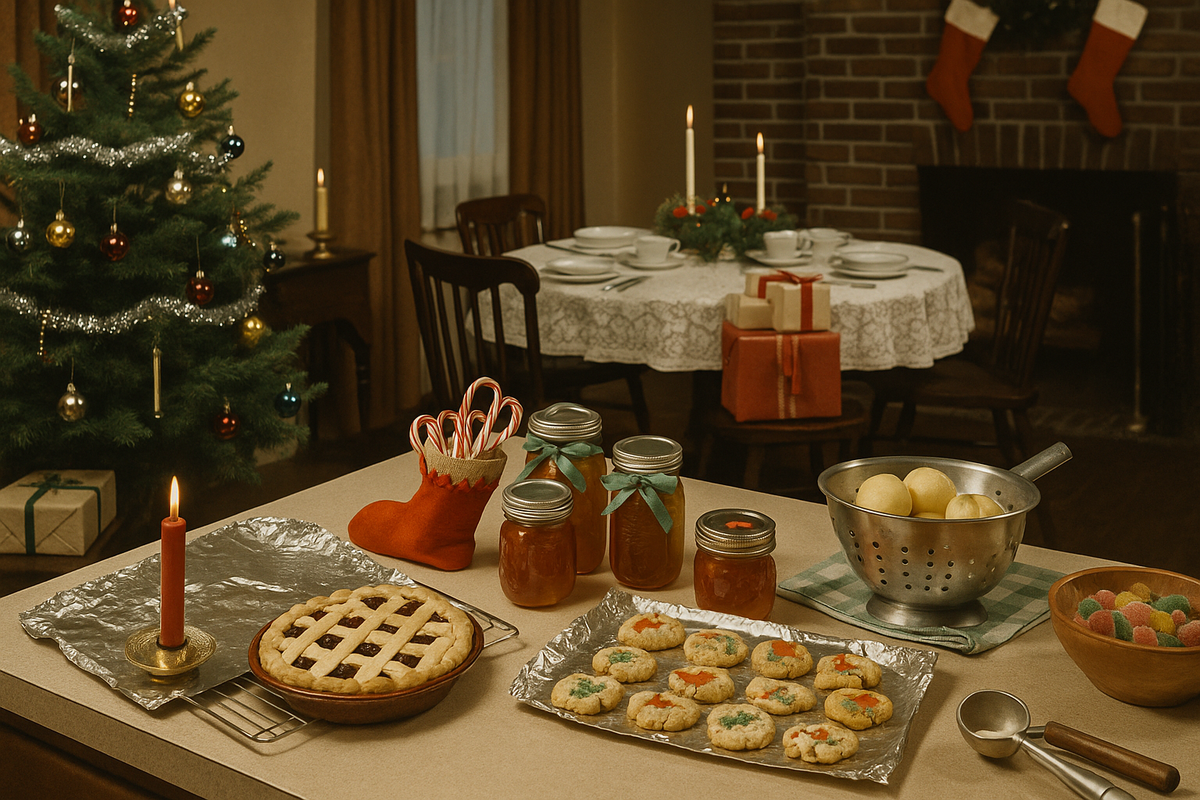
December 1952. A woman in Cleveland opens her Ladies' Home Journal and discovers that a strip of aluminum foil under her Christmas candles might be the difference between a festive evening and a house fire. In Pasadena, another reader learns that her fruit jars—those humble vessels of summer canning—can be repurposed into elegant gift containers. Across millions of American households, Margaret Davidson's "Holiday Helps" column is quietly rewriting the rules of domestic survival.
This wasn't lifestyle content. It was a survival manual for the modern homemaker.
Archive Details
Featured Column: "Holiday Helps" by Margaret Davidson
Issue Date: December 1952
Publication: Ladies' Home Journal
Historical Context: Postwar consumer boom, suburban expansion, Cold War era
The Magazine That Shaped a Generation's Christmas
When the December 1952 issue of Ladies' Home Journal arrived on newsstands, it carried more than recipes and fiction. It carried the weight of a nation still recalibrating after war, negotiating the promises of prosperity against the persistent demands of tradition. Women who had riveted bombers and managed factory floors were now expected to orchestrate flawless holiday gatherings with strawberry hullers and melon ballers.
The magazine understood this tension perfectly. Its pages became a negotiation table where old-fashioned frugality shook hands with postwar consumerism, where fire safety warnings shared space with DuPont cellophane advertisements promising "the essence of a modern Christmas" through brightly wrapped fruitcakes and cigars.
When Domestic Advice Was Genuinely Dangerous
Davidson's "Holiday Helps" opened with warnings that read like declassified documents from a gentler war: no indoor fireworks, no flammable decorations. This wasn't paranoia. Christmas tree fires were a seasonal epidemic in the early 1950s, when synthetic materials were flooding the market faster than safety standards could catch up. The aluminum foil candle trick wasn't charming—it was pragmatic fire prevention dressed in holiday cheer.
The advice that followed mapped the landscape of mid-century domestic ingenuity:
Kitchen gadgets as status symbols. That strawberry huller wasn't just a tool—it was evidence that you understood modern convenience. These implements, advertised relentlessly in the same magazine pages, transformed holiday cooking from drudgery into a performance of competence.
Repurposing as virtue. Fruit jars became gift vessels. Leftover ingredients became hostess offerings. This wasn't poverty—it was the peculiar postwar blend of abundance and thrift, where having more meant knowing how to use less.
The shortcut as salvation. Party cleanup hacks acknowledged what the magazine's glamorous advertisements never would: holiday entertaining could break you.
What distinguished Davidson's column from countless others was its refusal to promise perfection. The tone was conspiratorial, practical, almost subversive—you can pull this off, even if everything isn't Instagram-ready (though of course, Instagram wouldn't exist for another 58 years).
The Magazine's Double Life
Open the December 1952 issue and you're immediately caught in the cultural crossfire of the era. On one page, Davidson's modest suggestions for homemade salad dressings as gifts. Turn the page: Pond's Cold Cream promising instant transformation into flawless beauty, because even while juggling holiday stress, you were expected to look camera-ready.
The advertisements tell their own story:
DuPont Cellophane wrapped the future in transparent film, turning ordinary products into aspirational gifts. The message was clear: packaging mattered as much as content.
Pond's Cold Cream sold beauty as both achievement and obligation, reminding readers that femininity required constant maintenance.
Niagara Massage Appliances positioned technology as the solution to exhaustion—the same exhaustion the magazine's own advice columns helped create.
This wasn't contradiction. This was the magazine's genius. Ladies' Home Journal reflected women's lives by showing them pulled in opposite directions—toward tradition and innovation, thrift and spending, practicality and glamour. The magazine didn't resolve these tensions. It profited from them.
Why the Cover Mattered
While The Saturday Evening Post offered Norman Rockwell's winking holiday humor—usually from a male perspective—Ladies' Home Journal leaned into women's experiences with unapologetic focus. The December 1952 cover blended domestic warmth with fashion-forward styling, signaling that the magazine understood its readers as complete people, not just kitchen managers.
Inside, the editorial mix was deliberately eclectic: fiction alongside fire safety, fashion spreads beside frugality tips, health features competing with cigarette advertisements (a darker irony the 1950s hadn't yet confronted). This wasn't chaos—it was a mirror held up to the complexity of women's lives.
What Survives
Flip through this issue today and certain passages feel eerily contemporary. The advice about making do with what you have. The acknowledgment that holiday stress is real. The suggestion that efficiency and joy aren't mutually exclusive. The recognition that women deserved shortcuts, not just higher expectations.
Other passages feel like transmissions from a vanished civilization. Indoor fireworks were genuinely under consideration. Pond's Cold Cream was marketed as transformation, not just moisturizer. The suburban kitchen was the command center of American life.
But the fundamental negotiation—between what we're told to want and what we can actually manage, between tradition and innovation, between perfection and good enough—that negotiation never stopped. Davidson's column acknowledged it openly. Most modern content pretends it doesn't exist.
The Collector's Case
Historical Timing
This issue captures the moment when consumer culture fully colonized Christmas—after wartime austerity ended but before the 1960s questioned everything. It's the high-water mark of optimistic domesticity.
Visual Record
The cellophane-wrapped advertisements, the beauty campaign imagery, the typography and color palettes—these are design artifacts that tell stories about taste, aspiration, and commercial art.
Ordinary Details
Davidson's column, with its fruit jar gifts and aluminum foil tricks, documents how actual families—not television families—prepared for the holidays. This is kitchen-table history, the kind that doesn't make it into official archives.
The Contradictions
Holding this magazine means holding the full spectrum of mid-century American womanhood—the pressures, the innovations, the compromises, the small victories.
Browse the Archive
The December 1952 issue is one window into decades of American women's cultural history. From the magazine's Victorian origins in the late 19th century through its postwar dominance in the 1950s, each issue chronicles fashion, family life, social expectations, and the evolution of consumer culture.
Browse Ladies' Home Journal Magazine CollectionWhether you're a collector tracking the development of mid-century advertising, a historian researching domestic culture, or someone who simply appreciates the texture of physical media, these archives offer something digital content never can: the weight of the era in your hands.
The Foil Under the Candle
Margaret Davidson's "Holiday Helps" column occupies just a few pages in a thick December issue. But those pages crystallize an entire moment in American life—when women were expected to engineer domestic perfection while the rules of that perfection were being rewritten in real time.
The aluminum foil trick wasn't just about catching wax drips. It was about acknowledging that beauty and danger coexisted, that holidays required management, not just magic. It was about giving women permission to be practical when everything around them demanded they be perfect.
Seventy-three years later, that permission still feels radical. The magazine that granted it remains worth preserving.