
Only the Dead Know Brooklyn
The Night Thomas Wolfe Gave The New Yorker a Voice From the Streets
On June 15, 1935, readers of The New Yorker opened their magazines to find something they'd never seen before in its pages: the raw, unvarnished voice of Brooklyn itself.
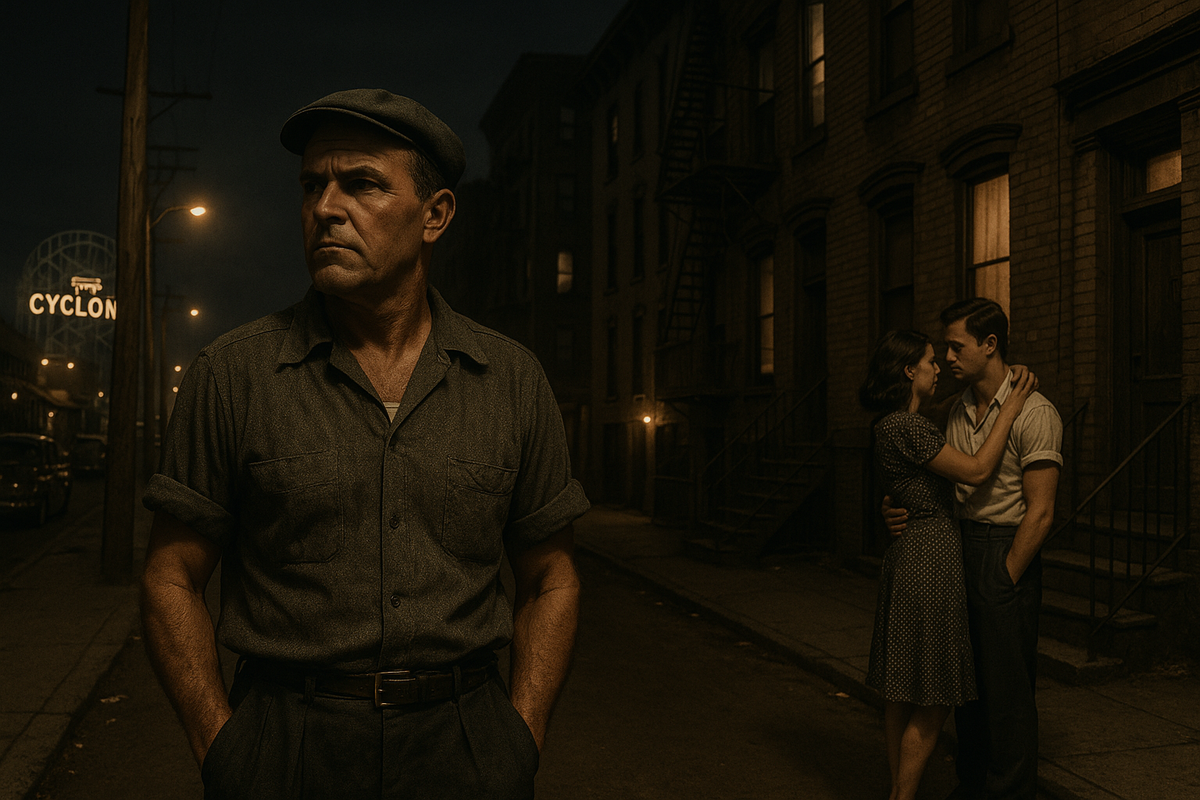
Thomas Wolfe's "Only the Dead Know Brooklyn" arrived not in polished literary English but in the phonetic dialect of the borough's streets—"You could live dere fawty yeahs, an' you wouldn't know it all." No plot to speak of. No resolution. Just the overwhelming immensity of a city that had grown too vast for any single life to comprehend. For a magazine built on urbane wit and sophisticated humor, publishing this story was a gamble. It became a landmark.
This wasn't Wolfe at his most expansive. This was Wolfe distilled: all atmosphere, all voice, all New York. And it marked the moment The New Yorker proved it could do more than satirize high society—it could speak for the streets.
Archive Details
Literary Figure: Thomas Wolfe
Issue Date: June 15, 1935
Archive Source: The New Yorker Magazine
Story: "Only the Dead Know Brooklyn"
The City That Wouldn't Sit Still
By 1935, Brooklyn was exploding outward. The Independent Subway System had just opened, threading new lines deep into neighborhoods that had once felt like distant provinces. The Brooklyn Bridge, already iconic, was now part of a web of transit that made the borough feel less like Manhattan's shadow and more like a world unto itself.
But the Great Depression hadn't loosened its grip. Unemployment remained brutal. Uncertainty was the prevailing mood. Roosevelt's New Deal offered flickers of hope, but for most New Yorkers, daily life was a grinding negotiation with economic precarity.
Literature was responding. Regionalism was ascendant—William Faulkner was mapping the South's interior landscape, John Steinbeck was chronicling California's dispossessed. Wolfe, with his sprawling novels and restless energy, gave voice to the urban American experience in all its chaos and loneliness. "Only the Dead Know Brooklyn" compressed that vision into a few pages. It wasn't about what happened. It was about what was—the weight of the city, the impossibility of knowing it, the sense that only death could offer the vantage point needed to see it whole.
The Magazine That Took the Risk
By 1935, The New Yorker was still finding itself. Founded in 1925 as a humor weekly, it had begun to publish serious fiction and essays, but it remained best known for cartoons, light verse, and the kind of wry social observation that made Manhattan's intelligentsia feel seen.
Then came Wolfe's story, written entirely in Brooklyn dialect. No compromise. No translation. Just the living sound of the borough's streets, preserved on the page like a field recording.
The effect was electrifying. This wasn't literature about working-class life—it was literature in the voice of working-class life. And The New Yorker printed it without apology, trusting its readers to meet the story on its own terms.
The narrator's central refrain—that Brooklyn is too immense for any one person to know, that only the dead possess the perspective to comprehend it—became one of the most quoted lines in American short fiction. It worked as both literal truth (Brooklyn was vast, sprawling, unknowable) and metaphor (life itself exceeds our capacity to grasp it). That duality is what made the story last.
The Issue Itself: Art and Irony in Equal Measure
The cover of the June 15, 1935 issue is pure New Yorker: a rowing team slumps in exhaustion while their coxswain triumphantly hoists a trophy. The joke is perfect—glory for the one who didn't row, fatigue for those who did. It's witty, sophisticated, and just subversive enough to feel smart.
Inside, Wolfe's gritty realism sits alongside cartoons, poems, and cultural commentary. This juxtaposition—high literary seriousness mixed with sharp humor—was The New Yorker's signature move. No other magazine could pull it off. No other magazine tried.
What Made It a Masterpiece
The Vastness Paradox
Wolfe's narrator insists that Brooklyn is too immense to know. Its neighborhoods stretch endlessly. Its streets form labyrinths. The borough becomes a symbol of both possibility and alienation, expansion and isolation.
The Sound of the Streets
Writing phonetically was revolutionary for a magazine associated with urbane sophistication. But it was also an act of preservation. Wolfe captured Brooklyn's voice at a specific moment in time, before gentrification, before the Brooklyn mystique became commodified.
Mortality as the Only Map
The story's title and central thesis—that only the dead truly know Brooklyn—elevates the piece beyond local color. It becomes a meditation on mortality, knowledge, and the limits of human perspective.
Atmosphere Over Plot
Wolfe gave readers street corners, strangers' voices, the overwhelming weight of the city. He trusted that atmosphere could carry a story as effectively as narrative. He was right.
The Endurance of a Voice
The 1930s were a crucible. Economic collapse forced artists to reckon with reality in new ways. The New Yorker could have played it safe—more cartoons, more society gossip, more predictable humor. Instead, it opened its pages to Thomas Wolfe's raw, unfiltered Brooklyn and proved that a magazine could be both sophisticated and street-level, both polished and phonetic.
"Only the Dead Know Brooklyn" is now taught in classrooms, anthologized in collections, and studied as a turning point in American short fiction. But its first home was here, nestled among cartoons and poems, in a magazine that understood that literature could speak in any voice—as long as that voice told the truth.
Why Collectors Seek This Issue
Literary Significance
"Only the Dead Know Brooklyn" remains one of Wolfe's most celebrated works. Owning the original magazine appearance places you at the source—the first printing, the first encounter, the moment before it entered the canon.
Cultural Preservation
The story preserves Brooklyn in the 1930s: its voices, its immensity, its working-class soul. For cultural historians, this issue is a primary document, not a reproduction.
Classic Cover Art
The rowing-race illustration is a perfect example of 1930s New Yorker wit—elegant, ironic, and immediately recognizable.
Rarity and Demand
First appearances of major literary works command premium interest. Wolfe enthusiasts, New Yorker completists, and Depression-era collectors all seek this issue. Supply is limited. Demand is constant.
Explore the Collection
Thousands of original New Yorker magazines, spanning from the 1920s to the present, are available in our collection. Each issue captures decades of wit, literature, and cultural history in its original form.
Browse The New Yorker Magazine CollectionWhether you're a Thomas Wolfe scholar, a collector of Depression-era artifacts, or a reader who values the materiality of literary history, the June 15, 1935 issue offers a rare opportunity to own the first printing of a masterpiece—not as a reprint, but as it was meant to be read: in context, in its original form, in the magazine that dared to let Brooklyn speak for itself.