
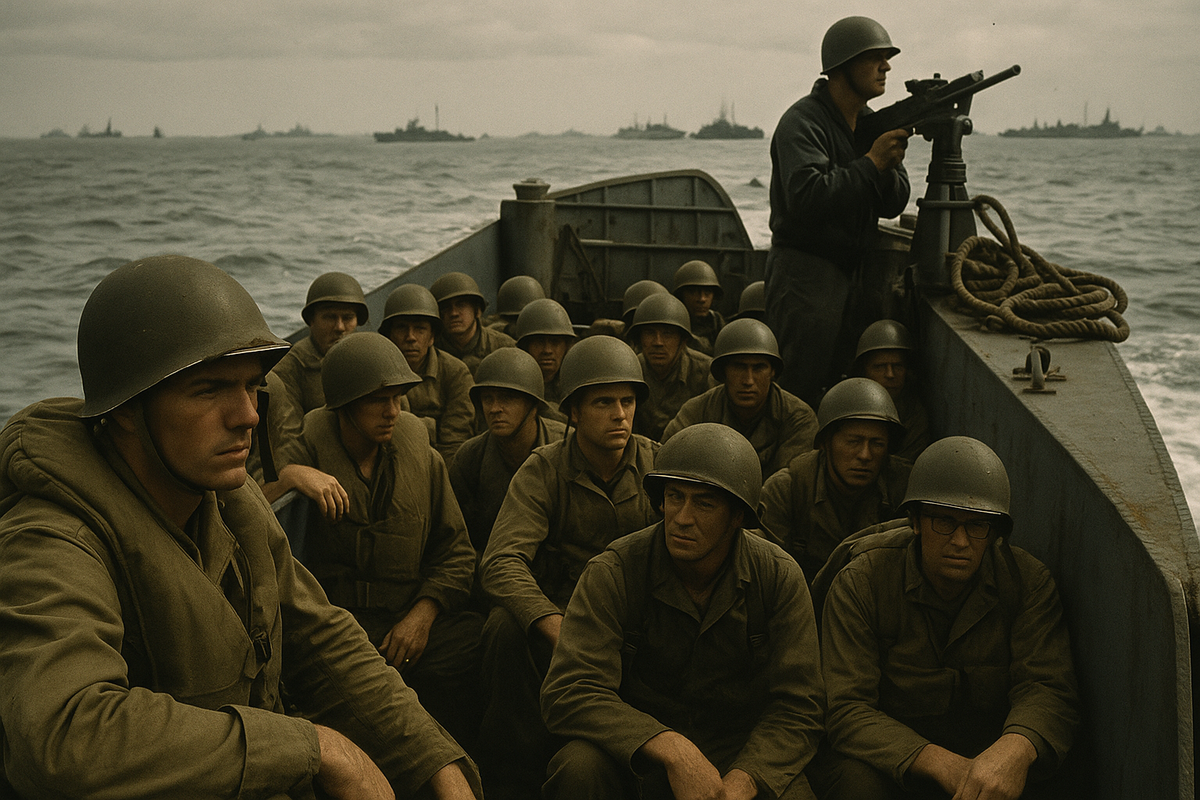
The Magazine America Read Three Weeks After D-Day
On July 1, 1944, American breakfast tables held more than coffee and ration cards. They held witness.
That morning, readers opened The New Yorker to find "Cross-Channel Trip"—a dispatch so immediate, so visceral, that the salt spray from the English Channel still seemed wet on the page. Written mere weeks after 150,000 Allied troops stormed Normandy on June 6, the article did what no military communiqué could: it put civilians inside the landing craft, shoulder-to-shoulder with the men crossing into history.
This wasn't propaganda. It wasn't sanitized wire copy. It was The New Yorker doing what it did best—turning world-shaking events into something you could feel in your chest.
Why This Issue Mattered Then
By summer 1944, Americans had lived with war for three years. They knew the Pacific island names, the Italian mountain ranges, the daily tally of ships and planes. But D-Day was different. Operation Overlord wasn't just another battle—it was the hinge upon which Europe's liberation would swing. The Western Front had finally opened. The question on every mind: What was it actually like?
Daily newspapers gave them headlines. The New Yorker gave them something rarer: the texture of war as lived experience.
"Cross-Channel Trip" took readers aboard the LCILs—Landing Craft, Infantry, Large—the unglamorous workhorses that ferried troops and supplies across the Channel. The article didn't traffic in heroic abstractions. Instead, it offered the cramped quarters, the nervous jokes, the cigarettes smoked while waiting, the ever-present threat of mines and U-boats lurking beneath slate-gray water. It showed soldiers as men, not symbols—young Americans who knew the enormity ahead but filled the hours talking about home.
For families waiting for letters from France, this was as close as they could come to the journey their sons had taken.
Archive Details
Publication: The New Yorker
Issue Date: July 1, 1944
Feature Article: "Cross-Channel Trip" (A Reporter at Large)
Cover Artist: Rea Irvin
Historical Context: Published 25 days after D-Day invasion (June 6, 1944)
The New Yorker's War
By 1944, The New Yorker had mastered an unusual alchemy. Founded in 1925 as the magazine of urbane wit and metropolitan sophistication, it had evolved into something more urgent without abandoning its literary DNA. Wartime issues paired cartoons with frontline dispatches, satire with sobering reportage.
This wasn't a contradiction. It was a philosophy: Americans needed to understand the war's weight and preserve the culture they were fighting for. The magazine refused to choose between gravity and grace.
"Cross-Channel Trip" exemplified this hybrid form—part journalism, part literature. Where other publications relied on statistics and official statements, The New Yorker delivered atmosphere and character. The result was war reporting that read like literature and literature that carried the authority of eyewitness testimony.
It mattered because it remembered the reader. This wasn't writing for generals or historians. It was writing for civilians trying to comprehend an incomprehensible scale of sacrifice.
The Cover That Spoke Without Words
Rea Irvin's July 1, 1944 cover announced the magazine's contents before a single page turned. Four creatures stood united: the American eagle, the British lion, the Chinese dragon, and a sleek black panther representing other Allied forces. Not sentimental. Not bombastic. Simply stated, as if these alliances were as natural as the animals themselves.
Inside, that same restraint shaped every page. Fiction, poetry, and humor sat alongside war coverage, creating a magazine that felt like civilization itself—multifaceted, resilient, unwilling to surrender complexity to crisis.
This was The New Yorker's gift to its wartime readers: the assurance that culture endures, even as the world burns.
What the Article Captured
The genius of "Cross-Channel Trip" lies in its details—the granular observations that transform distant events into lived reality:
The Floating City
LCILs weren't romantic vessels. They were functional, cramped, filled with Navy crews and Army troops navigating the strange intimacy of men preparing for violence.
The Waiting
Hours stretched between briefings. Soldiers filled time with ritual—card games, letters half-written, jokes that weren't quite funny but served their purpose anyway.
The Invisible Enemy
Mines drifted beneath the surface. German aircraft could appear at any moment. The Channel crossing wasn't transit—it was survival.
The Faces Behind the Operation
Young men, most far from home, carrying the weight of liberation on their shoulders. The article refused to let them disappear into the machinery of war.
Every sentence reminded readers that D-Day wasn't strategy on a map. It was sweat and fear and endurance, executed by men whose names would never make headlines but whose courage bent the arc of history.
The Endurance of Wartime Journalism
What separates The New Yorker's wartime coverage from yellowing newsprint is its refusal to sacrifice craft for urgency. These articles were written in the moment but designed to outlast it.
The magazine understood something fundamental: history isn't just generals and battle plans. It's the lived experience of ordinary people confronting extraordinary circumstances. By preserving that experience in literary form, The New Yorker created documents that still speak across eight decades.
For collectors, this is the essential appeal. These magazines aren't artifacts—they're active witnesses. They continue to perform the work they were designed for: connecting readers to pivotal moments in human history.
Why Collectors Seek This Issue
Timing Matters
Published within weeks of the invasion, it represents one of the earliest narrative accounts available to American civilians. The ink was barely dry on history.
Symbolism Endures
Irvin's Allied animals cover has become an icon of wartime unity, instantly recognizable to collectors and historians.
Cultural Authority
This issue captures how America's intellectual class processed the century's defining conflict—through literature, not just reportage.
Scarcity Drives Value
Wartime issues, particularly those documenting Operation Overlord, are increasingly rare. Families who saved them often did so for deeply personal reasons.
Personal Connection
For descendants of the Greatest Generation, owning this issue means holding the same pages their grandparents read while waiting for news from Normandy.
Material Memory
This isn't ephemera. It's a physical link to the moment when Americans at home first understood what their loved ones had endured on the beaches of France.
The July 1, 1944 issue of The New Yorker remains a landmark in American wartime journalism. "Cross-Channel Trip" gave readers a place inside the landing craft, a view of D-Day through the eyes of the men who carried it out, delivered while the battle's echoes still rang across Europe.
To hold this issue today is to hold a piece of courage, rendered in ink and paper. It reminds us that journalism, at its finest, doesn't just record history—it preserves the humanity within it.
Explore the Archive
Thousands of original New Yorker issues spanning the 1920s through the late 20th century are available to collectors today—each one a window into how Americans understood their world at its most critical junctures.
Browse The New Yorker Magazines CollectionWhether you're a seasoned collector, a student of 20th-century culture, or someone honoring family history, these magazines offer something irreplaceable: the chance to experience history as it was first reported, when the outcome was still uncertain and the stakes immeasurably high.