
The Detective, The Depression, and The Magazine That Made Myth Into Art
How The New Yorker's December 26, 1931 issue transformed police reporting into cultural portraiture at the depth of America's darkest hour
On December 26, 1931, as breadlines snaked through Manhattan and banks shuttered their doors, The New Yorker published a profile that transformed a New York cop into American folklore.
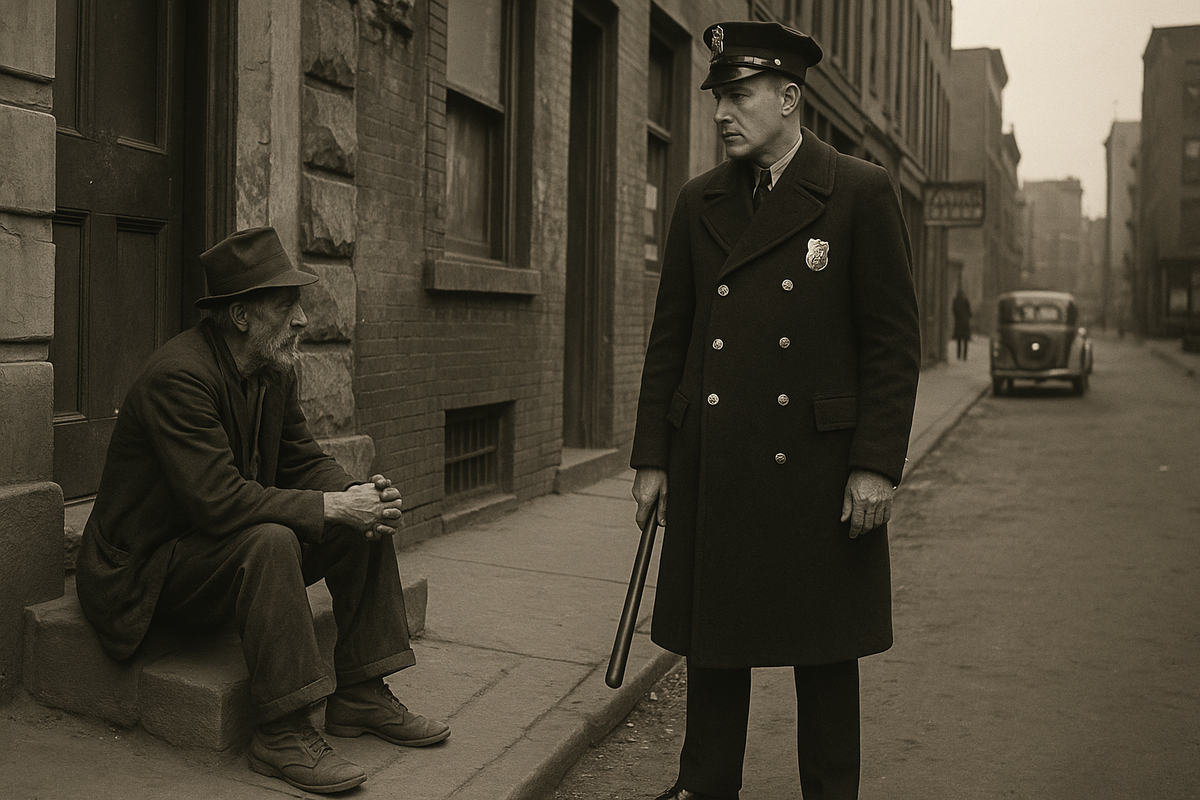
Detective John J. Broderick wasn't just fearless—he was theatrical. He traded gunfire with escaping convicts. He barged into rooms with the swagger of a stage actor. And in the hands of The New Yorker's writers, his exploits became something more than police reporting: they became cultural portraiture, a Depression-era fable about authority, bravado, and the razor-thin line between heroism and performance.
This wasn't escapism. It was something sharper—satire wrapped in admiration, journalism laced with irony. At the depth of America's economic collapse, The New Yorker gave its readers not fantasy but a mirror, reflecting back the absurdities and anxieties of 1931 with wit that cut clean.
Archive Document
Historical Figure: Detective John J. Broderick, NYPD
Issue Date: December 26, 1931
Cover Artist: M. S. Perey
Archive Source: The New Yorker Magazine Collection
Historical Context: Published at the depth of the Great Depression
A City in Freefall, A Magazine in Ascent
Winter 1931 marked the nadir of the Great Depression. Unemployment had gutted entire industries. Political confidence was hemorrhaging. New York, always America's nerve center, became its most visible wound—crime surged, poverty metastasized, and the future felt opaque.
Yet The New Yorker, still young at six years old, had already staked its claim as the premier voice of sophisticated urban culture. Where other publications offered sentiment or distraction, it delivered irony, understatement, and narrative experimentation. Its pages didn't comfort—they observed, skewered, entertained.
The Broderick profile embodied this ethos perfectly. Here was a man whose courage was undeniable: he'd faced down armed criminals, protected the vulnerable, earned commendations for bravery. But The New Yorker didn't lionize him—it examined him. The magazine presented Broderick as both institutional pillar and performance artist, a guardian whose reputation had calcified into legend. Readers found reassurance in his authority, certainly, but also a knowing wink at how myths are made.
The Alchemy of Visual Wit
M. S. Perey's cover illustration captured the magazine's signature contradiction. A robed figure beams at a Christmas gift, surrounded by wrapped packages—holiday abundance rendered in elegant line work. In any other year, it would read as pure whimsy. In December 1931, with millions unable to afford basic necessities, the image vibrated with subtext. The New Yorker never needed to explain its ironies. It simply placed them on the page and trusted its readers to feel the friction.
Inside, the visual language continued this conversation. Cartoons deployed understatement as comedic weapon—like the scene of startled diners reacting to chaos, captioned "There's a mouse in the shipping room." No exaggeration, no punchline telegraphed. The humor lived in the gap between expectation and delivery, in tone rather than spectacle.
Illustrative sketches accompanying the Broderick profile heightened the theatricality of his character. These weren't photographs documenting police work; they were drawings that transformed reportage into something closer to character study, visual punctuation that reinforced the article's hybrid nature—part journalism, part folk tale, entirely New Yorker.
While Life Magazine would later revolutionize visual storytelling with battlefield photography, The New Yorker of the early 1930s understood a different truth: sometimes a single drawn line could convey more complexity than any camera.
The Making of a Folk Hero
What made the Broderick profile unforgettable wasn't just the facts—it was the framing.
Courage Documented, Not Invented
Broderick had genuinely faced down armed convicts during an escape attempt, trading fire until prisoners were subdued. His commendations were real. His reputation for fearlessness was earned.
Protector Elevated to Archetype
Stories of him defending women from harassment or rescuing civilians didn't just report events—they constructed a narrative of guardian masculinity that Depression-era readers desperately wanted to believe in.
Performance Acknowledged, Not Mocked
The profile noted his flair for drama—the bold entrances, the sharp declarations of authority before confronting suspects. The New Yorker didn't debunk the theater; it appreciated it as part of the phenomenon.
Myth Examined From the Inside
By presenting Broderick's exploits with both admiration and gentle irony, the magazine created something rarer than hagiography or exposé—it showed readers how legends function, how a city builds its heroes.
This was The New Yorker's innovation: profiles that worked as cultural criticism, journalism that doubled as literature.
Why Vintage New Yorker Magazines Matter Now
These aren't artifacts. They're active documents—time capsules that still speak because wit, unlike news, doesn't decay.
Every page offers evidence of how humor, satire, and narrative sophistication shaped American self-understanding across the twentieth century. The covers functioned as gallery art. The profiles operated as literary essays. The cartoons remain untethered to their moment, still landing because observation of human absurdity never expires.
To read a 1931 New Yorker is to inhabit conversations happening in real time—the anxieties that kept readers awake, the ironies they used as shields, the cultural vocabulary they shared. For historians, collectors, and anyone who believes magazines once mattered in ways digital media cannot replicate, these issues remain essential testimony.
Why This Issue Endures
Temporal Precision
Published at the Depression's absolute depth, this issue captures how sophisticated Americans processed catastrophe—not through denial, but through wit sharp enough to cut both ways.
Early Visual Identity
Perey's cover reflects the magazine's formative aesthetic, before the roster of iconic illustrators who would define later decades. It's The New Yorker still discovering itself, already confident.
Narrative Singularity
The Broderick profile stands apart even within The New Yorker's archive—a Depression-era character study that reads like modernist fiction while documenting actual police work.
Material Scarcity
Surviving copies from the 1930s, particularly in readable condition, are genuinely rare. The magazine wasn't designed for preservation; it was designed to be consumed weekly, then discarded.
Owning this issue isn't nostalgia. It's access—to a vanished editorial sensibility, to the precise texture of American anxiety in 1931, to the moment when magazine journalism and literary art achieved perfect synthesis.
Explore the Archive
The December 26, 1931 issue is one portal into nearly a century of American cultural history preserved in print. From Depression-era satire through postwar criticism to the dawn of the digital age, The New Yorker documented how Americans thought, argued, laughed, and endured.
Browse The New Yorker Magazine CollectionEach issue is a conversation waiting to resume—wit and intelligence frozen in ink, still speaking across decades.
The December 26, 1931 New Yorker captured a moment when satire was survival, when irony was a form of courage, and when one magazine profile could turn a cop into a cultural cipher. It remains what it was then: proof that journalism, practiced with enough intelligence and art, becomes something permanent.
Nearly a century later, it still delivers what readers needed in 1931—clarity, complexity, and the consolation of knowing someone was paying attention.