
When Life Magazine Showed America the Face of Its Future Enemy
August 30, 1937: The Most Intimate Portrait of Japan Ever Published—Six Weeks After War Began
On August 30, 1937, Americans opened their mailboxes to find a frog hunt on the cover of Life Magazine. Inside, they found something far more unsettling: the most intimate portrait of Japanese life ever published in the United States.
The timing was deliberate. Just six weeks earlier, Japanese troops had crossed the Marco Polo Bridge into China, igniting what would become the Second Sino-Japanese War. While newspapers screamed headlines about the fall of Shanghai, Life took a different approach. Its editors commissioned a sweeping photo essay titled "The Japanese: The World's Most Conventional People"—not of soldiers or diplomats, but of farmers, fishermen, and families living their daily routines half a world away.
What readers encountered across those pages would become one of the most significant cultural documents of the pre-war era: a nation captured in full ceremony and contradiction, frozen at the exact moment it was mobilizing for total war.
The Magazine That Taught America to See
Life had launched just nine months earlier, in November 1936, with a revolutionary premise: photographs could tell history better than words. By the summer of 1937, that conviction had matured into editorial strategy. The Japan essay wasn't merely reportage—it was visual anthropology delivered to four million American homes.
The photographs were unsparing. Farmers bent double in flooded rice paddies, wearing grass hats and cotton work shirts under a merciless June sun. Families bathing in crude wooden tubs set directly over kitchen stoves, the steam rising in cramped village homes. Women and children crowded into communal bathhouses, their bodies exposed in ways that shocked Western sensibilities. A thirteen-year-old girl staring at the camera, her caption explaining she might soon be sold to a factory or brothel to ease her family's poverty.
But there was beauty too. Shinto fire rituals illuminating temple courtyards. Cherry blossom festivals where entire villages gathered. Fishermen launching wooden sampans at dawn—part of a fleet 360,000 boats strong that fed a population of 70 million on an island nation with scarce arable land.
Each image carried weight. These weren't generic scenes of "the Orient." They were specific, named places: terraced fields in specific prefectures, identified festivals, documented rituals. Life's photographers had gained access that no American publication had secured before.
Archive Details
Publication: Life Magazine
Issue Date: August 30, 1937
Feature Title: "The Japanese: The World's Most Conventional People"
Historical Context: Published six weeks after the Marco Polo Bridge Incident, which escalated into full-scale war between Japan and China
Significance: One of the most comprehensive Western photo-essays on Japanese daily life before World War II
What Americans Saw—and What They Couldn't
The essay's central argument was embedded in its title: the Japanese were "the world's most conventional people." Every caption reinforced this thesis. Farmers squatted on curbsides in identical postures. Families arranged themselves on tatami mats with geometric precision. Village hierarchies governed every social interaction, from bath order to festival roles.
To 1937 readers debating isolationism, this conformity read as both fascinating and alien. The captions emphasized loyalty, modesty, collective effort—values that bound individuals into a seamless social fabric. Men worked the paddies in synchronized rows. Women managed households with ritualized efficiency. Children learned deference before they learned to read.
Life presented this as cultural documentation. But the subtext was unavoidable: this was also a portrait of the enemy-in-waiting. The same conformity that made rice farming possible on impossible terrain was now being channeled into military expansion. The loyalty that sustained village life was the same force driving Japanese armies deeper into China.
The magazine never stated this explicitly. It didn't need to. Readers could draw their own conclusions from the juxtaposition: tradition and aggression, rice paddies and battlefields, bathhouses and bombers.
The Artifact in Context
What makes the August 30, 1937 issue exceptional isn't just its content—it's its position in time. Published exactly four years and three months before Pearl Harbor, it represents the last moment when Americans could view Japan with detached curiosity rather than wartime hatred.
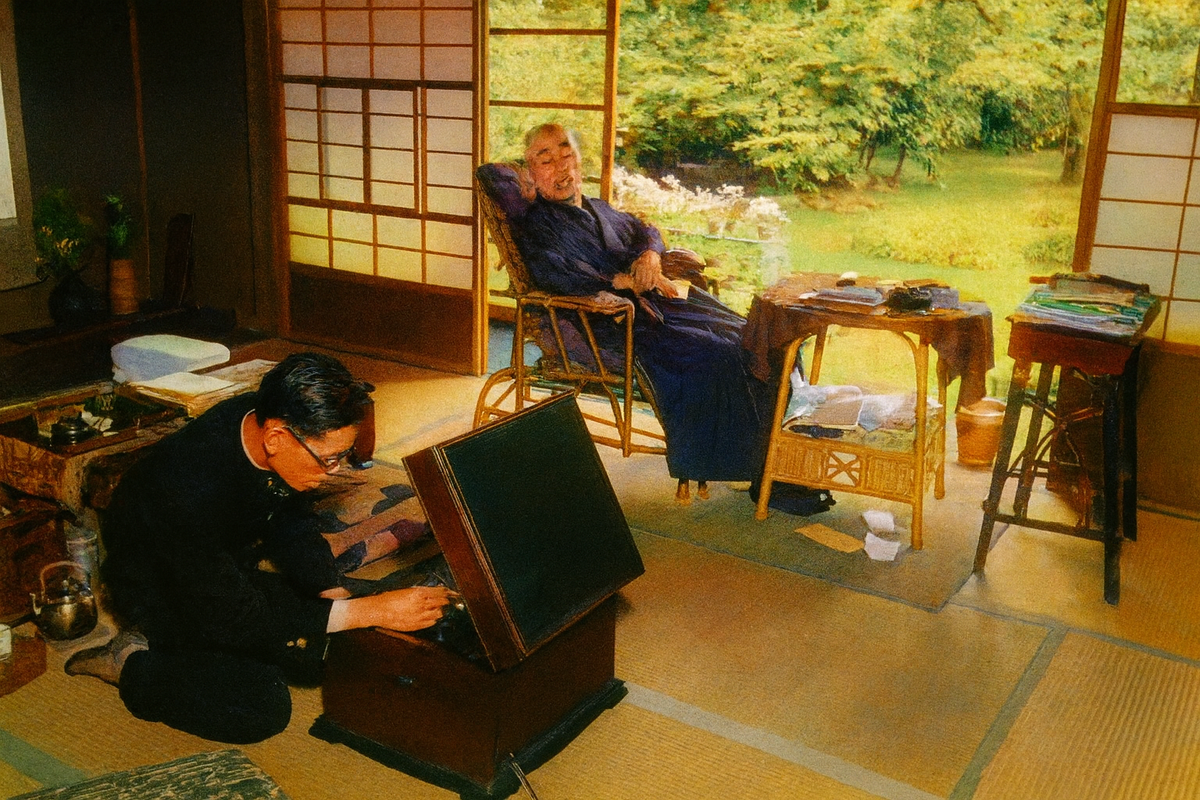
The essay captured a society in transition. Radios and phonographs appeared in homes still furnished with nothing but tatami mats and low tables. Movie theaters drew crowds in towns where Shinto priests still blessed the harvest. Wooden sandals clacked on dirt roads that would soon be paved for military vehicles.
The photographs also documented a gender hierarchy that Life's editors found noteworthy enough to highlight repeatedly. The farmer's daughter awaiting sale. The women scrubbing clothes in cold rivers while men gathered at bathhouses. The mothers bent over cooking fires in homes without running water. This wasn't romanticized—it was reported with the clinical eye of ethnography.
And threading through everything: the religious life that structured Japanese existence. Buddhist ancestor tablets in every home. Shinto festivals marking every season. Temple visits woven into daily routine. Faith wasn't separate from life—it was the architecture of life itself.
Cultural Themes Documented
The Rice Economy
Japan's farmers fed over 70 million people on limited arable land, a feat of endurance and ingenuity captured in stark detail.
The Role of Women
From daughters sold into labor to mothers in rustic homes, women's lives were shown as both essential and severely restricted.
Fishermen and Sampans
With 1.5 million fishermen and 360,000 boats, the seas were documented as vital to daily survival across the island nation.
Bathing Culture
Communal baths shocked Western readers but revealed deep cultural rhythms of hygiene, leisure, and community bonds.
Faith and Ritual
Shinto fire rituals and Buddhist ancestor tablets showed religion permeating every facet of existence.
Conformity and Convention
The essay stressed how values of loyalty and decorum shaped every relationship, from family to village to state.
Village Leisure
Weddings, pilgrimages, and cherry blossom viewings—ritual moments of beauty amid grueling agricultural labor.
Modernity vs. Tradition
Radios and phonographs appeared beside tatami mats and wooden sandals, capturing a nation caught between eras.
The Weight of Hindsight
Reading this essay today means reading it with knowledge its original audience didn't possess. Those farmers would be conscripted. Those villages would send entire generations to war. That conformity and loyalty would be weaponized into kamikaze pilots and last-stand defenses.
But the photographs themselves remain neutral witnesses. They show people working, bathing, praying, celebrating—pursuing the ordinary rhythms of life that persist regardless of what empires and armies decide. That's what makes them powerful. They remind us that history happens to people who are mostly just trying to get through the day.
Life gave Americans something rare in 1937: a chance to see their future adversary as human beings living recognizable human lives. Whether that made the coming war more tragic or more inevitable is a question the magazine never tried to answer.
Why Collectors Seek This Issue
Historical Timing
Published exactly four years and three months before Pearl Harbor, it captures ordinary Japanese life at the precise inflection point between peace and total war.
Photographic Rarity
These images remain among the most comprehensive Western documentation of pre-war Japanese daily life. Many traditions shown here were transformed or destroyed by the war that followed.
Cultural Perspective
The essay reveals not only how the Japanese lived, but how Americans were taught to see Japan in 1937—with anthropological distance, aesthetic appreciation, and growing unease.
Wartime Resonance
Issues covering the Axis powers before World War II carry unique weight. They're glimpses of "before" from people who couldn't yet know what "after" would look like.
Explore the Archive
For collectors, historians, and enthusiasts of 20th-century media, original Life magazines offer unparalleled primary sources. From the buildup to World War II through the cultural revolutions of the 1960s, each issue is a time capsule of how Americans first encountered the forces that would shape their world.
Browse Life Magazine CollectionOwn a piece of 1937. This isn't just a magazine—it's the last look Americans had at Japan before the world caught fire.