
When Dizzy Dean Demanded Justice: The 1968 Campaign That Changed Cooperstown Forever
How Jet Magazine and a White Hall of Famer Forced Baseball to Finally Recognize Satchel Paige
On March 14, 1968, newsstand browsers across Black America picked up their weekly copy of Jet Magazine and found themselves holding a grenade disguised as a sports story.
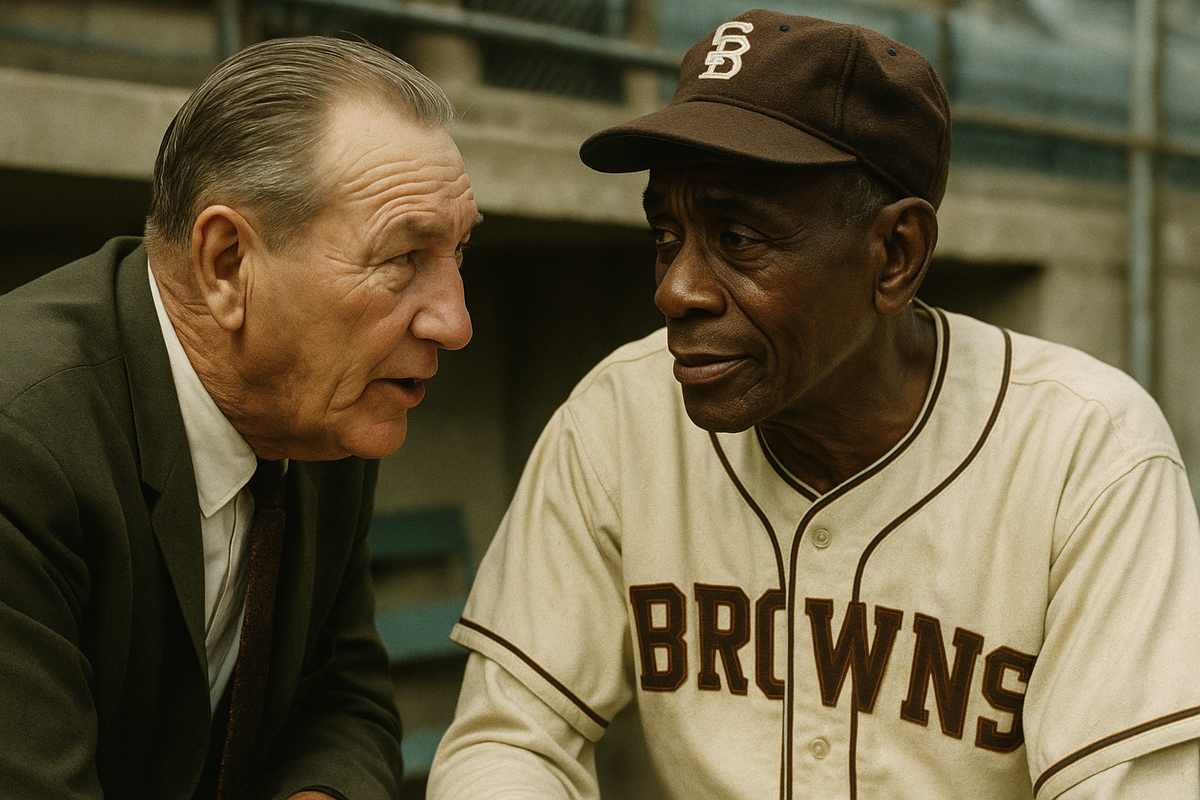
There, on the cover, sat two men who had no business being together in the same frame: Dizzy Dean, the white Hall of Fame fireballer who'd dominated the 1930s, leaning forward with the intensity of a closing argument—and Satchel Paige, calm in his St. Louis Browns uniform, the greatest pitcher ever barred from his own shrine. The headline cut straight to the point: "Dizzy Dean Makes Pitch to Get 'Satch' in Hall of Fame."
This wasn't just baseball coverage. It was a declaration of war against historical erasure.
For Jet's readers in 1968—a year when Martin Luther King Jr. would be assassinated two weeks after this issue hit stands—the fight for Paige's recognition wasn't about statistics or nostalgia. It was about forcing white America to finally write Black excellence into the permanent record. And Dean, improbably, had become the prosecution's star witness.
Historical Archive Details
Publication: Jet Magazine
Issue Date: March 14, 1968
Featured Figures: Satchel Paige, Dizzy Dean
Historical Context: Published three years before Paige's 1971 Hall of Fame induction
Archive Significance: Documents the civil rights-era campaign that changed Cooperstown's exclusionary practices
The Legend Locked Out
By 1968, Leroy "Satchel" Paige had already lived three careers' worth of mythology. Born in 1906, he'd spent two decades as the Negro Leagues' most electric attraction—a 6-foot-4 showman with a blazing fastball, pinpoint control, and the charisma to pack stadiums from Kansas City to the Caribbean. When he barnstormed against white major leaguers in exhibition games, they admitted what the record books would not: he was the best they'd ever faced.
Segregation stole his prime. When Jackie Robinson shattered baseball's color line in 1947, Paige was already 41 years old. The Cleveland Indians finally signed him in 1948—at 42—and he still helped them win the pennant. He made two All-Star teams with the Browns. He pitched in the majors until he was 47.
And yet, when Cooperstown inducted the modern greats, Paige waited outside.
Dizzy Dean knew better. He'd faced Paige in barnstorming tours during the 1930s, when exhibition games between white and Black stars drew crowds that dwarfed regular-season attendance. Dean had seen 49,000 fans pack Yankee Stadium in 1934 just to watch Paige pitch. He'd watched Paige dominate lineups that included some of the best hitters in baseball history.
In Jet's March 1968 feature, Dean put his Hall of Fame credibility on the line: "I want to say this in behalf of Satchel Paige. I think that he was one of the most outstanding pitchers I ever saw throw a ball."
Then he did something radical. He asked America to act.
The Black Press Makes History Move
Jet Magazine wasn't selling nostalgia—it was engineering a campaign.
While white sports media treated Paige as a colorful relic, Jet framed him as a living indictment of American injustice. The magazine combined Dean's testimony with photographs of Paige in action, recollections of record-breaking crowds, and a direct call to readers: write to Cooperstown. Demand his induction. Make history bend.
This was Jet's genius. Founded in 1951 by John H. Johnson, the pocket-sized weekly had become the chronicle of Black achievement in an era when mainstream media barely acknowledged it existed. Jet didn't wait for history to be made—it made history, then reported on it. Emmett Till's funeral. The March on Washington. Muhammad Ali's draft resistance. And now, Satchel Paige's Hall of Fame case.
The article didn't just list Paige's accomplishments. It built a legal brief. Dean's testimony established credibility. The crowd figures proved cultural impact. The photographs—Paige in uniform, Dean and Paige side by side—created visual evidence of what segregation had stolen. And the call-to-action transformed readers from witnesses into activists.
For Black Americans in 1968, this campaign carried stakes far beyond baseball. Every institution that had excluded Black excellence—universities, legislatures, corporate boardrooms—was under siege. The Hall of Fame was just another fortress that needed storming.
The Cover That Became a Courtroom
The visual composition of the March 14, 1968 cover deserves its own analysis. Jet's designers understood something profound: this wasn't a sports story, it was a civil rights story wearing a baseball uniform.
Dean leans toward Paige with the body language of testimony, as if delivering his verdict to a jury. Paige sits with the quiet dignity of a man who'd already proved everything but was still waiting for the receipt. The bold red and black graphics—Jet's signature style—made the issue impossible to ignore on newsstands crowded with mainstream magazines that were still figuring out how to cover Black America at all.
Inside, the magazine deployed photographs with prosecutorial precision: Paige pitching, Paige with teammates, Paige commanding stadiums. Each image built the case that this wasn't about charity or sentiment. This was about correcting the historical record.
Why This Issue Changed Everything
Three years after Jet published Dean's testimony, the Hall of Fame created a special committee to evaluate Negro Leagues players. In 1971, Satchel Paige walked through Cooperstown's doors.
Collectors recognize the March 14, 1968 issue as one of Jet's most significant publications for four reasons:
Historic Timing
This magazine documented the campaign that would succeed three years later, capturing advocacy in real-time rather than retrospect.
Iconic Cover
The Dean-Paige image has become one of the most recognizable in sports journalism history, appealing equally to baseball memorabilia collectors and civil rights archivists.
Crossover Significance
Few publications bridge sports history and civil rights history with this level of impact, making it essential for multiple collecting categories.
Artifact of Advocacy
This wasn't passive reporting. Jet created a call-to-action that mobilized readers to change an institution, making the magazine itself a tool of historical correction.
Owning this issue means holding both a piece of Cooperstown's evolution and evidence of how the Black press forced American institutions to confront their exclusions.
The Enduring Power of the Black Press
Jet's coverage of Satchel Paige endures because it understood what mainstream sports media missed: recognition isn't automatic, it's fought for. The magazine treated baseball's Hall of Fame the same way it treated segregated lunch counters—as another American institution that needed to be integrated, by force if necessary.
Every page of that March 1968 issue reminded readers that history wasn't written in legislatures alone. It was written in stadiums, on stages, in the faces of men like Paige who'd been robbed of their prime and were still owed their monument.
When collectors examine this issue today, they're not just seeing vintage sports journalism. They're seeing the moment when the Black press decided that Cooperstown's doors would open—and made sure white America heard the demand from a voice it couldn't ignore: one of baseball's own white legends.
Collector Significance
Historic Timing
Published just three years before Paige's eventual induction in 1971, it documents the very campaign that helped make it possible.
Iconic Cover
The image of Dean and Paige together makes this one of Jet's most memorable covers, appealing to both sports collectors and cultural historians.
Crossover Significance
This issue bridges the worlds of civil rights history and baseball memorabilia, making it highly desirable among diverse collectors.
Artifact of Advocacy
More than a story, this magazine served as a rallying cry for justice, giving readers a chance to be part of a campaign that changed history.
For Collectors and Historians
The March 14, 1968 issue of Jet Magazine represents a convergence point in American cultural history—where sports, civil rights advocacy, and media power intersected to change an institution's calculus.
Browse Jet Magazine CollectionThese aren't replicas or digital scans. They're original copies—artifacts from the newsstands of 1968, carrying the ink and paper that mobilized a campaign.
The Final Word
In 1971, when Satchel Paige finally entered the Hall of Fame, he did so because people like Dizzy Dean testified—and because publications like Jet Magazine refused to let America forget what segregation had stolen.
Holding the March 14, 1968 issue means holding proof that recognition doesn't arrive on its own. It's demanded, campaigned for, and won by people willing to make the case until history has no choice but to listen.
Satchel Paige got his plaque. Jet helped put it there. And this magazine is the evidence.