
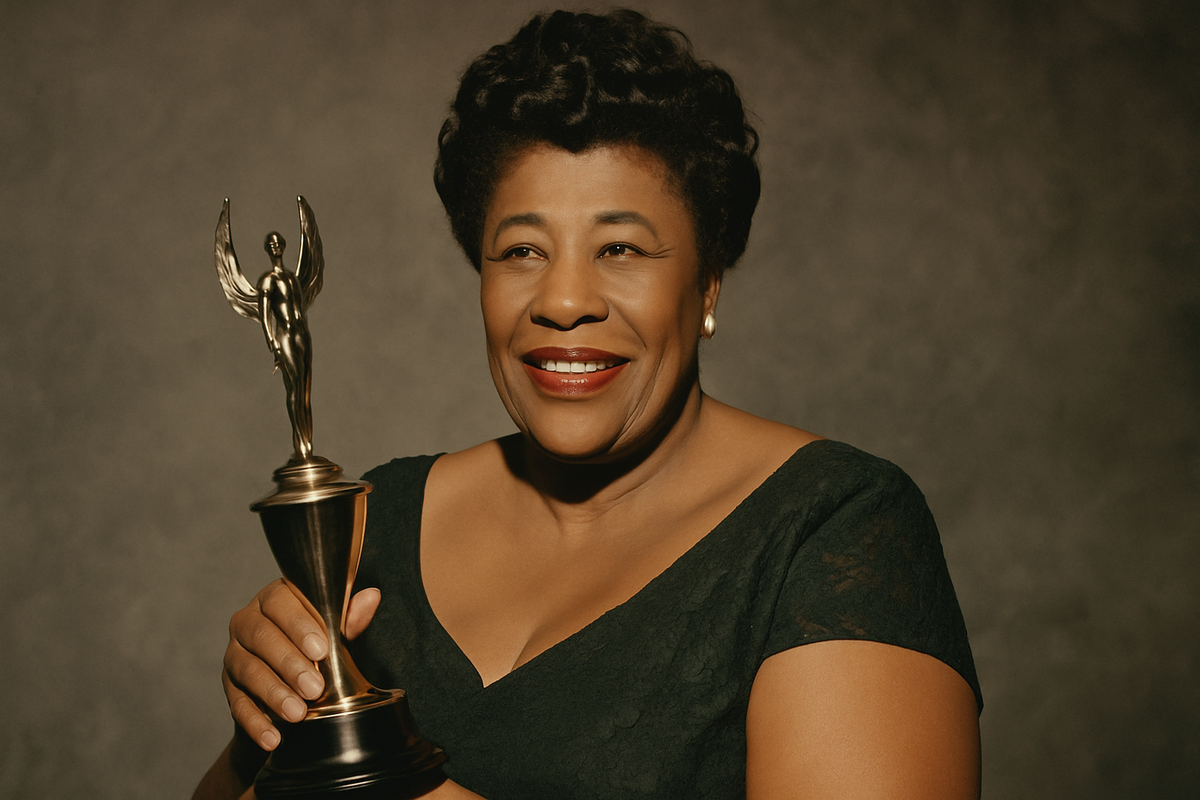
When Jet Magazine Crowned Ella Fitzgerald—and Refused to Wait for Permission
How a pocket-sized magazine created its own Hall of Fame and documented Black excellence in real time
January 26, 1961. While mainstream America debated whether a Catholic could be president and Southern lunch counters exploded into battlegrounds, a pocket-sized magazine in Chicago was doing something radical: celebrating Black excellence on its own terms.
The cover of that week's Jet didn't ask permission. Ella Fitzgerald, holding a trophy and smiling with the confidence of someone who had already sold 25 million records, stared back at newsstand browsers with a simple declaration: World's Most Honored Jazz Singer. Not "one of the best." Not "rising star." The best. Period.
For the readers who slipped that issue into their coat pockets—and Jet's compact format made it perfect for exactly that—this wasn't just entertainment coverage. It was vindication. At a moment when Life and Time rarely put Black faces on their covers unless attached to tragedy or controversy, Jet turned its First Annual Jazz Poll into a referendum on cultural authority: Who gets to decide greatness? We do.
Historical Record
Featured Artist: Ella Fitzgerald, "First Lady of Song"
Issue Date: January 26, 1961
Archive Source: Jet Magazine, First Annual Jazz Poll
Recognition: Best Female Singer, as voted by Jet readers
Context: Published during the Kennedy administration's first weeks and the acceleration of the Civil Rights Movement
The Power of Timing
Three months earlier, John F. Kennedy had narrowly won the presidency in an election where civil rights had moved from footnote to flashpoint. Two months earlier, Ruby Bridges had walked into an all-white New Orleans elementary school through a gauntlet of screaming adults. One month earlier, sit-in movements had spread to over 100 Southern cities.
Against this backdrop, Jet's decision to lead with Ella Fitzgerald carried weight beyond the music itself. Jazz had become America's most potent cultural export—the State Department was literally sending musicians abroad as "jazz ambassadors" to counter Soviet propaganda. But at home, the architects of that global influence still couldn't eat at certain restaurants or book certain hotels.
Fitzgerald knew this intimately. Despite her staggering success—the groundbreaking Songbook series that had redefined American popular music, the Apollo Theater triumph that launched her career in the 1930s, the genre-defying range that made "A-Tisket, A-Tasket" a household standard—she had been refused service at restaurants, blocked from hotel lobbies, treated as something less than the royalty she was.
Jet refused to frame her story through that lens of struggle alone. The magazine's genius lay in its refusal to choose between celebration and resistance. While other pages that week covered freedom riders and voting rights battles, the Fitzgerald feature insisted that Black joy and Black achievement deserved space without caveat or qualification.
What the First Lady of Song Represented
By 1961, Ella Fitzgerald had transcended category. The article traced her evolution from that legendary Apollo Theater debut—the teenage girl who had planned to dance but sang instead—through her years with Chick Webb's orchestra, to her current status as a figure who moved effortlessly between Dixieland and calypso, ballads and scat, high art and popular appeal.
This wasn't versatility for its own sake. In a segregated industry that constantly tried to box Black artists into narrow commercial categories, Fitzgerald's refusal of genre limitations was itself a political act. She sang what she wanted, how she wanted, for whoever wanted to listen. The fact that millions did—across racial lines, across national borders—made her success impossible to dismiss or diminish.
Jet's First Annual Jazz Poll, which crowned Fitzgerald as Best Female Singer, did something quietly revolutionary: it democratized cultural recognition. Readers voted. The community decided. No approval from downtown critics required, no waiting for mainstream outlets to catch up. This was Black America honoring its own, creating its own Hall of Fame in real time.
The trophy Fitzgerald held on that cover—awarded by Jet, by extension awarded by its readers—carried its own authority. It didn't need validation from institutions that had spent decades ignoring or marginalizing the very art form America now claimed as its own.
The Deep Dive: What This Issue Reveals
Cultural Power
Jet's First Annual Jazz Poll established the magazine—and its readers—as arbiters of cultural excellence, creating an alternative authority structure that didn't wait for mainstream validation.
Career Documentation
The article traced Fitzgerald's journey from her Apollo Theater debut in the 1930s through her collaborations with Chick Webb to her status as a 25-million-record-selling global icon.
Genre-Defying Artistry
Jet emphasized Fitzgerald's unprecedented range—from Dixieland to calypso, ballads to scat singing—showcasing why she remained unmatched in American music.
Historical Context
Published at the intersection of the Kennedy presidency and Civil Rights Movement acceleration, the issue documents how a community celebrated excellence while fighting for basic rights.
Reading the Room (Then and Now)
What makes this issue particularly valuable for contemporary readers is its refusal of nostalgia. The Jet writers weren't looking backward with misty sentiment—they were documenting dominance in present tense. Fitzgerald wasn't a relic to be preserved; she was the active, undisputed champion.
This matters because it reveals how Black communities understood their own excellence long before academic retrospectives or museum exhibitions "rediscovered" it. The narrative wasn't one of "overcoming" or "breaking barriers"—though Fitzgerald did both. It was simpler and more powerful: she's the best, we know it, here's the trophy.
That confidence—that certainty of cultural judgment—is what makes vintage Jet issues essential reading for anyone studying how communities create and maintain their own historical records. These weren't magazines begging for mainstream recognition. They were magazines creating an alternative record, one that refused to wait for permission to celebrate.
The Magazine as Time Capsule
Hold a 1961 Jet in your hands and you're holding something that was never meant to last this long. Newsprint yellows, pulp paper crumbles, pocket-sized formats disappear into coats and purses and landfills. That it survived is itself significant.
But what it contains—the photograph of Fitzgerald mid-triumph, the compact prose of the article, the surrounding ads and news briefs that show what else competed for attention that week—offers something no history book can quite replicate. It's the unfiltered voice of a community talking to itself, creating its own record, insisting on its own version of what mattered.
For collectors of 20th-century cultural materials, for jazz scholars, for anyone interested in how African American excellence was documented and celebrated in real time, this issue isn't just recommended reading. It's essential primary source material.
Why This Issue Matters to Collectors
Historical Inflection Point
Published during the Kennedy administration's first weeks and the Civil Rights Movement's acceleration, it captures a community asserting its cultural power even as it fought for basic civil rights.
Jazz Poll Inauguration
This marked the debut of Jet's annual reader poll, establishing a tradition that would span years and create its own historical record of how Black audiences valued their artists.
Ella at Her Peak
By 1961, Fitzgerald had achieved something rare: universal acclaim without compromise. This issue documents that moment before retrospectives and lifetime achievement awards—when she was still actively defining what greatness looked like.
The Artifact Itself
Jet's pocket format and newsprint fragility mean survival rates are lower than larger magazines. Well-preserved copies from the early 1960s are increasingly scarce.
Own a Piece of the Record
The January 26, 1961 issue of Jet Magazine remains a landmark publication—a document of how America's First Lady of Song was crowned by the people who understood her significance first and most deeply.
For serious collectors, cultural historians, and enthusiasts of African American cultural heritage, original issues like this one represent irreplaceable historical artifacts. They're not reproductions or retrospectives—they're the real thing, preserved from the moment when Ella Fitzgerald's greatness was news, not history.
Brows Jet Magazines CollectionWhether you're building an archive, researching mid-century Black cultural life, or simply want to hold a piece of the record that mainstream America tried to ignore, this issue offers something increasingly rare: unmediated access to how a community celebrated its own, on its own terms, without asking permission.